
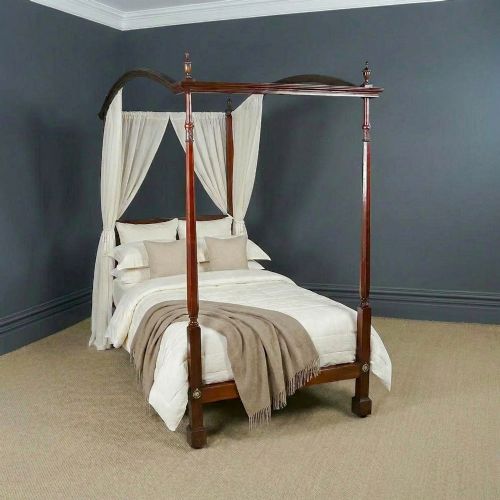
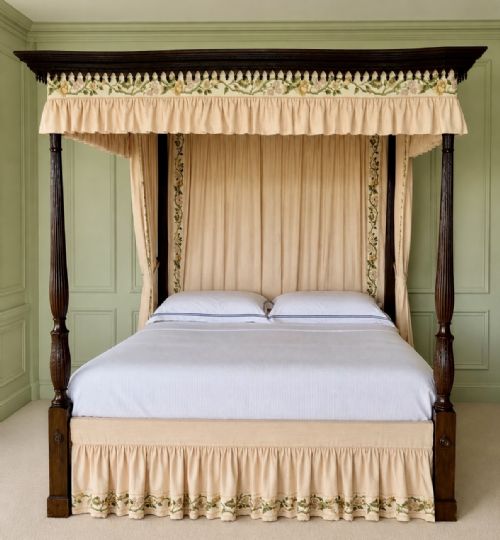


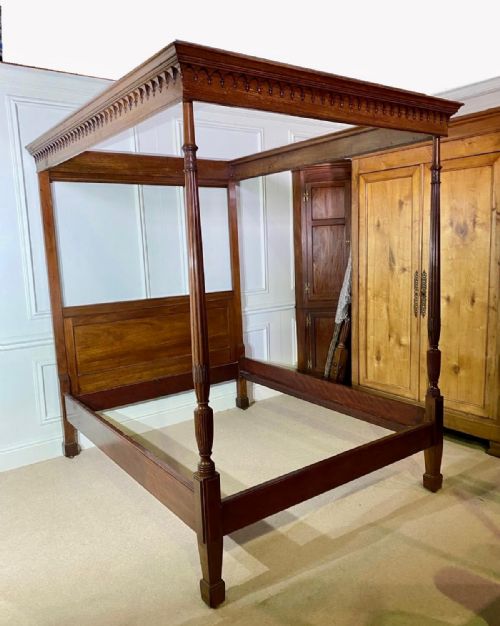

Carved Mahogany Canopy Bed
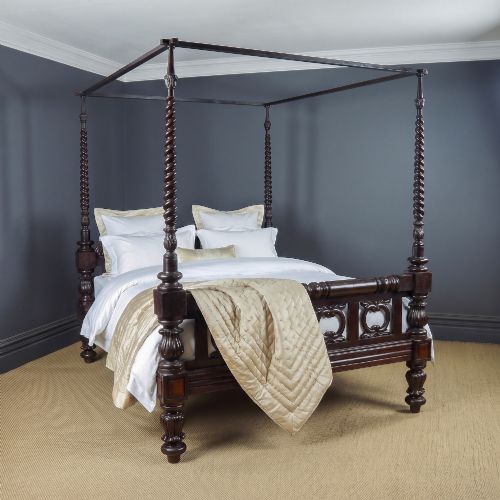
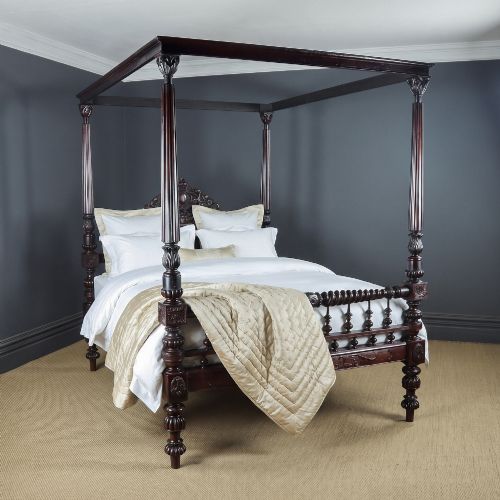
A carved mahogany canopy bed brings architectural presence and grand scale to a room, offering historic craftsmanship built around substantial timber posts and overhead testers.
Carved Mahogany Canopy Bed
A carved mahogany canopy bed represents substantial sleeping furniture constructed from dense timber, featuring upright posts that support an upper tester frame. When searching for a carved mahogany canopy bed, buyers encounter forms ranging from imposing Georgian and Regency examples to later Victorian, Edwardian, and revival interpretations.
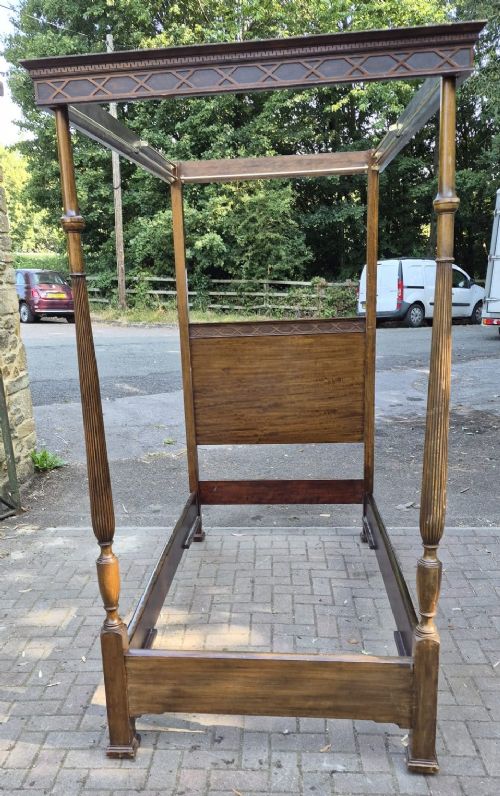
The selection includes standard king sizes and large single dimensions, alongside specific regional variants such as Anglo-Indian colonial pieces. Unusual adaptations like dog four poster beds also appear within the recorded listings.
Most examples date across the eighteenth and nineteenth centuries, utilising rich tropical timber and traditional joinery. The overarching design emphasises vertical height, substantial posts, and overhead fabric or timber canopies.
How they were made
Construction relies primarily on dense mahogany, supported by secondary timbers such as pine and hardwood within internal framing. Craftsmen utilised hand-carving techniques to ornament the heavy corner posts and headboards with classical motifs.
Surface treatments incorporated traditional polishing methods to bring out the deep grain of the timber, occasionally complemented by gilt wood accents or painted details. Overhead testers frequently integrated fabric elements to form the complete canopy structure.
Listings feature periods spanning the eighteenth century through the Edwardian era, predominantly constructed from mahogany and fabric.
What varies in quality
Quality separates through the depth and precision of the hand-carving on the primary posts, where crisp, undercut mouldings distinguish finer workshop output from simpler production. The selection of timber also dictates distinction, particularly the density and figure of the mahogany used.
Proportion and structural integrity define the higher end of the range, ensuring the substantial weight of the tester frame remains securely balanced across the upright supports.
Heals of London·Howard & Sons
The Carved Mahogany Canopy Bed Glossary
- Half tester
- A smaller canopy frame attached to the headboard that projects only partway over the length of the bed. This form emerged to reduce fabric requirements while maintaining vertical presence.
- Chippendale
- A style originating from eighteenth-century design books characterised by classical proportions and elaborate carving. Pieces in this tradition display meticulous attention to decorative detail.
- Anglo-Indian colonial
- Furniture produced in the Indian subcontinent under British rule, often combining traditional European forms with local timber selection and intricate carving styles. These pieces frequently feature substantial dimensions.
- Mahogany
- A durable tropical hardwood prized for its deep reddish-brown colour and stable grain structure. It serves as the primary structural and visual material for these frames.
Carved Mahogany Canopy Bed: Frequently Asked Questions
How do I assemble a four poster bed?
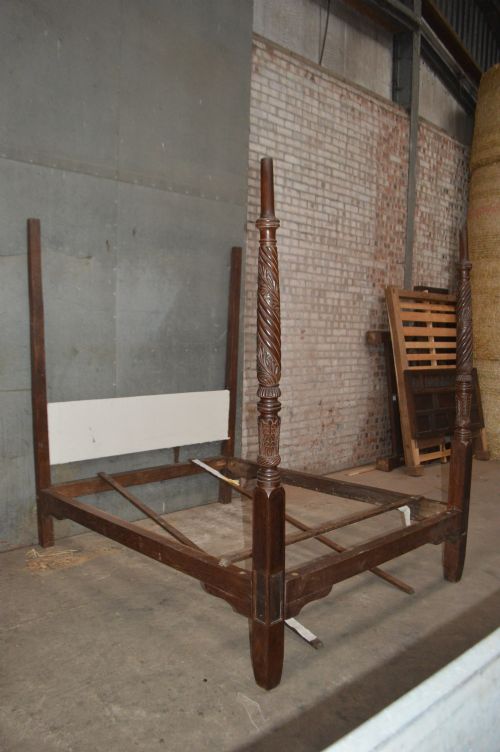
Assembly requires connecting the heavy headboard, footboard, and side rails using traditional bolt fixings before hoisting the overhead tester into position atop the upright posts.
Due to the substantial weight of the timber components, two or more people are necessary to ensure the frame remains square and secure during construction.
Will a standard mattress fit an antique bed?
Many historical beds predate modern standard sizing conventions, meaning older frames often vary by a few inches in length or width compared to contemporary mattresses.
Buyers should measure the interior wooden rails precisely to determine if a standard modern mattress fits or if a custom-made foundation is required.
How do I clean mahogany furniture?
Regular maintenance involves dusting with a soft, dry cloth to prevent particulate buildup on the carved surfaces and polished timber grain.
Avoid using silicone-based polishes or excessive moisture, applying traditional wax sparingly only when the wood appears dry.
What is the difference between Georgian and Victorian styles?
Georgian design generally emphasises restrained classical proportions, lighter carved ornamentation, and balanced symmetrical lines derived from architectural manuals.
Victorian pieces typically display heavier proportions, more exuberant and dense carving, and bolder interpretations of historical revival aesthetics.