

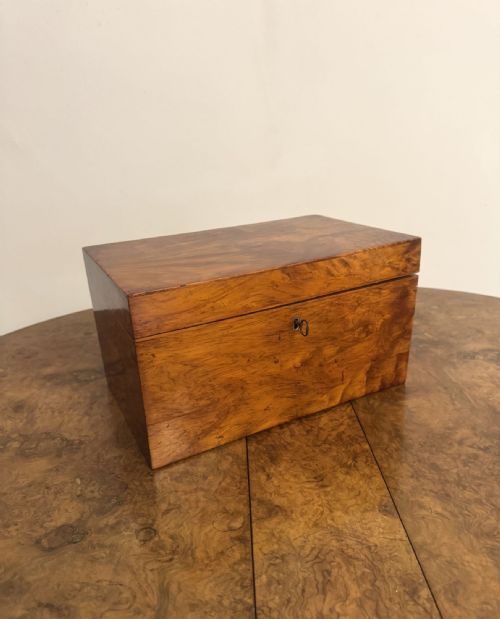


Carved Mahogany Caddy
A carved mahogany caddy brings architectural dignity to a room, offering secure storage for valuable tea and precious dry goods.
Carved Mahogany Caddy
When you search for a carved mahogany caddy, you enter a domain of fine timber containers designed to preserve leaf tea, host stationery, or chill wine. The objects appearing on this page span the Georgian, Regency, William IV, and Victorian periods, stretching from the year 1800 through to the close of the nineteenth century.
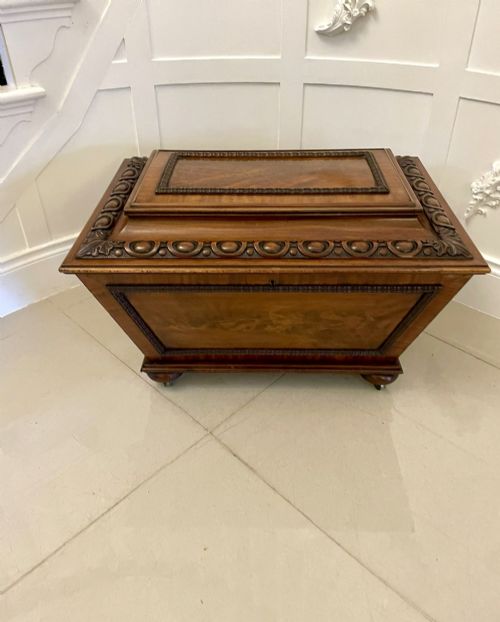
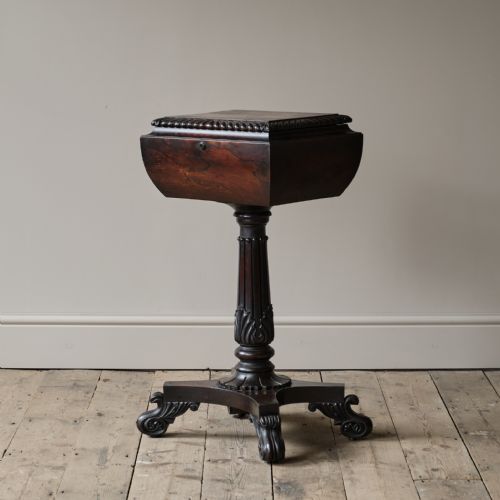
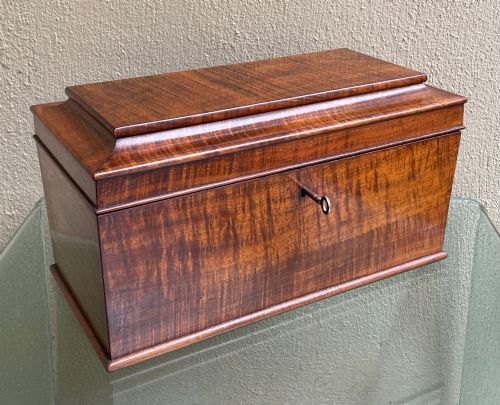
Most frequently, you will encounter substantial sarcophagus forms, freestanding teapoys on stands, and larger cellarettes equipped with robust brass fittings and carved paw feet. These pieces range from tabletop tea canisters to grand wine coolers, utilising rich wood veneers and flame mahogany alongside ebony inlay.
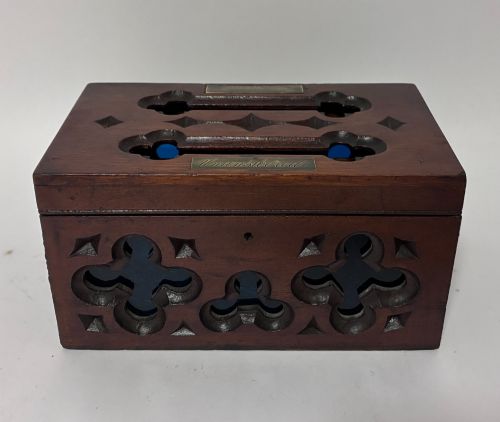
The typology extends beyond simple tea storage to encompass correspondence boxes and stationary cabinets, reflecting how nineteenth-century households organised their most important possessions. Each iteration demonstrates the cabinetmaker's skill in handling dense tropical timber while fulfilling domestic ritual.
How they were made
Cabinetmakers selected dense mahogany and flame mahogany veneers, applying them over secondary woods to create stable carcass structures. Skilled hands shaped the timber into sarcophagus profiles, curved tea caddies, and architectural cellarettes.
Metalwork played a structural and decorative role, integrating brass handles, hinges, and paw feet to support heavy wine coolers and teapoys. Inlayers added contrast through fine lines of ebony, while carvers defined scrollwork and feet with chisels.
Carved Mahogany Caddy Retail Price Guide 2026
Typical asking prices for carved mahogany caddy among the pieces listed under this phrase on Sellingantiques today, from the lower quarter to the upper quarter. They describe what is for sale here now, not the wider market.
Listings feature mahogany, walnut, oak, and brass across Georgian, Regency, and Victorian periods.
What varies in quality
The grade of timber selection dictates the visual impact, with choice flame mahogany veneers and crisp carving setting apart the finest examples. Maker attribution also alters the standing of a piece, particularly when workshop stamps or distinct proportions link an object to prominent cabinetmakers.
Proportion and architectural balance separate standard production from exceptional works, visible in the handling of sarcophagus curves and carved feet. Original brass hardware and intact internal compartments elevate the integrity of surviving pieces.
Gillows·Strahan·Freemans of Norwich
The Carved Mahogany Caddy Glossary
- Sarcophagus form
- A burial-chest shape with a domed lid and tapered sides, widely adopted by nineteenth-century cabinetmakers for large tea caddies and cellarettes. This silhouette provided generous internal volume while maintaining classical architectural proportions.
- Teapoy
- A pedestal-mounted container or small table designed to hold tea canisters, often fitted with mixing bowls and interior compartments. These freestanding pieces sat in drawing rooms for the hostess to prepare tea.
- Cellarette
- A large freestanding box or cabinet designed to hold bottles of wine and spirits, frequently fitted with lead linings and brass carrying handles. They sat beneath sideboards or beside dining tables in formal rooms.
- Flame mahogany
- A decorative veneer cut from where the branch joins the main trunk, showing a swirling pattern resembling flickering flames. Cabinetmakers reserved this striking grain for the primary facades of superior furniture.
- Canterbury
- A low stand featuring partitioned sections for holding sheet music, books, or papers, often resting on castors. These pieces share stylistic details and timber choices with contemporary caddies.
Carved Mahogany Caddy: Frequently Asked Questions
What is a teapoy?
A teapoy is a lidded box on a pillar and claw foot, designed to hold tea caddies and mixing bowls in the drawing room.
These pieces allowed the host to prepare tea away from the servants, keeping expensive leaf blends locked safely inside.
How were cellarettes used?
Cellarettes stored wine bottles securely in the dining room, often lined with lead to hold ice and water.
They stood beneath sideboards or beside tables, ready to supply the table without requiring trips to the cellar.
How do I date a mahogany caddy?
Dating relies on combining the overall silhouette, such as sarcophagus curves or architectural pedestals, with timber choice and hardware.
Georgian and Regency examples show heavier proportions and brass paw feet, while later Victorian pieces often incorporate Gothic revival details.
Where did these pieces sit?
Caddies sat upon tables, sideboards, or dedicated stands within formal reception rooms where guests gathered for social rituals.
Larger cellarettes and teapoys occupied floor space, anchoring the corners of dining rooms and parlours with dark timber.