
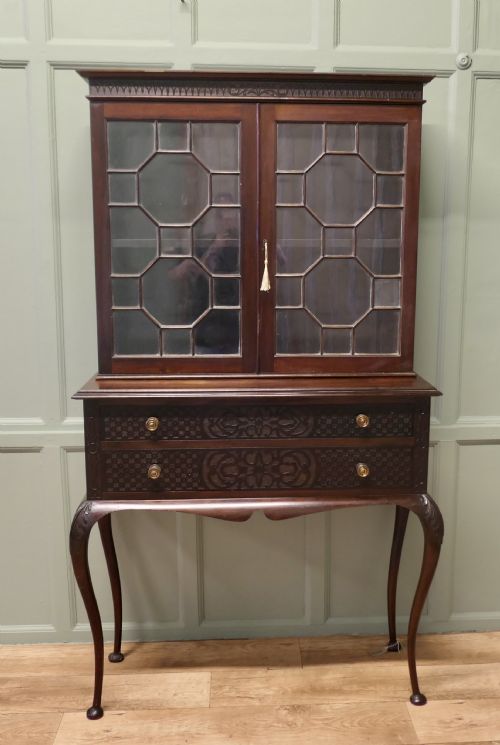
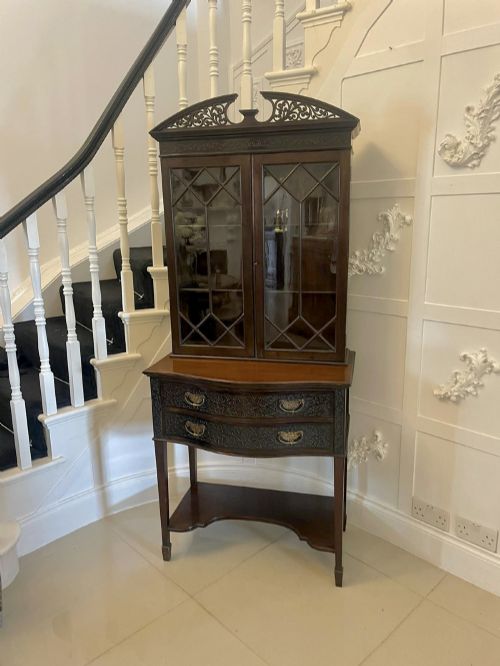
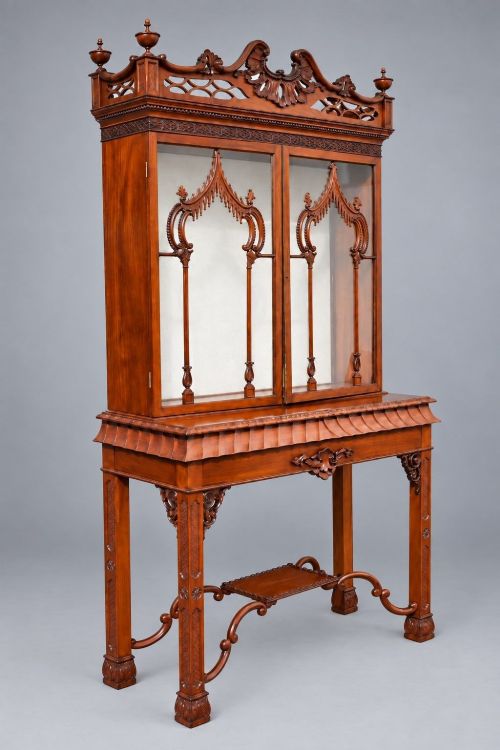
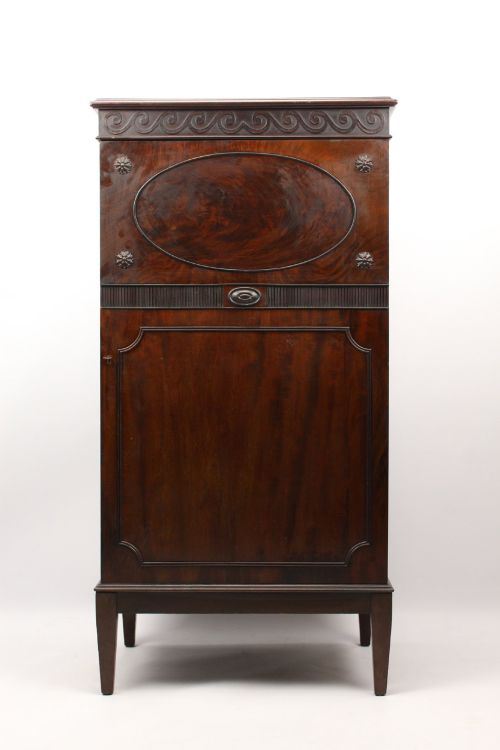
Carved Mahogany Cabinet on Stand
A carved mahogany cabinet on stand is a raised storage piece designed to display or conceal valuables, uniting rich timber with elevated proportions.
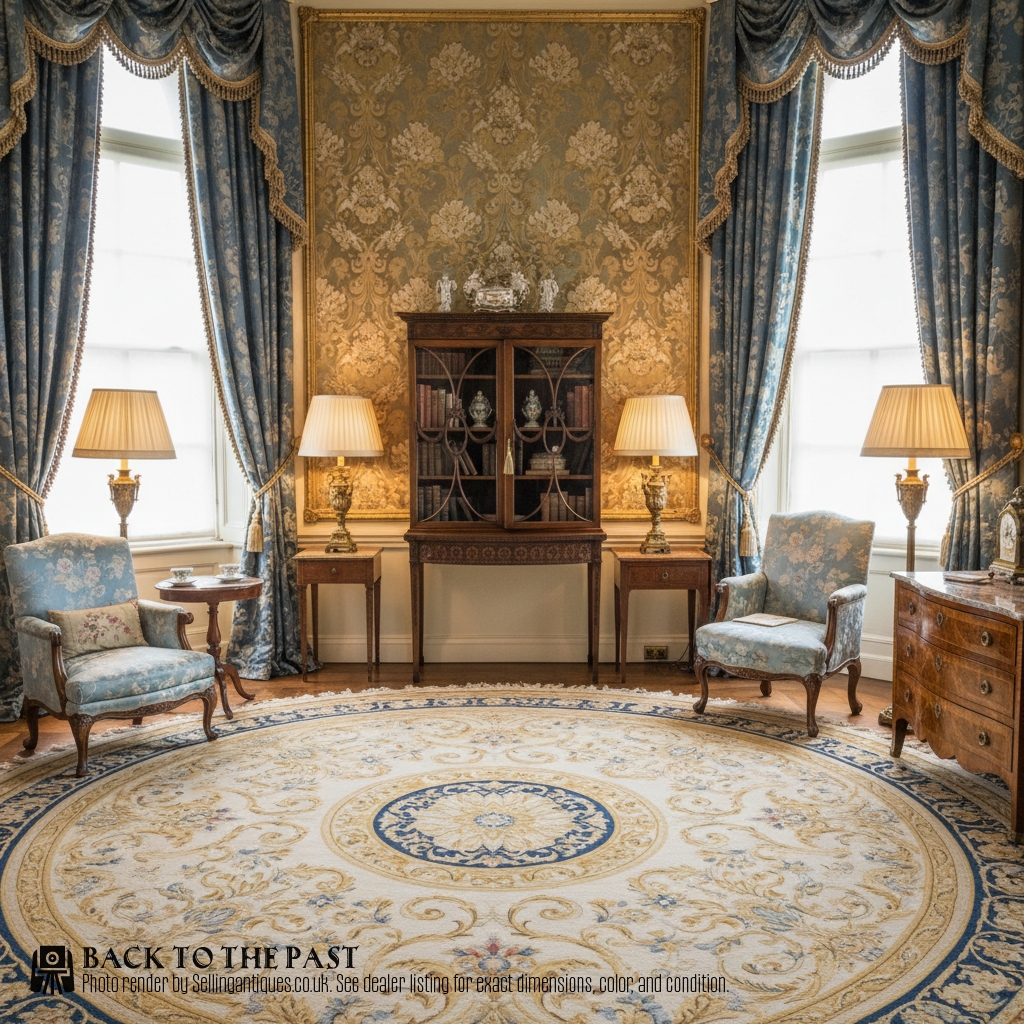
Carved Mahogany Cabinet on Stand
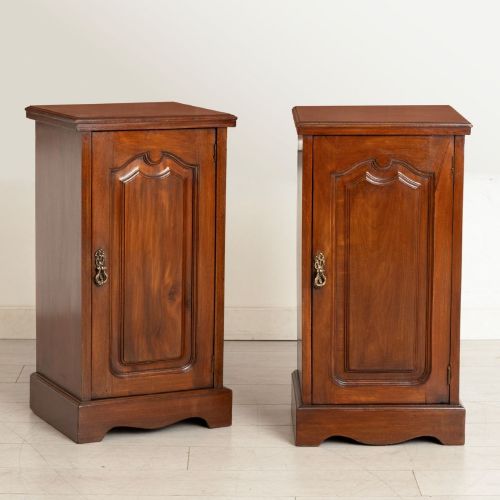
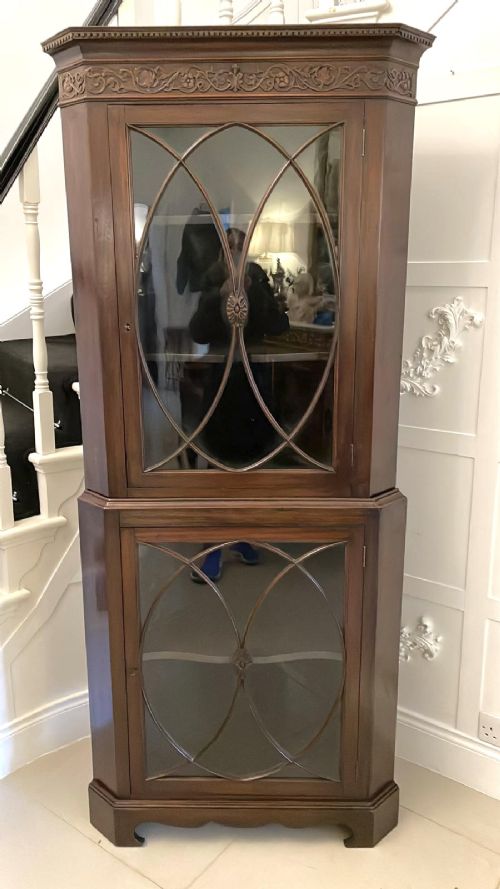
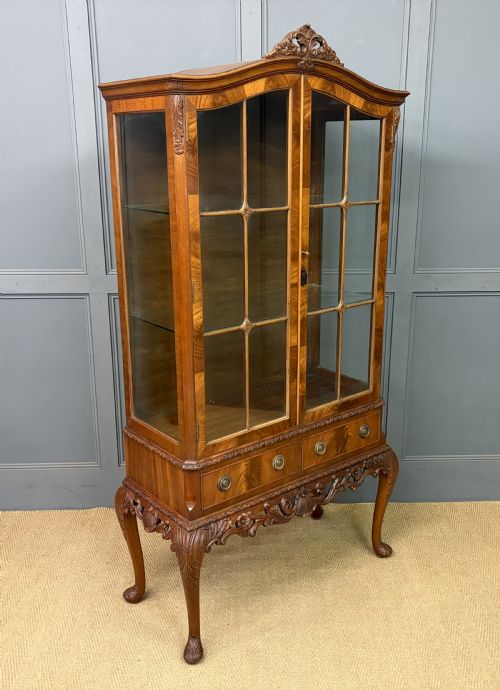
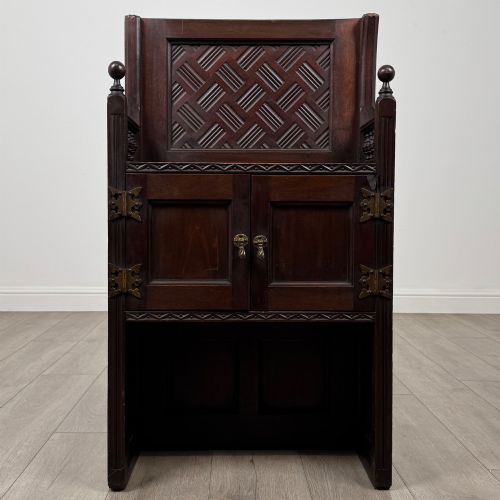
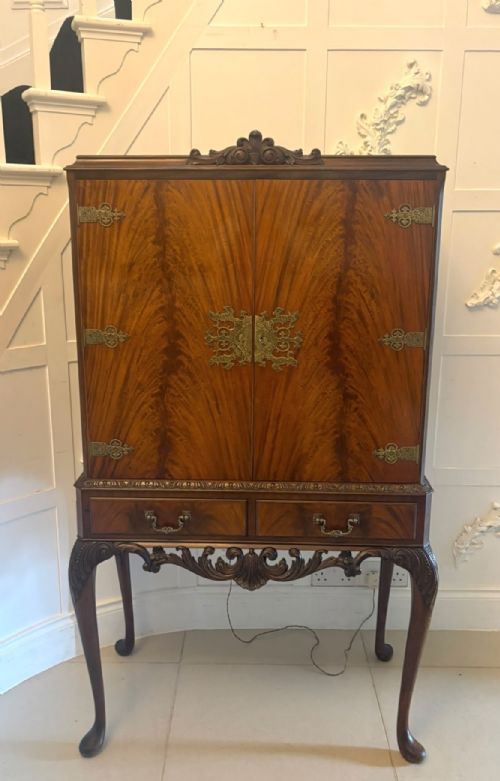
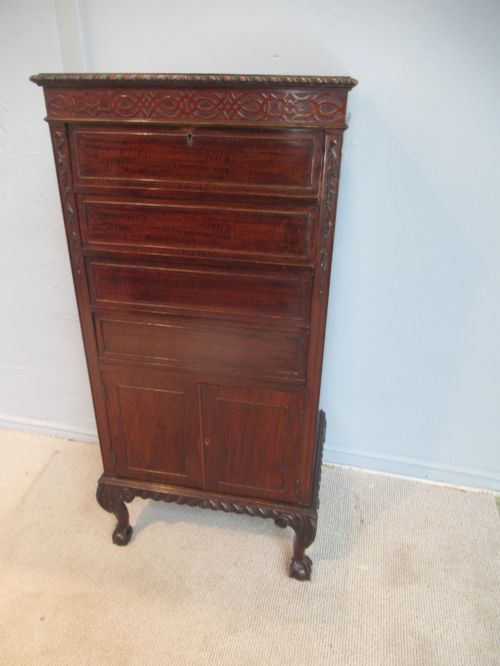
A carved mahogany cabinet on stand presents a structured case elevated on legs or a dedicated support frame, combining utility with distinct architectural presence. When searching for a carved mahogany cabinet on stand, a buyer encounters pieces originating from the nineteenth century alongside later revival interpretations.
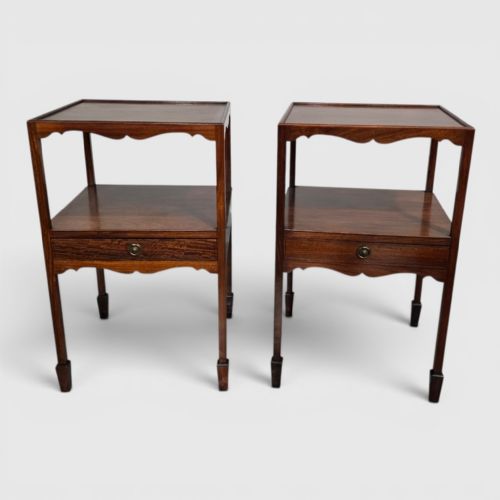
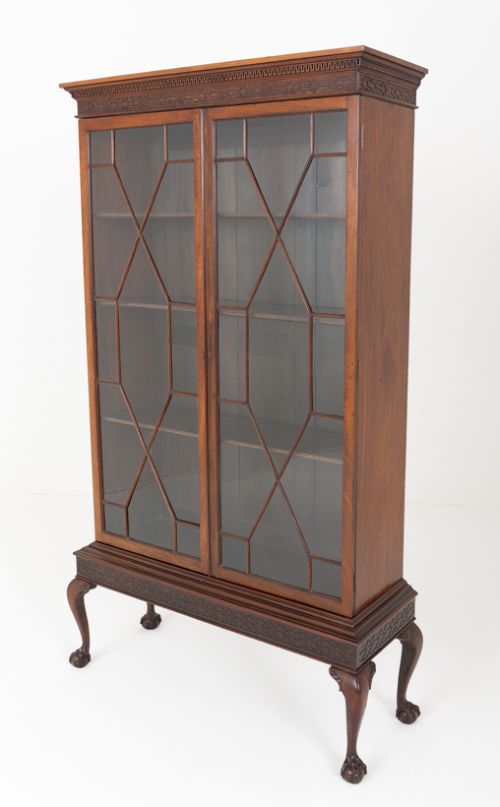
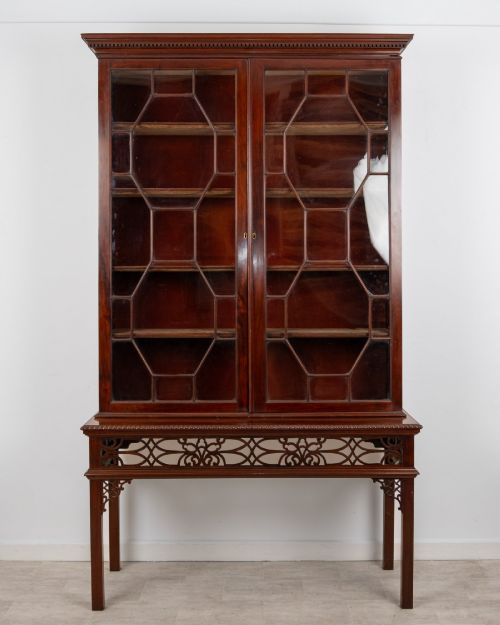
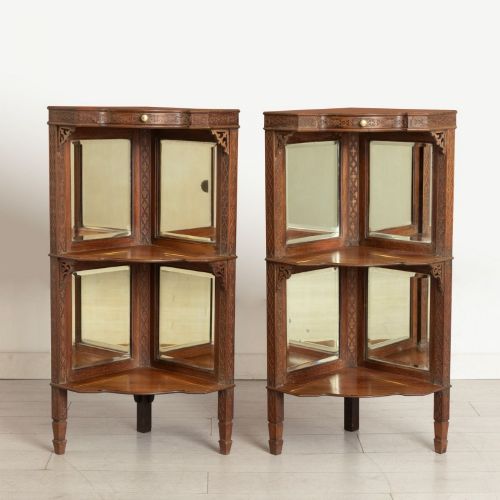
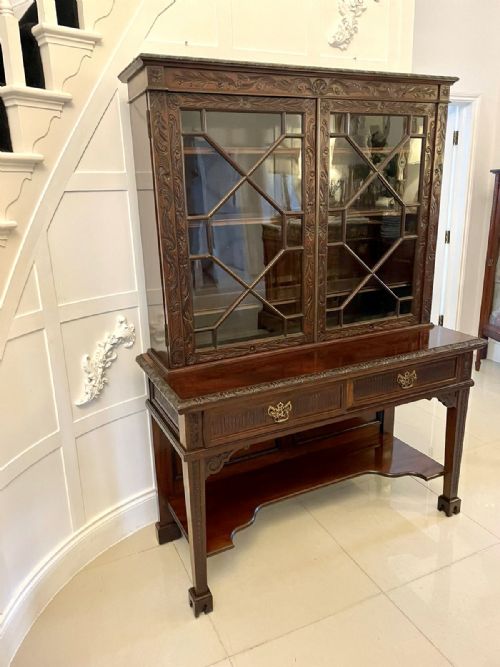
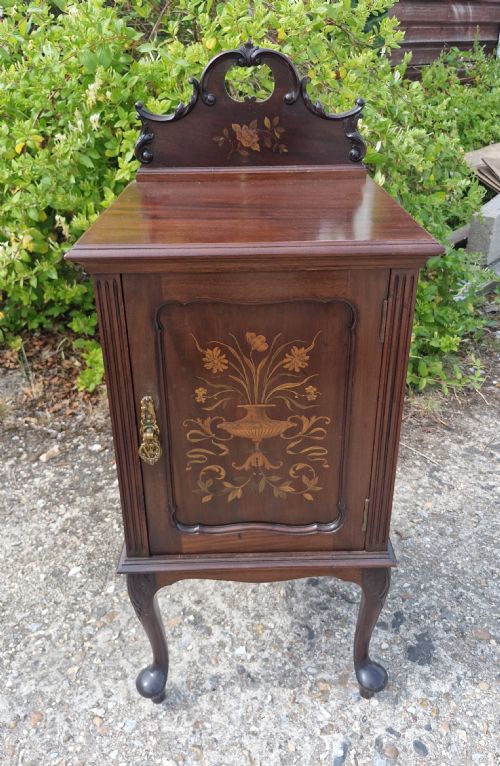
The selections span display cabinets, bookcases, and side tables that incorporate enclosed storage with raised framing. While the archive records a direct predecessor, current examples demonstrate the enduring popularity of raised mahogany forms across Victorian and Edwardian periods.
How They Were Made
Craftsmen built these pieces primarily using solid and figured mahogany, frequently enhanced by satinwood, marquetry inlay, and contrasting exotic hardwoods. Structural and decorative accents incorporated brass fittings, glass panels, mirror glass, and marble tops.
Joinery techniques supported complex silhouettes ranging from Chippendale revival fretwork to astragal glazing and carved bracket supports. Workshops shaped the dense timber by hand, applying decorative carving directly to the cabinet frames and stands.
Listings feature mahogany alongside satinwood, marble, and mirror glass across the Victorian and Edwardian periods.
What Varies in Quality
The standard of carving distinguishes superior examples, where crisp detail and depth define the ornamentation on the mahogany surface rather than flat, machine-cut moulding. Finer pieces demonstrate careful timber selection, utilising figured grain patterns that align harmoniously across doors and drawer fronts.
Construction integrity determines the strength of the joint between the cabinet body and its supporting stand, separating robust framing from weaker assemblies. The precision of glazing bars, the quality of internal fittings such as shelving, and the incorporation of secondary timbers further mark the distinction between workshops.
Denby & Spinks·Maple & Co.·Edwards & Roberts·James Winter & Sons·Waring & Gillow
The Carved Mahogany Cabinet on Stand Glossary
- Astragal
- A moulding profile used to hold glass panes within a door frame. It creates a grid pattern typical of period bookcases and display cabinets.
- Chippendale
- A style derived from mid-eighteenth-century design manuals, notable in revival pieces through fretwork, carved cabriole legs, and elaborate glazing.
- Cellarette
- A fitted subterranean or freestanding chest designed to hold bottles. It represents an evolution of secure beverage storage.
- Marquetry
- The art of applying pieces of veneer to a structure to form decorative patterns. It utilises contrasting woods like satinwood against a mahogany base.
Carved Mahogany Cabinet on Stand: Frequently Asked Questions
What is a cabinet on stand?
A cabinet on stand is a distinct furniture form consisting of an enclosed storage section supported by an open frame or legs. This elevation lifts the main body off the floor, lightening the overall visual weight.
Such pieces functioned historically to keep precious items away from damp floors while offering a comfortable height for viewing or access. The base structure ranges from simple tapered legs to elaborate carved stands.
How do I date a mahogany cabinet?
Dating relies on examining the construction methods, secondary woods, and stylistic revival influences present in the piece. Victorian and Edwardian interpretations often adapt earlier Georgian or Chippendale motifs.
Hardware fixes, drawer linings, and the type of glass used in doors provide further chronological clues. Examining the backboards and interior surfaces reveals tool marks consistent with specific manufacturing eras.
Where were these cabinets used?
These cabinets served primarily in formal reception rooms, libraries, and drawing rooms as both storage and display surfaces. They held collections of books, ceramics, and personal valuables.
In domestic interiors, raised cabinets added vertical interest without dominating the floor plan. Their glazed doors protected delicate contents from dust while maintaining visibility.
How do I care for mahogany?
Mahogany requires stable room temperatures and protection from direct sunlight to prevent the timber from drying out or fading. Regular dusting with a soft, dry cloth preserves the finish.
Applying appropriate wax sparingly maintains the lustre of the polished wood surface. Avoiding excessive moisture ensures the marquetry and veneer remain secure.