
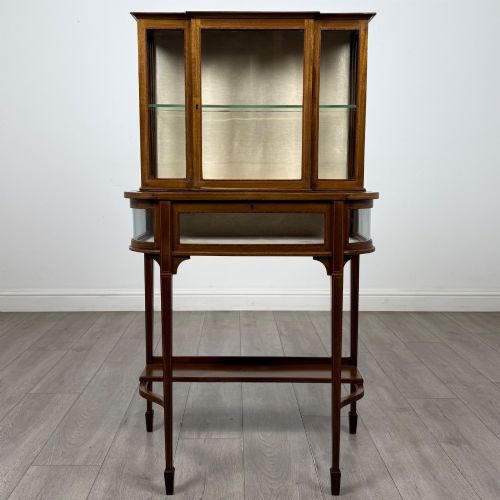
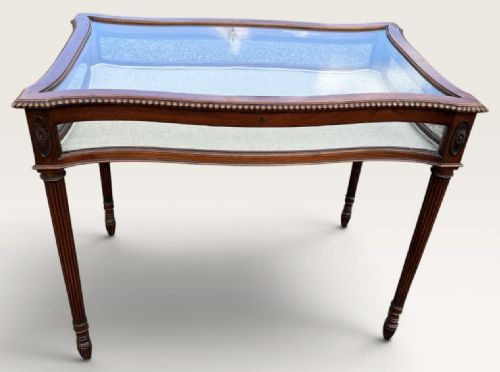
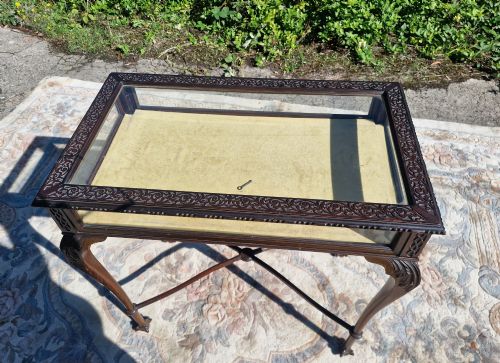
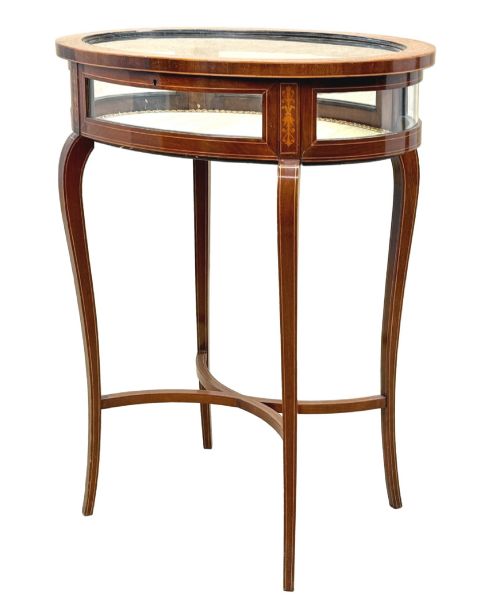


Edwardian Bijouterie Cabinet
When you search for an edwardian bijouterie cabinet, you seek a glazed vitrine designed to showcase small treasures under glass.
Edwardian Bijouterie Cabinet
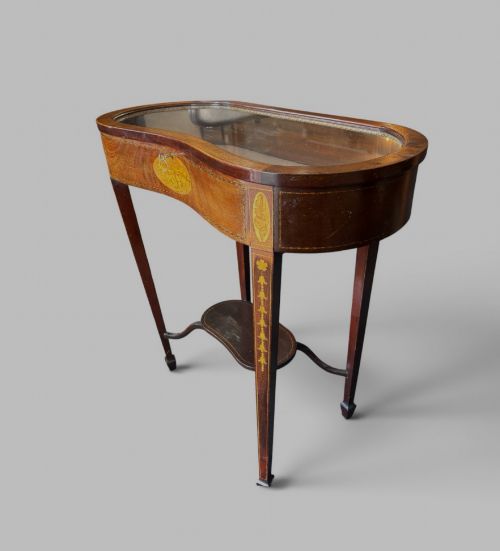
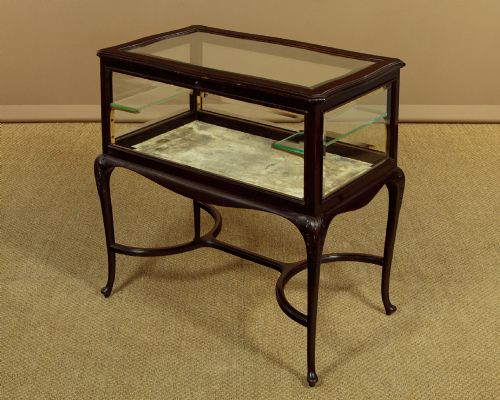
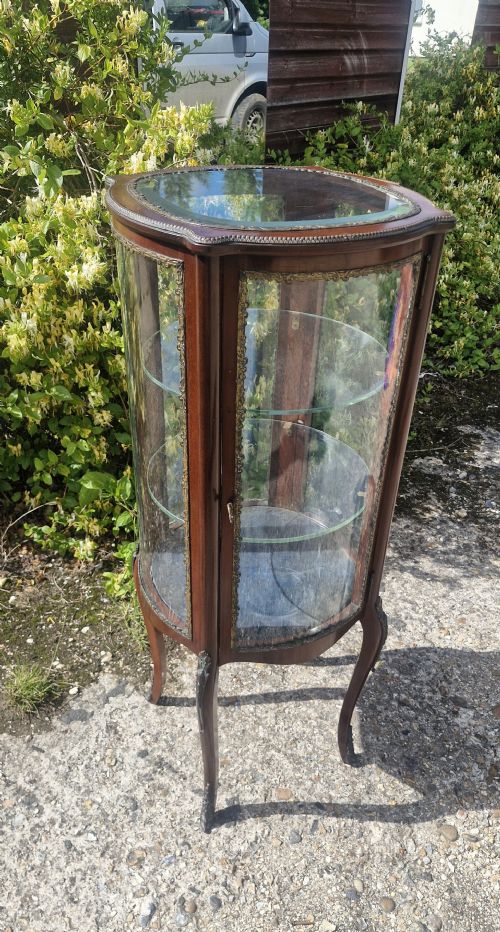
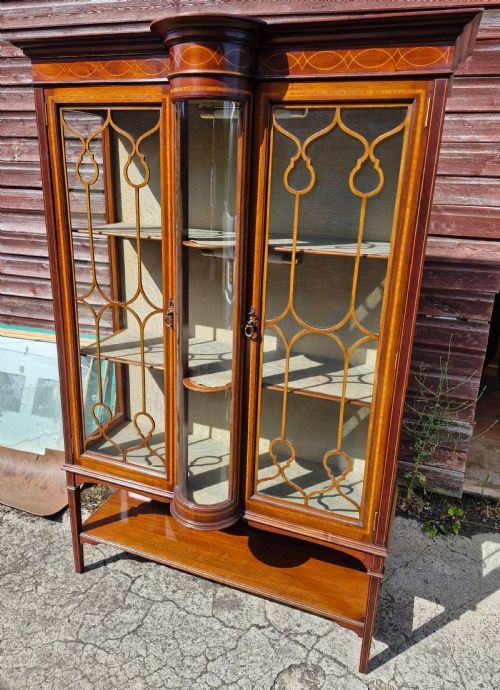
An edwardian bijouterie cabinet primarily emerges from the Edwardian era and surrounding decades, spanning late Victorian to early twentieth century production. These pieces take the form of display tables, pedestal cabinets, and glazed vitrines intended for the exhibition of personal ornaments.
The silhouettes vary from rectangular and serpentine frames to kidney-shaped and oval formats designed to sit within drawing rooms. Makers construct these display vessels to raise small collectables to eye level whilst protecting them beneath hinged or glazed lids.
Materials and Construction
Cabinet makers rely heavily upon mahogany as the primary timber, frequently enhanced with satinwood inlay, boxwood stringing, and marquetry motifs. Glass panels and glazed lids enclose the display compartment, supported by brass hinges, mounts, and velvet or fabric linings.
Structural variety includes crossbanded borders, carved mahogany frames, and occasional use of alternative woods such as kingwood, walnut, and bamboo. Joinery techniques unite glass display cases with sturdy legs, pedestal bases, or tabletop stands.
Listings demonstrate that mahogany remains the dominant timber across these display tables, frequently decorated with satinwood inlay.
Craftsmanship and Proportion
The standard of an edwardian bijouterie cabinet depends upon the precision of its inlay work, the choice of timber figuring, and the delicacy of its frame proportions. Superior examples display refined satinwood details, harmonious serpentine or kidney outlines, and intact interior fabric linings.
Lesser pieces feature simpler rectilinear construction with minimal decoration. The integration of glazed panels with sturdy yet slender cabinetry separates standard utilitarian furniture from exceptional decorative showcases.
The Edwardian Bijouterie Cabinet Glossary
- Bijouterie cabinet
- A glazed display case or table engineered specifically for showcasing small precious objects, medals, or jewellery under glass.
- Vitrine
- A glass-fronted or glass-topped cabinet utilised for displaying decorative arts and fine collectables.
- Marquetry
- Decorative woodwork where pieces of veneer are fitted into a ground to form intricate pictorial or geometric patterns.
- Satinwood inlay
- Contrasting pale timber inserted into the primary mahogany surface to create decorative borders and linear highlights.
- Serpentine shaped
- A curved furniture outline featuring a concave centre flanked by convex ends, providing fluid movement to the cabinet silhouette.
Edwardian Bijouterie Cabinet: Frequently Asked Questions
What is an edwardian bijouterie cabinet?
An edwardian bijouterie cabinet is a glazed display table or standing vitrine created during the early twentieth century to exhibit small valuables.
These pieces combine timber framing with glass panels and lined interiors to protect and display delicate collections.
How were these cabinets used?
These cabinets served as drawing room display furniture where hosts exhibited medals, miniatures, and personal trinkets to visitors.
The glazed lids and glass panels allowed guests to inspect fragile ornaments without handling them directly.
Which woods are most common?
Mahogany forms the primary structural timber for the majority of these glazed display pieces, often accented with satinwood.
Craftspersons also utilised kingwood, walnut, and bamboo alongside brass mounts and velvet or fabric interior trims.