
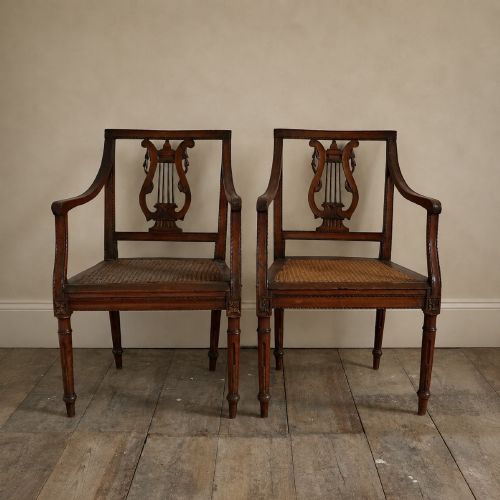
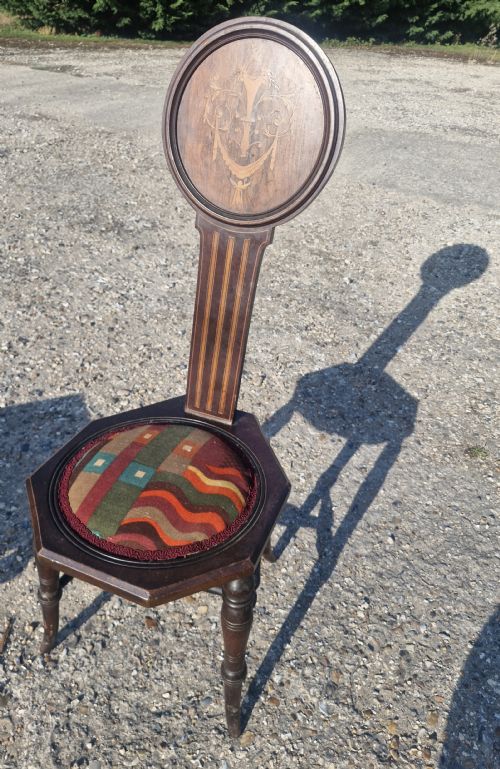
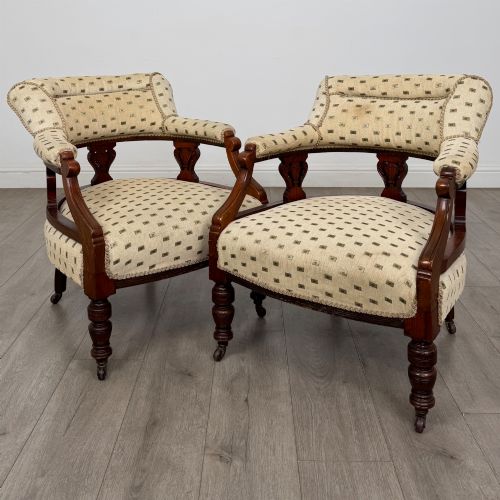
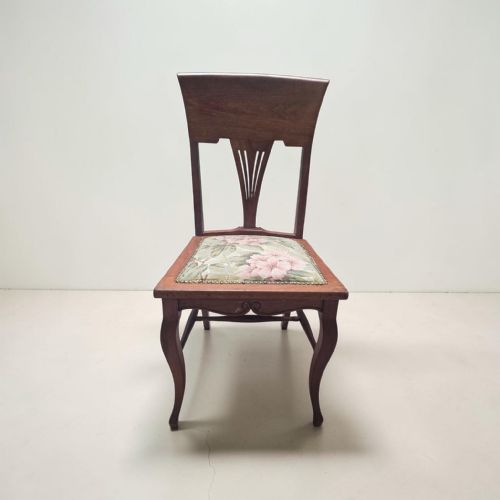
Carved Mahogany Bedroom Chair
A carved mahogany bedroom chair brings solid timber and traditional seating forms into private rooms.
Carved Mahogany Bedroom Chair
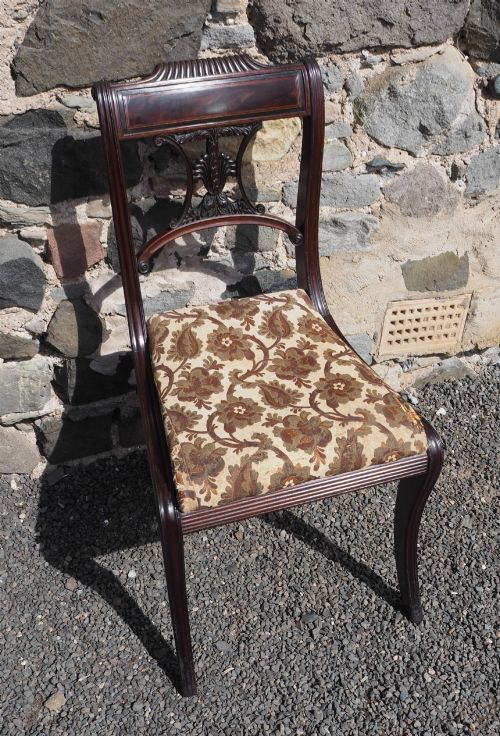
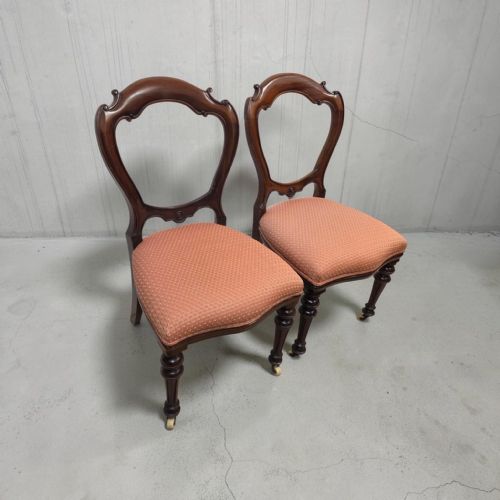
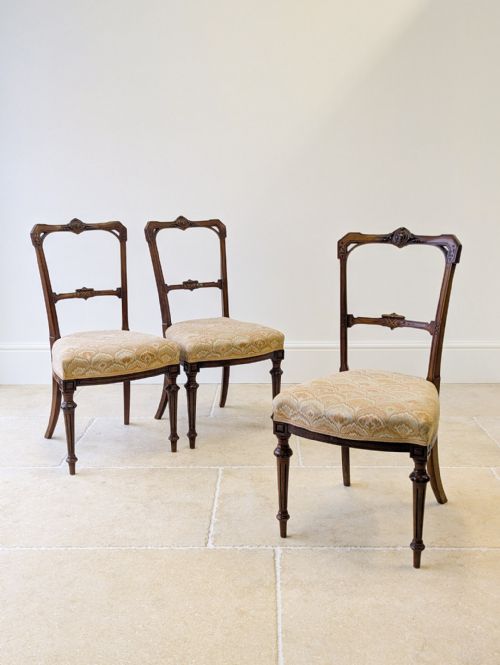
A carved mahogany bedroom chair typically appears in Victorian or Edwardian incarnations, alongside examples from the nineteenth century and the Georgian era. These pieces function as occasional seating, dressing table chairs, or lower nursing seats designed for domestic chambers.
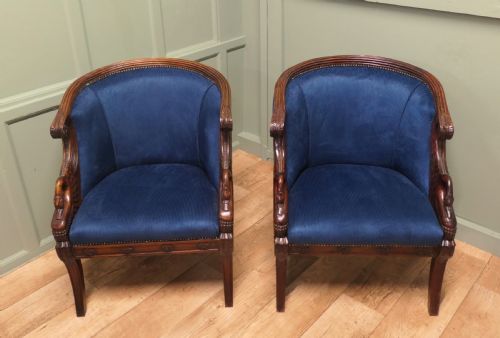
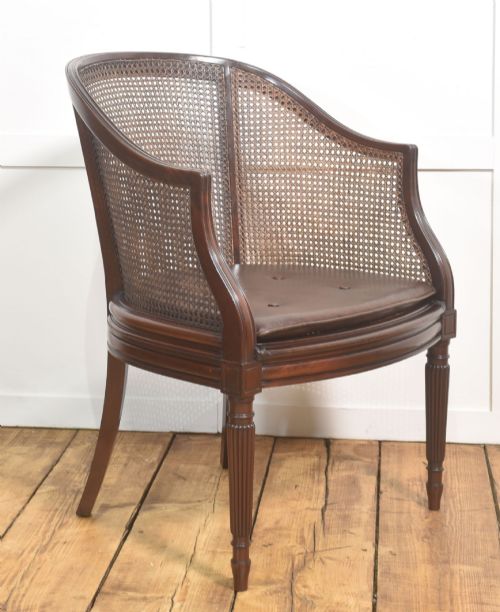
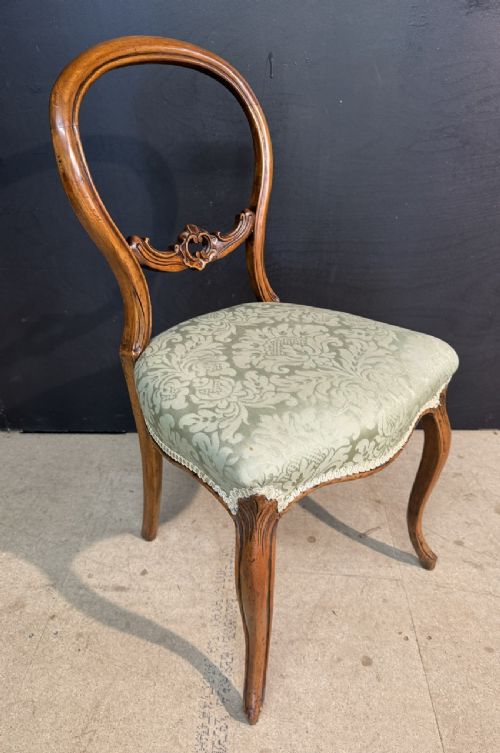
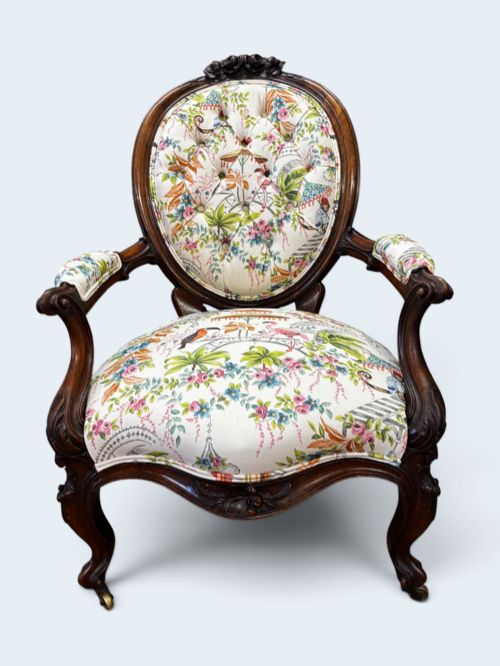
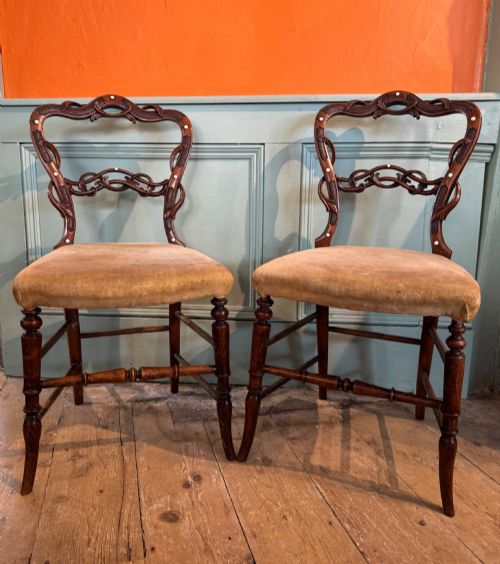
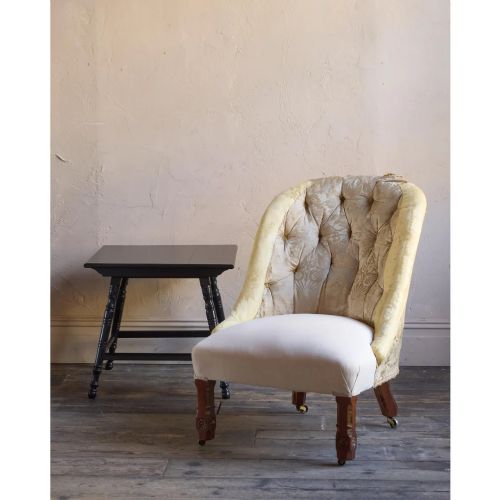
The inventory on this page ranges from balloon-back and scroll-carved forms to tub armchairs and simpler side chairs. Solid timber construction unites these items, frequently incorporating upholstery in fabric, velvet, damask, or cane seats.
Materials and Construction
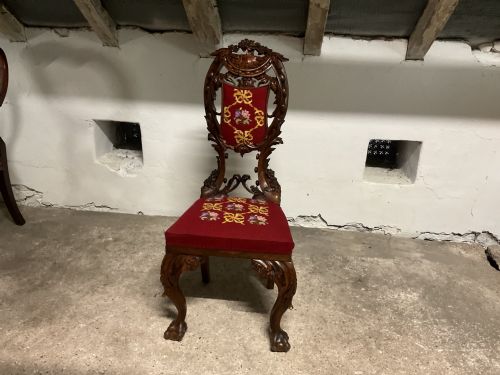
Makers shaped these items primarily from mahogany, occasionally utilising Cuban varieties, and supplemented the timber with brass fittings or inlaid details. Structural support relies on sturdy joints and carved elements such as cabriole legs or turned supports.
Upholstered variants incorporate traditional stuffing covered in textiles like velvet, damask, or standard upholstery fabric. Caning also appears as a lighter seating material, particularly in Edwardian and Regency revival pieces.
Listings feature mahogany, walnut, fabric, velvet, brass, cane, and damask across Victorian, Edwardian, and eighteenth-century periods.
Assessment of Quality
The standard of carving defines the upper tier of these pieces, distinguishing crisp, deep relief work from soft or mechanical moulding. Timber selection also matters, as dense Cuban mahogany with rich grain patterns commands greater appreciation than plain stock.
Structural integrity and the preservation of original elements dictate the worth of a chair. Pieces retaining their early upholstery fabric or cane work in sound condition reflect careful ownership over the decades.
The Carved Mahogany Bedroom Chair Glossary
- Mahogany
- A durable tropical hardwood prized for its deep reddish-brown colour and fine grain. It served as the primary material for quality cabinet making across the eighteenth and nineteenth centuries.
- Balloon-Back
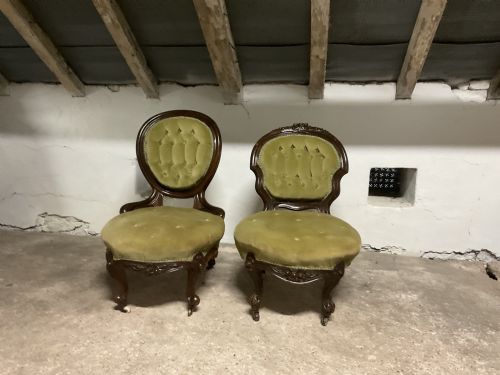
- A chair back shaped in a continuous oval curve resembling a balloon. This form became particularly popular during the Victorian period for parlour and bedroom seating.
- Tub Armchair
- A seated piece featuring a rounded back that wraps continuously into low arms. This form offers an enclosed, supportive shape often found in Edwardian examples.
- Cane
- Plant material woven into an open mesh pattern to form lightweight seats or backs. It appears frequently on Edwardian and Regency revival chairs.
- Nursing Chair
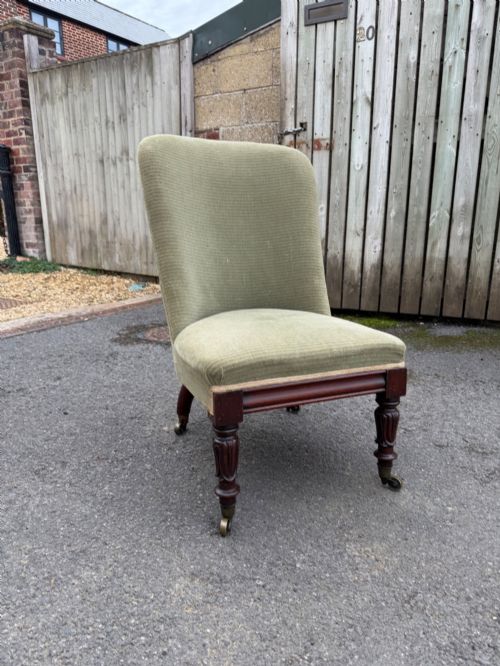
- A low-seated chair designed for comfort and close domestic tasks. These pieces often feature padded backs and shortened legs suited to bedroom use.
Carved Mahogany Bedroom Chair: Frequently Asked Questions
How do I date a carved mahogany bedroom chair?
Dating relies on stylistic markers and construction methods that align with specific eras like the Victorian or Edwardian periods. Details such as balloon backs, cabriole legs, or inlaid motifs help narrow down the decade of production.
Examining the timber and interior fixings also provides clues to the age of the piece. Comparative examples in the evidence record help confirm whether a chair originates from the nineteenth century or later.
Were these chairs used only in bedrooms?
While designated as bedroom chairs or nursing seats, these versatile pieces frequently served in dressing rooms, salons, and boudoirs. Their compact proportions made them suitable for private chambers rather than large dining spaces.
Today, owners continue to place them in bedrooms, studies, or hallways as occasional seating. Their decorative carved backs ensure they function well as standalone display items.
What is the difference between a side chair and an armchair?
A side chair is built without armrests, designed to sit neatly against a wall or at a dressing table when not in use. An armchair includes structural supports for the arms, offering a more enclosed and restful sit.
Both forms utilise carved mahogany frames and similar upholstery options such as velvet or fabric. The choice between them depends on the available floor space and the intended domestic function.
How should I care for mahogany and upholstery?
Mahogany benefits from occasional dusting with a soft cloth and treatment with appropriate furniture wax to preserve the timber finish. Direct sunlight and sudden temperature changes should be avoided to prevent wood splitting.
Upholstered sections require gentle vacuuming with a brush attachment to remove dust from fabrics like velvet or damask. Cane seats need occasional cleaning with a damp cloth to prevent the natural fibres from becoming brittle.