


Carved Lion Furniture
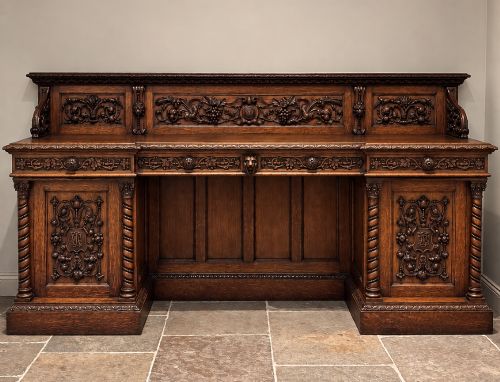
Carved lion furniture brings monumental presence and muscular animal forms into a room, featuring fierce leonine heads and paw supports across heavy timber tables and seating.
Carved Lion Furniture
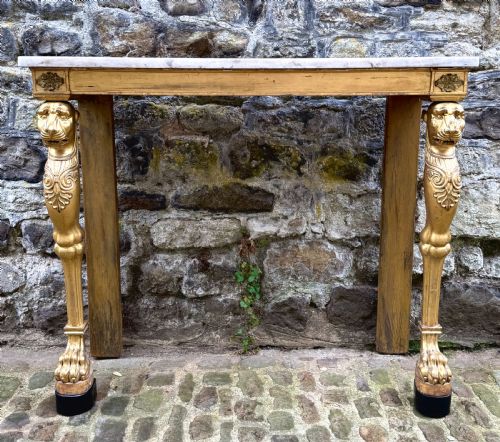
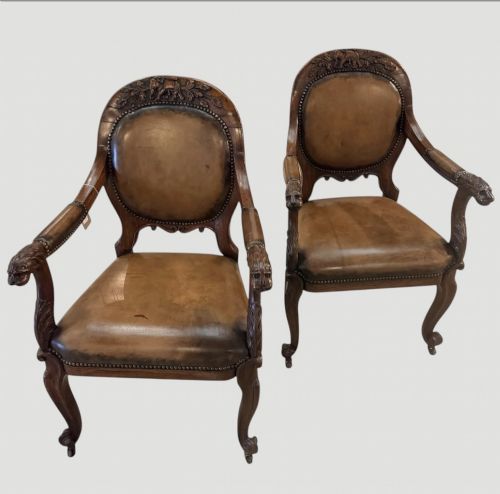
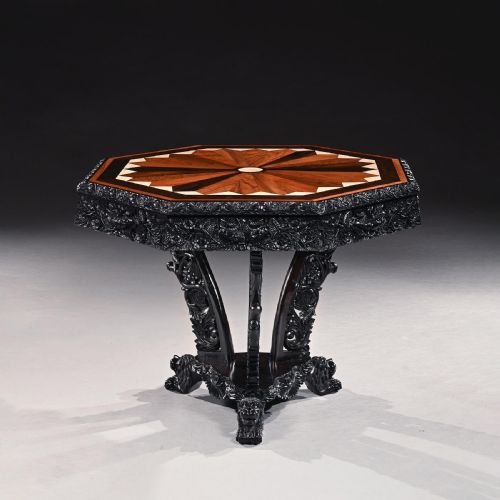
When you search for carved lion furniture, you look at robust seating, storage and tables defined by sculptural animal motifs. The pieces on this page span the Georgian, Regency and Victorian eras, alongside robust revival movements.
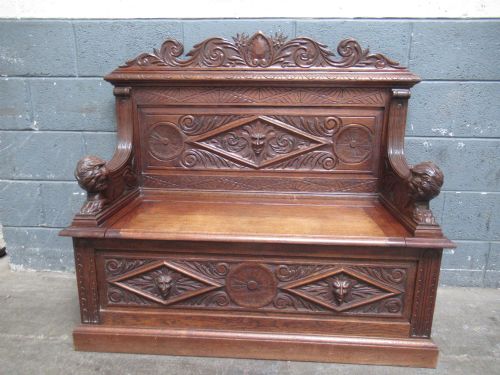
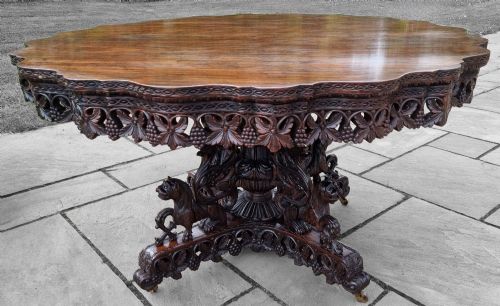
The most common forms you meet here are substantial oak benches, console tables and library armchairs. These items draw on Italian Baroque, Anglo-Indian and Gothic revival styles.
Makers utilised dense hardwoods to support deep relief carving on armrests, friezes and table supports. The resulting items anchor grand reception spaces and hallways with architectural weight.
How they were made
Cabinet makers worked primarily in solid oak, mahogany, walnut and padauk, selecting dense timbers that held crisp sculptural detail. They joined structural elements using traditional mortise and tenon joinery.
One unexpected piece wears public house sign-writing, proving that even fierce carved lions occasionally enjoyed a retirement in the local pub.
What varies in quality
The depth and animation of the carving separate standard production from exceptional artistry. Master carvers rendered anatomy with muscular tension and lifelike proportions, whereas lesser examples appear stiff and shallow.
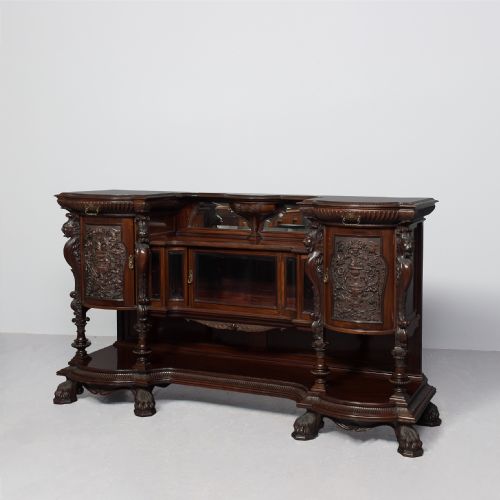
The choice of primary timber influences durability and visual depth, with dense padauk and figured mahogany holding sharper details than softer secondary woods. Integrated marble tops on console tables add substantial weight and cost.
Mack Williams And Gibton·Wylie Lockhead Manufacturers
The Carved Lion Furniture Glossary
- Console table
- A wall-mounted or freestanding table supported by sculptural legs, frequently featuring paw feet and elaborate carved friezes beneath a marble or timber top.
- Cellarette
- A lockable container designed to hold bottles of wine, often shaped like a sarcophagus and resting upon heavy carved supports.
- Padauk
- A dense, reddish-brown tropical hardwood utilised in Anglo-Indian and colonial furniture production for its ability to accept intricate carving.
- Giltwood
- Timber treated with a thin layer of gold leaf over a prepared base, commonly seen on revival console tables and frames.
- Monks bench
- A convertible hall seat featuring a hinged back that folds down to form a table surface, frequently decorated with panel carving.
Carved Lion Furniture: Frequently Asked Questions
Where did carved lion furniture originate?
The tradition draws from classical Italian Baroque and Renaissance design, later reinterpreted through British Regency, Victorian revival periods and colonial workshops.
Craftsmen adapted these powerful motifs for domestic interiors, creating imposing sideboards, console tables and library seating.
How do I identify a Victorian piece?
Victorian examples utilise heavy oak or mahogany with deep relief carving, often displaying Gothic, Jacobean or Renaissance revival influences.
Look for robust proportions, dark patination and functional forms such as hall benches, sideboards and davenport desks.
What rooms suit a console table?
Console tables function well in entrance halls and reception rooms, providing a structural surface against a wall beneath a mirror or painting.
Their heavy carved bases and marble tops demand space to anchor the room visually without crowding the floor plan.