
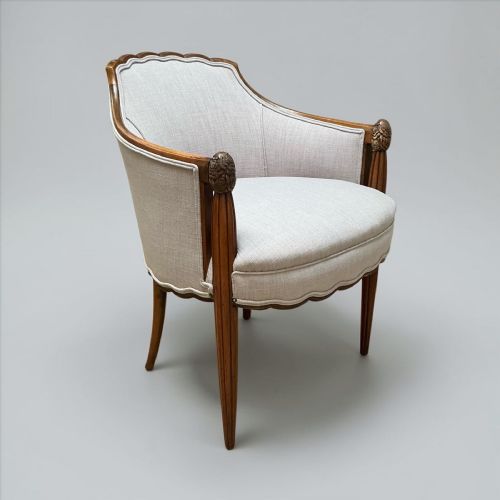
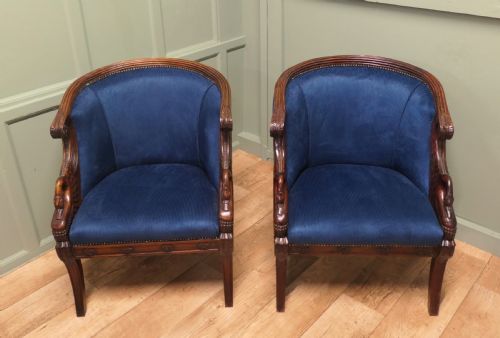
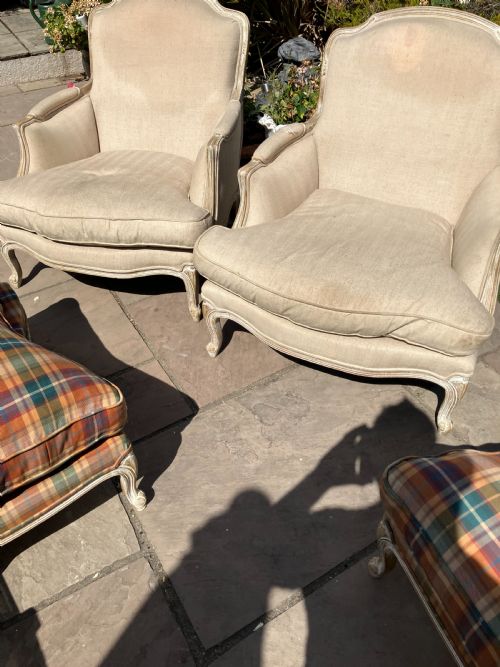
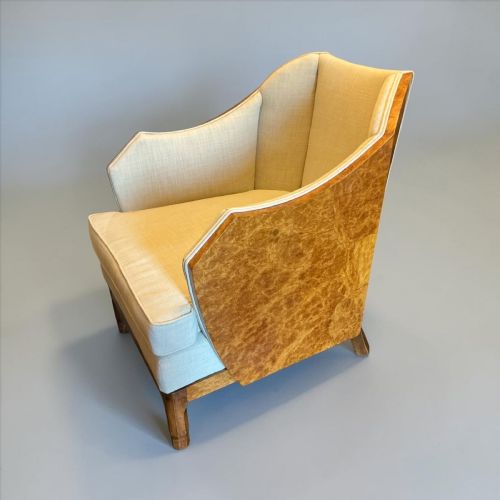
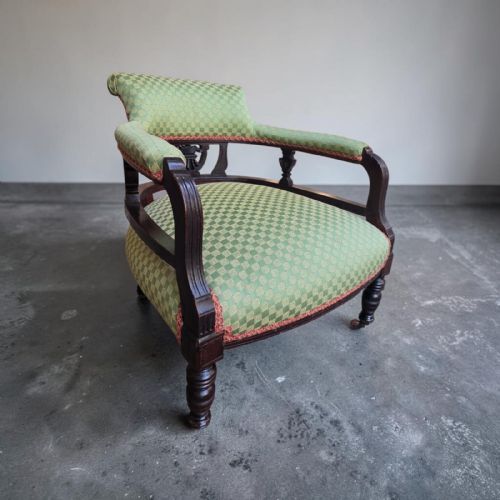
Carved Club Chair
A carved club chair brings robust nineteenth-century timber frames and deep leather seating together for serious daily comfort.
Carved Club Chair
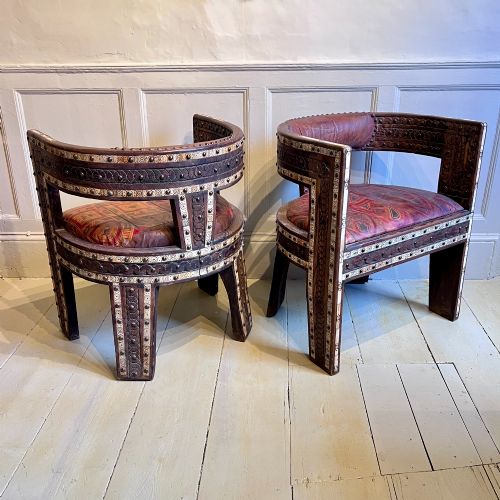
A carved club chair combines sturdy nineteenth-century framework with generous proportions designed for relaxation. The type appears in Victorian and Edwardian iterations alongside earlier stylistic revivals.
The selections span library armchairs, spoon backs, and wing chairs with substantial wooden structures. Mahogany, oak, and walnut provide the structural support for these heavy seats.
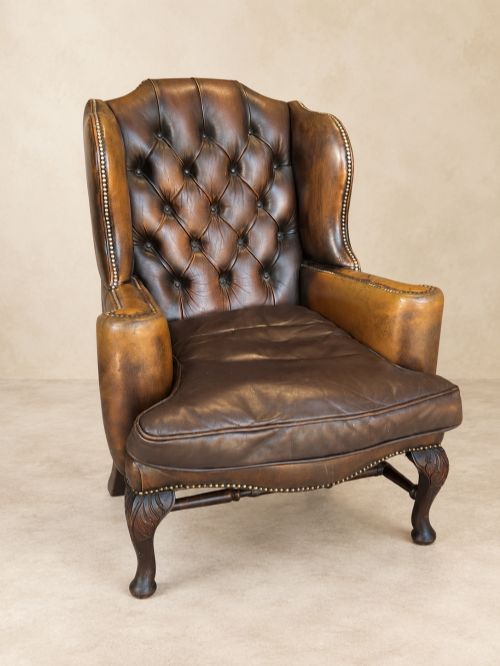
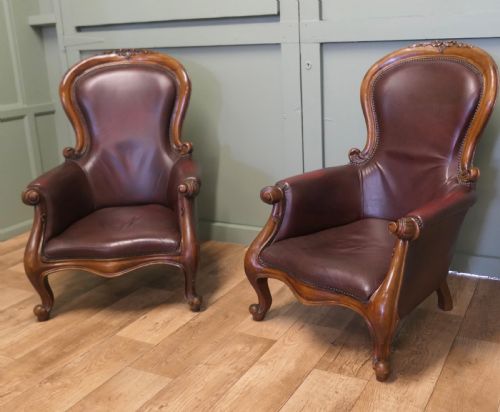
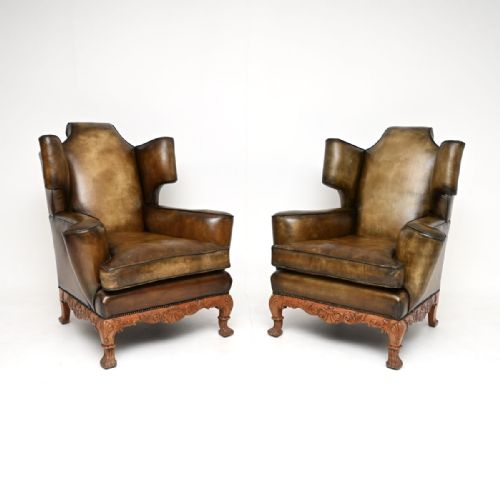
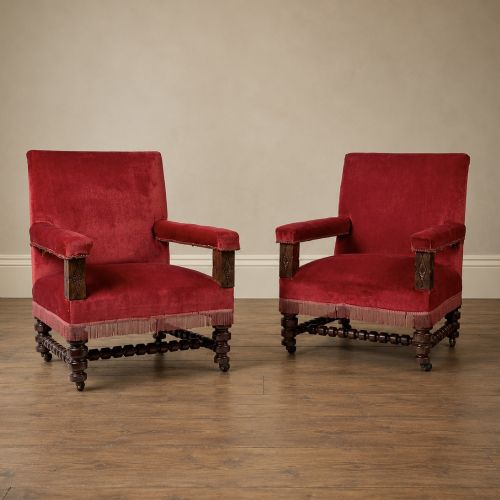
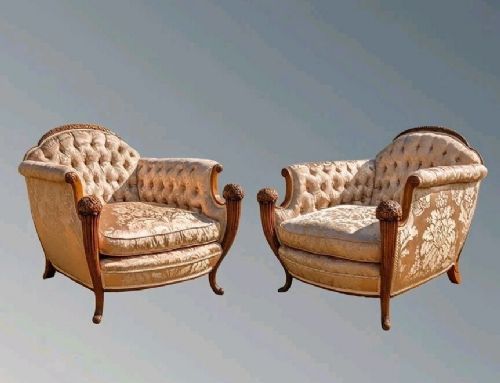
Leather upholstery dominates the archival and current examples, though velvet and cane also surface. Many pieces feature deep buttoning or carved detailing on the arms and legs.
Construction and materials
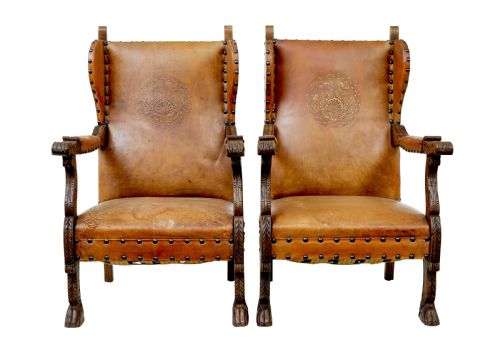
Makers utilised dense hardwoods such as mahogany, oak, walnut, and rosewood for the structural frames. These timbers permitted deep relief carving, particularly around the lion head motifs and arm terminals.
Upholstery relied on supportive internal webbing, horsehair stuffing, and heavy top covers in leather or woven fabric. Brass tacks frequently secure the leather edges to the wooden rails.
Several armchairs boast fierce carved lion heads on the arm terminals to guard the sitter from interruptions.
Assessing quality
The crispness of the timber carving distinguishes finer workshop output from standard production. Deeply undercut details on mahogany or oak show superior hand-tool work by skilled cabinet makers.
The integrity of the frame joints and the quality of the leather hide dictate longevity. Thick, supple leather patinates well with age, whereas inferior replacements lack proper grain texture.
Whytock And Reid·Howard And Sons
The Carved Club Chair Glossary
- Bergere
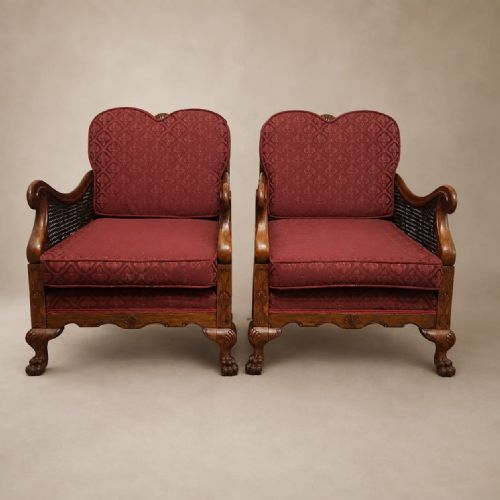
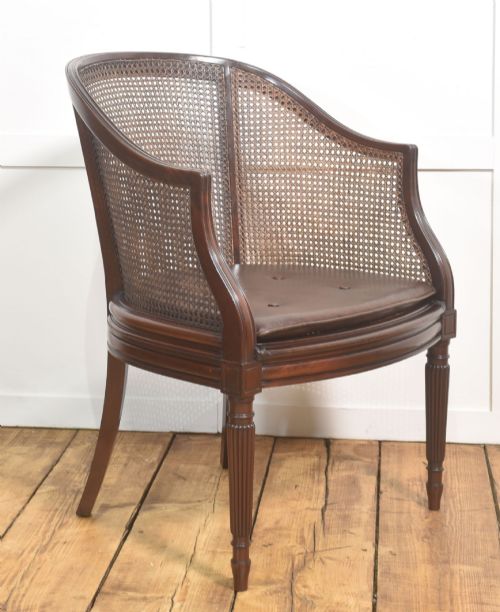
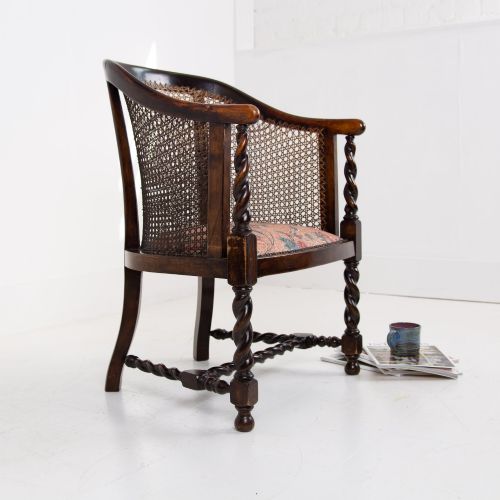
- An enclosed armchair with cane webbing panels set into the wooden frame. This French seating style became popular in various Edwardian and Victorian interpretations.
- Spoon back
- An upholstered chair back shaped in a concave oval to resemble the bowl of a spoon. The profile provides ergonomic support for the spine.
- Tub chair
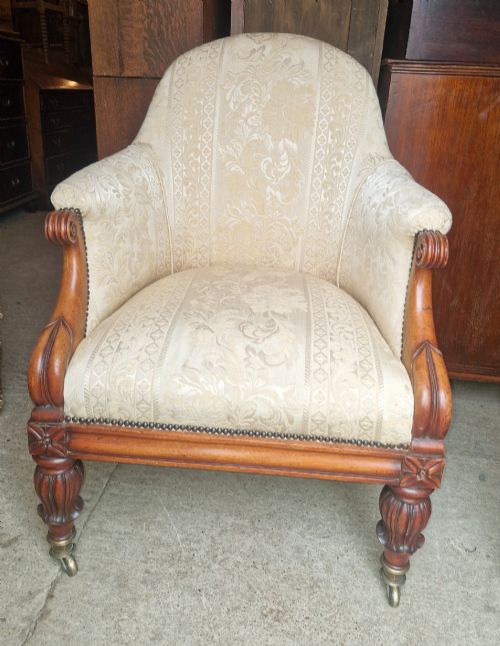
- A curved upholstered armchair where the arms rise continuously from the seat to form a semicircular back. These compact seats often feature exposed mahogany or walnut frames.
- Library armchair
- A heavy, durable seat designed for prolonged reading in private studies. They frequently incorporate leather upholstery and substantial carved timber arms.
- Gothic revival
- An architectural and decorative style drawing on medieval forms. Pieces display pointed arches, heavy oak construction, and ecclesiastical motifs.
Carved Club Chair: Frequently Asked Questions
What defines a carved club chair?
A carved club chair is a heavily built nineteenth-century seat featuring exposed wooden frames with decorative relief work. They prioritise robust construction and deep upholstered comfort.
Most examples employ mahogany, oak, or walnut paired with leather or heavy fabric. Their proportions make them suited for studies, libraries, and large living spaces.
How do I care for antique leather?
Antique leather requires occasional conditioning with specialist wax to prevent the hide from drying and cracking. Avoid placing these chairs near direct heat sources or strong sunlight.
Dust the frames gently and check the internal webbing periodically for slackness. Proper maintenance preserves the natural patina developed over decades of use.
Are these chairs comfortable for daily use?
Most library and club chairs were engineered for extended reading sessions, offering generous seat depths and supportive backs. Their traditional sprung interiors provide firm yet yielding support.
Upholstered versions with horsehair stuffing adapt well to regular sitting. Pairing them with an appropriate footstool enhances their ergonomic practicality.
How can I distinguish Victorian from Edwardian pieces?
Victorian iterations generally display heavier timber frames, darker finishes, and dense carving such as lion heads or floral motifs. Buttoned leather and deep proportions are common hallmarks of this era.
Edwardian designs tend to exhibit lighter mahogany or walnut frames with subtler decorative elements. Cane panels and satin birch inserts also appear more frequently in later Edwardian seating.