
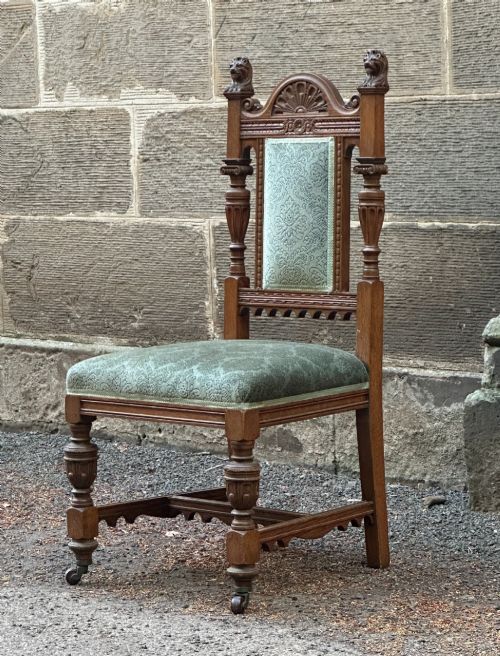


Lion Head Chair
A lion head chair brings carved dignity to a room, grounding seating in nineteenth-century strength and classical form.
Lion Head Chair
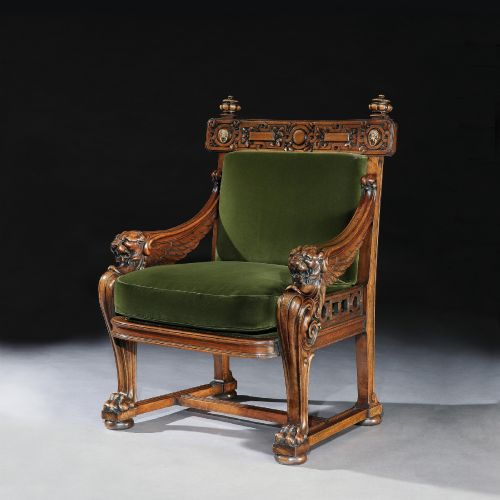
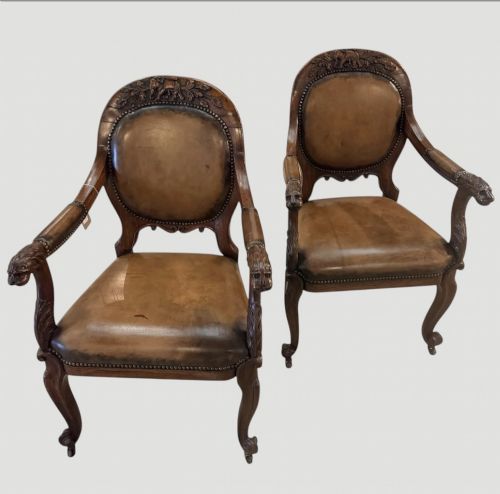
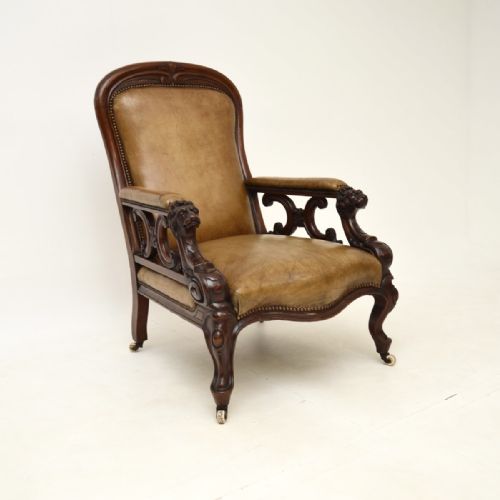
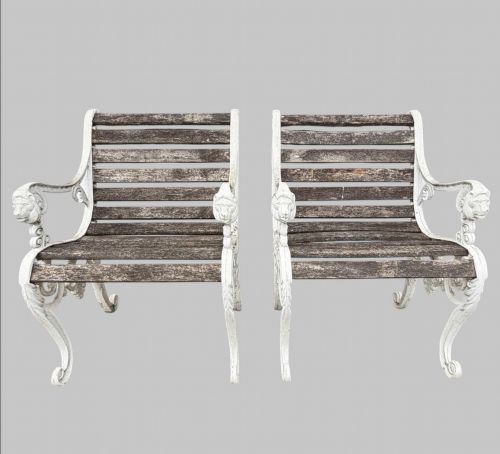
A lion head chair is a seating form defined by carved leonine terminals on the arms or supports. When searching for a lion head chair, buyers encounter heavy nineteenth-century library armchairs, oak throne seats, and occasional garden pieces.
The selections span Victorian, Regency, and Gothic Revival styles, utilising rich timbers like mahogany, oak, and walnut. Many examples incorporate leather upholstery, brass details, and robust carved frames suited for studies or principal rooms.
How they were made
Metal components also appear, including cast iron for garden armchairs and brass or parcel-gilt highlights on Regency library seats. Wood surfaces receive traditional polishing to accentuate the grain of the walnut and mahogany.
Listings feature oak, mahogany, walnut, and cast iron, spanning the Regency and Victorian periods through to Arts and Crafts designs.
What varies in quality
The depth and animation of the wood carving dictate the distinction between standard production and master craftsmanship. Crisp detailing in the lion's muzzle, eyes, and mane separates exceptional library armchairs from simpler provincial seating.
Timber selection and the integrity of the underlying frame structure further define the grade of the piece. Heavy oak throne chairs and mahogany library suites rely on solid construction and well-preserved original leather or textiles to sustain their character.
Thomas Hope·Bruce Talbert·Gillows·George Smith
The Lion Head Chair Glossary
- Monopodia
- A furniture support shaped like a single animal leg, often ending in a paw or claw. This classical feature appears on nineteenth-century library armchairs.
- Fauteuil
- An open-framed armchair with upholstered armrests, typical of French seating designs. These pieces often feature carved wooden frames.
- Curule stool
- A cross-framed stool based on ancient Roman magistrate seats. They frequently display gilt or carved wooden X-frames.
- Gothic Revival
- A nineteenth-century design style drawing on medieval architecture and motifs. Pieces in this manner display pointed arches and heavy structural oak.
- Library chair
- A substantial armchair built for reading rooms and studies, usually upholstered in leather. They offer wide arms and robust wooden frames.
Lion Head Chair: Frequently Asked Questions
Where should I place a lion head chair?
These commanding seats suit studies, libraries, and principal living spaces where their substantial wooden frames and carved arms can anchor the room. They pair naturally with large wooden desks and traditional interior schemes.
Because many examples feature dark oak, mahogany, or rich leather, they require adequate floor space to showcase their detailed carving without crowding surrounding furniture.
Are these chairs comfortable for daily use?
Library armchairs and club chairs offer deep, upholstered seats designed for sustained reading and relaxation. Their robust construction supports comfortable daily sitting.
Stiff hall chairs and decorative throne seats, conversely, prioritize upright posture and formal presentation over cushioned ease.
How do I identify a Victorian lion head chair?
Victorian examples frequently combine dark carved oak or mahogany with button-tufted brown leather upholstery. Look for heavy proportions and elaborate foliate carving accompanying the lion terminals.
They often date from the mid to late nineteenth century, reflecting the period's preference for historical revival styles.
What is the difference between Regency and Victorian styles here?
Regency pieces often draw on classical antiquity and Egyptian revival motifs, utilising parcel-gilt, bronzed finishes, and graceful monopodia supports after designers like George Smith and Thomas Hope. Victorian versions tend to be heavier, employing dark carved oak and substantial leather upholstery.
Regency seating favors refined classical lines, while Victorian examples emphasise robust ornamentation and comfort.