
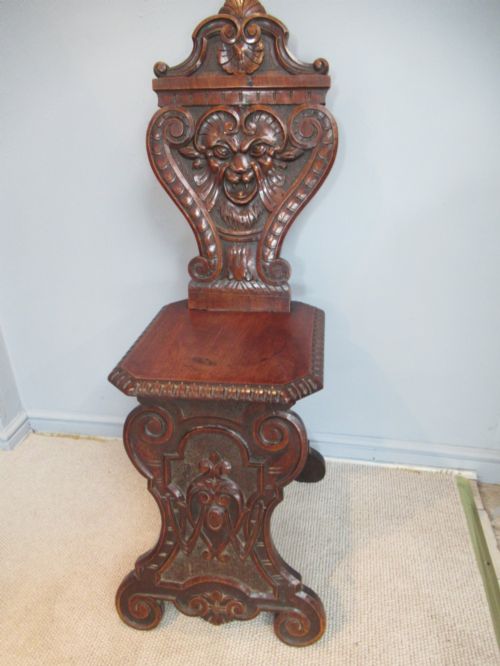
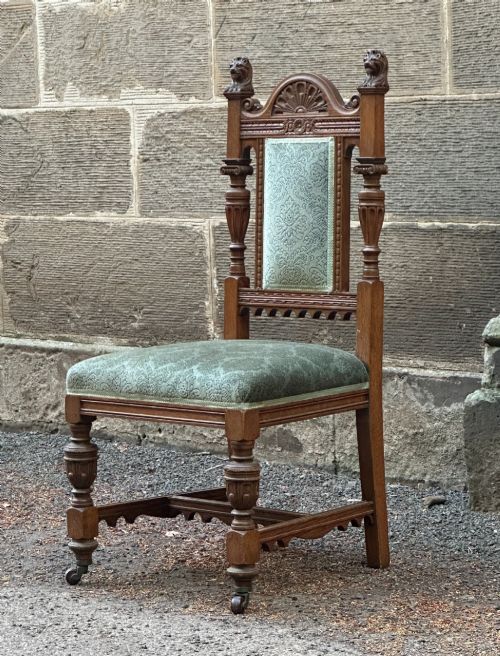


Carved Lion Chair
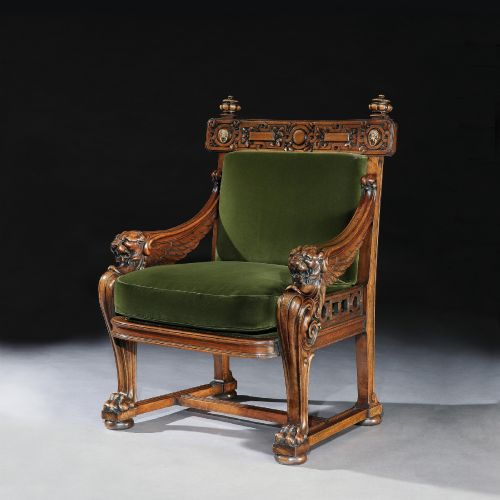
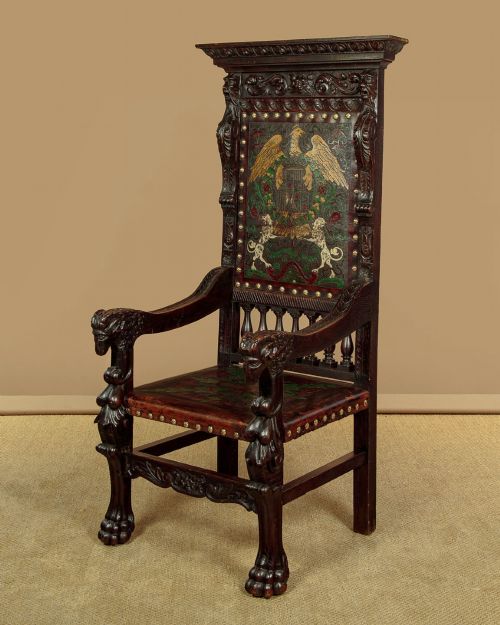
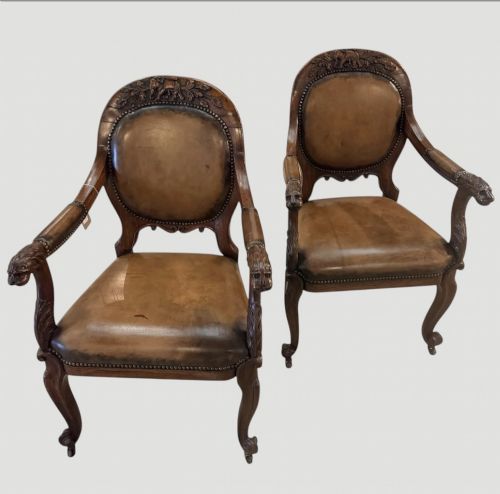
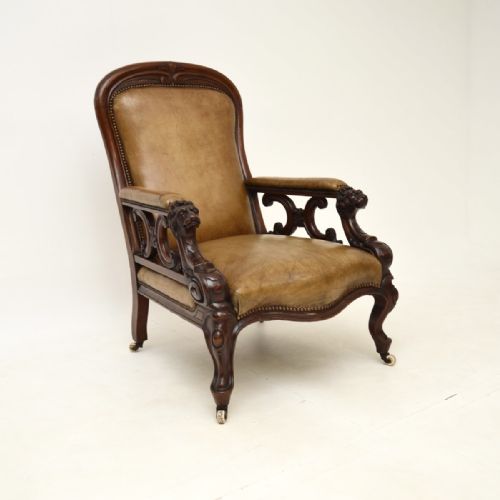
A carved lion chair brings heavy nineteenth century timber and carved feline authority straight into a room.
Carved Lion Chair
When you search for a carved lion chair, you are looking at substantial nineteenth century seating featuring carved feline heads, paws, or monopodia terminals. These pieces appear primarily as Victorian library armchairs, oak throne chairs, and hall seats, drawing upon Renaissance Revival and Gothic Revival idioms.
The version you are most likely to meet on this page is the Victorian carved oak library armchair, often upholstered in brown leather and supported by prominent lion head armrests or monopodia legs. Pieces range from sturdy regional hall seating to grand Anglo-Indian and continental walnut library chairs.
Makers and designers from Thomas Hope to Gillows influenced this heavy seating tradition, where carved wooden beasts project dignity and formal weight. These chairs were built for principal rooms, studies, and libraries where domestic architecture matched their solid proportions.
Materials and construction
Cabinetmakers constructed these frames predominantly in solid oak, walnut, and mahogany, utilising dense hardwoods capable of supporting deep hand-carving. Oak holds crisp architectural detail in Gothic and Renaissance revival pieces, while walnut and mahogany permit smoother contours on arm terminals and leonine feet.
Upholstery relies on traditional horsehair stuffing secured over coil springs, finished with nailed brown leather, velvet, or heavy woven fabric. Carved elements such as lion masks and monopodia supports are integral parts of the timber frame rather than applied ornaments.
Object forms range from library armchairs and hall seats to monks benches, throne chairs, and revolving grotto stools.
What separates the best from the rest
Proportion and structural integrity dictate the upper tier of these seats, particularly in heavy throne chairs and library armchairs where joints bear constant weight. Original leather upholstery with period brass tacking or well-matched replacement hide separates superior survivals from compromised frames.
Thomas Hope·Gillows·C Hindley & Sons·Bruce Talbert
The Carved Lion Chair Glossary
- Monopodia
- A furniture support formed of a single animal leg and foot, often terminating in a lion's paw. This classical motif appears frequently on Regency and nineteenth century library armchairs.
- Throne chair
- A high-backed, imposing seat designed with architectural authority, usually carved from solid oak. These pieces often incorporate heraldic motifs or prominent lion masks along the armrests.
- Fauteuil
- An open-armed wooden armchair with upholstered back and seat, originating in France. Nineteenth century iterations frequently incorporate carved wooden arms and animal terminals.
Carved Lion Chair: Frequently Asked Questions
Where were carved lion chairs used?
These imposing seats were traditionally placed in libraries, morning rooms, and entrance halls where their heavy timber construction commanded authority.
They functioned as practical seating for reading or reception, while visually reinforcing the status of the room through carved feline symbolism.
How do I date a carved lion chair?
Dating relies on timber selection, structural joinery, and the specific stylistic revival movement evident in the carving.
Victorian pieces typically employ solid oak with deep relief carving, whereas early nineteenth century examples often favour mahogany or rosewood with classical monopodia supports.
Are these chairs comfortable for daily use?
Library armchairs and club chairs offer deep, spring-loaded seating upholstered in leather, making them practical for everyday sitting.
Throne chairs and hall seats are stiffer and more upright, designed for formal posture rather than relaxed lounging.
How should I care for the leather and wood?
Maintain the timber by feeding the surface with appropriate wax polish to prevent the grain from drying out in heated rooms.
Treat leather upholstery with specialised balm to preserve suppleness and prevent the historic hide from cracking.