



Carved Light Oak Table
A carved light oak table brings pale warmth and heavy relief-carving into a room, offering practical surface space rooted in historic revival styles.
Carved Light Oak Table
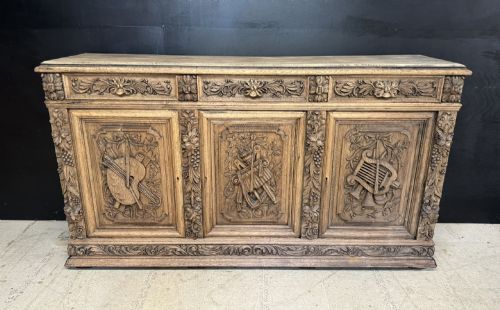
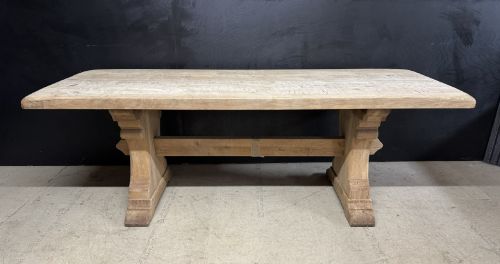
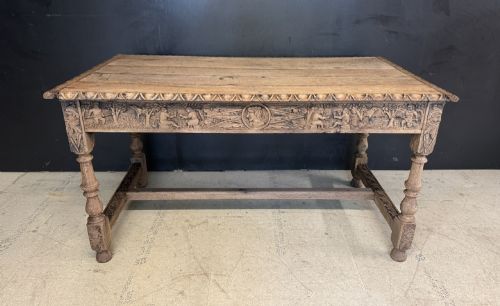
A carved light oak table encompasses dining tables, side tables, refectory tables, and console tables originating from the nineteenth and early twentieth centuries. These pieces appear in lighter blonde tones, bleached finishes, and traditional golden hues, reflecting revival movements rather than raw antiquity.
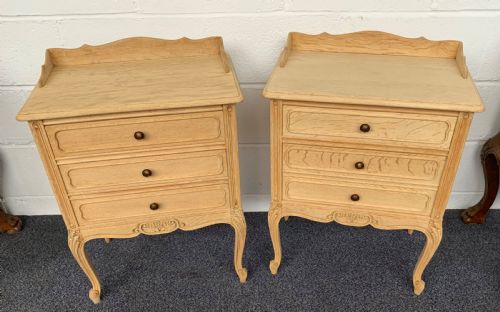
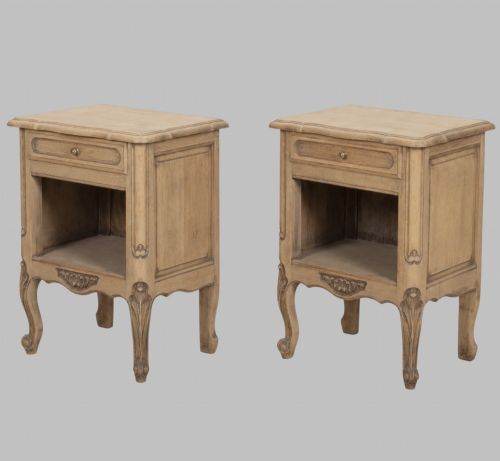
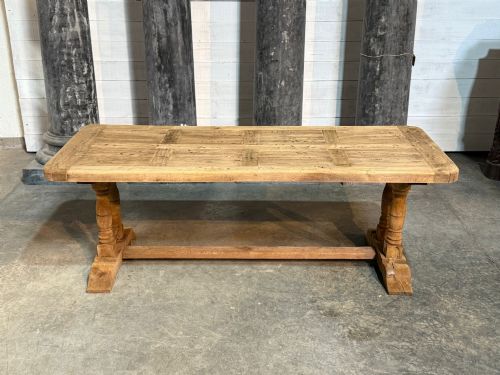
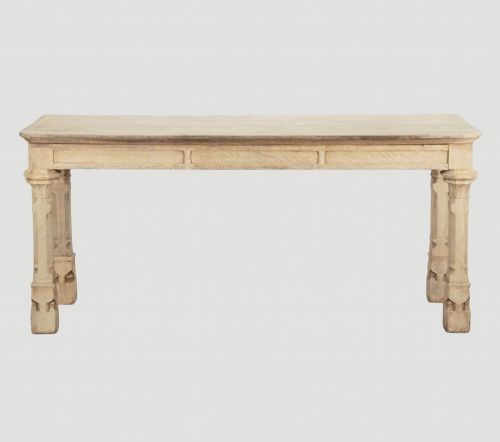
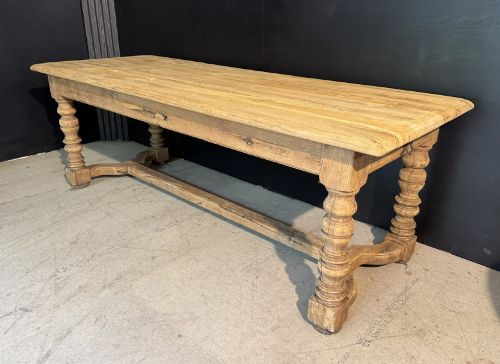
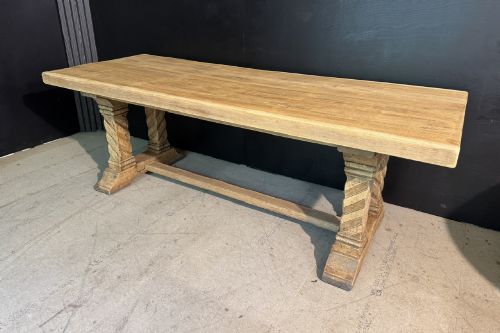
The selection ranges from French farmhouse dining surfaces to Jacobean Revival side tables and Gothic-influenced centre tables. Buyers find both long refectory formats and compact occasional tables suited to modern domestic spaces.
Origins stretch across English workshops and French provincial makers, alongside pieces marked by Arts and Crafts sensibilities. The common thread is the presence of figured grain paired with sculptural carved detail.
Materials and construction
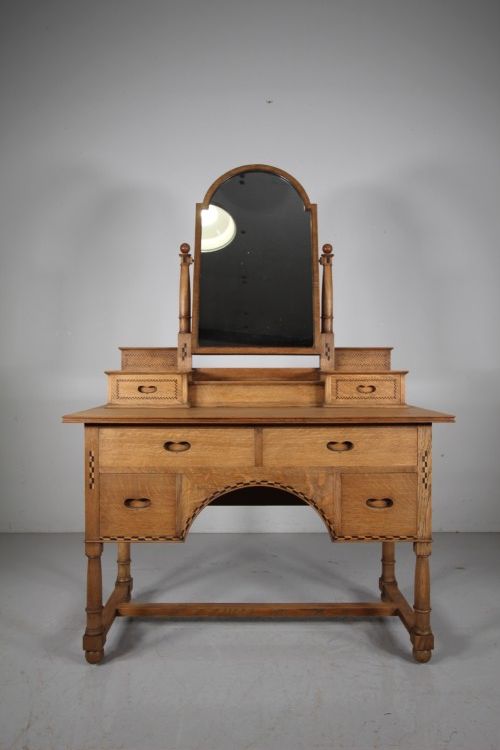
Solid oak provides the structural foundation for these pieces, often manipulated through bleaching or lime-washing to achieve the paler tones popular in Edwardian and later periods. Secondary materials such as brass fittings, iron hardware, and occasional leather or fabric inserts appear on desks and metamorphic designs.
Joinery relies on traditional methods including draw-leaf mechanisms, peg construction, and parquetry tops built to withstand heavy daily use. Hand-carved relief work defines the borders, legs, and aprons, utilising motifs drawn from Jacobean, Gothic, and Renaissance revivals.
Listings feature solid oak combined with brass and glass, spanning nineteenth-century Gothic Revival and early twentieth-century French provincial aesthetics.
What separates the grades
The depth and clarity of the hand-carving dictate the artistic merit of each piece, distinguishing sharp, purposeful chisel work from softer, mechanical reproduction. Crisp relief on the frieze and legs elevates a table above standard utility furniture.
The treatment and condition of the timber matter significantly, with intentional bleaching or natural patination maintaining the integrity of the grain without masking the underlying character of the solid oak.
The Carved Light Oak Table Glossary
- Bleached oak
- Timber treated to lighten its natural colour, producing the pale blonde finish seen on many early twentieth-century French and English pieces.
- Draw leaf table
- A dining table equipped with sliding extension leaves stored beneath the main surface, allowing the length to expand easily.
- Jacobean Revival
- A nineteenth-century style emulating seventeenth-century English furniture, characterised by heavy turnings, geometric mouldings, and deep panel carving.
- Refectory table
- A long, narrow dining table historically used in communal dining halls, distinguished by sturdy legs connected by low stretchers.
- Parquetry
- Geometric mosaic woodwork arranged in patterns across a table top, creating visual texture through contrasting wood grains.
Carved Light Oak Table: Frequently Asked Questions
How do I clean a bleached oak table?
Dust regularly with a dry, soft cloth to prevent grit accumulation in the carved recesses. Avoid silicone-based polishes that can seal the grain and alter the pale tone.
For stubborn marks, wipe gently with a damp cloth using mild soap, drying the surface immediately to protect the wood fibres.
Are these tables suitable for daily dining?
Solid oak construction provides the durability required for everyday family meals. Tables featuring draw-leaf mechanisms offer flexibility for hosting guests.
Use coasters and placemats to protect the historic wax or French polish finishes from heat and moisture rings.
How do I identify the period of the carving?
Nineteenth-century pieces often display Gothic Revival or Renaissance Revival influences with deep, dramatic relief. Early twentieth-century examples tend toward lighter bleached finishes and cleaner Jacobean Revival lines.
Tool marks and the uniformity of the grain help separate genuine period work from later interpretations.
Will a light oak table fit a modern interior?
The pale blonde and bleached finishes reflect contemporary design preferences for bright, neutral spaces. The natural warmth of the wood grounds minimal rooms without overwhelming them.
Compact side and console tables integrate smoothly into hallways and living areas where heavy dark timber might feel imposing.