
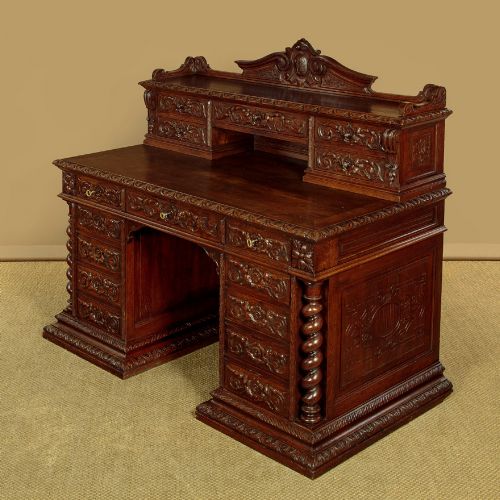


Gothic Revival Study Desk
These gothic revival study desk pieces bring heavy architectural forms and deep timber into a room, offering a functional workspace with distinct historical weight.
Gothic Revival Study Desk
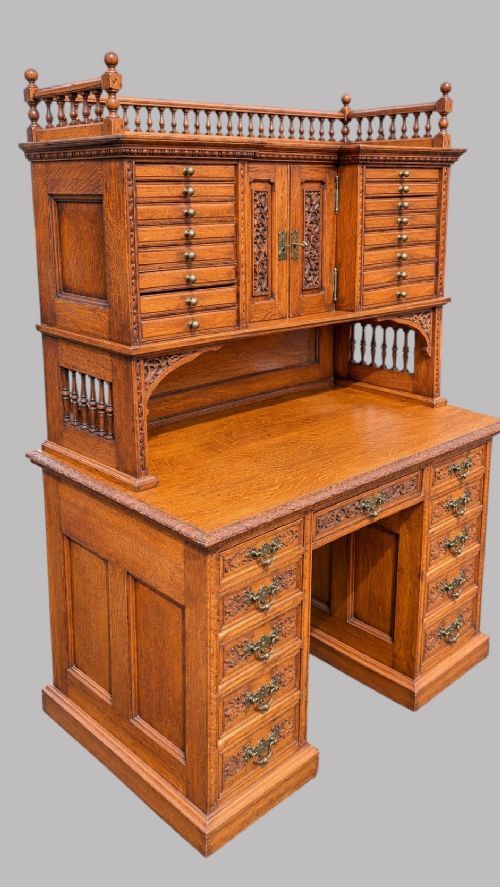
A gothic revival study desk brings nineteenth-century architectural motifs into the workspace, frequently taking the form of a pedestal desk or writing table. These items emerge primarily from the Victorian era, spanning various decades of the nineteenth century into the early twentieth century.
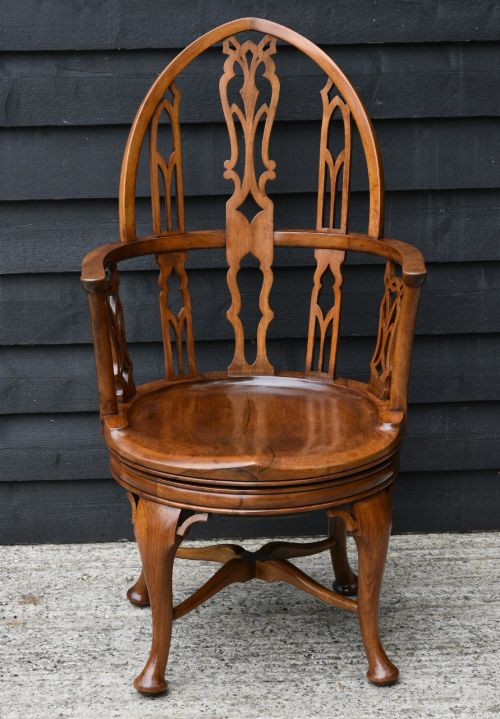
The category encompasses related writing furniture such as kneehole desks, Davenport desks, and accompanying seating including revolving chairs and library armchairs. Oak serves as the dominant timber across these forms, often paired with leather writing surfaces.
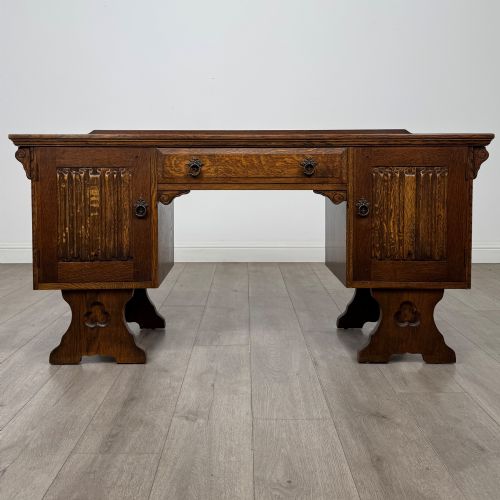
Makers and designers of the period drew upon medieval architectural elements, incorporating linenfold carving, pointed arches, and heavy structural framing into functional library and study furniture.
How they were made
Makers utilised solid timbers such as oak, walnut, rosewood, and mahogany, constructing heavy frames designed for durability. Surfaces received intricate hand-carvings, including linenfold panels and geometric tracery reflecting medieval stone architecture.
Fittings incorporated brass handles, locks, and hinges, while writing surfaces were frequently inset with tooled leather. Seating forms utilised robust joinery, sometimes featuring X-frames or revolving mechanisms supported by iron and brass hardware.
The listings span the nineteenth century into the Edwardian period, with oak appearing as the primary material alongside walnut and rosewood.
What varies in quality
Quality rests in the depth and precision of the timber carving, where crisp linenfold panels and undercut details separate standard production from superior workshop output. The selection of figured timbers, particularly in golden oak and walnut, defines the visual hierarchy of surviving examples.
Structural integrity and the retention of original brass hardware and leather inserts influence the standing of a piece. Works associated with known cabinet-making firms display superior joinery and thoughtful proportion within the heavy architectural style.
Gillows·Bruce James Talbert·Pugin
The Gothic Revival Study Desk Glossary
- Linenfold
- A style of relief carving used on wooden panels to resemble folded parchment or linen. This motif is frequently seen on nineteenth-century oak furniture.
- Kneehole desk
- A type of desk featuring a central recessed space for the legs, flanked by pedestals of drawers. These provide substantial storage while maintaining a formal presence.
- Pedestal desk
- A heavy freestanding desk supported by two vertical columns of drawers with a central writing surface. They dominate larger nineteenth-century libraries and studies.
- Davenport
- A compact small writing desk featuring a sloping lid and side drawers. The form became popular during the Victorian period for domestic studies.
Gothic Revival Study Desk: Frequently Asked Questions
How do I identify a genuine period piece?
Examine the timber shrinkage, hand-cut joinery, and the wear patterns on drawer runners and brass hardware.
Nineteenth-century construction methods leave distinct tool marks that modern reproductions fail to replicate accurately.
What woods were used for these desks?
Oak is the predominant timber, appearing in various finishes including golden and light oak.
Walnut, mahogany, and rosewood also appear in select writing tables and seating from the period.
How do I care for the leather top?
Clean the leather gently with a damp cloth and apply a neutral leather wax conditioner periodically.
Avoid placing hot cups or direct sunlight on the surface to prevent cracking and fading.
Are revolving desk chairs comfortable?
Period revolving chairs offer functional movement via early iron and brass swivel mechanisms.
They are built with sturdy timber frames and button leather upholstery designed for extended daily use.