
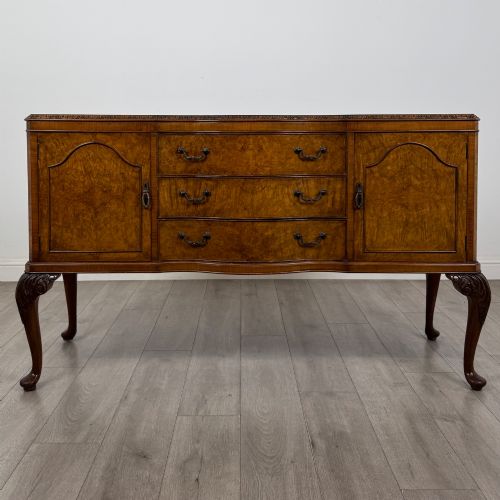
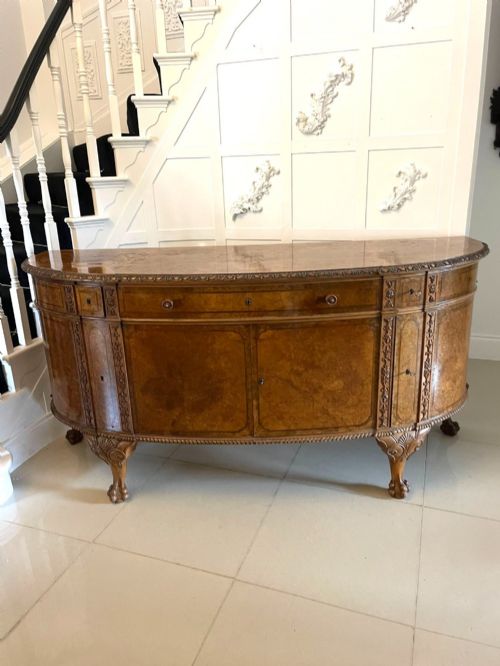
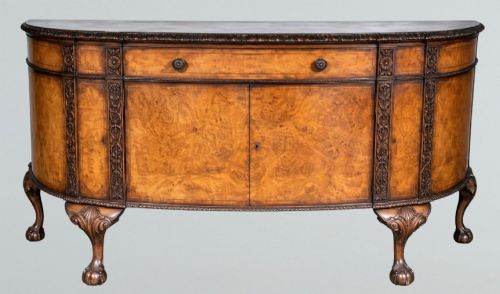
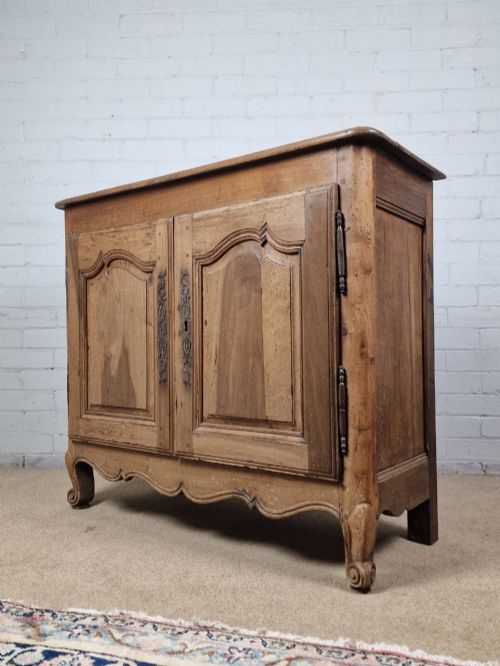
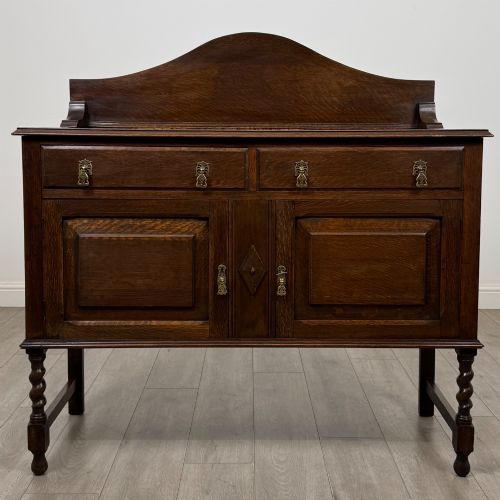
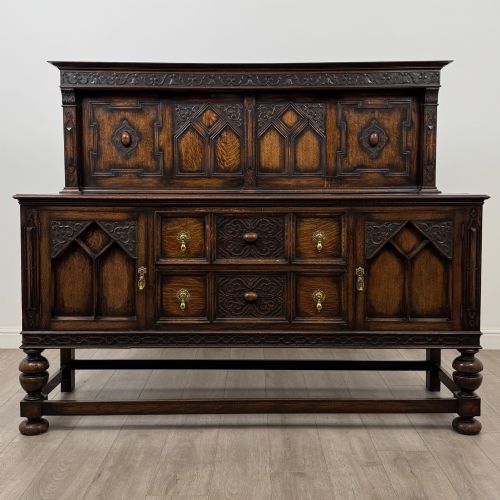
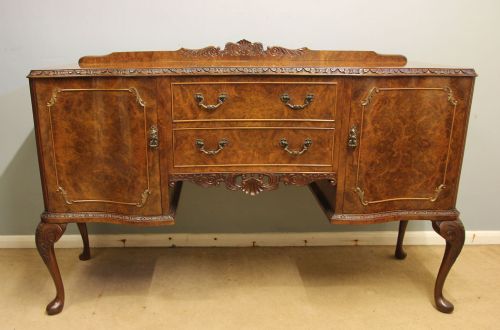
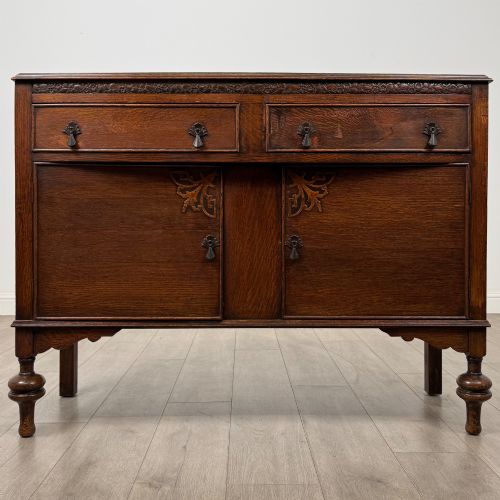
Carved Leg Sideboard
A carved leg sideboard brings substantial storage and distinct period character into a dining room or hallway through its decorative timber supports.
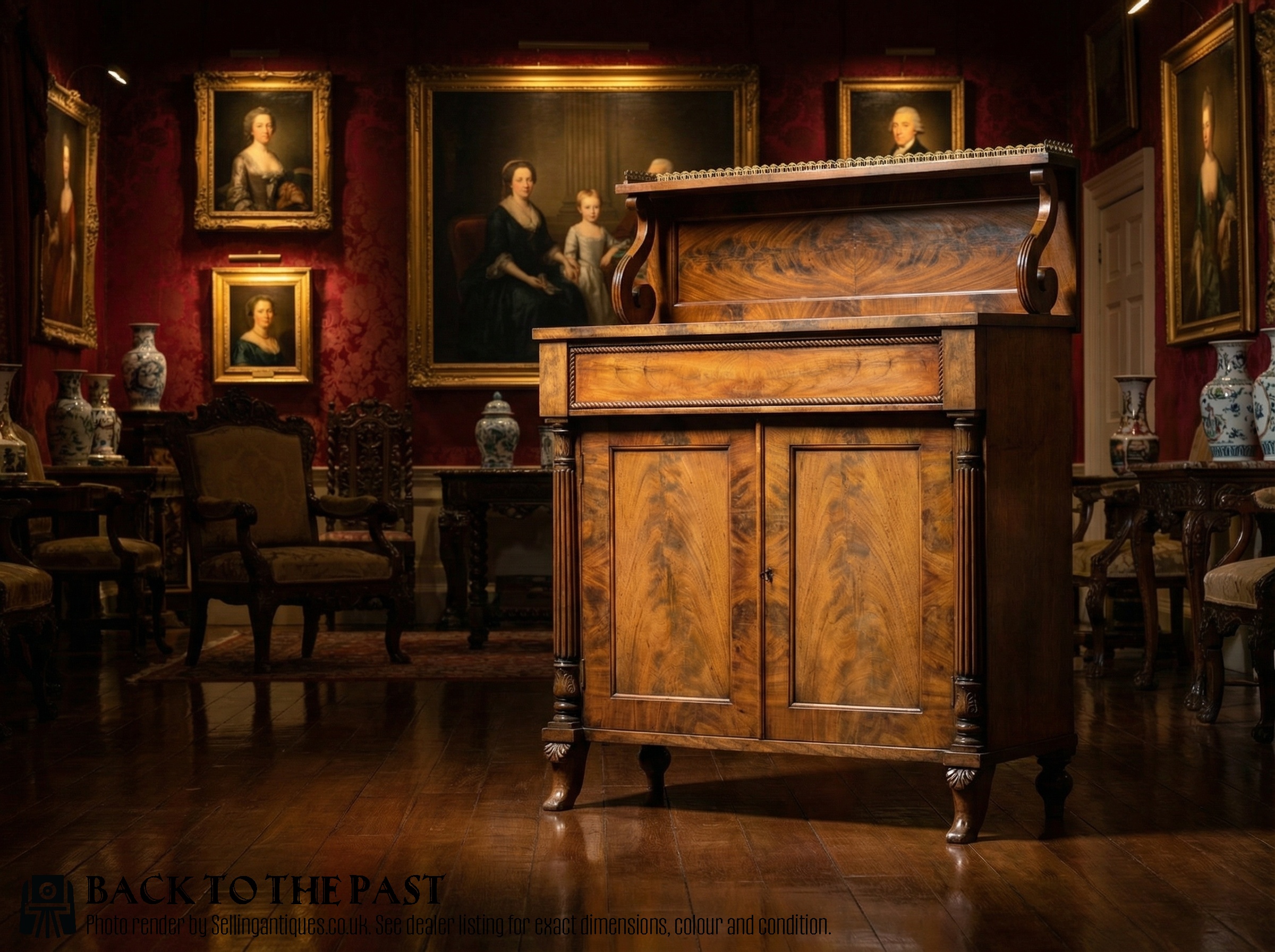
Carved Leg Sideboard
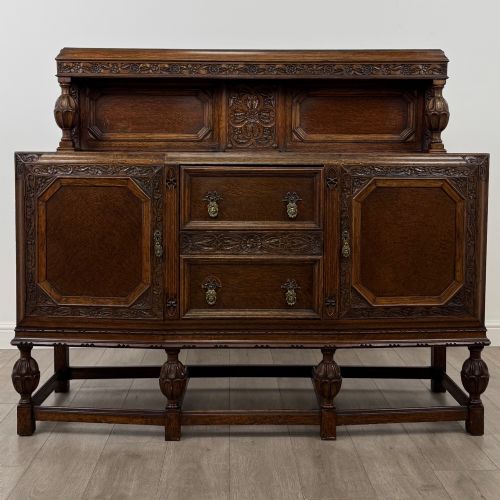
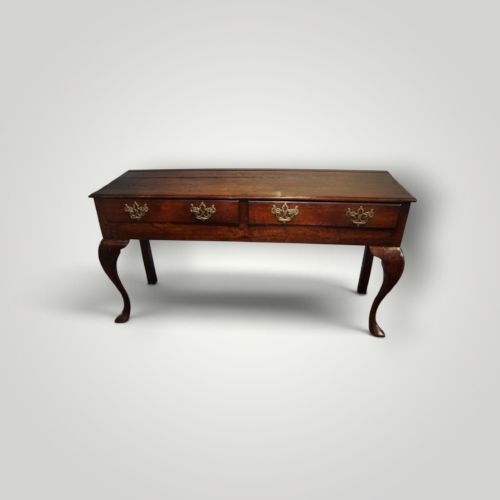
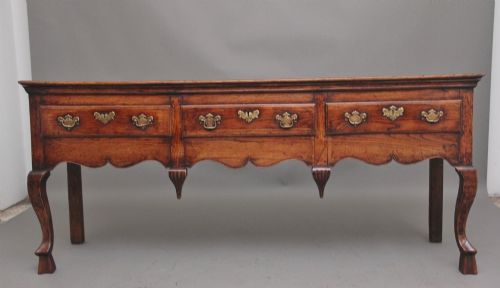
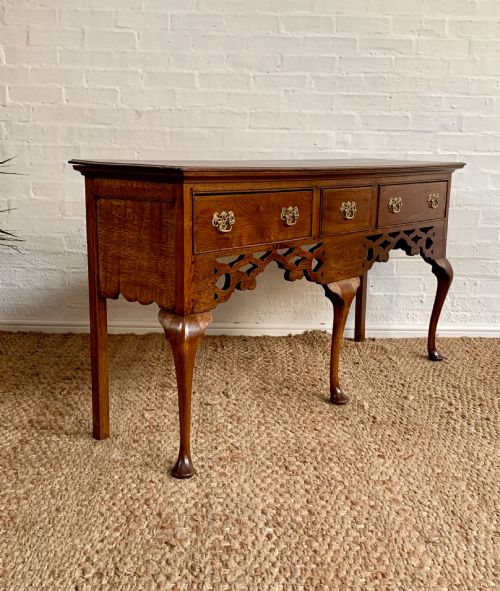
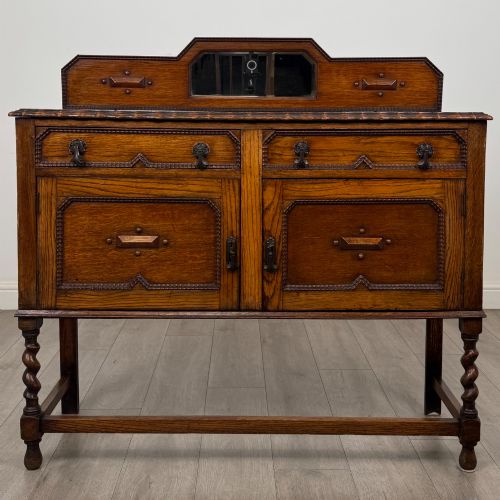
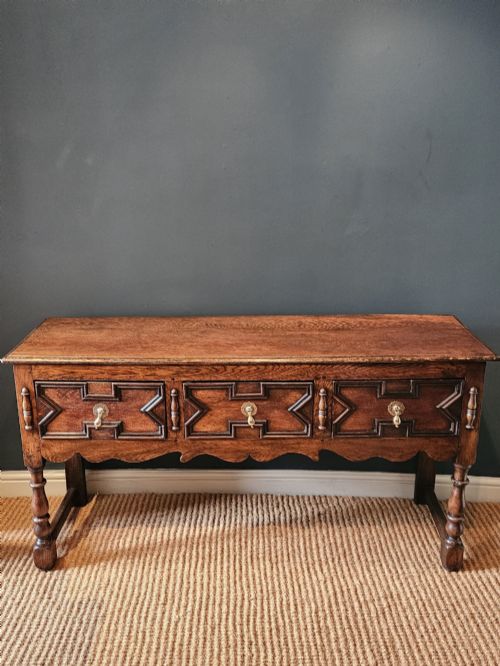
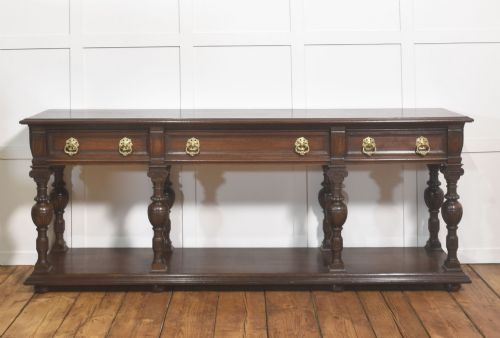
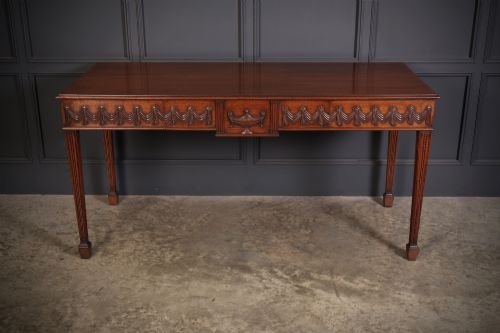
A carved leg sideboard comprises heavy timber storage furniture built with prominent sculptural supports, taking forms such as serving tables, dresser bases, and side cabinets across this selection. Buyers find pieces spanning from the 17th century through the Georgian, Victorian, and Edwardian eras up to the 1930s.
The version most frequently encountered on this page is constructed from oak or burr walnut, often displaying Edwardian or 1920s revival characteristics. These tables and cabinets serve dining and entertaining spaces by offering surface display alongside drawer and cupboard capacity.
How they were made
Cabinet makers utilised solid timbers such as oak, mahogany, and walnut alongside burr walnut veneers to construct the main bodies of these pieces. Brass hardware, iron fixtures, and occasional marble tops provide functional contrast and structural support.
Carving techniques shape the legs and fascias, incorporating motifs like cabriole curves, barley twists, and geometric moulding. Joinery relies on traditional methods to integrate the decorative bases securely with the heavy serving tops and cabinets.
Listings span from the late 17th century through Georgian and Victorian periods to the 1930s, using oak, mahogany, walnut, and burr walnut veneer.
What varies in quality
The refinement of the timber selection and the depth of the carving determine the distinction between standard items and superior examples. Matched burr walnut veneers and crisp, hand-chiselled details indicate higher workshop standards.
Proportion and the integrity of the original structure dictate overall merit. Pieces that retain their unblemished primary surfaces and solid leg joinery demonstrate better original craftsmanship than later alterations.
Gillows·Hille of London·James Simpson And Sons
The Carved Leg Sideboard Glossary
- Cabriole leg
- A furniture support curving outward at the knee and inward at the ankle, ending in a pad or foot. This form derives from animal limbs and appears frequently on Georgian and revival furniture.
- Dresser base
- A low wooden storage unit featuring drawers and cupboards beneath a wide serving surface. These items often stand on carved legs or solid plinths.
- Burr walnut
- Timber taken from the warted growths of walnut trees, displaying intricate, swirling grain patterns. Cabinet makers slice this wood into thin veneers for decorative surfaces.
- Barley twist
- A column or leg turned on a lathe to resemble a spiralling rope. This decorative turning is common on 17th-century pieces and later revival furniture.
- Serving table
- A long, narrow table designed for holding food and dishes during meals. These pieces frequently feature fine timber inlays and carved supports.
Carved Leg Sideboard: Frequently Asked Questions
What is a carved leg sideboard used for?
These pieces function as dining room servers, holding tableware, linens, and serving dishes while providing a surface for food presentation.
In modern homes, they also act as hallway console tables or living room storage cabinets that anchor a decorative display.
How do I identify an Edwardian sideboard?
Edwardian examples often utilise oak or mahogany, frequently incorporating revival styles like Jacobean turning or Sheraton-inspired inlay.
They date from the early 20th century and balance traditional weight with domestic proportions suited to smaller Edwardian rooms.
Where should I place a dresser base?
A dresser base suits dining rooms, kitchens, or wide hallways where its depth can accommodate storage without obstructing walkways.
Ensure the surrounding floor space allows cabinet doors and drawers to open fully without striking other furniture.
What is the difference between a sideboard and a commode?
Sideboards generally offer longer surfaces with a combination of cupboards and drawers intended for dining room service.
Commandes are typically lower, French-influenced chests of drawers or cabinets with a more compact footprint and marble or timber tops.