

Carved Leg Settee
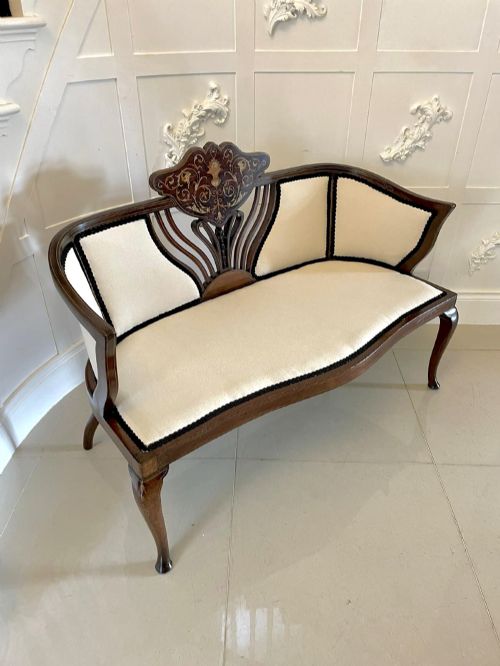
A carved leg settee brings period craftsmanship into a room, offering substantial seating anchored by ornate wooden supports.
Carved Leg Settee
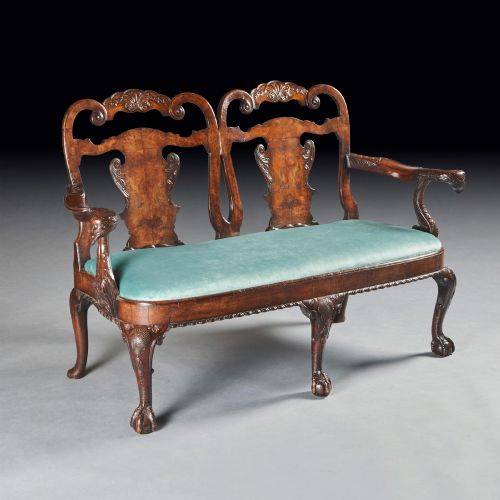
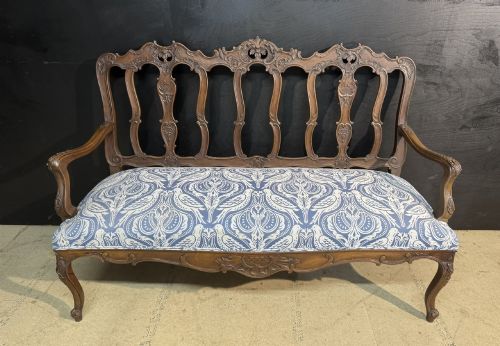
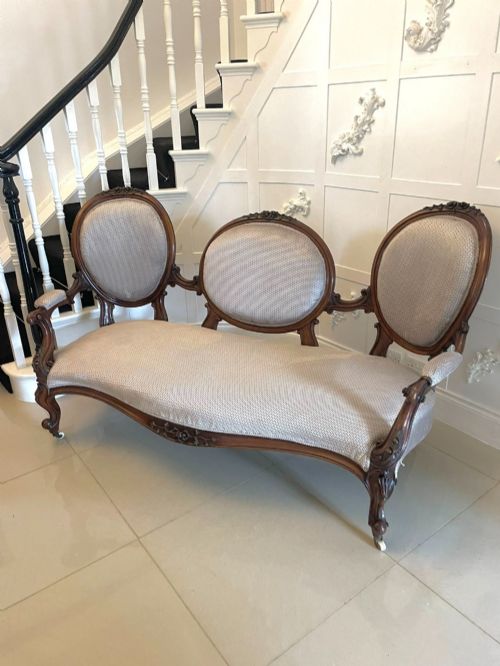
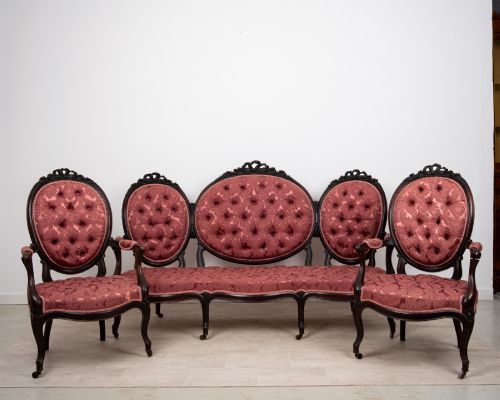
When you search for a carved leg settee, you encounter large upholstered seating forms designed across multiple centuries, predominantly originating from the Victorian era alongside Georgian, Regency, and Edwardian periods. These pieces appear as two-seater or three-seater couches, salon suites, and twin chair back sofas.
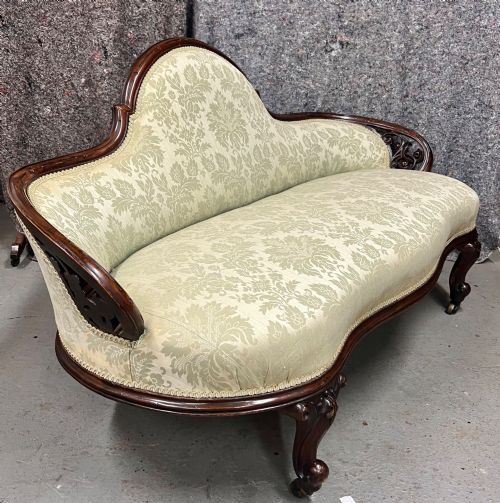
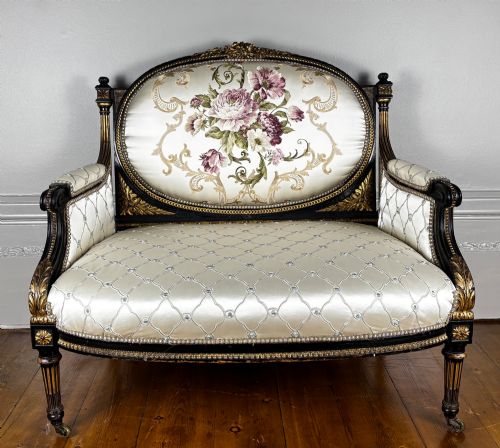
The most common versions on this page are Victorian walnut and mahogany settees featuring detailed woodwork on the frames and legs, supplemented by French-influenced revival styles and Georgian designs.
Makers and designers referenced in these pieces include Giles Grendey, Howard and Sons, and Butlers of Dublin, alongside broader stylistic revivals such as Louis XV, Louis XVI, and Chippendale.
How they were made
Makers built the structural frames of these settees using hardwoods such as mahogany, walnut, and rosewood, occasionally applying giltwood, ebonisation, or painted finishes to the exterior surfaces.
Upholstery relied on traditional materials including fabric, velvet, linen, and deep buttoning, supported internally by webbing and springs.
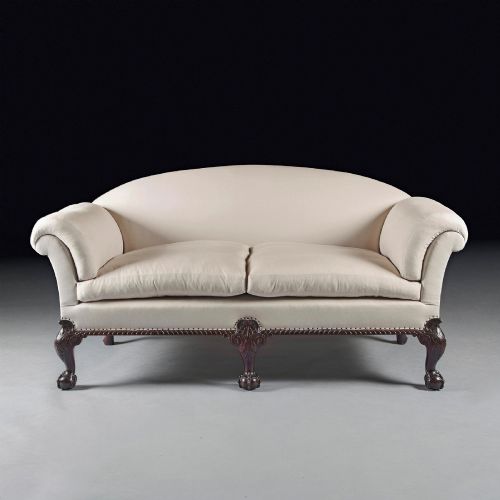
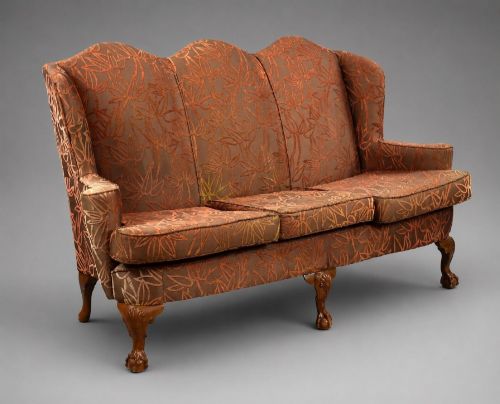
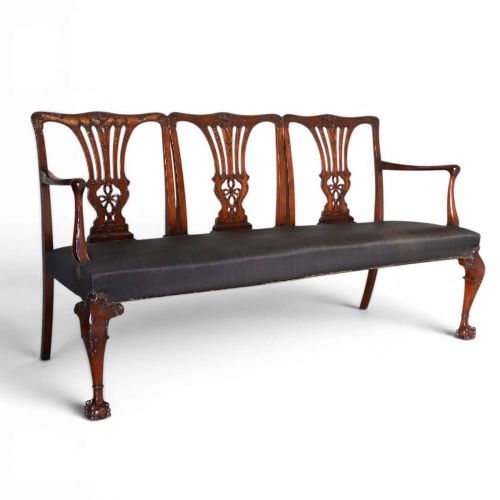
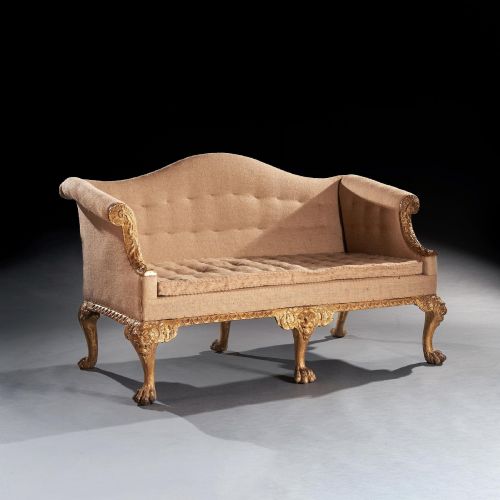
Carved details included ball and claw feet, lion mask hairy paw feet, fluted legs, and intricate crest rails executed by hand.
Certain settees rest on fierce lion mask hairy paw feet that give formal seating an unexpected animal spirit.
What varies in quality
The distinction between standard production and top-tier examples lies in the crispness and depth of the timber carving on the legs and frame, particularly on specialised details like ball and claw or lion mask feet.
Proportion and design fidelity separate ordinary seating from pieces produced after specific cabinetmaker designs or in recognised regional manners, such as Irish or Swedish iterations.
The integrity of the underlying woodwork and the fidelity of revival styles, whether Rococo, Louis XVI, or Chippendale, dictate the overall standard of the settee.
Giles Grendey·Howard and Sons·Butlers of Dublin
The Carved Leg Settee Glossary
- Canapé
- An upholstered French sofa or settee featuring an exposed wooden frame. These typically date from the eighteenth and nineteenth centuries.
- Giltwood
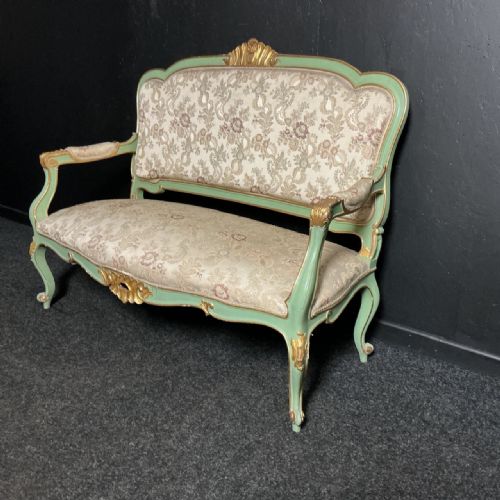
- Timber treated with gold leaf or gold paint applied to the surface. This finish appears frequently on French and high-status English frames.
- Settee
- A long upholstered seat with a back and arms, designed for more than one person. It shares its category with sofas and couches.
- Salon suite
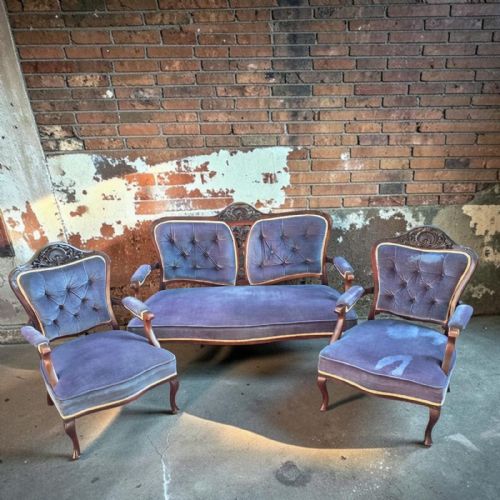
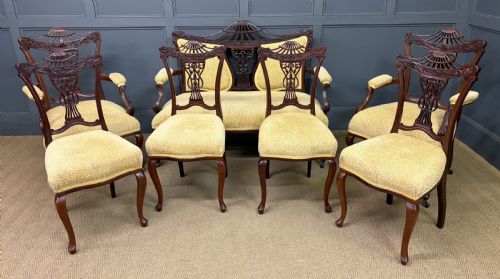
- A matched set comprising a settee and matching chairs. These groupings were intended for formal reception rooms.
- Camel back
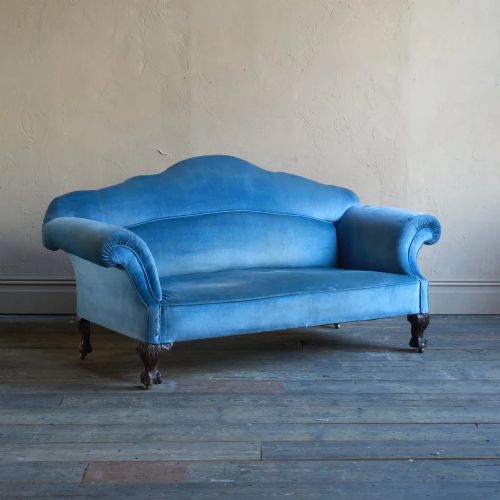
- A sofa or settee back featuring a characteristic hump or convex curve in the centre. This profile appears on eighteenth and early twentieth-century examples.
Carved Leg Settee: Frequently Asked Questions
What periods do carved leg settees come from?
The listings span from the eighteenth century through the Victorian era up to the early twentieth century. Pieces from the Georgian, Regency, and Edwardian eras appear alongside specific revival periods.
Craftsmanship and stylistic details evolved across these eras, moving from ornate mahogany and walnut frames to lighter painted French designs and Edwardian interpretations.
How do I identify a revival style settee?
Revival pieces incorporate design elements from earlier reigns, such as Louis XV or Louis XVI curves, or Chippendale fretwork and cabriole legs. Makers produced these during the nineteenth and early twentieth centuries.
Examining the wood ageing, construction joints, and secondary timbers helps distinguish a later revival piece from an original eighteenth-century example.
What is the difference between a sofa and a settee?
Historically, the term settee often described a formal wooden or upholstered seat for multiple occupants, whereas sofa implied a fully upholstered couch. In practice, makers and sellers used both terms interchangeably across the centuries.
Both forms utilise carved wooden legs and frames, varying primarily in back height, arm construction, and overall proportions.
How were salon suites used?
Salon suites served as coordinated seating arrangements for formal entertaining in Victorian and Edwardian drawing rooms. A suite typically combined a large settee with a matching set of armchairs or side chairs.
These matching sets ensured visual harmony in the parlour, utilising identical upholstery fabrics, timber frames, and carved leg designs throughout the grouping.