


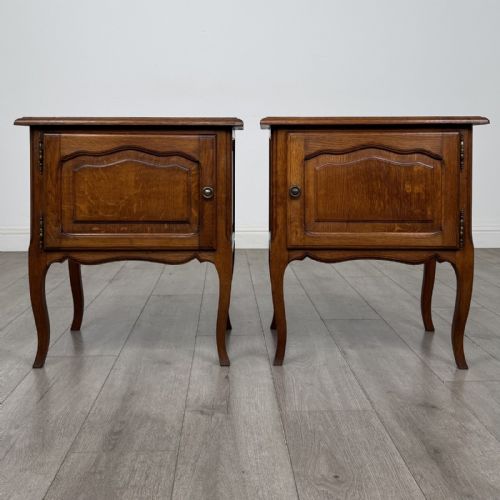
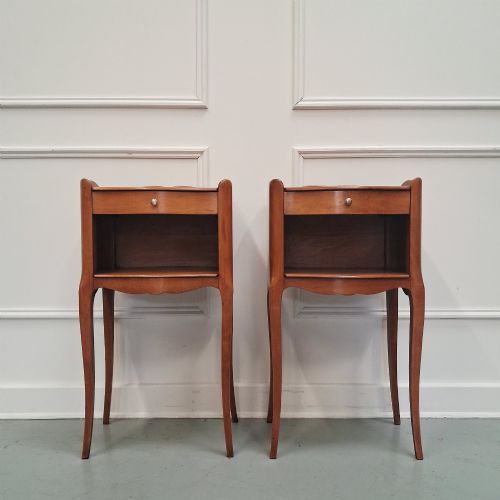
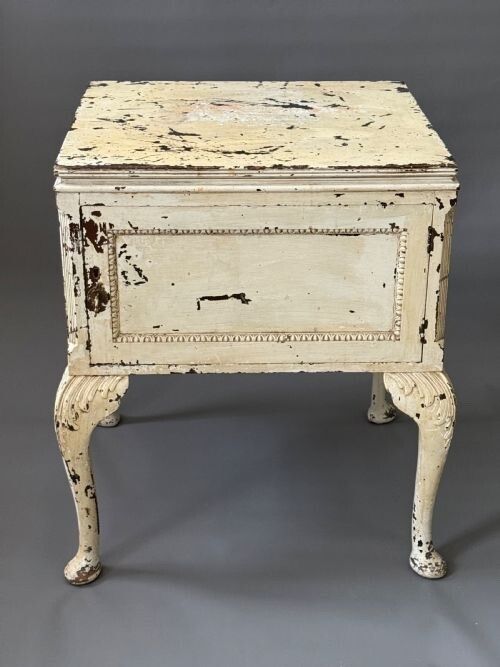
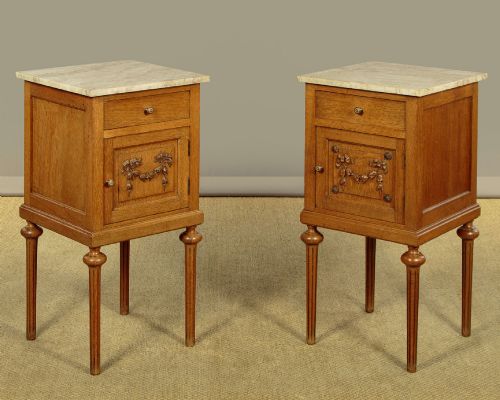
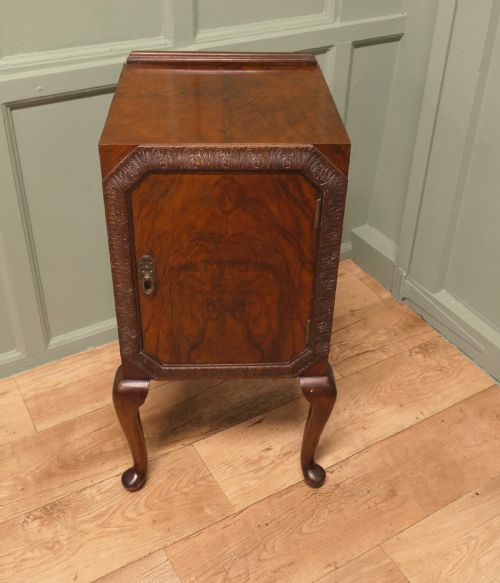
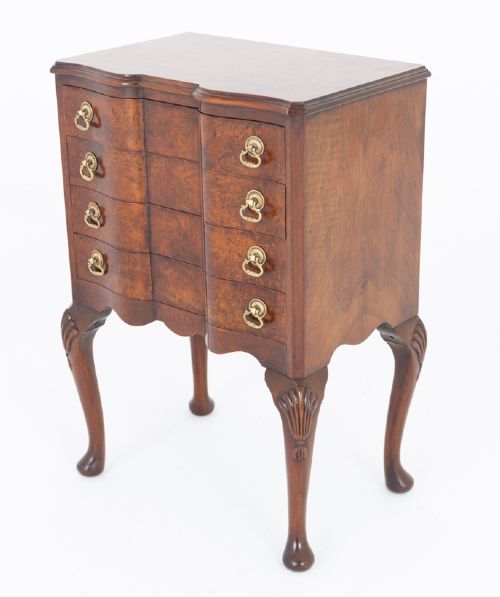


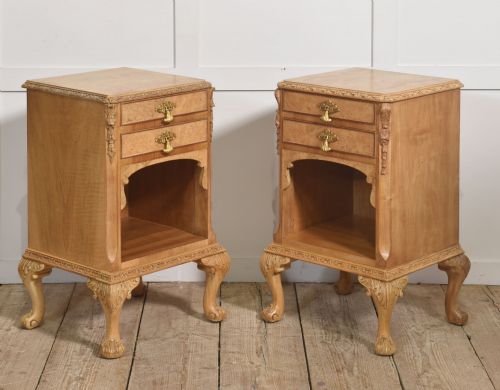
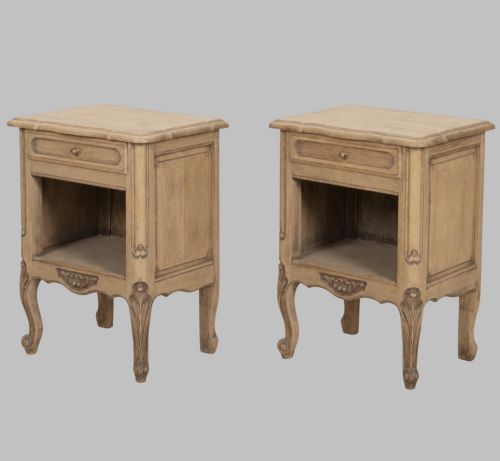

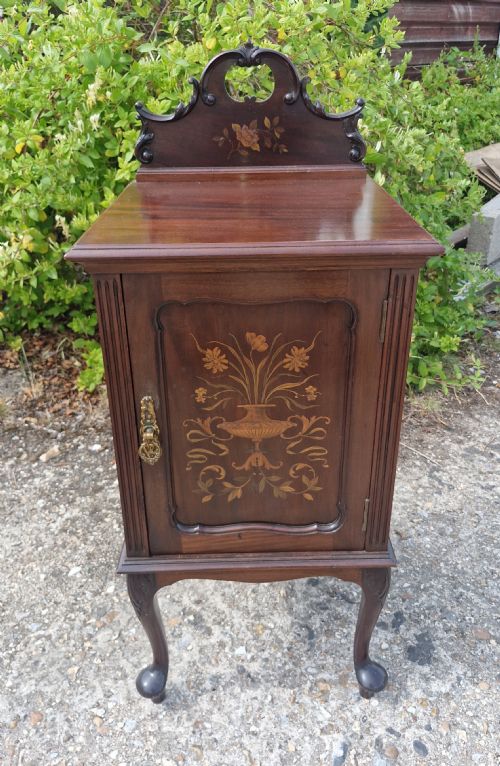


Carved Leg Bedside Cabinet
A carved leg bedside cabinet brings practical storage and period character beside the bed, drawing on diverse European and British cabinet-making traditions.
Carved Leg Bedside Cabinet
A carved leg bedside cabinet serves as a compact bedside companion for private spaces, offering enclosed storage or surface space for a lamp. When you search for a carved leg bedside cabinet, you encounter forms ranging from French Provincial cupboards to Georgian-inspired mahogany chests.
The pieces appearing on this page span the nineteenth and twentieth centuries, taking in Edwardian interpretations alongside robust oak, walnut, and mahogany variants. Pairs emerge frequently alongside single pieces, reflecting how bedrooms were furnished across different decades.
How They Were Made
Cabinet-makers relied upon timber selection, employing walnut, burr walnut, oak, mahogany, and fruitwood to construct the carcase and frame. Tops frequently incorporated marble inserts, while brass fittings and mounts provided structural and decorative accents.
Joinery techniques combined traditional carcase construction with carved detailing on legs and panels, drawing on styles such as Queen Anne Revival, Chippendale, and Louis XV.
Carved Leg Bedside Cabinet Retail Price Guide 2026
Typical asking prices for carved leg bedside cabinet among the pieces listed under this phrase on Sellingantiques today, from the lower quarter to the upper quarter. They describe what is for sale here now, not the wider market.
Listings feature walnut, oak, and mahogany alongside marble and brass elements across Edwardian, Victorian, and early twentieth-century periods.
What Varies in Quality
Quality reveals itself in the crispness of the carved woodwork and the choice of timber veneer, such as burr walnut or figured mahogany. Superior examples display balanced proportions and cohesive design elements across matched pairs.
The integrity of the construction, the fit of doors and drawers, and the integration of marble tops or brass hardware distinguish finer workshops from more utilitarian production.
The Carved Leg Bedside Cabinet Glossary
- Carcase
- The main structural body or framework of a cabinet before doors, drawers, and decorative elements are attached. It provides the essential stability for the piece.
- Burr walnut
- A prized timber harvested from walnut tree growths, featuring intricate, swirling grain patterns. It was frequently utilised for decorative veneering on high-status furniture.
- Pot cupboard
- An alternative historical term for a bedside cabinet or small bedside table, originally designed to house a chamber pot. They evolved into general bedside storage.
- Demi-lune
- A half-moon shape describing furniture with a semicircular front and a flat back designed to sit flush against a wall.
- Etagere
- A set of open shelves used for display, sometimes incorporated into smaller bedside or side furniture forms.
Carved Leg Bedside Cabinet: Frequently Asked Questions
What is a carved leg bedside cabinet?
A carved leg bedside cabinet is a small piece of bedroom furniture designed for bedside storage, distinguished by decorative carved woodwork on its supports. These pieces provide a surface for lamps and enclosed space for nighttime essentials.
They appear in various timbers such as walnut, oak, and mahogany, reflecting design influences from French Provincial to Edwardian periods.
How do I date a bedside cabinet?
Dating relies on observing the timber species, construction methods, and stylistic revival cues such as Queen Anne or Louis XV motifs. Nineteenth-century examples often display heavier timbers and hand-carved details.
Twentieth-century pieces, including Edwardian and 1920s variations, frequently utilise walnut veneers and lighter structural framing while retaining classical carved elements.
Are bedside cabinets sold in pairs?
Many bedside cabinets survive and are offered as matched pairs, reflecting the traditional furnishing of double bedrooms. Single cabinets also appear frequently.
Pairs often exhibit identical carving, timber grain matching, and hardware, making them suitable for placing on either side of a bed.
What materials were used?
Cabinet-makers utilised dense hardwoods including mahogany, oak, and walnut, frequently enhanced by burr walnut veneers. Marble tops were also incorporated for durability and decorative contrast.
Brass hardware, metal accents, and secondary fruitwood timbers frequently appear in the construction of these cabinets.