

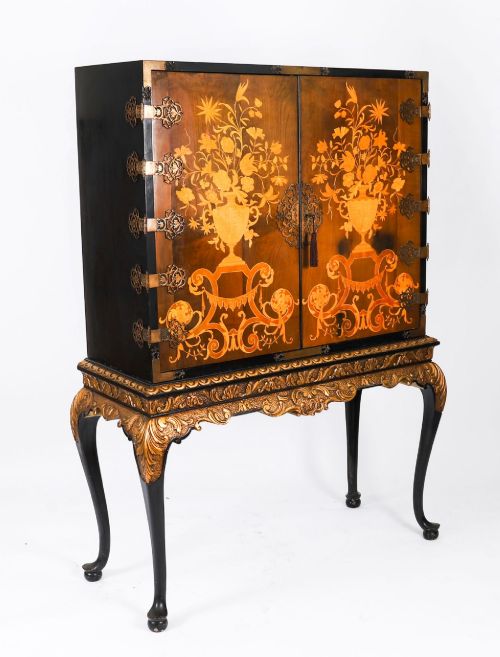
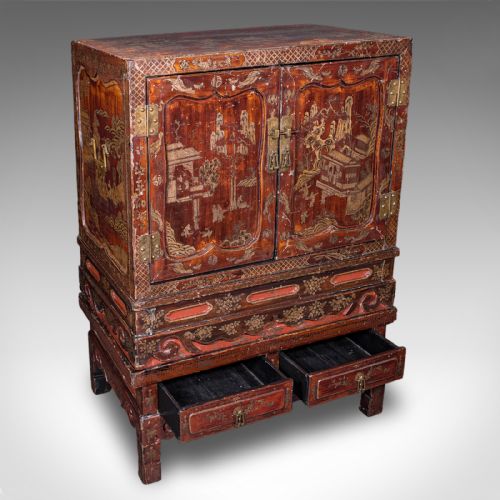
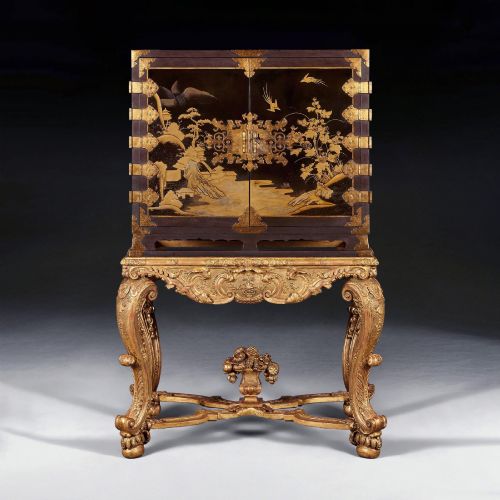
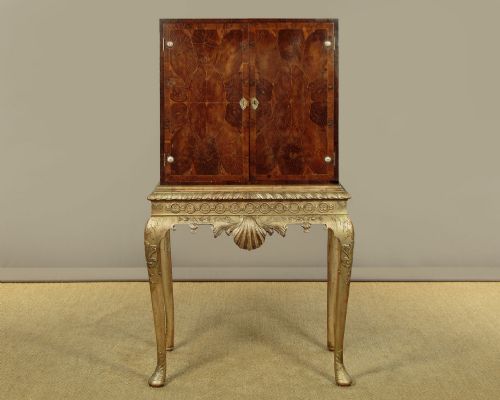
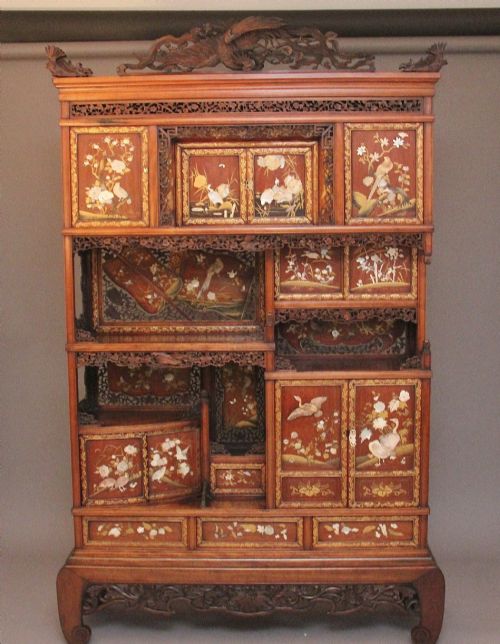
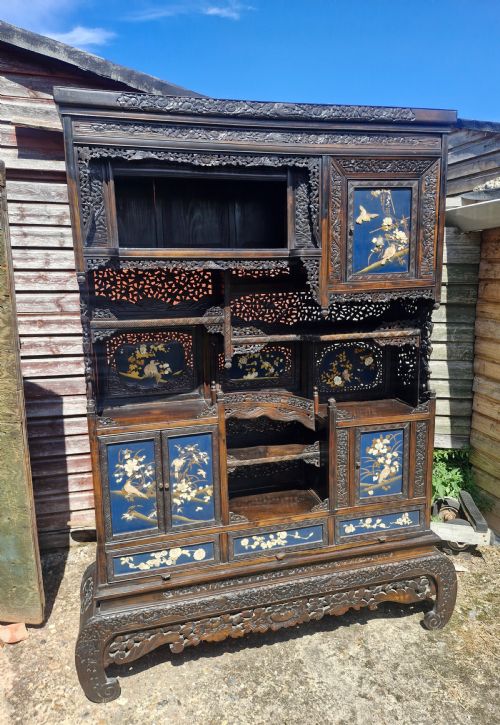
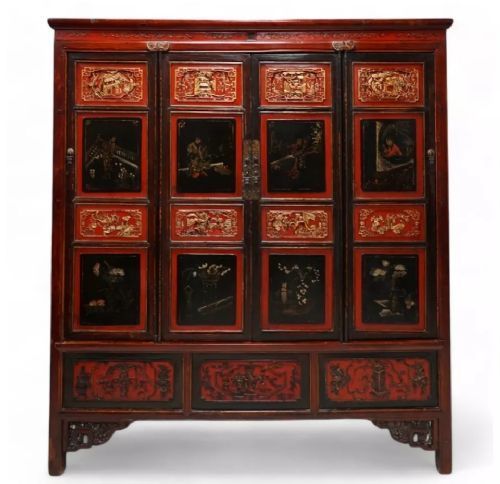

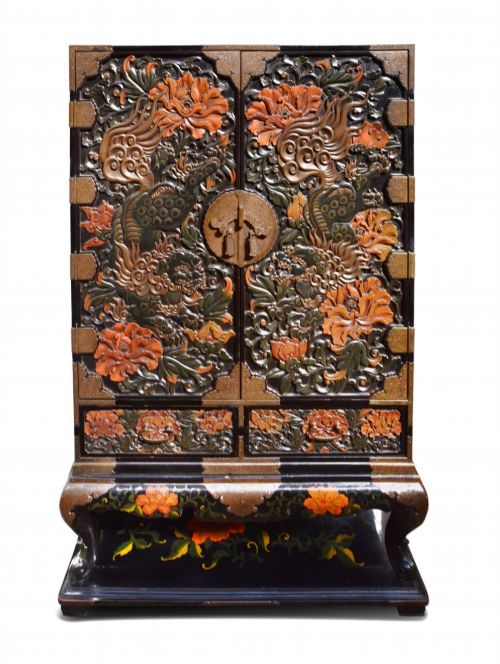


Carved Lacquer Cupboard
A carved lacquer cupboard brings deep red, black or green surfaces into a room, offering both bold colour and practical storage.
Carved Lacquer Cupboard
A carved lacquer cupboard encompasses various forms such as marriage cabinets, display units, side cabinets and cocktail cabinets on stands.
The pieces span periods including the seventeenth century, the Victorian era, the nineteenth century and the early twentieth century.
Origins represented on this page stretch across Chinese and Japanese traditions, alongside British interpretations in the Chinoiserie style.
How they were made
Construction relies upon a wooden or hardwood carcass coated in successive layers of lacquer, which allows artisans to carve deep patterns directly into the hardened surface.
Many examples incorporate applied details of brass, bone, mother of pearl, gold leaf or silver gilt to accentuate the carved panels and structural stands.
Carved Lacquer Cupboard Retail Price Guide 2026
Typical asking prices for carved lacquer cupboard among the pieces listed under this phrase on Sellingantiques today, from the lower quarter to the upper quarter. They describe what is for sale here now, not the wider market.
Listings feature wood, brass, bone and mother of pearl across nineteenth-century Chinese and Japanese periods.
What varies in quality
Quality rests upon the depth and precision of the carved lacquer work, where sharper incisions and more complex layering distinguish superior examples from simpler surfaces.
The integrity of the underlying wood, the harmony between the cabinet and its supporting stand, and the finesse of inlay materials like mother of pearl all shape the standing of a piece.
The Carved Lacquer Cupboard Glossary
- Lacquer
- A durable resin applied in numerous coats to a wooden base. It provides a smooth, polished finish that can be carved once cured.
- Shodana
- A traditional Japanese multi-tiered display cabinet featuring staggered shelves and small cupboards. These pieces often showcase intricate joinery.
- Cinnabar
- A bright red mineral pigment traditionally mixed into lacquer layers. It yields a dense surface suitable for deep, figurative carving.
- Chinoiserie
- European decorative style imitating Chinese artistic traditions. It appears on cabinets through painted and lacquered motifs.
- Cabinet on stand
- A freestanding storage compartment raised upon a dedicated base or table frame. The stands frequently display distinct period styling like Regence or Queen Anne revival.
Carved Lacquer Cupboard: Frequently Asked Questions
What is a carved lacquer cupboard?
It is a wooden storage piece finished with layered resin that has been carved with decorative motifs, often standing on a separate base.
These items range from large marriage cupboards to smaller display cabinets originating from Asian and European workshops.
How do I date a lacquer cabinet?
Dating relies upon examining the construction methods of the underlying timber, the style of the hardware, and the characteristic motifs of periods such as the Meiji era or Qing Dynasty.
Matching the stand to the cabinet helps determine whether the piece was created as a single unit or assembled later.
Where should I place this cabinet?
These cabinets suit living rooms or hallways where their rich colours and textured surfaces can serve as focal points.
Positioning them away from direct sunlight protects the lacquer and delicate inlays from fading or drying out over time.
What is the difference between Chinese and Japanese cabinets?
Chinese examples often feature large marriage cabinets and red cinnabar finishes with symbolic carving, while Japanese pieces frequently include tiered shodana layouts and intricate Shibayama inlays.
Both traditions utilise skilled lacquer work but express distinct architectural forms and decorative themes.