





Brass Mounted Lacquer Cabinet
A brass mounted lacquer cabinet brings Eastern craft and deep historic polish into a room, offering both concealed storage and dramatic visual weight.
Brass Mounted Lacquer Cabinet
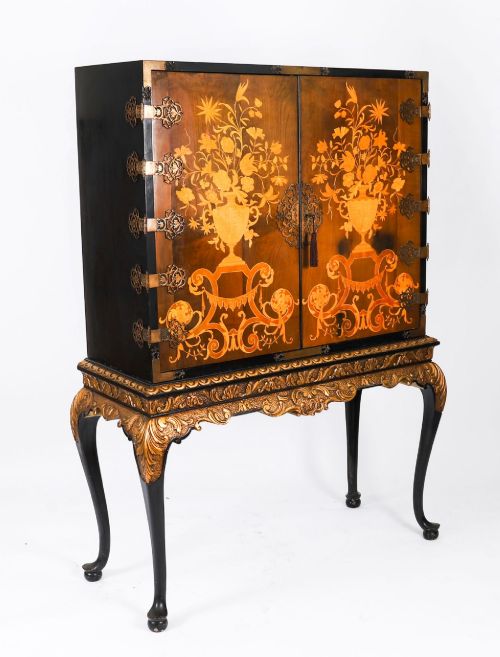
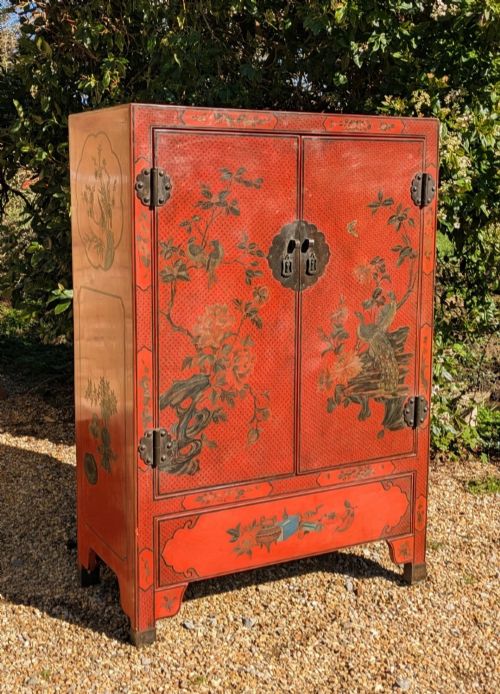
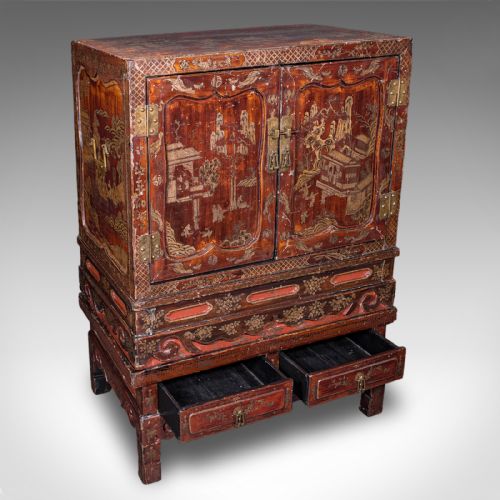
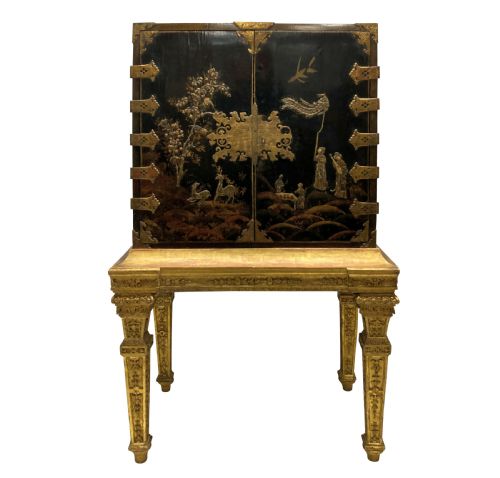
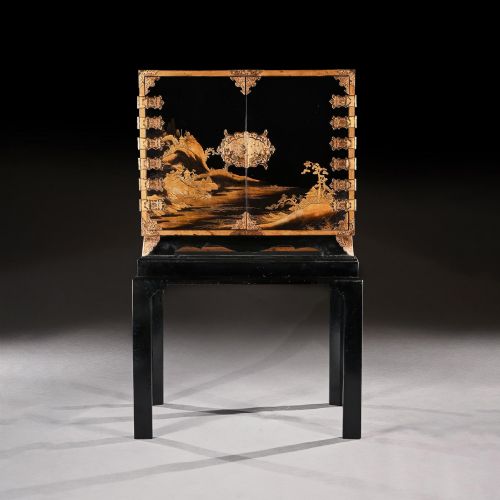
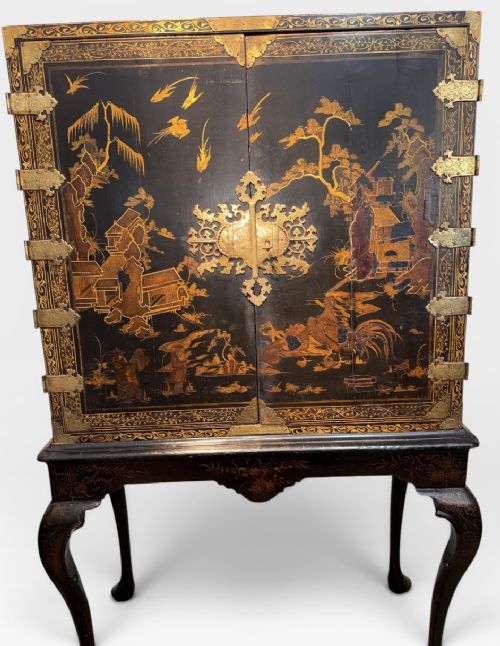
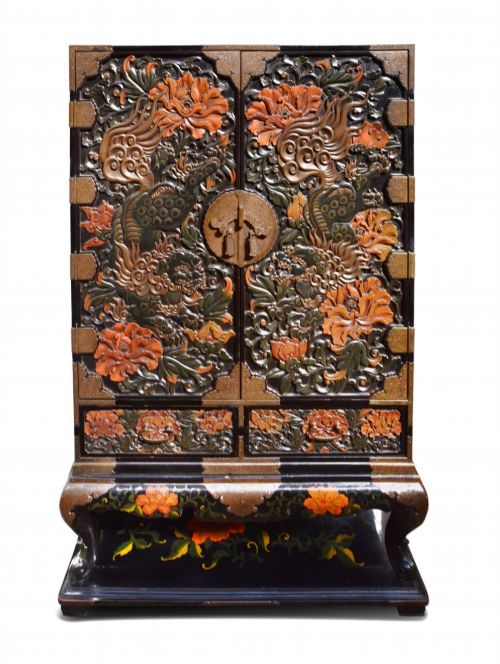
When you search for a brass mounted lacquer cabinet, you are looking at substantial storage forms that combine glossy finished surfaces with polished metal mounts. The examples you meet on this page span from the seventeenth century through to the twentieth century, reflecting varied global traditions.
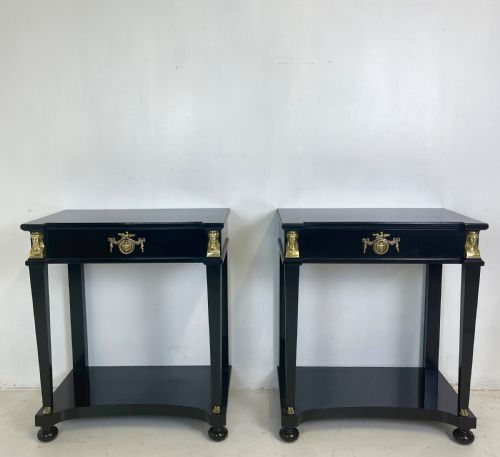
The most common formats on this page are cabinets on stands and table cabinets, often decorated in Chinoiserie or originating from Qing Dynasty and Edo Period workshops. You will also find cocktail and drinks cabinets from later decades, alongside side cabinets and compound forms.
The materials recorded in these listings rely heavily on wood, lacquered wood, and ebonised wood, finished with brass hinges, mounts, and lock plates. Gilt and giltwood details frequently appear to accentuate the surface sheen and structural edges of the piece.
How they were made
The foundation of these pieces relies on timber carcases, often utilising wood, ebonised wood, or lacquered wood to build the structural body. Artisans applied successive layers of lacquer to achieve a durable, glossy ground before adding hand-painted or carved decorative scenes.
Metalwork played a critical functional and decorative role, with brass mounts, hinges, and lock plates secured to the corners and doors. Ormolu or gilt elements were also applied to enhance the overall visual richness of the construction.
Brass Mounted Lacquer Cabinet Retail Price Guide 2026
Typical asking prices for brass mounted lacquer cabinet among the pieces listed under this phrase on Sellingantiques today, from the lower quarter to the upper quarter. They describe what is for sale here now, not the wider market.
One green cocktail cabinet once lived at Harrods before finding its way to the modern market.
What varies in quality
The depth and execution of the lacquer surface separate standard items from superior examples. Finely rendered Chinoiserie detailing and well-preserved painted or carved motifs demonstrate higher levels of workshop skill.
The integration of the brass mounts and the craftsmanship of the accompanying stand define the architectural success of the piece. Well-balanced proportions between the upper cabinet and its base indicate a more thoughtful commission.
Harrods
The Brass Mounted Lacquer Cabinet Glossary
- Lacquer
- A durable resin finish applied in multiple layers to wood surfaces. It provides a hard, glossy protective coating that accepts pigments and metallic dust.
- Chinoiserie
- European artistic interpretations of Chinese and East Asian decorative traditions. This style became particularly popular during the seventeenth and eighteenth centuries.
- Ormolu
- Gilded bronze used for decorative mounts and furniture hardware. The technique involves applying a gold amalgam to a bronze base.
- Ebonised wood
- Timber treated to imitate the dark, dense appearance of ebony. This finish was frequently utilised on Victorian display and pier cabinets.
Brass Mounted Lacquer Cabinet: Frequently Asked Questions
How do I care for a lacquer surface?
Keep these pieces away from direct sunlight and excessive heat sources, which can cause the lacquer to dry out or crack over time. Dust gently with a dry, soft cloth and avoid chemical polishes.
Maintain a stable room humidity to protect the underlying wooden carcase from expanding or contracting, which directly affects the delicate finish.
Were these cabinets made as stands originally?
Many seventeenth and eighteenth-century examples were constructed as two separate components, placing a tabletop cabinet onto a dedicated matching stand to raise its height.
Over centuries, stands and upper cabinets occasionally became separated or paired with alternative bases, making the joinery and proportion key areas to examine.
What is the difference between a table cabinet and a cabinet on stand?
A table cabinet is a smaller, self-contained storage piece designed to sit directly upon a desk, chest, or table surface.
Cabinets on stands incorporate a purpose-built base or frame that elevates the main storage compartment off the floor as a single architectural unit.
How can I tell a seventeenth-century piece from a twentieth-century copy?
Early pieces display hand-cut joinery, aged timber shrinkage, and traditional lacquer formulations that react differently to age than twentieth-century counterparts.
Hardware placement, mounting techniques, and the specific style of Chinoiserie decoration also offer clear chronological markers for attribution.