



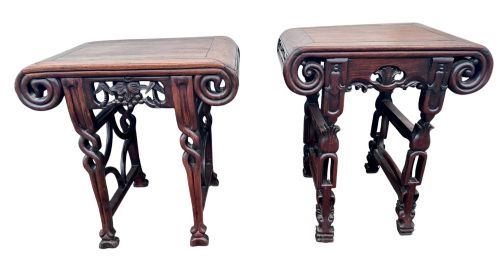


Carved Hardwood Side Stool
These carved hardwood side stool options bring dense timber construction and intricate regional detail into compact seating and display.
Carved Hardwood Side Stool
A carved hardwood side stool functions as both a low seat and a sturdy surface for lamps or plants within domestic spaces. You encounter pieces spanning the nineteenth century through the early twentieth century, originating from Chinese Qing Dynasty workshops, Anglo-Indian centres, and Moorish revival makers.
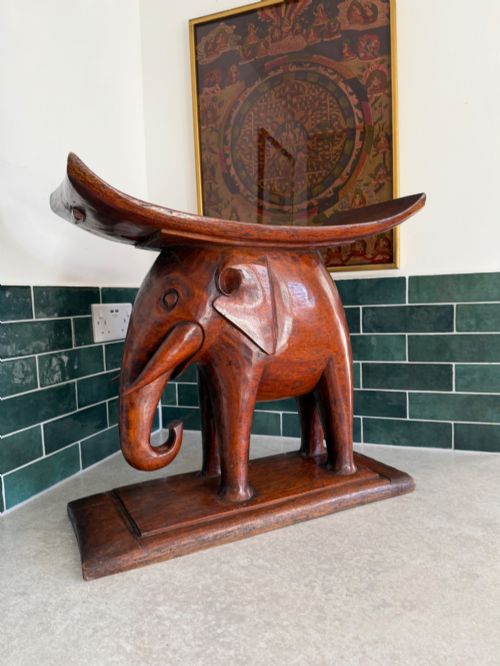
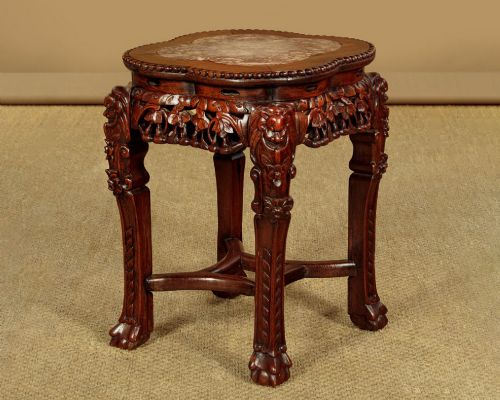
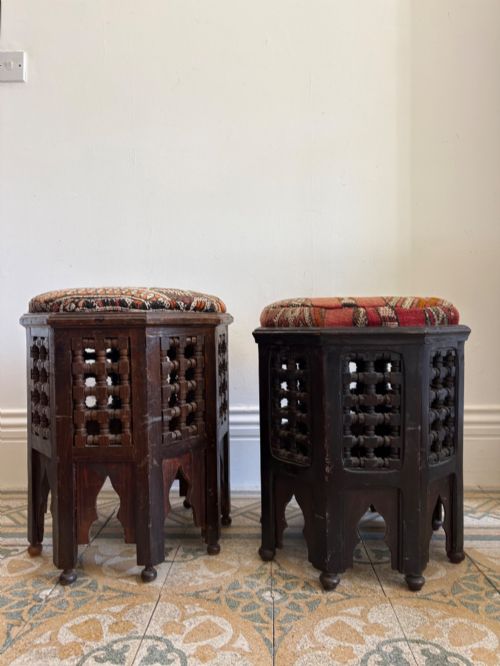
The selections on this page lean heavily towards Chinese rosewood, hongmu, and ebonised timber forms alongside Anglo-Indian elephant designs and Moorish octagonal frames. These items vary from square occasional tables and dish-top stools to drum-shaped barrel stands.
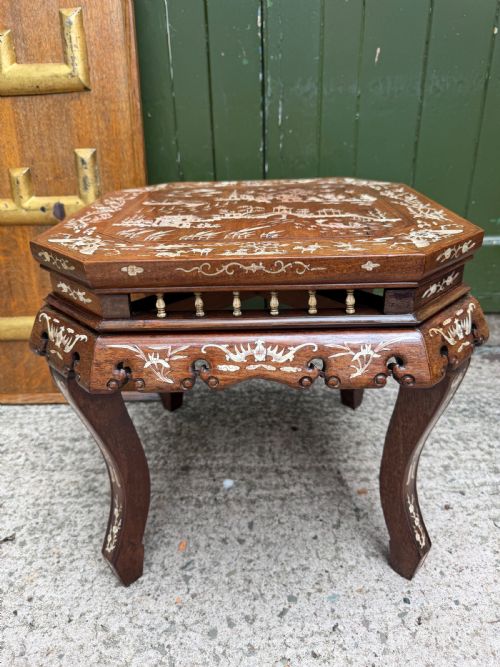
Makers utilised dense timbers, often pairing the carved wooden frames with inset rouge marble tops, bone decoration, or woven kilim tapestry seat covers. Their low profiles and solid construction suit them for flexible placement beside chairs or within hallways.
How they were made
Artisans constructed these pieces using heavy tropical timbers including rosewood, hongmu, teak, and ebonised hardwood. These dense materials allowed for deep, crisp carving along aprons, legs, and borders without compromising structural integrity.
Many examples incorporate contrasting materials set directly into the wooden frame, such as smooth marble discs, bone inlay work, and textile upholstery. Joinery relied on traditional framing techniques to support weight while accommodating the natural movement of dense timber over decades.
Carved Hardwood Side Stool Retail Price Guide 2026
Typical asking prices for carved hardwood side stool among the pieces listed under this phrase on Sellingantiques today, from the lower quarter to the upper quarter. They describe what is for sale here now, not the wider market.
Current listings demonstrate materials spanning rosewood, hongmu, teak, marble, bone, and kilim tapestry across nineteenth- and twentieth-century periods.
What varies in quality
The crispness and depth of the carved motifs dictate the visual weight of the piece, separating standard production from superior craftsmanship. Sharp relief work on dense hongmu or rosewood reflects a higher standard of hand tool mastery by the maker.
The selection and fitting of secondary materials like inset marble tops or bone inlay dictate overall refinement. Tightly fitted stone inserts and complete, secure inlay work demonstrate superior original assembly compared to replacement panels or loose decorative elements.
The Carved Hardwood Side Stool Glossary
- Hongmu
- A dense, dark traditional Chinese hardwood prized for its weight and fine grain. Artisans favoured this material for furniture requiring stable structural members and deep relief carving.
- Ebonised
- Wood finished to resemble ebony through staining or painting techniques. This treatment appeared frequently on nineteenth-century occasional tables and stands to achieve a uniform dark lustre.
- Kilim
- A flat-woven tapestry textile often utilised for upholstery. These durable wool covers appear on Moorish stool frames.
- Jardiniere
- A decorative stand or container designed to hold indoor plants. These forms frequently feature inset marble tops to resist moisture from pots.
Carved Hardwood Side Stool: Frequently Asked Questions
What is a carved hardwood side stool?
A carved hardwood side stool is a low, sturdy timber piece designed for flexible seating or display within a room.
These items combine dense woods like rosewood and teak with intricate carving, often featuring inset marble tops or bone inlay.
How were these stools used originally?
These items served multipurpose roles in domestic spaces as compact seats, lamp tables, or plant stands.
Their robust timber frames allowed them to support heavy ceramic vessels, lighting, or daily seating requirements.
How do I identify a Qing Dynasty piece?
Qing Dynasty items typically feature traditional Chinese hardwood species such as hongmu or huali paired with deep relief carving.
Details such as inset rouge marble tops and barrel or drum shapes further signal this regional origin.
What is an Anglo-Indian elephant table?
An Anglo-Indian elephant table is a nineteenth-century carved wooden stand featuring structural supports shaped as elephants.
Originating from regions like the Bombay presidency, these pieces often incorporate detailed bone inlay work.
How do I care for hardwood furniture?
Maintain hardwood surfaces by keeping them away from direct heat sources and sudden humidity changes to protect the timber.
Dust regularly with a dry cloth and avoid harsh chemical polishes that can degrade the original finish.