






Vintage Tapestry Top Stool
These vintage tapestry top stools bring character and texture to a room, offering practical seating with historical textile work.
Vintage Tapestry Top Stool
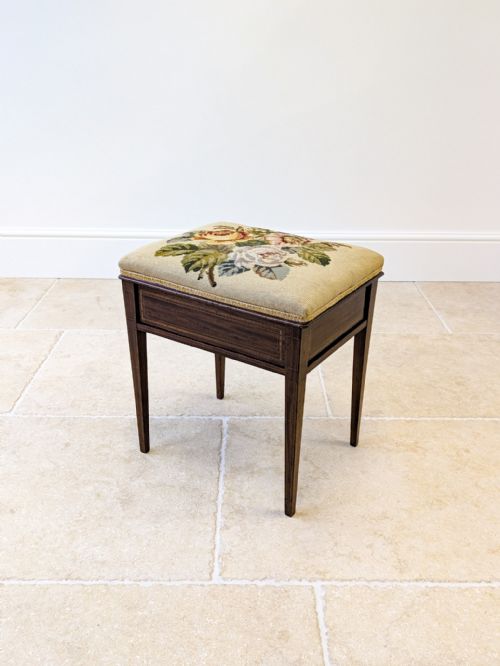
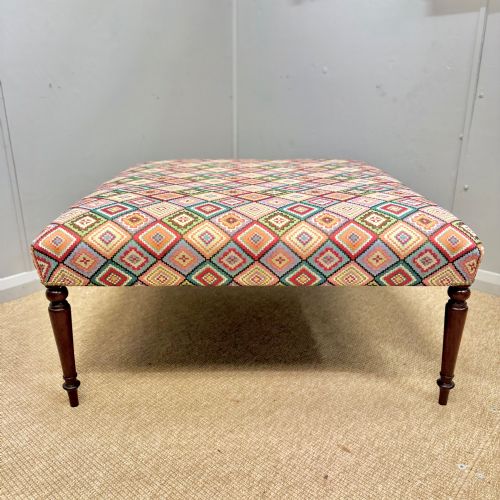
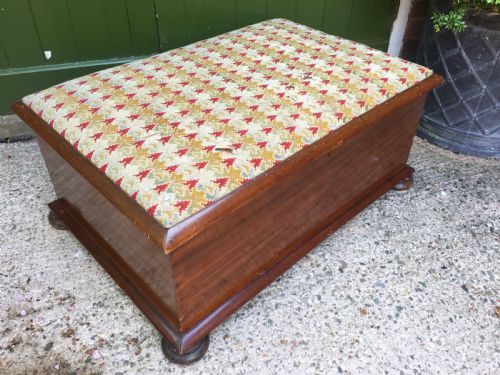
A vintage tapestry top stool combines a sturdy timber frame with a decorative textile seat, functioning as a footstool, dressing stool or small ottoman. These pieces emerge from the nineteenth century onwards, spanning Victorian, Edwardian and later traditional periods.
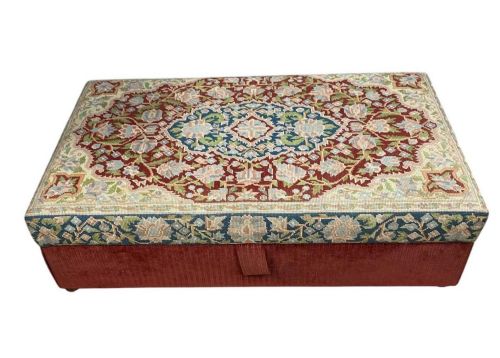
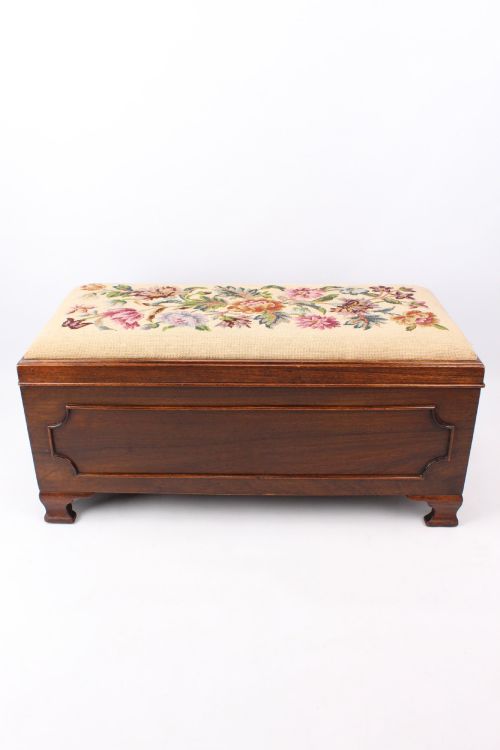
You encounter forms ranging from compact dressing table seats to large Scottish Baronial stools and octagonal Moorish designs. Timber frames include mahogany, walnut, oak and ebonized wood, paired with needlepoint, gros-point, wool or kilim covers.
The variety reflects diverse domestic settings, from English country houses to formal Victorian drawing rooms. Each piece serves as both functional furniture and a display vehicle for historic needlework.
Materials and construction
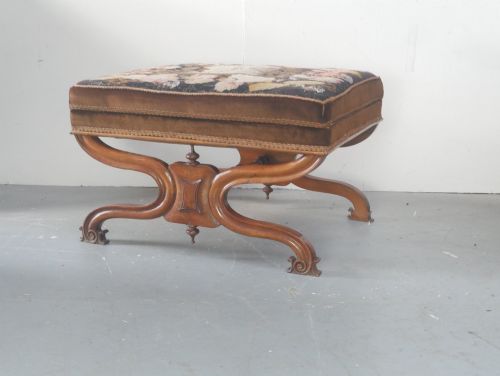
Makers built the structural frames using dense hardwoods like mahogany, walnut and oak, often shaping the timber into Queen Anne, Chippendale or geometric styles. Turning, carving and guilding defined the woodwork beneath the seat.
Seats utilise hand-stitched needlework, tapestry, gros-point and wool textiles stretched over traditional stuffing. These covers were worked separately by hand before being secured to the wooden frames by craftsmen.
Vintage Tapestry Top Stool Retail Price Guide 2026
Typical asking prices for vintage tapestry top stool among the pieces listed under this phrase on Sellingantiques today, from the lower quarter to the upper quarter. They describe what is for sale here now, not the wider market.
Listings feature frames in mahogany, walnut, oak and ebonized wood, paired with wool, velvet and needlepoint textiles.
Judging quality in construction and textiles
Quality rests in the density of the timber frame and the tightness of its joinery, alongside the complexity and tightness of the needlework. Finely hand-worked gros-point or petit-point covers command greater attention than simpler printed fabrics.
Proportion and decorative detail elevate certain pieces, such as those with carved mahogany details, ebonization or distinct regional styles like Scottish Baronial and Moorish Revival. The integration between the textile top and the wooden base determines the overall cohesiveness.
The Vintage Tapestry Top Stool Glossary
- Tapestry
- A form of textile art traditionally woven on a loom or worked by hand with needle and thread. In these pieces, it forms the decorative top surface of the stool.
- Gros-point
- A type of needlepoint worked with a coarse yarn on an open-weave canvas. It creates a durable, textured surface frequently seen on nineteenth century footstools.
- Ottoman
- A low, upholstered seat or footstool without a back or arms. Versions here often feature hinged lids or substantial wooden frames.
- Ebonized
- Wood that has been treated chemically or finished with dark stain to resemble ebony. This finish appeared frequently on Victorian frames.
- Kilim
- A flatwoven textile originating from the Middle East or Eastern Europe. Pieces on this page utilise these rugs as alternative seat covers.
Vintage Tapestry Top Stool: Frequently Asked Questions
What is a tapestry top stool used for?
These stools function primarily as footstools, dressing table seats or small occasional ottomans. They provide low seating or a surface to rest feet while adding decorative textile colour to an interior.
Historically, they sat in parlours, bedrooms and drawing rooms as both utility items and displays of domestic needlework skill.
How do I date a vintage stool?
Dating relies on observing the timber species, framing style and the technique used in the needlework top. Victorian and nineteenth-century pieces often feature heavier woods and detailed hand-stitched gros-point.
Later pieces from the early twentieth century may show simpler geometric forms or revival styles like Chippendale and Queen Anne.
Are the needlework tops original?
Many pieces retain their original hand-stitched needlepoint, gros-point or kilim seat covers applied during the nineteenth or early twentieth century. The wear and patina on the wool often match the age of the wooden frame beneath.
Some examples feature later textile applications where the historic frame has been given a new top cover.
How do I care for the textile top?
Protect the wool and tapestry surfaces from direct sunlight to prevent the natural dyes from fading over time. Gentle vacuuming with a low suction attachment helps remove dust from the woven fibres.
Avoid placing heavy sharp objects on the needlework to prevent pulling the historical threads.