

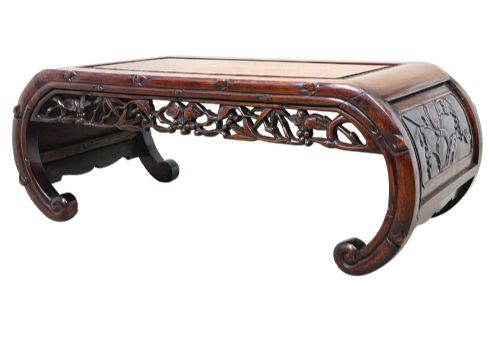
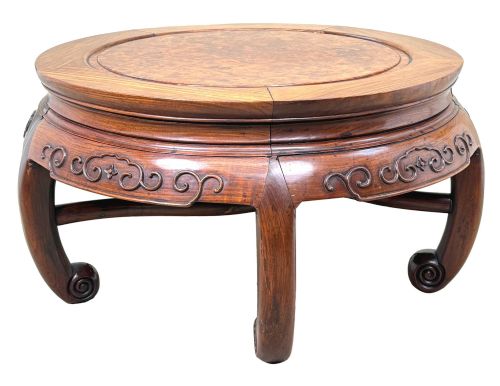
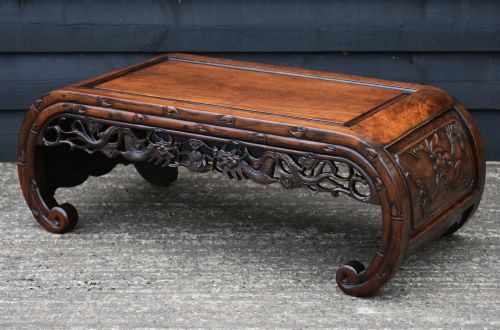
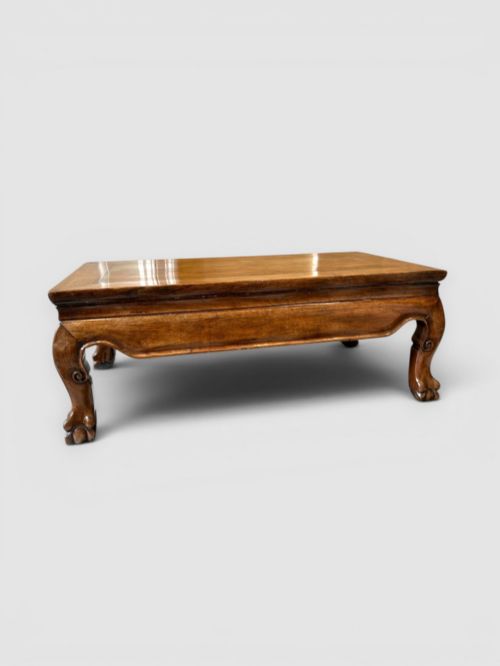
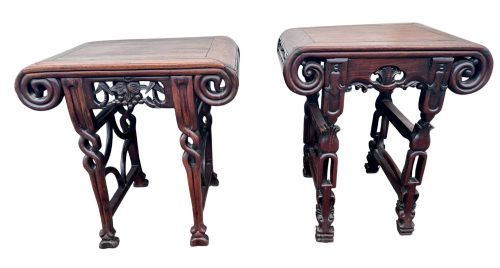


Carved Hardwood Scroll Table
A carved hardwood scroll table brings unmistakable architectural line and rich timber tone into a room.
Carved Hardwood Scroll Table
A carved hardwood scroll table unites traditional low forms and console designs originating from Asian workshops during the nineteenth century and the early twentieth century. When exploring this group, buyers frequently encounter low opium tables, Kang tables, and side tables featuring characteristic upturned ends.
The material selection spans dense Asian timbers such as padouk, rosewood, huali wood, and hongmu, alongside elm. Makers shaped these dense materials into scholar's tables, altar tables, and low coffee tables designed for traditional interiors.
How they were made
Craftsmen utilised dense hardwoods like padouk, hongmu, and huali wood, working the timber to achieve smooth surfaces and rich natural patinas. These timbers possess inherent weight and density, allowing for crisp carving along aprons and scroll ends without compromising structural integrity.
Joinery techniques suited to traditional Chinese and Anglo-Indian furniture construction ensured stability for low tables and console forms without relying on modern hardware. Surfaces received careful polishing to highlight the dark grain and deep colour inherent to rosewood and elm.
Carved Hardwood Scroll Table Retail Price Guide 2026
Typical asking prices for carved hardwood scroll table among the pieces listed under this phrase on Sellingantiques today, from the lower quarter to the upper quarter. They describe what is for sale here now, not the wider market.
Several tables were once tasked with holding opium pipes before finding a second career as very stylish coffee tables.
What varies in quality
Distinction across these tables rests in the depth and sharpness of the carved scroll-end details and the proportion of the frame. Pieces showing deliberate restraint in ornament alongside superior timber selection sit at the higher end of the range.
The condition of the natural patina on padouk or hongmu surfaces dictates visual appeal. Tables retaining an undisturbed, deep finish display the distinct grain of the hardwood far better than examples with compromised surfaces.
The Carved Hardwood Scroll Table Glossary
- Kang table
- A low traditional platform table placed upon a heated brick bed or floor for resting, writing, or serving tea. These pieces often feature characteristic scroll ends.
- Padouk
- A heavy, durable tropical hardwood prized for its reddish-brown colour and fine grain. Furniture makers utilised this timber for robust console and low tables.
- Hongmu
- A translation meaning red wood, referring to a category of dense, dark tropical hardwoods used in fine Qing Dynasty scholar's furniture. It takes a high polish and develops a rich patina.
- Huali wood
- A traditional Chinese term for fragrant rosewood varieties prized for their decorative grain patterns. Craftsmen utilised it for high-status tables and scholar's pieces.
- Altar table
- A tall, rectangular table traditionally positioned against a wall for display purposes. They often feature slender proportions and carved aprons.
Carved Hardwood Scroll Table: Frequently Asked Questions
How were opium tables used?
Opium tables served as low utilitarian furniture pieces positioned on platforms or floors for resting and social gatherings. Their low height accommodated seating on cushions or mats.
Over time, these versatile low tables transitioned into general use as coffee tables within modern domestic settings.
How do I identify a Qing Dynasty table?
Qing Dynasty tables typically display traditional Chinese joinery, specific dense hardwoods like hongmu or padouk, and characteristic carved motifs. They often date from the nineteenth century or the turn of the twentieth century.
Examination of the timber grain, construction methods, and surface patina helps distinguish these period examples from later reproductions.
Where should I place a low table?
A low carved table functions effectively as a central coffee table in a sitting room, providing strong horizontal lines and rich timber tones. Its compact height suits placement in front of low seating.
Care should be taken to position the piece away from direct heat sources to protect the historic hardwood and its natural finish.