


Carved Hardwood Lamp
A carved hardwood lamp brings rich texture and dense grain to an interior, channelling decades of skilled Asian and British colonial craftsmanship.
Carved Hardwood Lamp
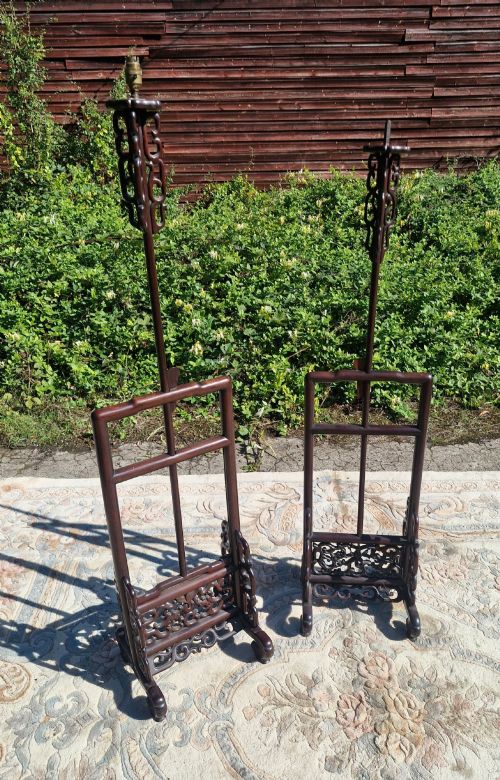
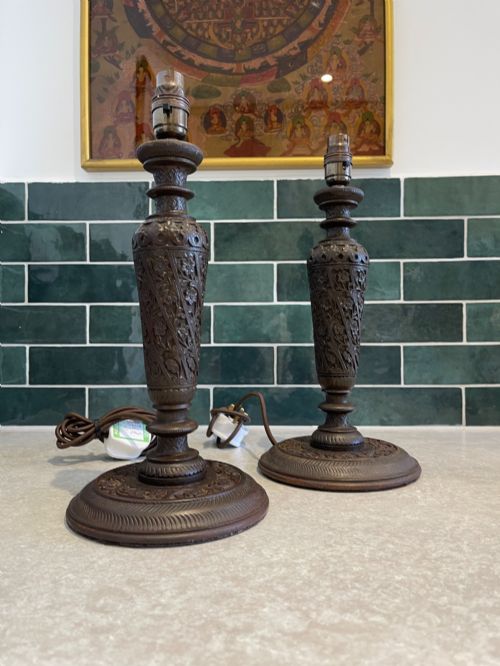
When you search for a carved hardwood lamp, you encounter lighting fixtures and tall stands originating primarily from Chinese, Anglo-Indian, and Burmese workshops. The selection ranges from towering standard lamps and floor torches to smaller table-top designs adapted from traditional lantern and vase stands.
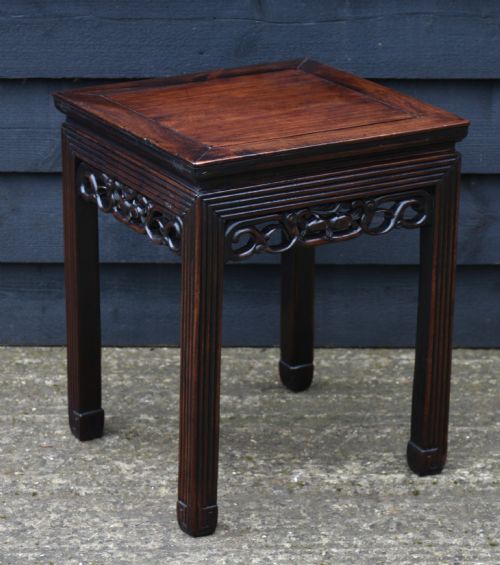
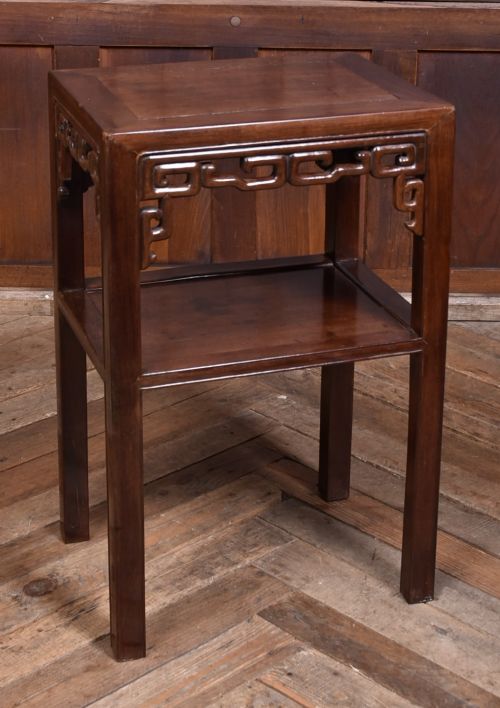
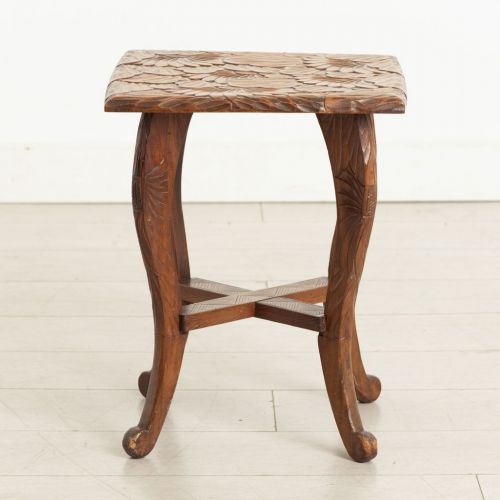
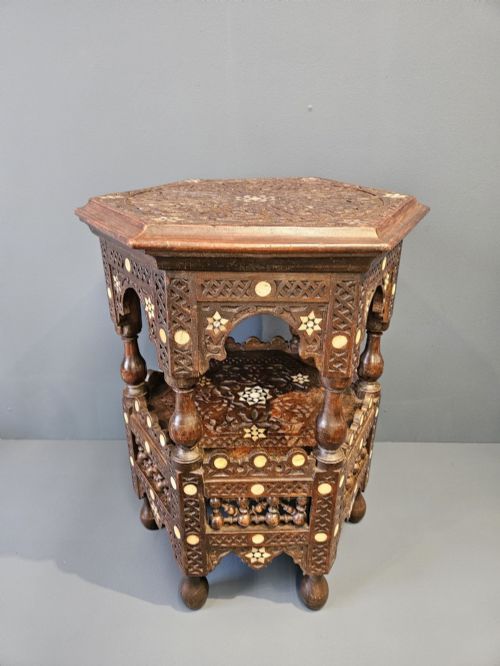
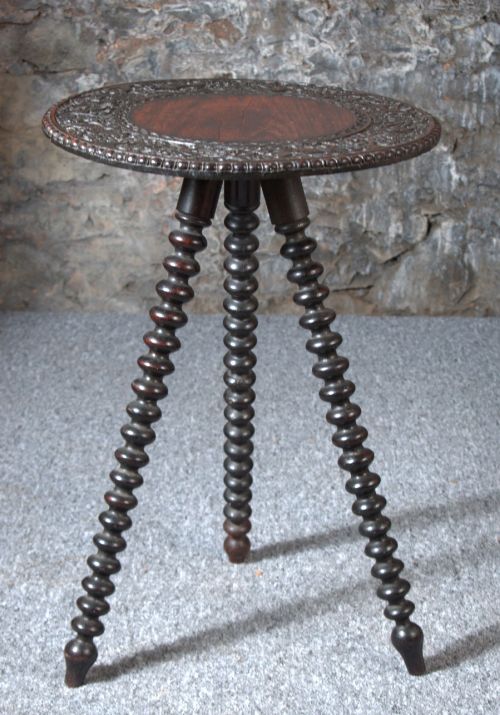
Many examples emerge from the nineteenth century and the early decades of the twentieth century, reflecting Victorian and Edwardian taste for exotic imported furnishings. Alongside standard upright lamps, the records show multi-tier tables and plant stands serving dual purposes as lamp bases.
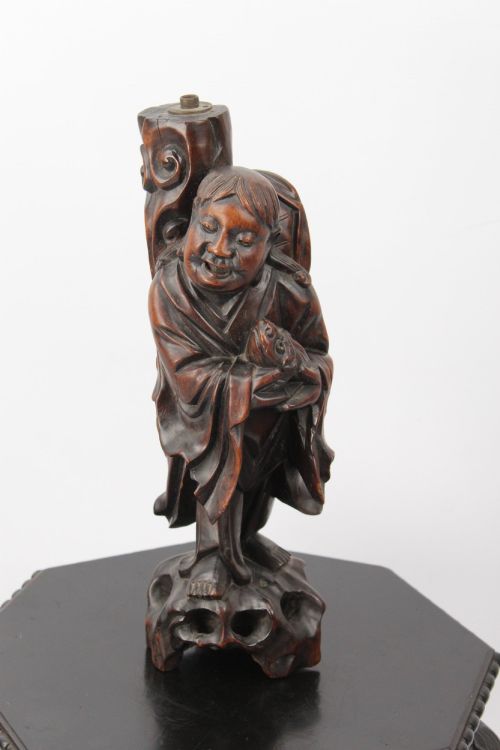
Chinese export pieces and regional variations dominate the inventory, often displaying intricate floral motifs, dragons, or root wood formations. Buyers frequently select these objects to anchor a room with dark, heavily figured timber.
How they were made
Artisans fashioned these items from dense tropical timbers including padouk, rosewood, teak, huali, and general root wood. These heavy materials required patient hand-tooling to achieve deep, three-dimensional relief carvings without splitting the grain.
Joinery techniques relied on traditional mortise and tenon construction, allowing heavy standard lamp columns and table structures to support significant weight. Details such as inset marble tops and turned brass components frequently complemented the carved timber frames.
Listings feature items spanning the nineteenth century through to the 1930s, constructed predominantly from padouk, rosewood, and hardwood.
What varies in quality
Quality rests principally on the depth and crispness of the carving, distinguishing sharp, undercut foliage and animated dragon motifs from shallow, mechanical incisions. Superior examples exhibit deliberate proportion between the supporting column and the wider base.
The choice of timber heavily influences the standard of the piece, with dense, finely figured padouk and rosewood commanding greater visual weight than plain secondary woods. Original surface patination and intact structural joinery complete the measure of a superior object.
Liberty of London
The Carved Hardwood Lamp Glossary
- Padouk
- A heavy, durable tropical hardwood displaying reddish-brown tones that darken gracefully over time. Artisans favoured it for carved tables and standard lamps due to its stability.
- Torchiere
- A tall standing lamp or torch holder designed to project light upward toward the ceiling. These pieces often feature substantial carved columns supported by tripod bases.
- Huali
- A prized Chinese hardwood noted for its distinctive grain patterns and rich colour. It appears frequently in export furniture from the late nineteenth century.
- Root wood
- Timber sourced from the root system of a tree, selected for its gnarled, organic contours. Carvers utilised these natural irregularities to create expressive lamp bases and sculptural stands.
- Jardiniere stand
- A tall piece of furniture originally intended to elevate a plant pot or floral arrangement. Many such stands share dimensions suited to conversion as lamp tables.
Carved Hardwood Lamp: Frequently Asked Questions
How do I wire an antique lamp?
Most older lamps require modern rewiring to meet current safety standards, which a qualified electrician can perform easily. Modern internal flex cables can be threaded through existing wooden channels without altering the exterior wood.
Retaining the original switch or bulb holder preserves historical integrity while allowing safe daily use in a modern home.
Where should I place a floor lamp?
Standard lamps with carved columns work effectively in room corners or beside low seating where their height balances vertical space. They provide warm ambient illumination rather than harsh direct task lighting.
Ensure the heavy wooden base rests on a level floor to maintain stability, particularly with taller floor-standing variations.
How do I clean carved timber?
Dust intricate carvings regularly using a soft, dry brush to prevent debris from settling in the deep recesses. Avoid harsh chemical polishes that can build up within the carved crevices over time.
Applying a microcrystalline wax occasionally protects the wood and enhances the natural lustre of dense hardwoods like rosewood.
What is the difference between a standard lamp and a table lamp?
Standard lamps stand directly on the floor as tall upright columns, typically measuring over five feet in height. Table lamps are smaller objects designed to sit securely upon side tables, cabinets, or desks.
Both categories utilise similar carved wooden motifs, but their scale determines their placement within an interior layout.