





Carved Hardwood Bench
A carved hardwood bench brings grounding weight and deep, figured grain to a room, drawing the eye with its intricate chisel work.
What these pieces are
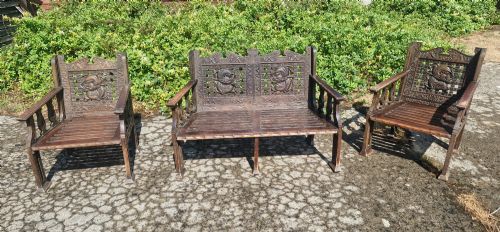
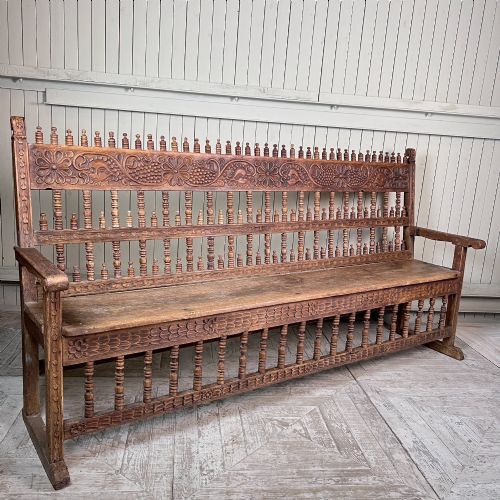
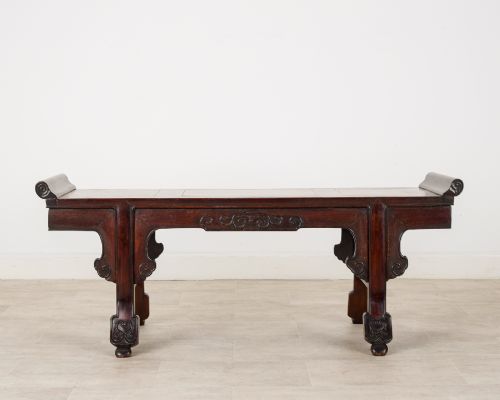
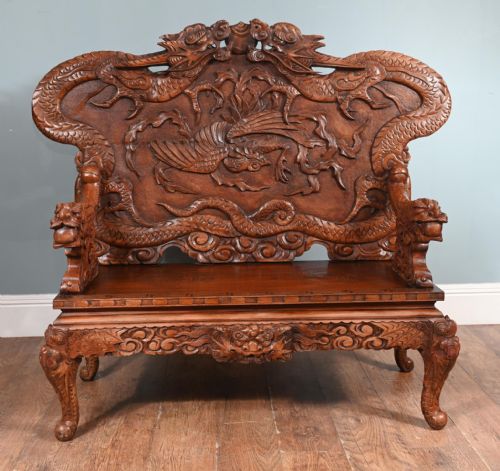
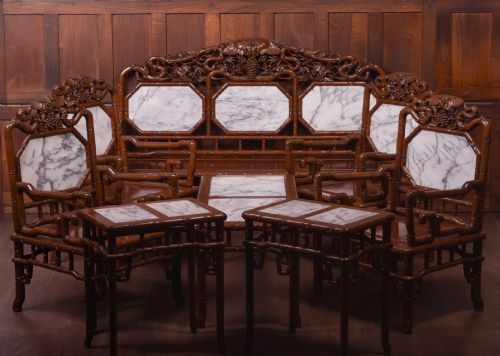
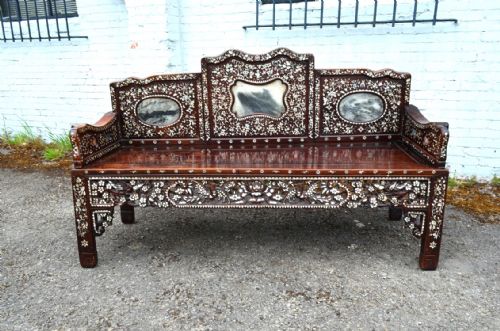
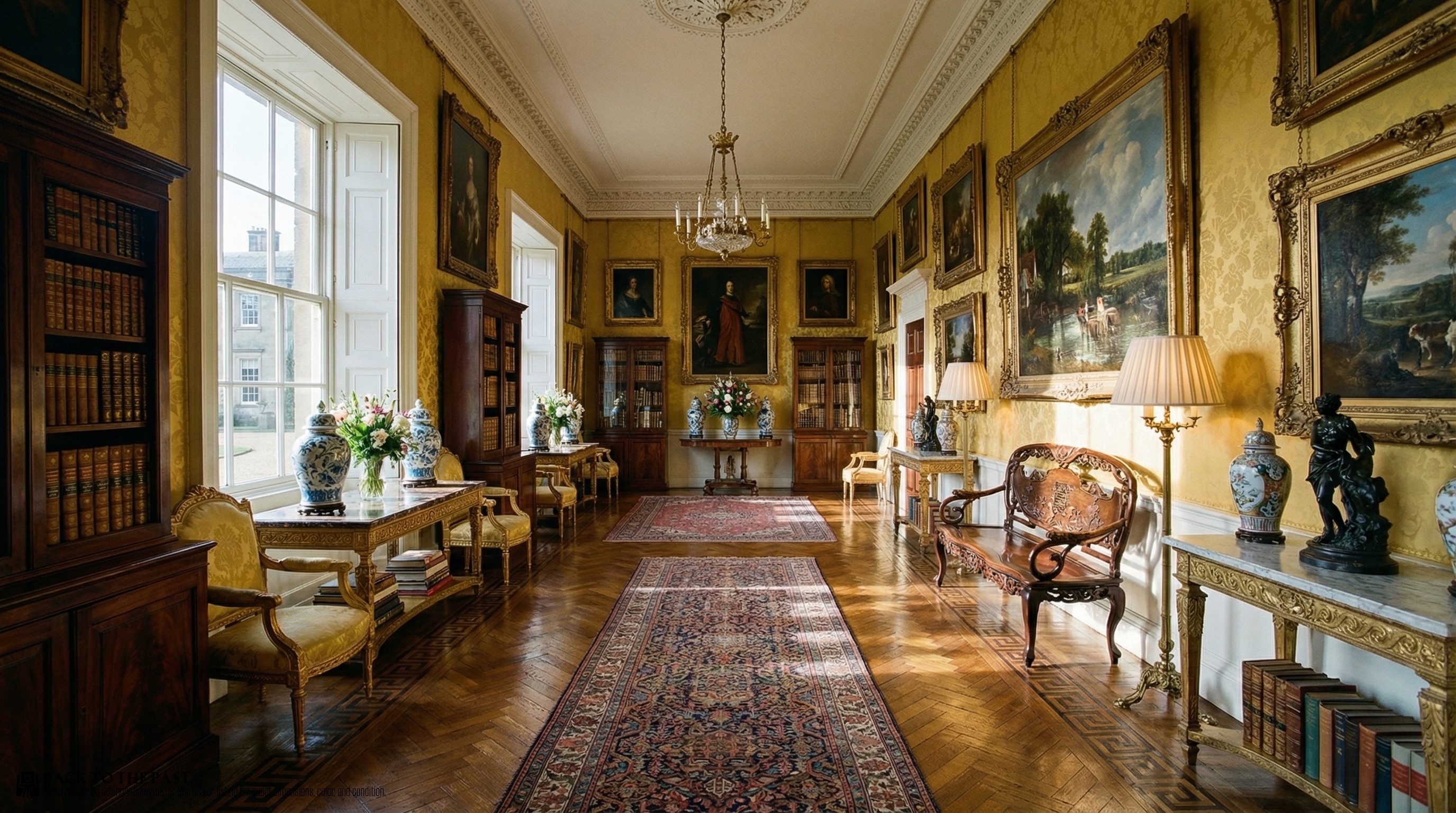
A carved hardwood bench is a substantial seating form fashioned from dense timber, appearing on this page primarily in forms such as hall benches, parlour suites, and window seats. These pieces range from the late eighteenth century through to the early twentieth century, reflecting varied origins across Chinese Qing Dynasty workshops, Spanish Colonial centres, and Moorish Revival designs.
The buyer meets variations spanning straightforward hall benches designed for narrow spaces to elaborate parlour suite elements and low inlaid benches. Construction dates cluster heavily in the nineteenth and early twentieth centuries, utilising resilient timbers that withstand daily use while maintaining intricate surface decoration.
How they were made
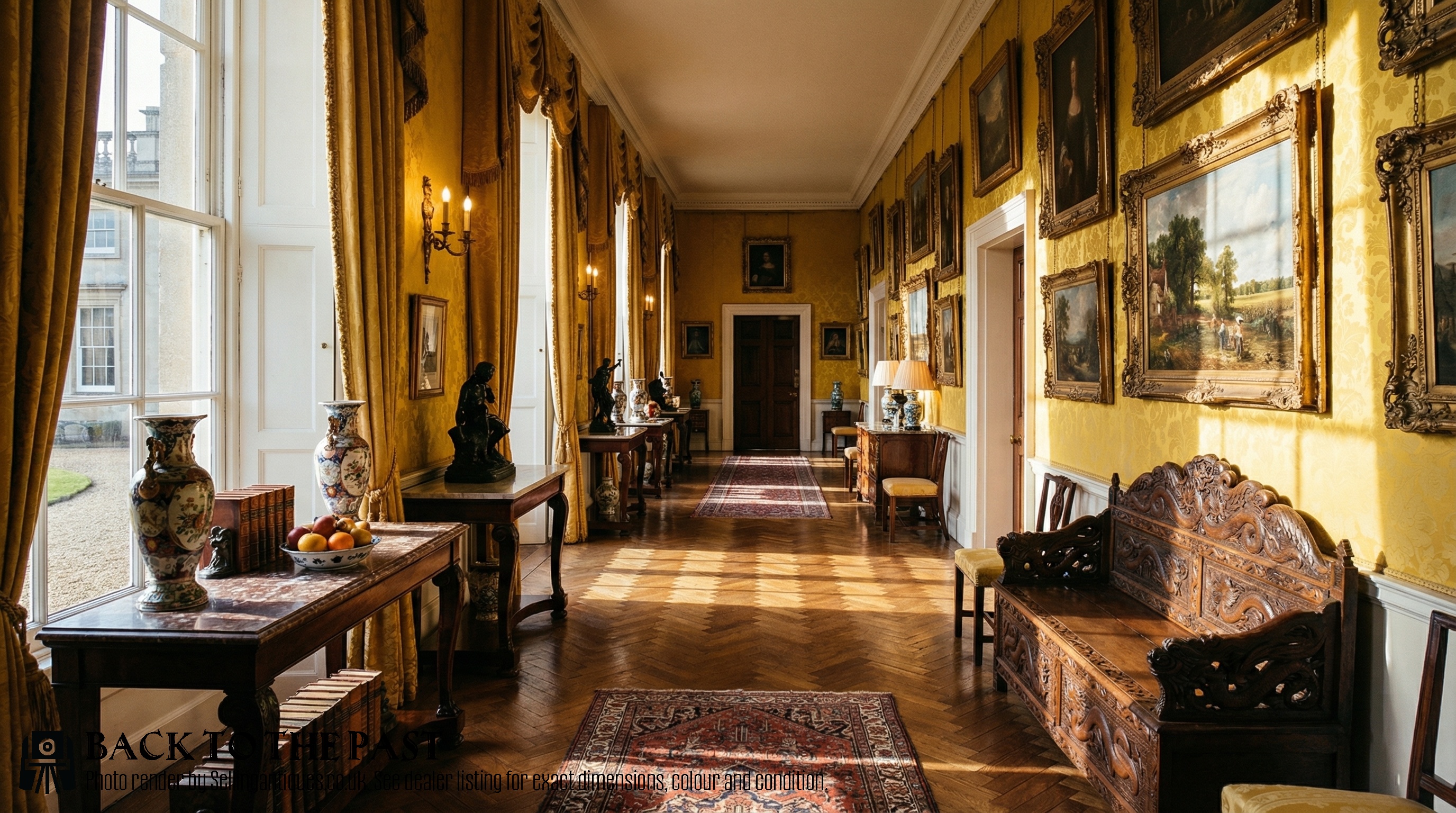
These pieces rely on dense timbers including rosewood, huanghuali wood, and ebonised hardwood, worked with traditional hand joinery and deep relief carving. Artisans shaped the heavy materials using chisels and gouges to produce elaborate surface motifs, occasionally incorporating marble inserts into the dense wooden frames.
Surfaces receive careful hand-polishing and finishing to highlight the natural figure of the hardwood without obscuring the precision of the carved details. The integration of structural elements demonstrates traditional framing techniques that keep heavy timber stable over generations.
Retail Price Guide 2026
Typical UK retail prices for carved hardwood bench, calculated from the Sellingantiques database of over a million retail prices indexed since 2003. This retail price guide relies exclusively on Sellingantiques data; no external sources or auction records are used, so the figures do not describe the wider market.
Listings feature pieces spanning the 18th century to 1920, constructed from rosewood, huanghuali wood, marble, and ebonised hardwood.
What varies in quality
Quality rests upon the crispness of the carving and the selection of the timber, where deeply undercut relief work and well-figured grain mark the upper tier of production. Finer examples display meticulous attention to joint alignment and symmetrical balance across complex ornamental surfaces.
The Carved Hardwood Bench Glossary
- Huanghuali wood
- A prized fragrant tropical hardwood native to China, known for its rich amber colour and striking ghost-face grain patterns. It forms the material base for some of the most sought-after antique seating.
- Hall bench
- A tall or backless seating piece traditionally placed in an entrance hall or corridor for brief seating. These items often feature prominent backrests with dense carving.
- Spanish Colonial
- A design aesthetic blending European forms with indigenous craftsmanship from regions under Spanish rule. Pieces from this tradition display robust proportions and distinct regional carving motifs.
- Moorish Revival
- An architectural and decorative style popular in the nineteenth and early twentieth centuries that imitates North African and Islamic design elements. It frequently incorporates intricate geometric lattices and low seating profiles.
- Ebonised hardwood
- Timber treated with a chemical stain or pigment to simulate the deep black appearance of ebony. This finish provides a uniform dark surface that highlights reflective carved highlights.
Frequently Asked Questions
Where should I place a hall bench?
A hall bench suits narrow corridors, entranceways, or large landing spaces where its linear form and decorative backrest can be viewed clearly.
Because these seating pieces are relatively shallow, they fit well against walls without obstructing thoroughfares in domestic interiors.
How do I clean carved hardwood?
Maintenance requires dusting with a dry, soft cloth to prevent particulate matter from settling into the deep recesses of the carved decoration.
Avoid liquid cleaners and silicone-based polishes, as these substances can accumulate within the grain and darken the timber over time.
What defines a Chinese Qing Dynasty bench?
These items typically feature traditional mortise and tenon joinery alongside relief carving depicting floral, animal, or symbolic motifs.
The timbers used in these pieces are exceptionally heavy, exhibiting dense grain structures characteristic of nineteenth-century workshops.
How can I tell the period?
Dating relies on examining tool marks, timber shrinkage patterns, and the stylistic conventions associated with specific historical eras like the late eighteenth century or early 1920s.
Hand-cut joinery details and traditional surface patination provide reliable indicators of age when compared against documented regional examples.