



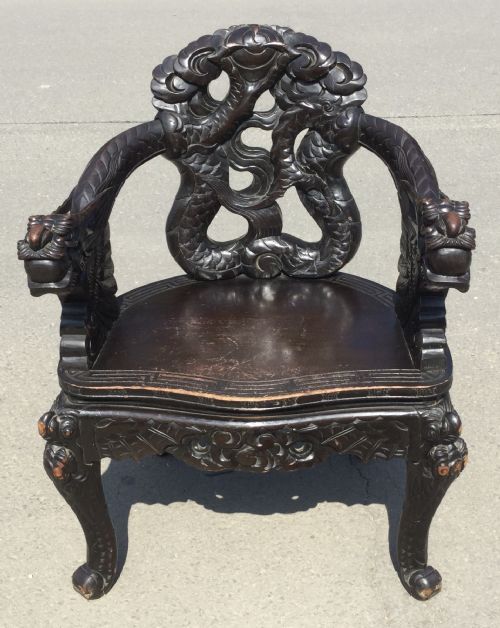
Carved Hardwood Accent Chairs
Carved hardwood accent chairs bring global history and sculptural weight into a room, offering striking seating shaped by diverse international traditions.
Carved Hardwood Accent Chairs
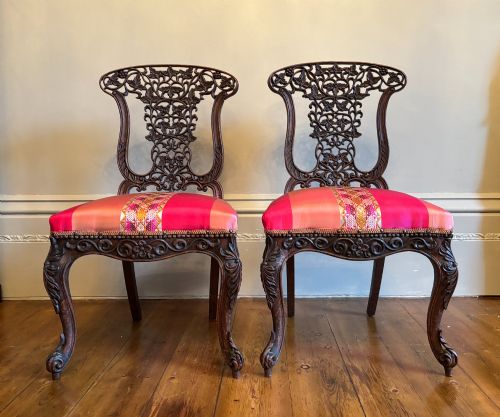
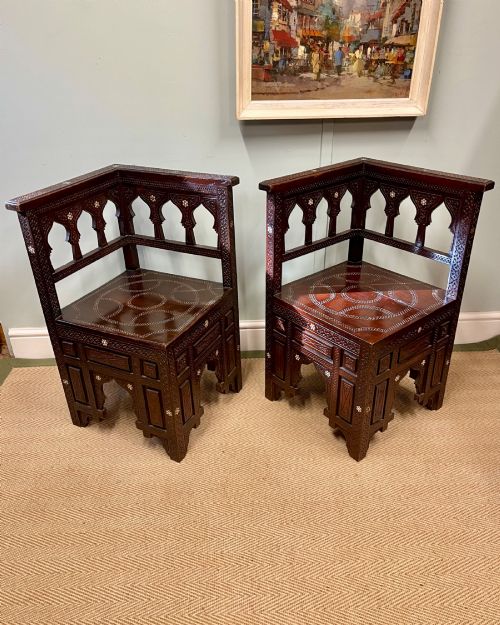
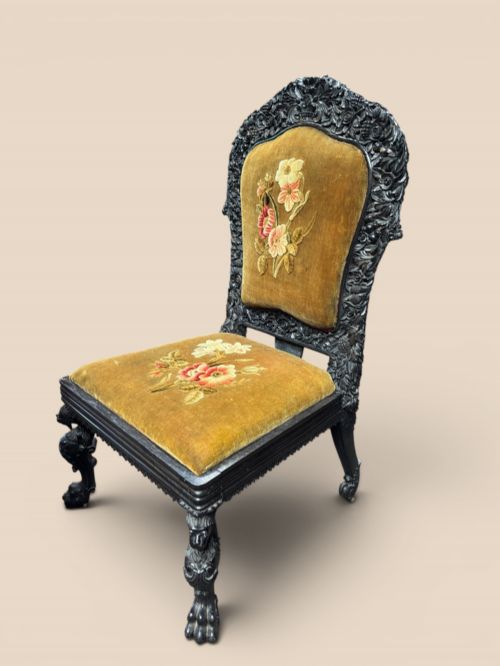
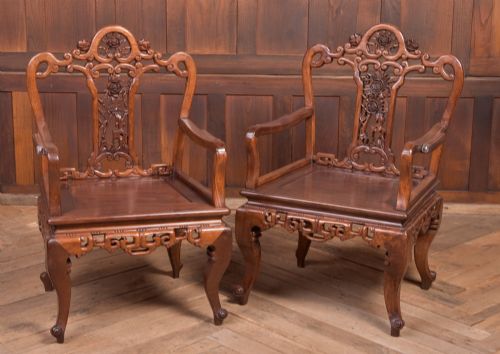
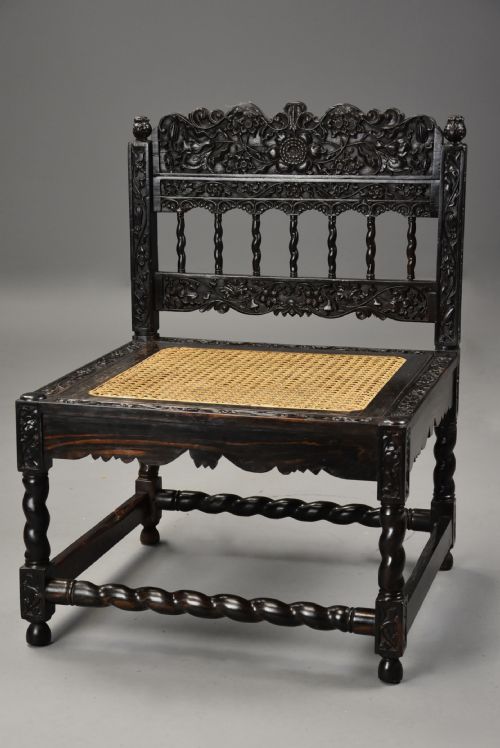
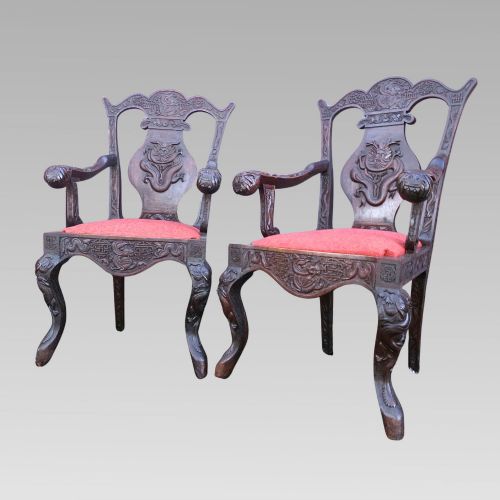
When you search for carved hardwood accent chairs, you encounter a diverse array of seating originating from Chinese workshops, Indian provinces, and North African or Middle Eastern makers. These pieces span from the seventeenth century through to the early twentieth century, encompassing Victorian interpretations alongside Qing Dynasty exports and Anglo-Indian creations.
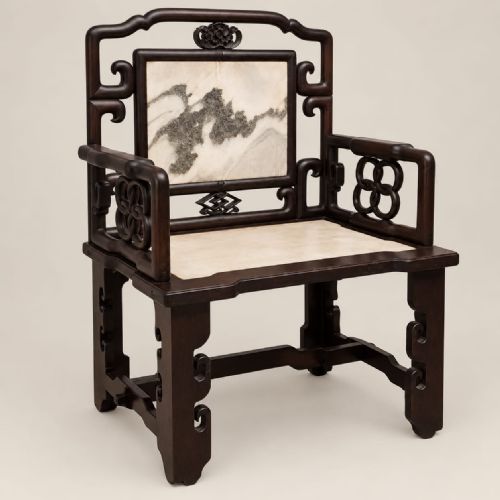
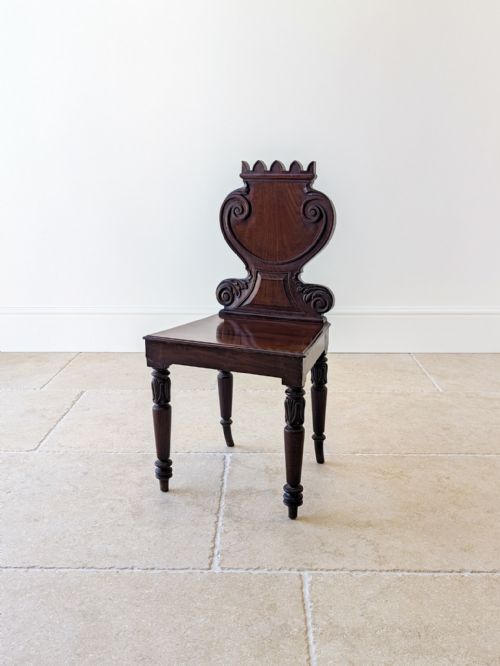
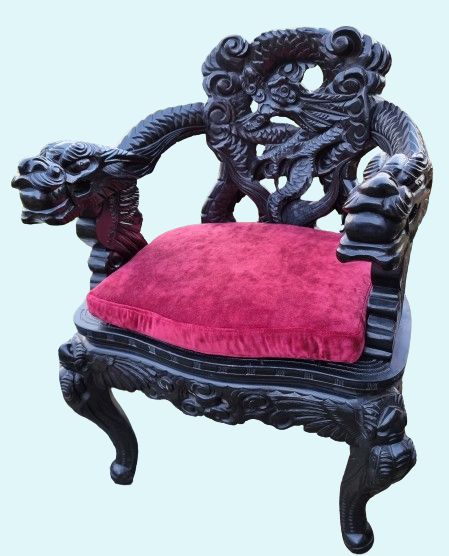
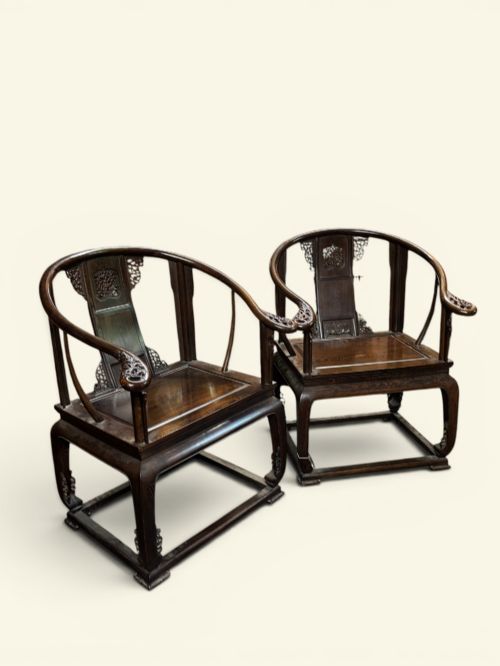
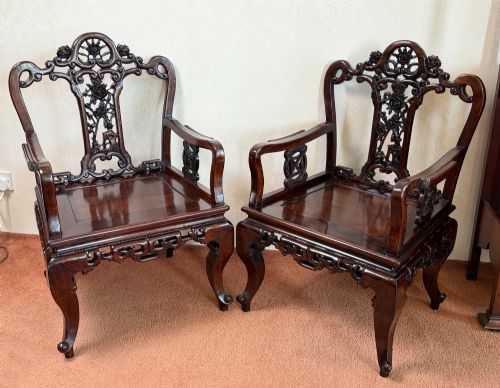
The forms on this page include substantial throne chairs, horseshoe-back armchairs, folding seats, and occasional side chairs. Chinese hardwood versions and Indian regional pieces dominate the selection, bringing dense timbers and intricate relief carving into domestic interiors as distinct statement seating.
How they were made
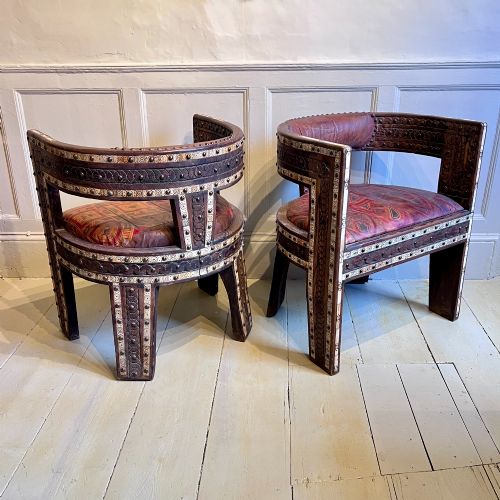
Maker workshops utilised dense timbers such as padauk, teak, ebony, hongmu, and mahogany, chosen for their structural strength and capacity to hold crisp, deep chisel work. Many examples incorporate contrasting materials, pairing dark hardwood with bone inlay, brass wire, nacre-shell, marble inserts, or woven cane seats.
Joinery techniques relied heavily on traditional framing without modern fasteners, allowing intricate components like dragons, foliage, and geometric Moorish motifs to be carved directly into the structural elements. Surfaces were often finished with subtle lacquering or left to highlight the natural grain and rich tone of the timber.
Some nineteenth-century makers evidently believed a chair should double as a menagerie, carving entire families of dragons into a single backrest.
What varies in quality
Quality in carved hardwood accent chairs rests upon the depth, precision, and crispness of the chisel work rather than mere surface decoration. Superior examples display deeply undercut foliage, sharply defined facial expressions on figural carvings, and harmonious proportions that balance heavy ornamentation with structural integrity.
The choice of timber and the integration of secondary materials further differentiate the range. Pieces utilising solid ebony, hongmu, or padauk, alongside finely fitted marble panels or intricate brass and bone inlay, demonstrate superior craftsmanship compared to simpler regional utility pieces.
The Carved Hardwood Accent Chairs Glossary
- Hongmu
- A traditional Chinese term denoting dense, heavy hardwoods, often translated as red wood. These timbers provide the ideal weight and stability for intricate furniture carving.
- Padauk
- A durable tropical hardwood displaying rich reddish-brown tones that deepen with age. It is frequently encountered in nineteenth-century Anglo-Indian and Burmese furniture.
- Savonarola
- A folding chair of X-frame construction, originating in the Italian Renaissance but adopted in nineteenth-century Indian production using inlaid brass and carved timber.
- Hongmu
- A traditional Chinese term denoting dense, heavy hardwoods, often translated as red wood. These timbers provide the ideal weight and stability for intricate furniture carving.
- Cane
- Woven split rattan used for seating panels, offering flexibility and breathability. It appears frequently on Asian and colonial export chairs.
Carved Hardwood Accent Chairs: Frequently Asked Questions
Where were these chairs made?
The pieces originate from diverse global regions, predominantly featuring workshops across China, India, and the Middle East. Many were created for export during the nineteenth and early twentieth centuries.
Makers incorporated distinct regional styles, ranging from Qing Dynasty dragon motifs to Anglo-Indian padauk carving and Moorish geometric inlay.
How do I style an accent chair?
These sculptural seats work best as standalone focal points in a hallway, study, or living room. Their dense timber tones and intricate carving complement neutral backgrounds.
Pairing a heavier throne or horseshoe-back chair with simpler modern furnishings allows the traditional craftsmanship and materials to stand out.
Are these chairs comfortable?
Comfort varies significantly depending on the specific form and period of the seating. Many historic pieces prioritise sculptural presence and upright posture over ergonomic cushioning.
While some feature expansive horseshoe arms or leather upholstery, others function primarily as decorative hall chairs or low occasional seats.
What woods are commonly used?
Makers relied on heavy, durable tropical timbers capable of supporting deep relief carving. Common varieties include dense ebony, fragrant teak, padauk, and hongmu.
Secondary materials like walnut, fruitwood, and mahogany also appear, frequently enhanced with contrasting bone, brass, or marble elements.