

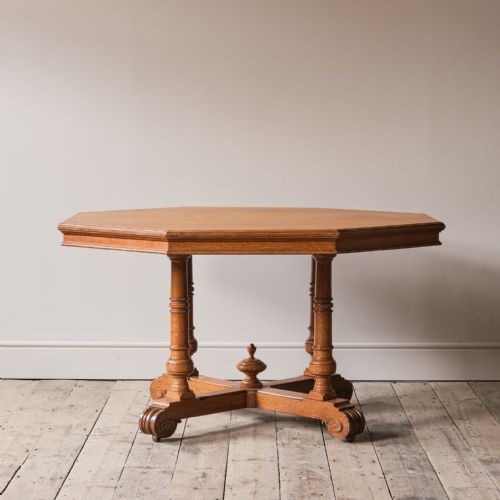
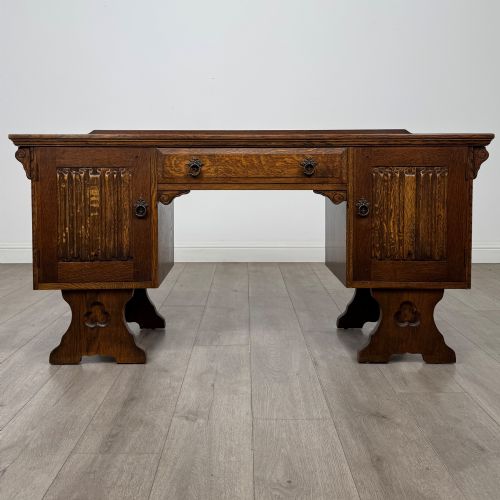
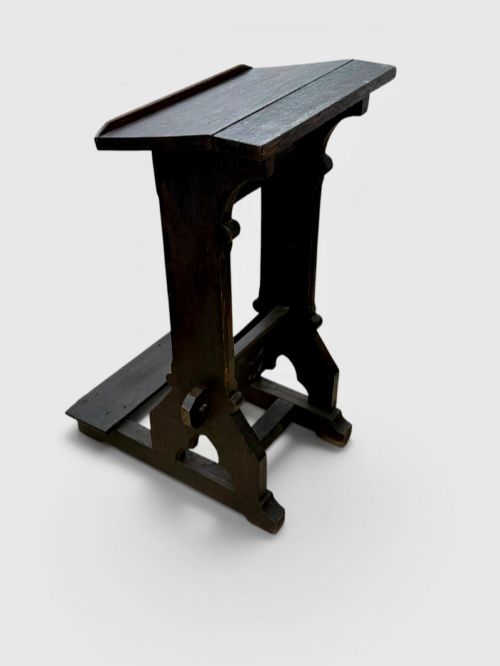
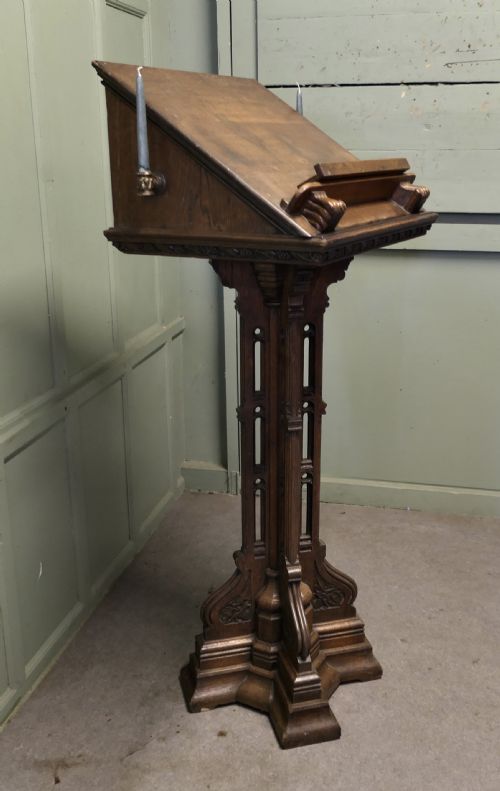
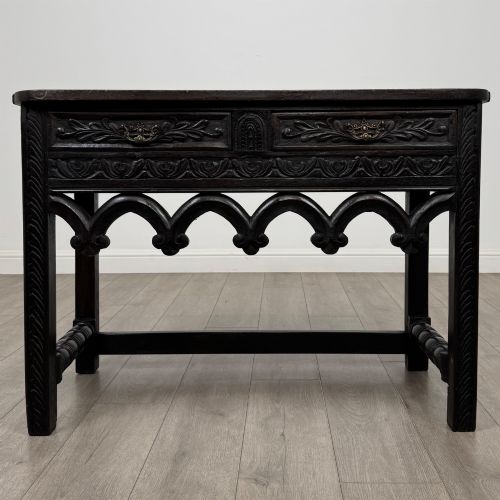
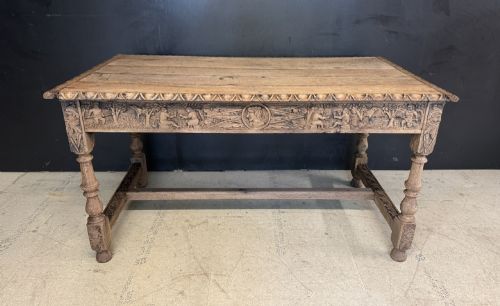
Carved Gothic Oak Desk
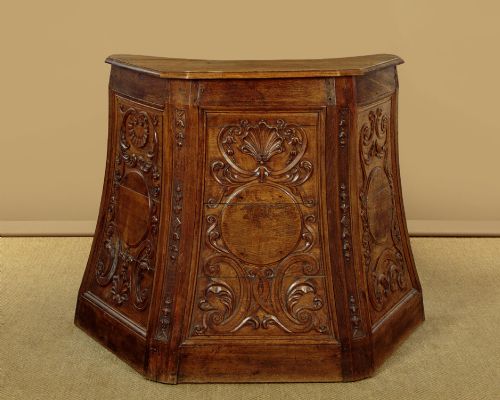
A carved gothic oak desk brings serious architectural presence to a room, fashioned from sturdy timber with pointed arches and deep relief carvings.
Carved Gothic Oak Desk
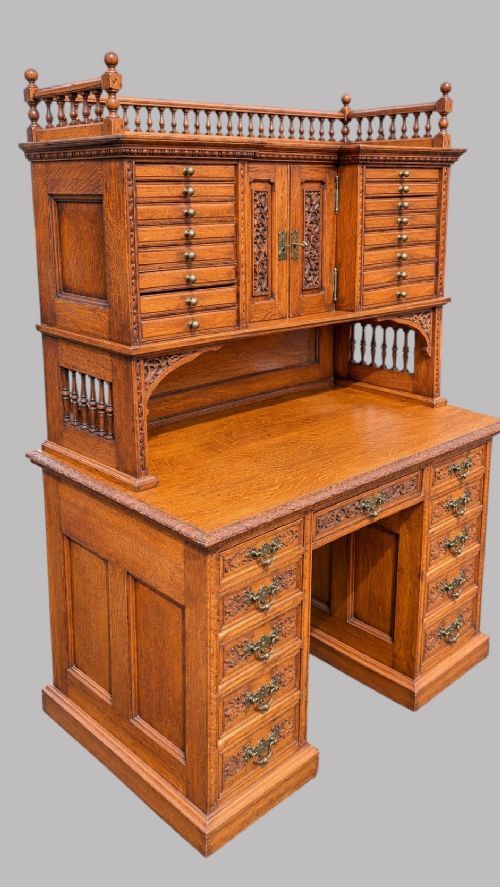
A carved gothic oak desk is a sturdy writing surface built with architectural motifs drawn from medieval buildings. You will frequently encounter nineteenth-century pedestal desks, kneehole desks, and bureau forms bearing this heavy ornamentation.
The pieces on this page span the Victorian and Edwardian eras, often showing revivalist influences from Tudor, Elizabethan, and Jacobean periods. Alongside standard writing tables, you meet bureau desks and partner's desks equipped with drawers and drop-front panels.
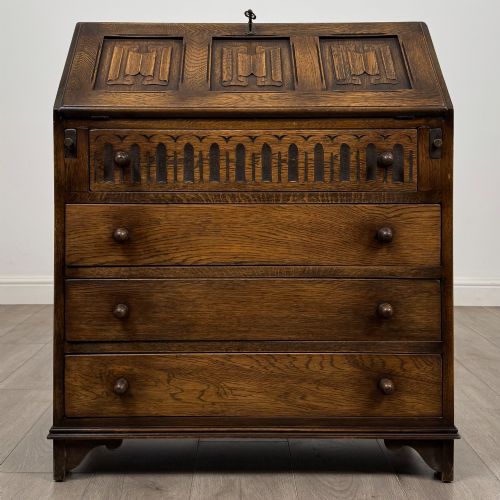
Makers drew heavily on ecclesiastical and secular gothic design, incorporating pointed arches, tracery, and linenfold panelling into everyday workspace furniture. These objects served utilitarian functions in libraries, studies, and offices while projecting solemn authority.
How they were made
Carpenters utilised solid oak planks joined with traditional framing methods, mounting surfaces on sturdy legs or twin pedestals of drawers. Structural integrity relied on thick timber boards that accommodated deep chisel work without splitting.
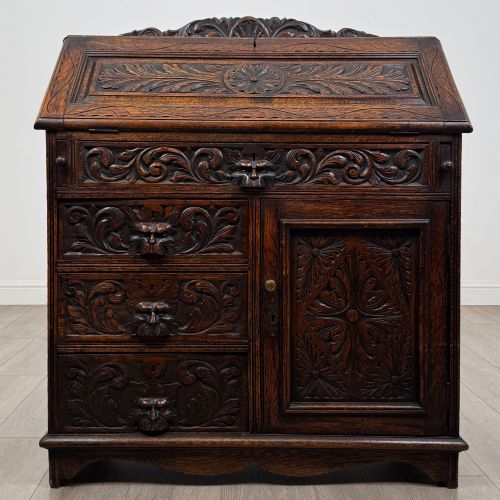
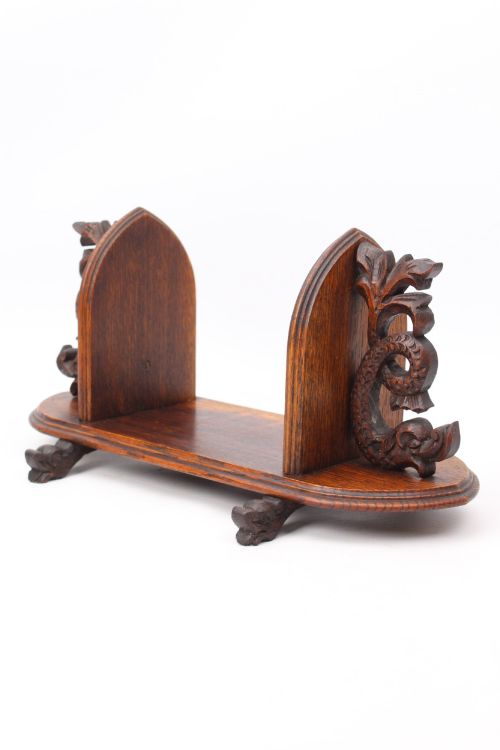
Ornamentation was carved directly into the wood grain, often featuring high-relief motifs such as Green Men, lions' heads, dragons, and floral tracery. Metal components like brass pulls, drop handles, and iron hinges fastened doors and drawers securely.
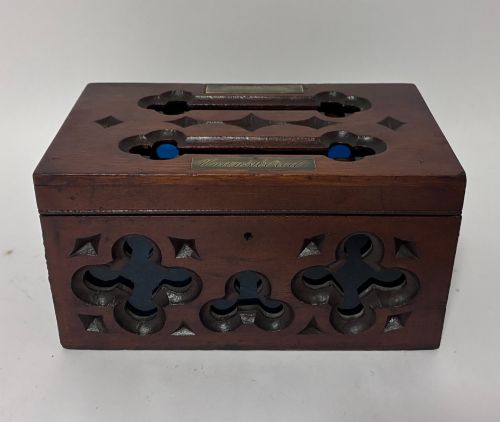
Writing surfaces were frequently inset with panels of tooled leather or fabric to provide a smooth plane for ink and paper. Secondary materials such as glass and metal occasionally appeared in associated pieces like bookcases and correspondence boxes.
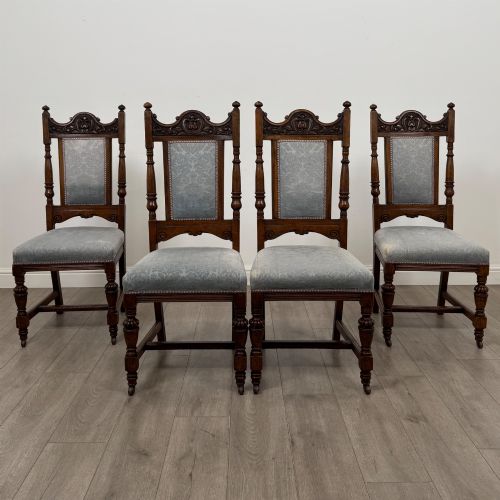
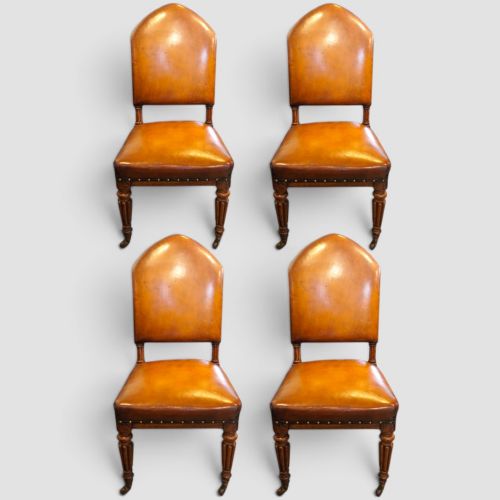
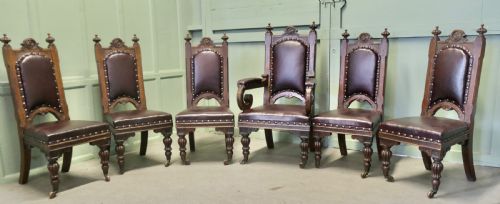
Listings span the nineteenth and early twentieth centuries, dominated by Victorian oak pedestal desks, side tables, and dining chairs.
What varies in quality
The selection of timber grain affects visual weight, with quarter-sawn oak displaying prominent medullary rays that catch the light across panels and drawer fronts. Superior construction involves heavy gauge brass hardware and robust internal framing that prevents structural movement over decades of use.
Arthur Simpson of Kendal·Winterhalder·Bruce James Talbert·Gillows·S&H Jewell
The Carved Gothic Oak Desk Glossary
- Gothic Revival
- An architectural and decorative style popular in the nineteenth century that revived medieval forms, pointed arches, and ecclesiastical motifs.
- Green Man
- A sculptural motif of a human face disgorging foliage, frequently carved into the woodwork of Victorian and Edwardian furniture.
- Linenfold
- A style of wood carving that imitates folded parchment or linen, commonly used on the panels of bureau desks and cupboards.
- Kneehole desk
- A freestanding desk with a central recess for the user's legs, flanked by pedestals containing banks of small drawers.
- Partners desk
- A large double-sided writing table designed for two people to work opposite one another, featuring drawers on both long sides.
Carved Gothic Oak Desk: Frequently Asked Questions
What is a kneehole desk?
A kneehole desk provides a central recess for sitting, flanked by two pedestals containing banks of small drawers.
This layout allowed makers to add substantial storage capacity beneath the writing surface without sacrificing legroom.
Where were these desks used?
These pieces belonged in private libraries, studies, and administrative offices where formal scholarly work took place.
Their imposing architectural presence suited domestic interiors that valued historical authority and heavy wooden craftsmanship.
What is linenfold carving?
Linenfold is a flat panel relief technique that makes the wood appear as though stiff cloth is folded across the surface.
Cabinetmakers utilised this specific motif extensively on the drop-fronts of bureau desks and cabinet doors.