





Gothic Style Wooden Table
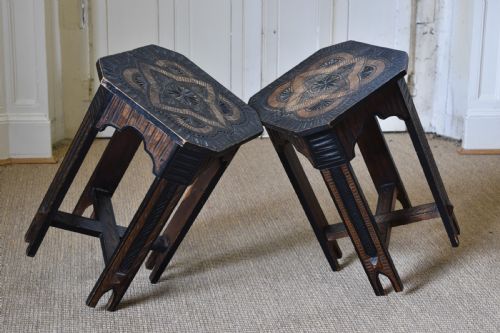
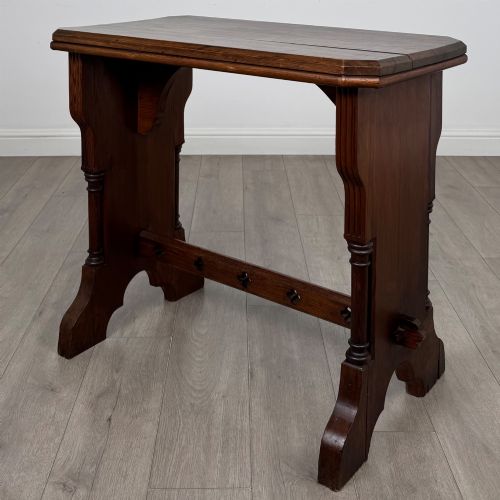
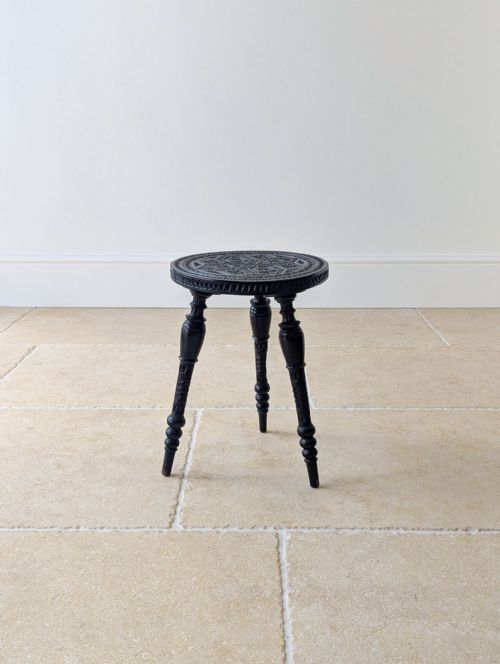
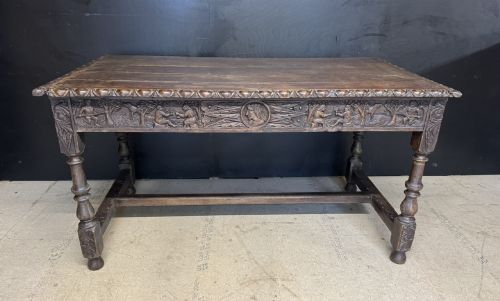
A gothic style wooden table brings heavy architectural carving and deep timber character straight into a room.
Gothic Style Wooden Table
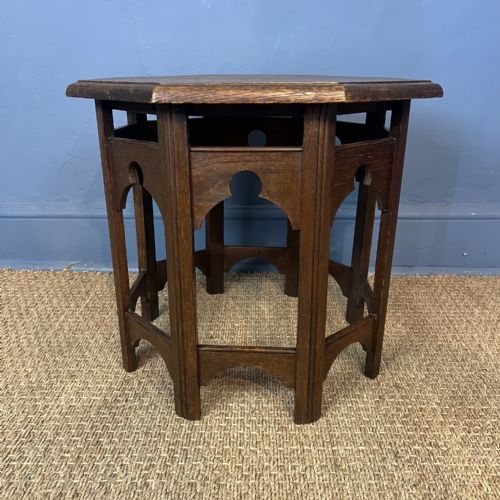
A gothic style wooden table draws upon medieval architectural motifs like tracery, linenfold, and pointed arches, translating stone details into domestic timber furniture. You will encounter dining tables, occasional tables, and writing desks shaped by Victorian Gothic, Jacobean Revival, and Arts and Crafts movements.
Most pieces date from the nineteenth and early twentieth centuries, spanning periods from the eighteen-fifties through to nineteen-thirty. The forms range from compact side tables and bedside cabinets to substantial refectory and centre tables built for communal halls.
Makers utilised heavy timbers like oak, pitch pine, and mahogany, applying deep chip carving, fretwork, and panelled construction. These tables serve as functional surfaces while anchoring a room with dark wood presence and historical weight.
How they were made
Carpenters constructed these tables using solid domestic hardwoods, predominantly oak, alongside pitch pine, mahogany, and ebonised wood. Joinery relied on traditional pegged mortise and tenon frames to support heavy loads and thick timber tops.
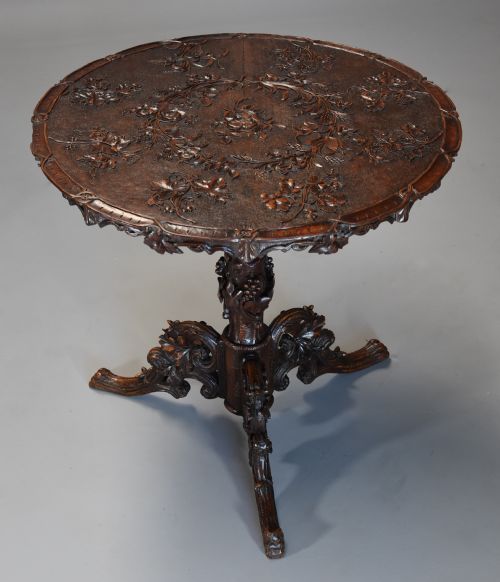
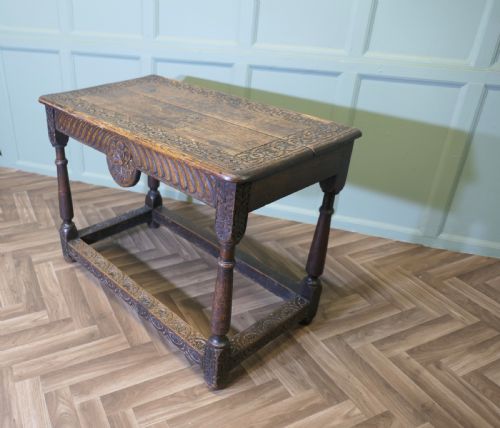
Carvers decorated the surfaces by hand using gouges and chisels to create chip-carved geometric patterns, Celtic motifs, and cathedral-arch fretwork. Iron and brass fittings occasionally reinforced the structure or provided functional handles for drawers.
Cats evidently approved of medieval design, as several tables share space with a carved Black Forest linden wood centrepiece.
What varies in quality
The depth and crispness of the hand-carved detail separate standard commercial production from exceptional workshop pieces. Tables featuring profuse, undercut relief work and well-balanced proportions demonstrate superior craftsmanship compared to simpler, mechanically milled items.
Timber selection and construction integrity also define the upper tier. Mature quarter-sawn oak with prominent medullary rays and tight joints retains stability and visual richness over centuries, unlike lesser hardwoods prone to warping.
Baillie Scott·Sir Robert Lorimer
The Gothic Style Wooden Table Glossary
- Chip carving
- A style of relief carving where small chips are removed from a single piece of wood with knives or chisels to form geometric patterns. This technique appears frequently on nineteenth-century occasional tables and panels.
- Refectory table
- A long, narrow dining table originally designed for monastic dining halls. The listings feature sturdy oak examples built with trestle supports or central underframes.
- Quarter-sawn
- A method of milling logs where the blade intersects the annual growth rings at a steep angle. This cut produces stable boards with distinctive figure lines, common in quality oak furniture.
- Ebonised
- Wood finished with a chemical stain or black paint to imitate ebony. This treatment was popular during the Victorian era to create high-contrast decorative surfaces.
- Fretwork
- Ornamental perforated wood design created by cutting patterns through thin boards. It adds architectural lightness to cabinet doors and table aprons.
Gothic Style Wooden Table: Frequently Asked Questions
How do I care for an antique oak table?
Feed the timber periodically with traditional beeswax to maintain the moisture and natural sheen of the wood. Avoid placing the surface near direct heat sources or in strong sunlight to prevent splitting.
Use coasters and felt pads beneath objects to protect the hand-finished top from moisture rings and scratches. Regular dusting with a soft, dry cloth is sufficient for daily upkeep.
Can I use a gothic style table in a modern room?
The strong architectural lines and dark timber tones provide a striking contrast against minimalist contemporary interiors. Pair a carved side table or refectory desk with neutral walls to let the historical craftsmanship stand out.
These pieces work well as functional focal points, adding texture and warmth to otherwise sleek, modern spaces without overwhelming the room layout.
What is the difference between a refectory and a centre table?
A refectory table is long and narrow, traditionally built to seat many people along communal dining halls. A centre table is typically more compact and designed to stand freestanding in the middle of a room for display.
Refectory versions rely on sturdy trestle or four-leg frames with stretchers, while centre tables often showcase more elaborate pedestal or carved apron details.