


Tracery Carved Oak Table
These traceried carved oak tables bring architectural Gothic detail straight into a room, offering robust construction and striking ecclesiastical ornament.
Tracery Carved Oak Table
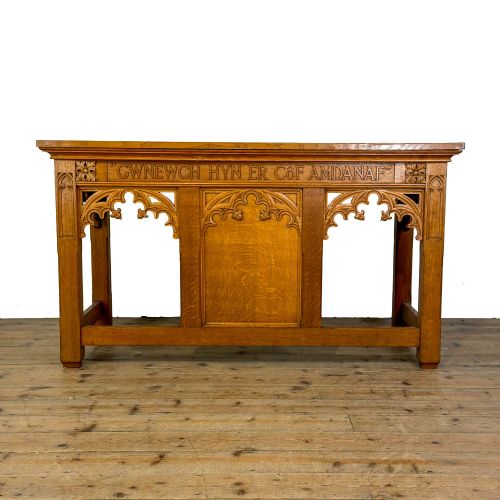
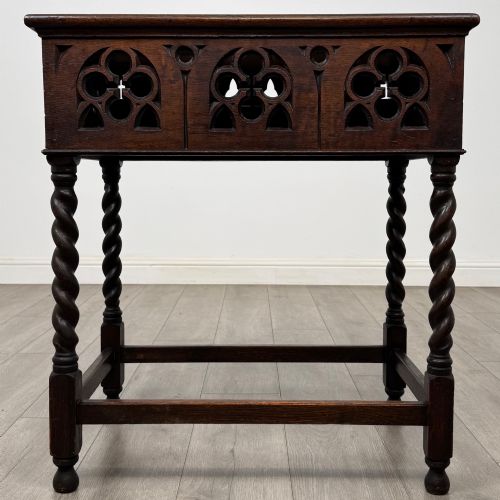
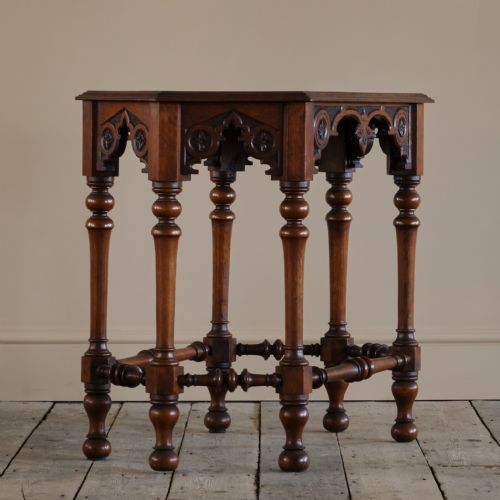
A tracery carved oak table carries the heavy influence of Gothic architecture into domestic furniture, displaying pointed arches, cusping, and geometric window patterns carved directly into the timber. When you search for a tracery carved oak table, you encounter pieces that bridge the gap between ecclesiastical furnishings and home use.
The selections available here span several distinct periods, including Victorian, Edwardian, and nineteenth-century examples alongside a few specific dates such as nineteen thirty and eighteen eighty. Forms range from side tables and occasional pieces to altar tables, serving tables, and dining tables.
Oak dominates the material palette, supported by structural elements in walnut, chestnut, brass, and iron. Most items align with Gothic Revival and Victorian Gothic Revival styles, giving rooms a historic and substantial presence.
How they were made
Makers built these pieces primarily using solid oak, selecting boards for strength and distinct grain patterns before applying deep hand-carved tracery. Secondary timbers such as chestnut and walnut occasionally appear in related forms like deed boxes and buffets.
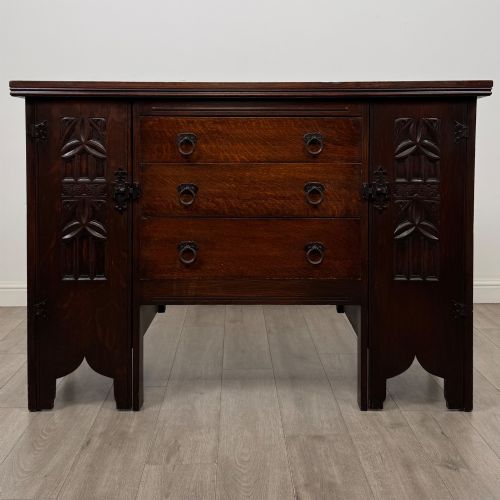
Metal components in brass and iron provide functional reinforcement and decorative hardware, securing joints and framing drawers or structural angles. Joinery relied on traditional framing methods suited to heavy wood and architectural carving.
Listings feature oak predominantly, supported by walnut and chestnut, across nineteenth-century and Edwardian periods.
What varies in quality
Quality rests upon the depth and crispness of the carved tracery, where sharper architectural lines and well-defined cusping distinguish superior pieces from softer, shallower work. The proportion of the carvings relative to the structural frame dictates the visual balance of the table.
The choice of timber grain and the integrity of the joins determine structural longevity, separating utilitarian items from finer examples designed with careful attention to historic detail.
The Tracery Carved Oak Table Glossary
- Tracery
- Architectural stonework ornamentation adapted into woodwork, forming geometric patterns within the upper part of Gothic windows or panels.
- Gothic Revival
- A nineteenth-century design movement that revived medieval architectural forms, pointed arches, and ecclesiastical motifs in architecture and furniture.
- Altar table
- A heavy ecclesiastical table form often adapted into domestic settings during the Gothic Revival period for use as serving or side furniture.
- Cusping
- The projecting points where foils meet in Gothic tracery and panel design, creating ornate curved interior edges.
Tracery Carved Oak Table: Frequently Asked Questions
What periods do these tables come from?
The pieces span the nineteenth and early twentieth centuries, including Victorian, Edwardian, and nineteen-thirty examples alongside specific dates like eighteen eighty and nineteen hundred.
This broad timeline shows how ecclesiastical Gothic styles persisted well past the medieval era, being reinterpreted by later cabinetmakers in various domestic forms.
How do I identify Gothic Revival styling?
Look for characteristic architectural motifs such as pointed arches, cusped tracery panels, and heavy framing reminiscent of medieval stone structures.
These elements are carved directly into oak surfaces, distinguishing the style from classical or later revival periods.
What materials were used besides oak?
While oak serves as the primary wood, listings include walnut and French chestnut alongside metal components in brass and iron.
These secondary materials appear in hardware, hinges, and occasional alternative forms associated with the broader Gothic tradition.
Where were these table forms used?
Original forms ranged from chapel altar tables and serving tables to everyday side tables, dining tables, and occasional stands.
Victorian and Edwardian homes incorporated these ecclesiastical styles into hallways, libraries, and dining rooms to project a sense of historic gravity.