
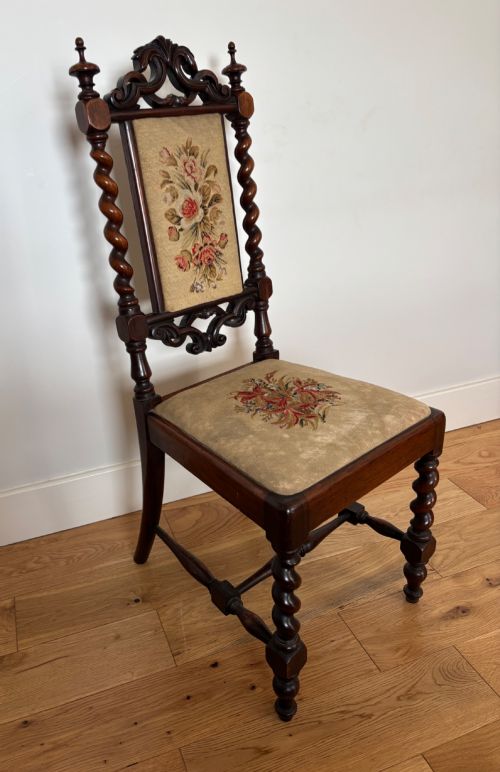


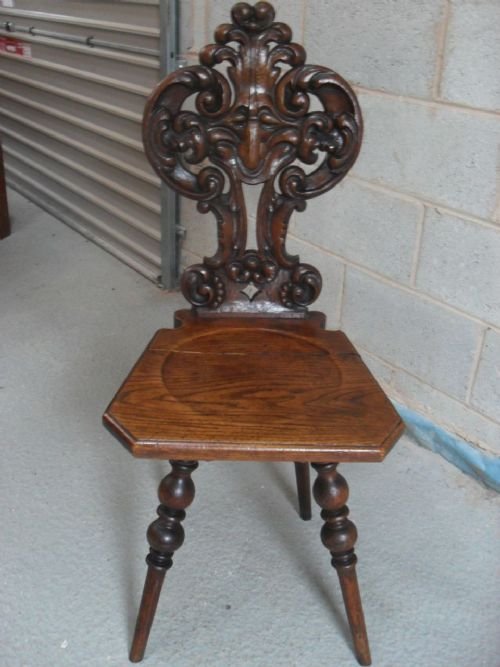
Carved Gothic Bedroom Chair
A carved gothic bedroom chair brings a devout, architectural presence to a room, drawing on medieval forms adapted for nineteenth-century interiors.
Carved Gothic Bedroom Chair
When you search for a carved gothic bedroom chair, you encounter a selection of nineteenth-century seating shaped by the Gothic Revival and Aesthetic movements. These pieces encompass forms designed for private chambers and domestic sanctuaries, including prayer chairs, side chairs, nursing chairs, and hall chairs.
The versions most frequently met on this page belong to the Victorian era, spanning from eighteen fifty to nineteen hundred. They bridge utilitarian chamber furniture and ornamental revival design, executed in rich woods like oak, mahogany, and rosewood.
How they were made
Cabinetmakers built these chairs from dense hardwoods, primarily selecting solid oak, mahogany, and rosewood to support deep hand-carving and architectural tracery. Timber selection dictated the depth and crispness of the Gothic motifs carved directly into the frames.
Seating portions utilised traditional upholstery methods, incorporating fabric, velvet, and specialised upholstery materials secured to sprung or padded foundations. Brass details occasionally fastened textile elements or reinforced structural joints.
Materials recorded across the inventory include oak, mahogany, rosewood, pitch pine, brass, and various traditional upholstery fabrics.
What varies in quality
The distinction between standard domestic seating and superior examples lies in the ambition of the joinery and the execution of the carved ornament. Sharp, undercut tracery and crisply articulated architectural details separate exceptional workshop production from simpler commercial output.
Choice of timber heavily influences the grade of the piece, with dense rosewood and finely figured mahogany carrying greater refinement than utility pine or standard oak. The integrity of the original frame construction and the fidelity of the stylistic revival determine the overall stature of the chair.
Bruce J. Talbert
The Carved Gothic Bedroom Chair Glossary
- Gothic Revival
- An architectural and decorative movement drawing inspiration from medieval design, featuring pointed arches and trefoils. This aesthetic dominated mid to late nineteenth-century cabinetmaking.
- Prie Dieu
- A devotional chair designed for prayer, traditionally featuring a low seat and an upper rest for the arms or elbows. These pieces frequently incorporate Gothic ecclesiastical motifs.
- Rosewood
- A heavy, dense tropical timber prized for its dark grain and polished finish. It served as a premium material for nineteenth-century revival seating.
- Tracery
- Architectural stone window ornamentation translated into woodcarving. It forms the openwork patterns seen across the backs of Gothic chairs.
- Nursing chair
- A low-seated chair designed for comfort and close domestic tasks. Victorian examples often adopt revival styles for bedroom use.
Carved Gothic Bedroom Chair: Frequently Asked Questions
What is a prayer chair?
A prayer chair, or prie dieu, is a specialised nineteenth-century seat featuring a low platform and a padded upper rail. It was intended for private devotional use in Victorian bedrooms.
These pieces combine functional domestic comfort with ecclesiastical design elements, often displaying carved arches and pointed finials derived from medieval architecture.
How do I identify Gothic Revival furniture?
Gothic Revival furniture is recognised by its architectural vocabulary, including pointed arches, quatrefoils, fretwork, and linenfold panelling. Makers adapted stone cathedral motifs into timber frameworks.
Most surviving examples date from the Victorian period, reflecting a widespread nineteenth-century fascination with medieval craftsmanship and design.
Where were these chairs placed?
These chairs were primarily made for private domestic spaces such as bedrooms, dressing rooms, and parlours. Smaller side and occasional chairs served decorative and functional roles around the home.
Specialised forms like nursing chairs and prayer chairs were tailored for specific domestic activities, reflecting the compartmentalised nature of Victorian interior life.
What woods were used?
Cabinetmakers relied on dense, durable hardwoods such as oak, mahogany, and rosewood. These timbers provided the structural strength required for elaborate hand-carving and tracery.
Softer woods like pine occasionally appeared in secondary parts or more modest parlour seating, while exotic grain patterns elevated the status of the piece.
How do I date a Victorian Gothic chair?
Dating relies on stylistic shifts within the nineteenth century, moving from the heavier proportions of eighteen fifty to the more linear Aesthetic movement designs of eighteen seventy and beyond. Documentary clues like maker attributions or specific revival sub-styles help narrow the timeline.
Material choices also offer guidance, as rosewood and heavy mahogany dominated mid-century production before lighter woods and alternative revival movements gained favour towards nineteen hundred.