
Carved Gold Wall Frames
Carved gold wall frames unite centuries of craftsmanship, presenting luminous surfaces that transform light and depth within a room.
Carved Gold Wall Frames
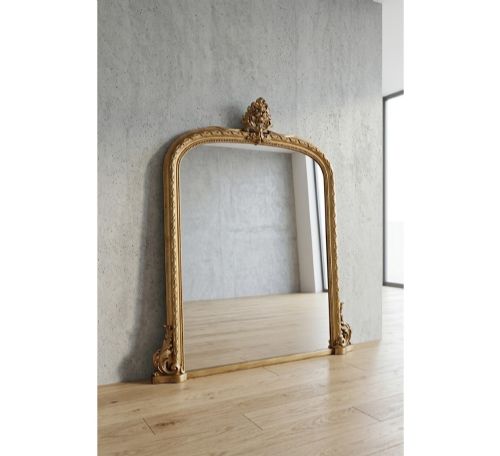
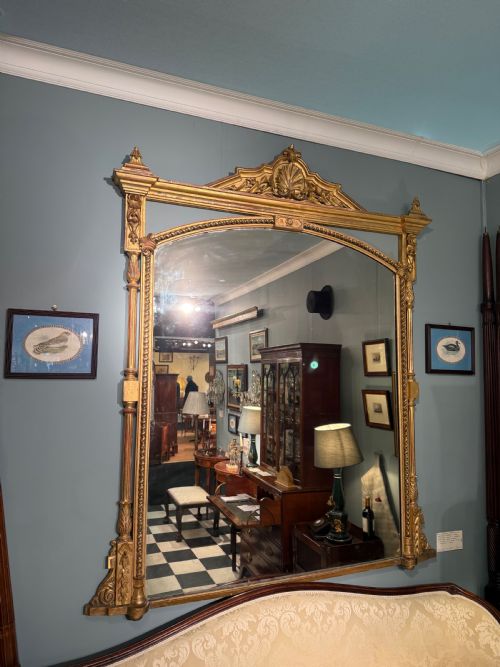
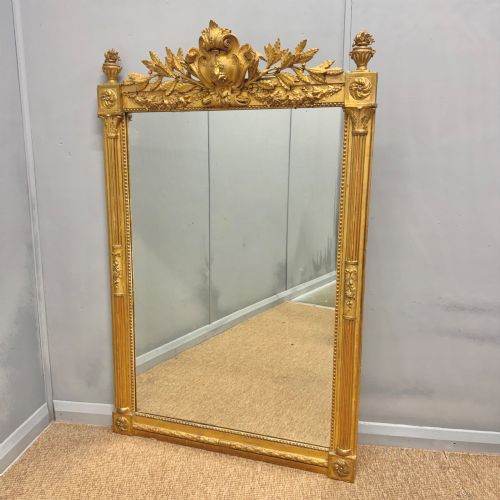
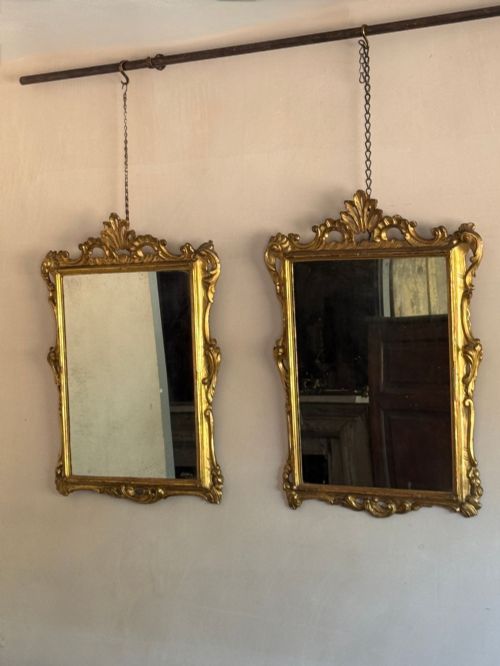
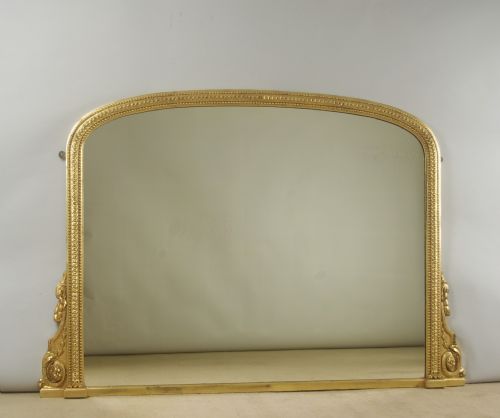
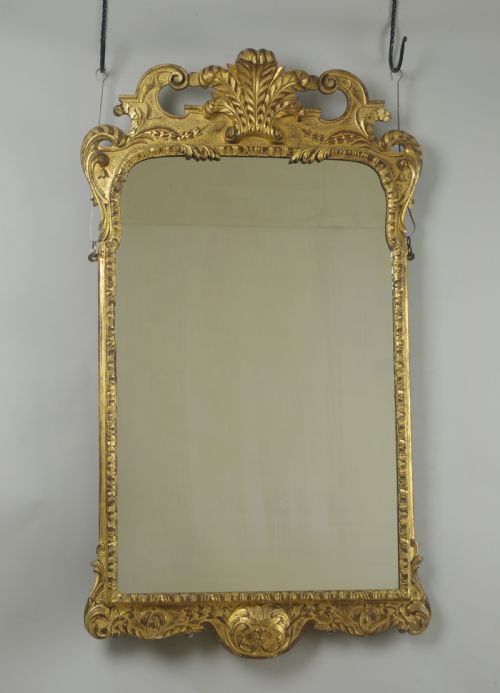
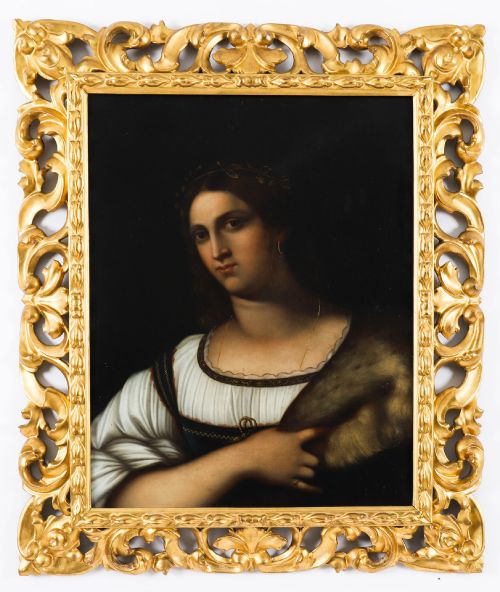
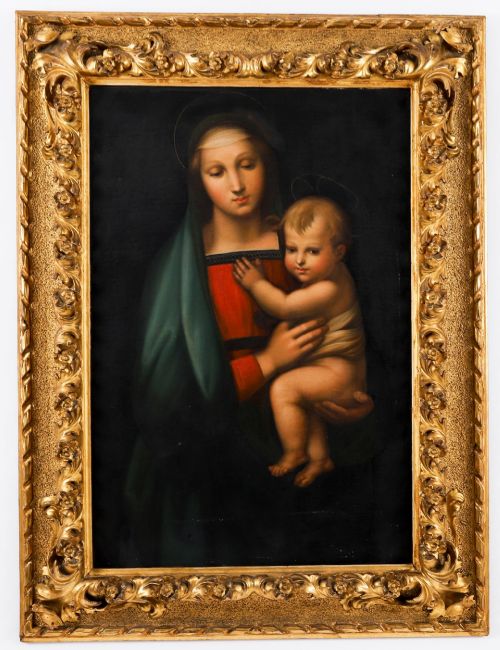
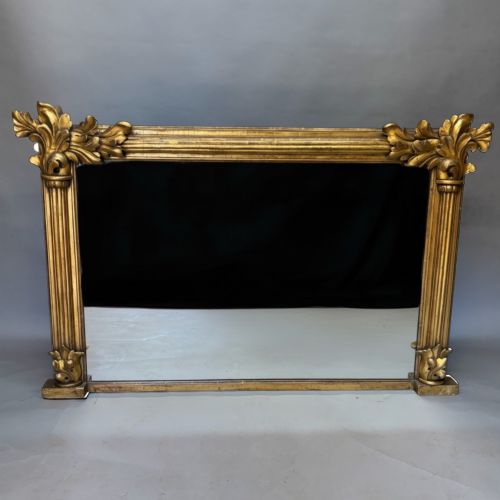
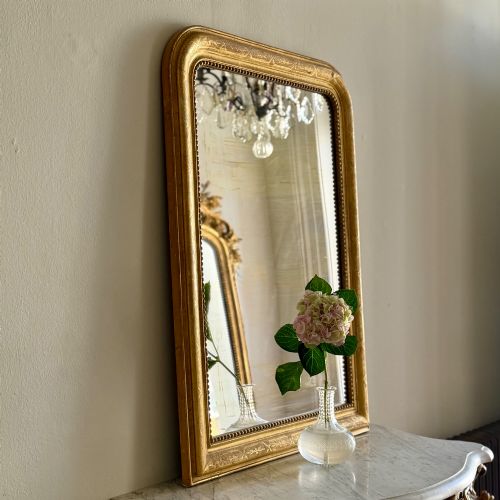
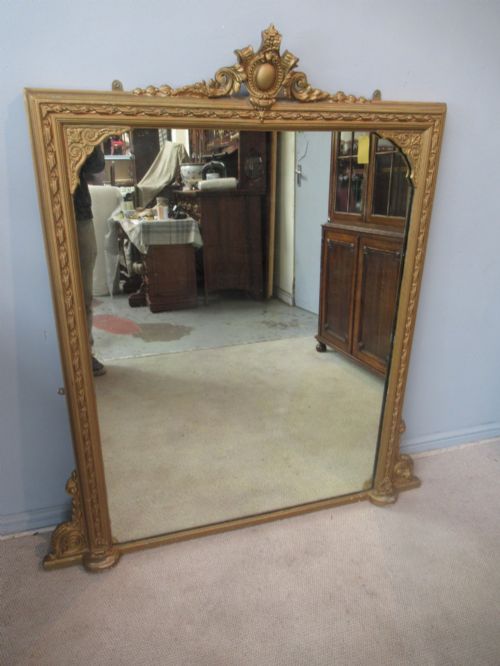
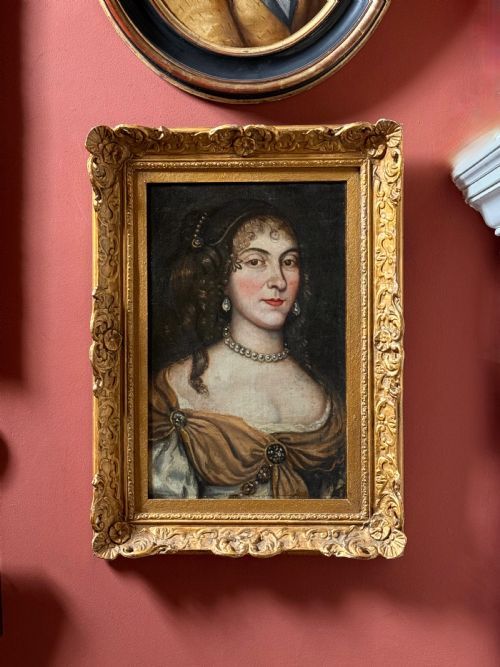
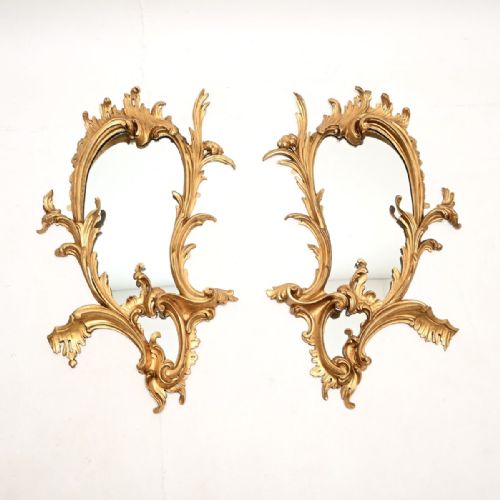
Carved gold wall frames encompass elaborate overmantel mirrors, pier glasses, girandoles, and oil paintings originating from the eighteenth, nineteenth, and early twentieth centuries. These pieces display distinct regional characteristics, ranging from English Regency and Victorian designs to ornate French Rococo Revival and Florentine aesthetics.
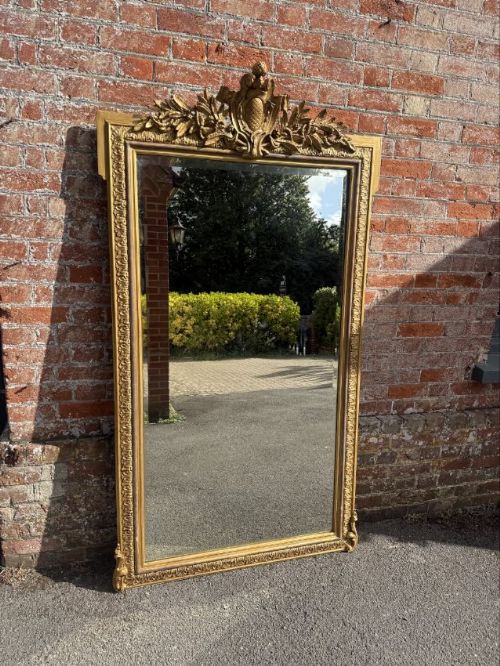
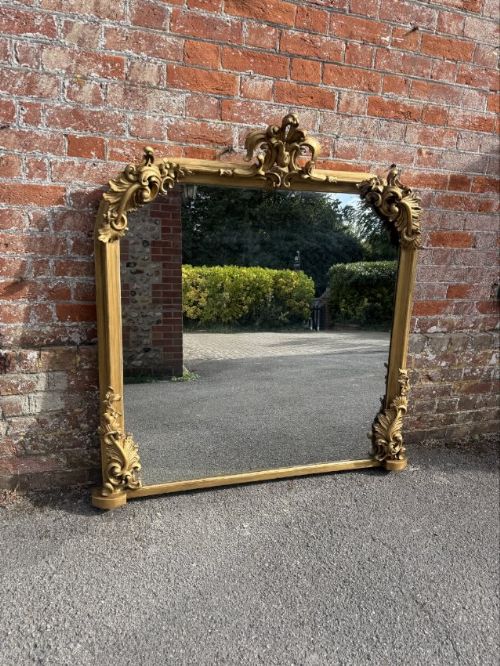
The selection centres heavily on large mirrors, featuring arched tops, rectangular plates, and oval formats enclosed within heavily ornamented timber structures. Buyers encounter substantial nineteenth-century English gesso pieces alongside eighteenth-century gilt frames housing antique mercury glass plates.
Makers and workshops across Britain and continental Europe utilised carved wood, composition, and gesso to achieve deep relief ornamentation such as acanthus leaves, ribbon crests, and rope twists. Each object serves primarily to reflect interior light while acting as a dominant focal point on panelled or plastered walls.
Materials and construction methods
The underlying structure typically relies on timber such as pine, walnut, or general carved wood, providing a stable skeletal foundation for the heavier ornamentation applied above. Artisans shaped these timbers by hand before applying layers of composition and gesso to build up intricate relief details like floral carvings and ribbed twists.
Gilding was achieved by applying thin sheets of gold leaf or gold paint over prepared surfaces, creating a brilliant metallic sheen that catches ambient light. Over decades, this gilt layer settles into the underlying gesso, producing the characteristic soft warmth associated with antique frames.
Several mirrors retain olive green painted accents hidden beneath layers of ornate nineteenth-century gold leaf.
Distinctions in quality and execution
Quality reveals itself in the depth, crispness, and manual precision of the carved relief work rather than simple surface brightness. Superior examples display sharply defined acanthus leaves, balanced proportions, and seamless joints within the timber and gesso layers.
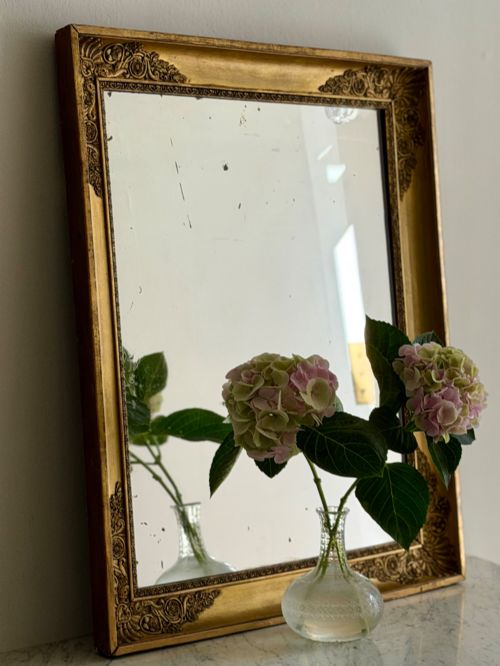
The integration of original antique glass plates, including foxed mercury glass, elevates the integrity of a piece compared to later replacements. Furthermore, the weight and density of the carved wood frame indicate the substantial materials utilised during construction.
The Carved Gold Wall Frames Glossary
- Giltwood
- Timber that has been coated with gold leaf or gold paint. This material forms the primary visual and structural body of ornate antique frames.
- Gesso
- A plaster-like mixture applied to wood frames to create a smooth base for relief ornamentation and gilding. Artisans modelled intricate motifs directly into this compound.
- Overmantel mirror
- A large horizontal mirror designed specifically to hang above a fireplace mantel. These pieces frequently feature arched or shaped tops to fit architectural proportions.
- Girandole
- A decorative wall mirror fitted with attached candle sconces. The reflective glass multiplies the candlelight within nineteenth-century rooms.
- Pier glass
- A tall, narrow mirror designed to hang on the wall space between windows. They maximise light reflection in darker period interiors.
- Mercury glass
- A double-walled glass blown type featuring a silvering solution inserted between the layers. It produces a characteristic mottled reflection found in older pieces.
Carved Gold Wall Frames: Frequently Asked Questions
How do I hang a heavy overmantel mirror?
These substantial carved pieces require professional wall anchors fixed directly into masonry or heavy timber studs. The weight demands robust hardware distributed evenly across the frame's structure.
Ensure the hanging wire or integrated brackets engage securely with wall fixings to support the dense combination of wood, gesso, and glass safely.
What is the difference between gesso and carved wood?
Carved wood refers to the structural timber base shaped directly by cutting tools, providing the primary physical strength of the frame. Gesso is a plaster mixture applied over the wood to build up softer, highly detailed relief ornaments.
Many nineteenth-century pieces combine both techniques, using a solid wooden chassis overlaid with moulded gesso for intricate floral and leaf decorations.
How should I clean a gilded frame?
Dust the gilded surfaces gently using a very soft, dry brush to remove particulate matter without disturbing the delicate gold leaf layer. Avoid all moisture, commercial cleaning solutions, and abrasive cloths.
Liquid cleaners can strip the historical gold leaf and soften the underlying gesso, permanently damaging the antique finish.
Why do some mirror plates look spotty?
Older mirrors often utilise mercury or early silvering techniques that naturally oxidise and deteriorate over long periods. This chemical reaction creates dark spots and a mottled appearance known as foxing.
Foxed glass provides an authentic indicator of age, confirming that the mirror plate has remained undisturbed within the antique frame for generations.