
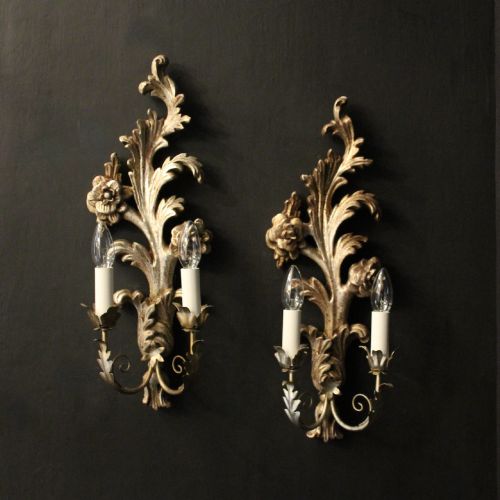
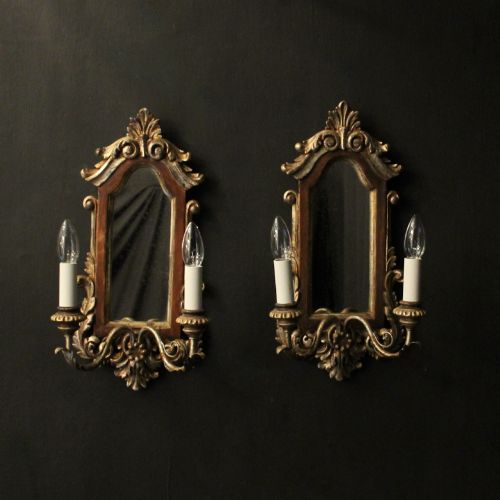
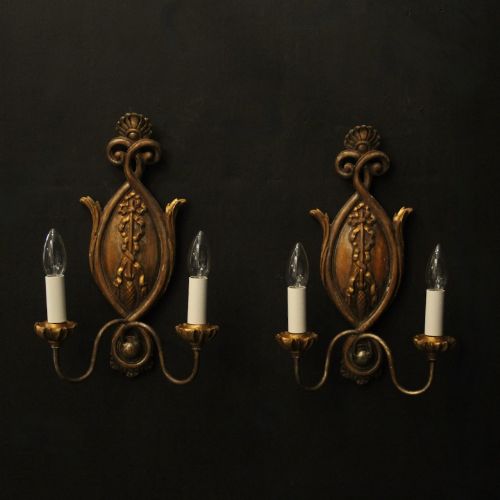
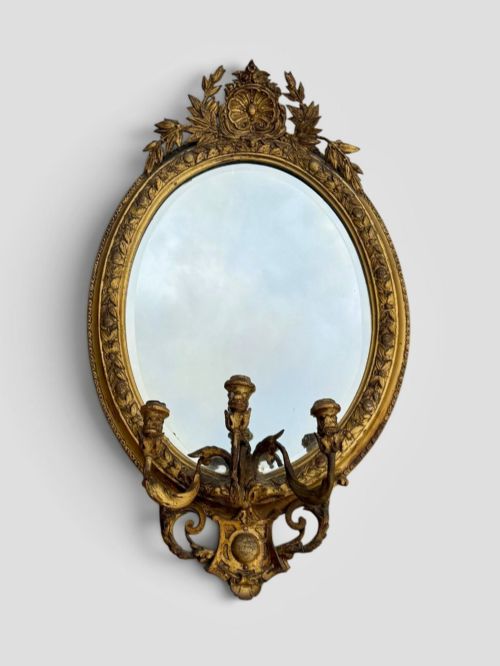
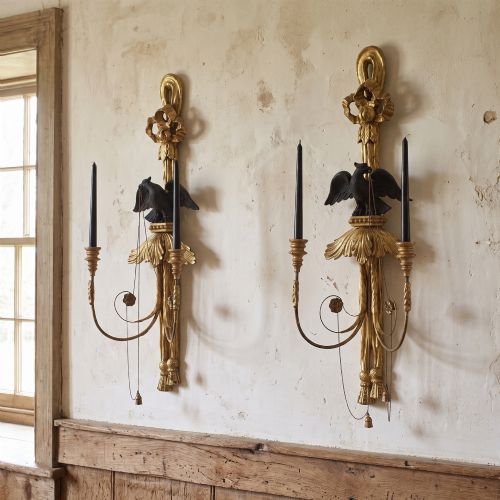
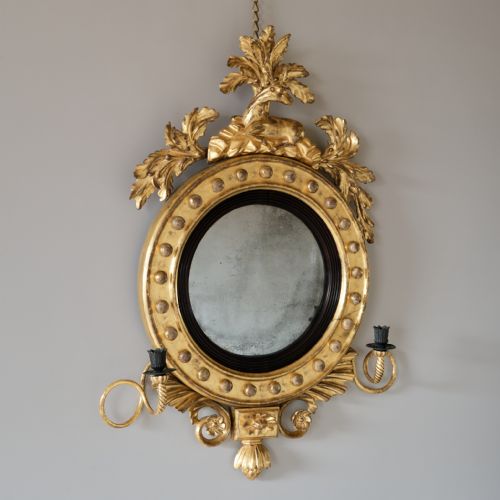
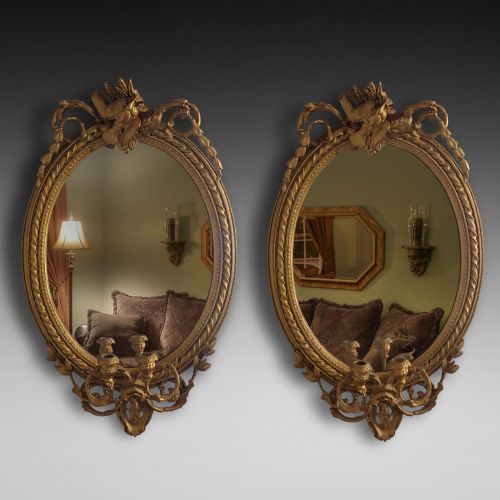
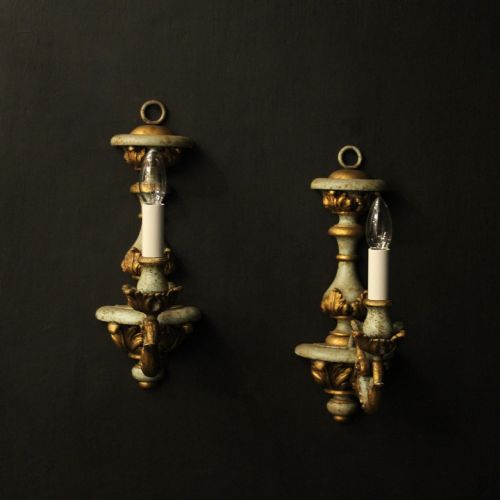
Carved Giltwood Wall Sconces
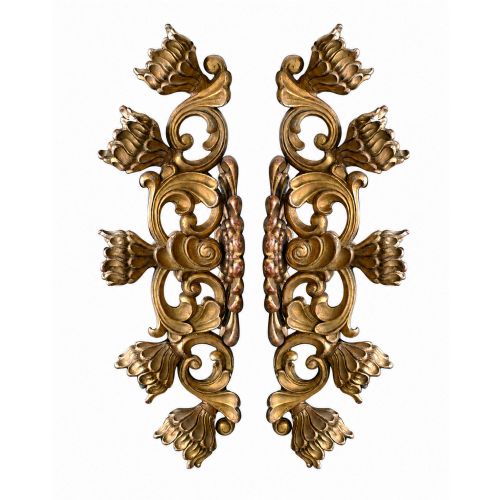
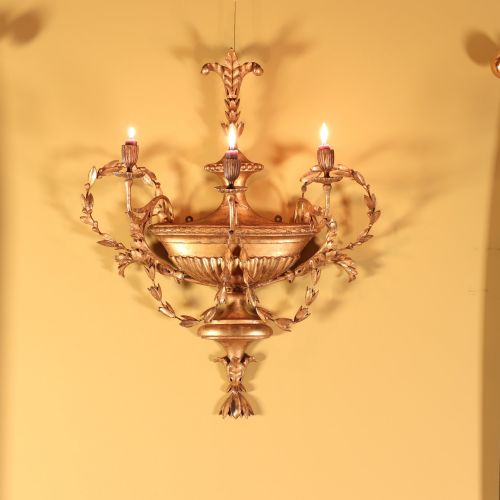
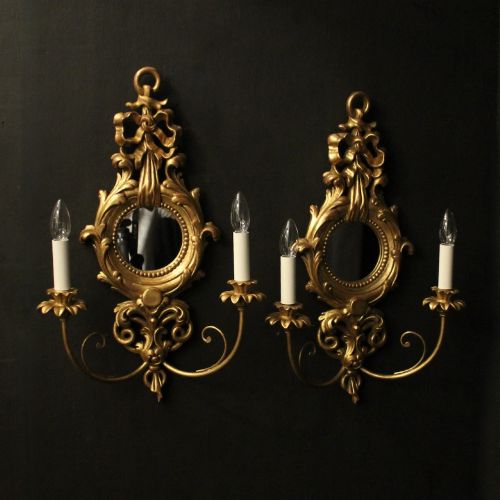
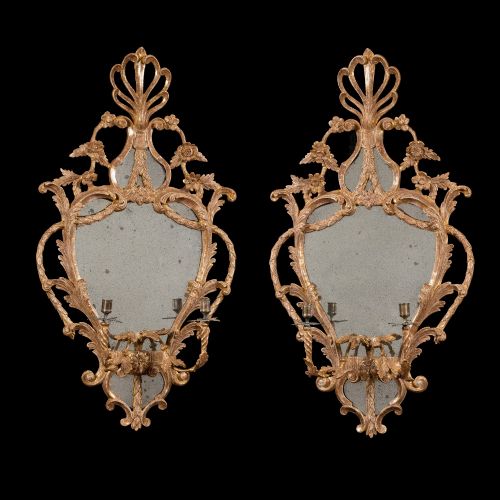
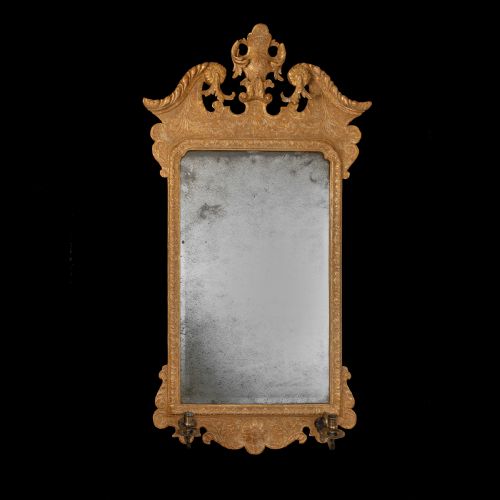
These carved giltwood wall sconces bring candlelit warmth and sculptural presence to a room, catching the eye with their gilded surfaces.
Carved Giltwood Wall Sconces
The selection spans centuries of design, with pieces originating from Italian workshops, French makers and English studios. Examples stretch from seventeenth-century survivals and eighteenth-century Georgian or Venetian creations through nineteenth-century Victorian and Regency interpretations up to twentieth-century Florentine productions.
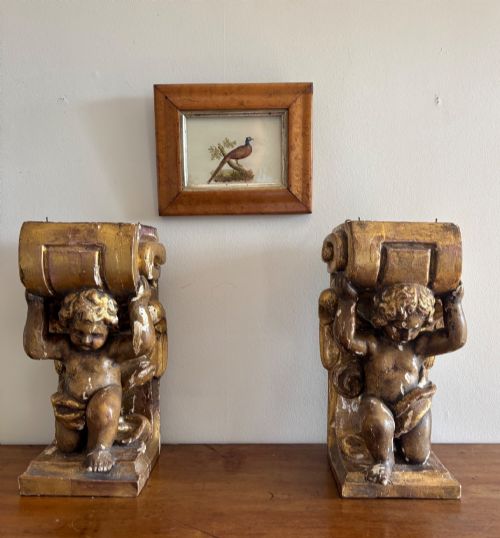
Makers drew on distinct regional vocabularies, producing Rococo curves, Neoclassical symmetry, Chinese Chippendale motifs and Baroque flourishes. The surviving inventory balances these historical lighting fixtures with related wall brackets and mirror frames adapted for illumination.
Materials and construction
Craftsmen shaped these objects from timber substrates such as wood, applying layers of gesso to build up intricate relief details before carving. Artisans then laid fine gold leaf or gold paint over the prepared surfaces to achieve a luminous metallic finish.
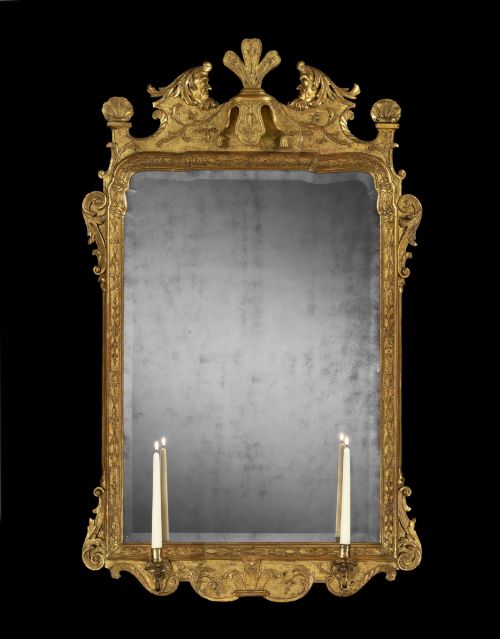
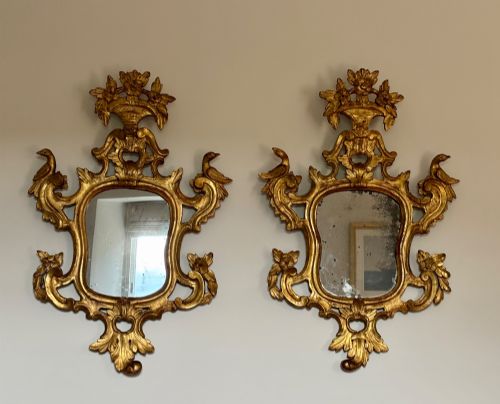
Glass elements frequently complement the gilded woodwork, appearing as central mirror plates, convex glass or Murano glass components within girandoles and sconces. Metal arms and brass fittings provide the structural support required to hold candle nozzles securely.
Listings span periods from the 17th century through the Regency and Victorian eras into 1930s Florentine production.
Judging quality in gilded lighting
Quality rests in the crispness of the hand-carved detail and the depth of the gesso relief beneath the gilding. Superior examples display sharply defined acanthus leaves, scrollwork and figures without the softening that occurs when moulds replace direct hand-chizzling.
The integrity of the surface finish dictates visual success, distinguishing pieces with well-preserved original gold leaf from later repainted surfaces. Structural robustness in the arm joints and candle branches also separates utilitarian workshop output from masterwork commissions.
The Carved Giltwood Wall Sconces Glossary
- Giltwood
- Wood that has been coated with gold leaf or gold paint. This technique creates a rich surface that reflects candlelight effectively.
- Girandole
- A decorative wall mirror featuring attached candle arms. These dual-purpose fixtures amplify light within a room.
- Gesso
- A plaster-like mixture applied to a wooden base to create a smooth surface for carving and gilding. It allows for intricate relief ornamentation.
- Regency
- A British design period spanning the early nineteenth century. Pieces from this era often feature classical motifs and convex mirror plates.
Carved Giltwood Wall Sconces: Frequently Asked Questions
How do I hang heavy carved giltwood wall sconces safely?
These fixtures require secure fixing into wall studs or appropriate masonry anchors due to the weight of the timber and gesso construction. Professional installation ensures the bracket supports the downward pull of the candle arms.
Position them at eye level or flanking a central mirror to balance the room's proportions and distribute reflected light evenly.
Were these designed for candles or electricity?
Most historical examples were constructed to hold wax candles in sockets mounted on wooden or metal arms. Many pieces retain their original candle pans and drip catchers.
Later adaptations sometimes introduce electrical wiring, though numerous examples preserve their traditional configuration for decorative display.
How do I clean and care for antique giltwood?
Dusting requires a very soft, dry brush to avoid disturbing fragile gesso and thin gold leaf layers. Moisture and chemical cleaners damage the historic surface finish.
Keep these fixtures away from direct heat sources and strong sunlight to prevent the wood from warping and the gilding from flaking.
How do I distinguish eighteenth-century sconces from later revivals?
Early pieces display hand-carved tool marks, older timber shrinkage, and genuine oxidation beneath the gold leaf. Revival pieces from the Victorian and later periods often utilise standardised machine-cut elements or different preparation layers under the paint.
Examining the backboards, fixings, and construction joins helps clarify the age of the object.