
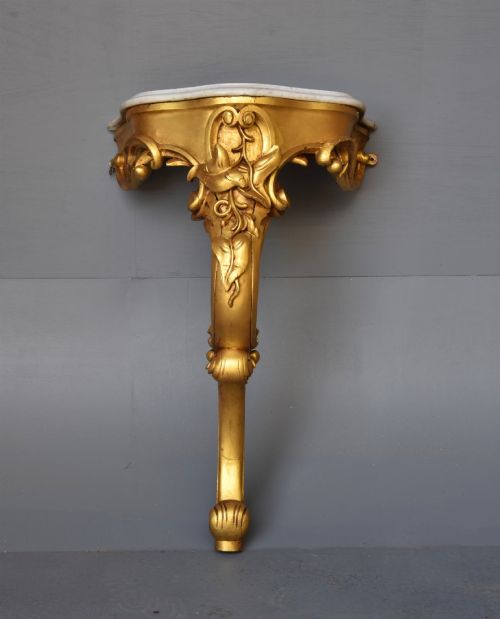
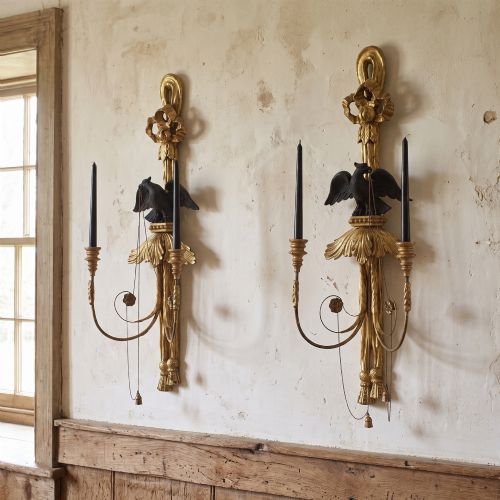
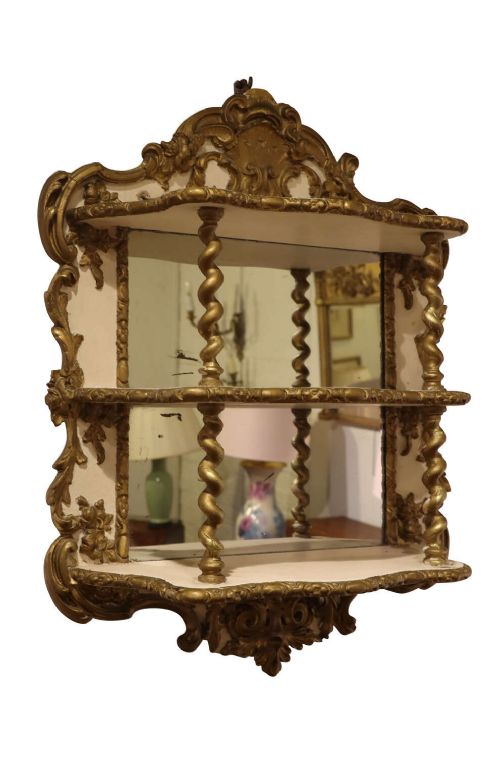
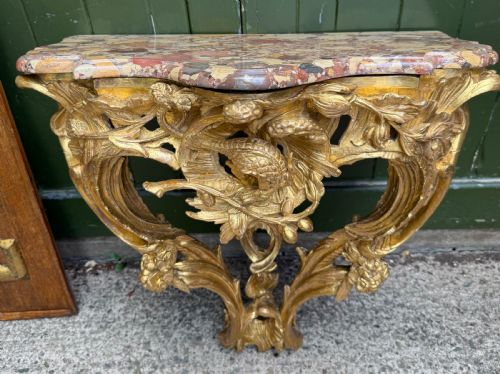
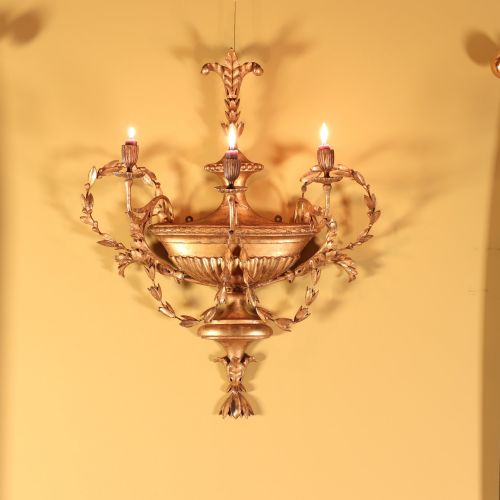
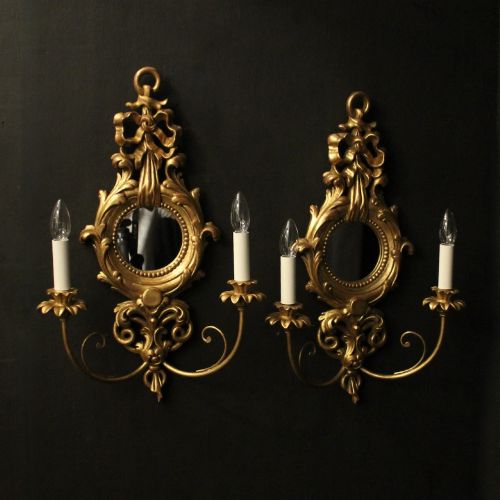
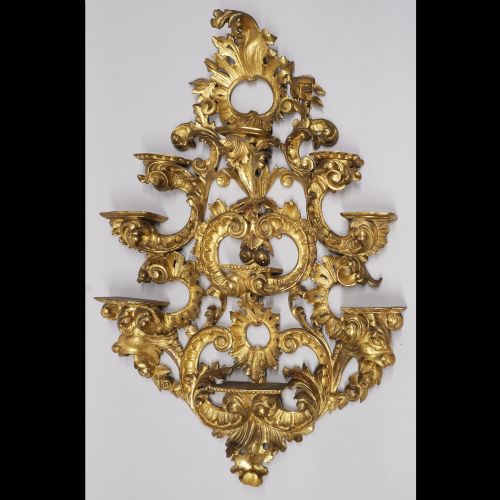
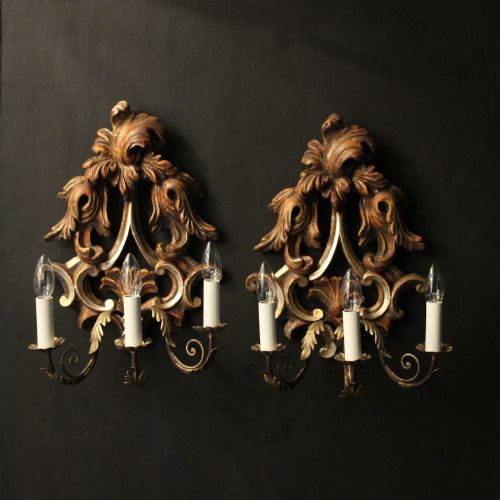
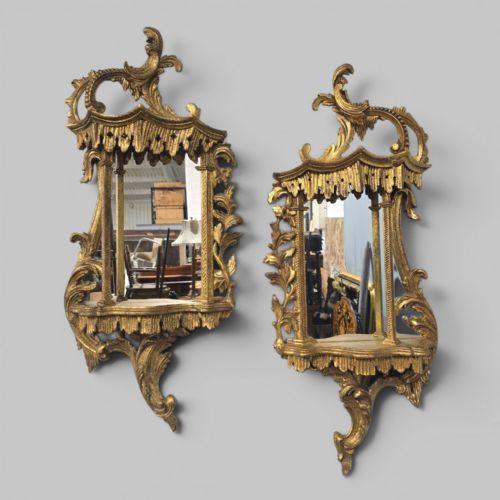
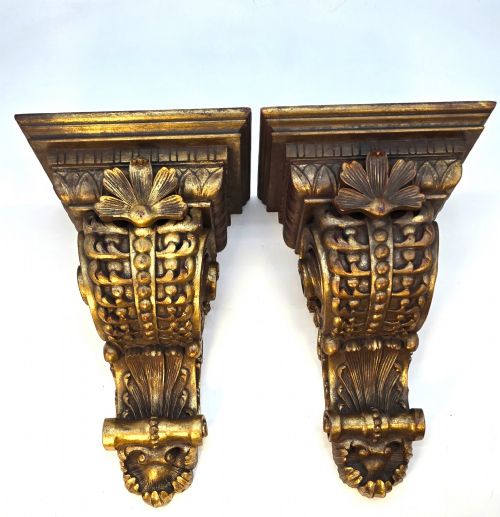


Carved Giltwood Wall Bracket
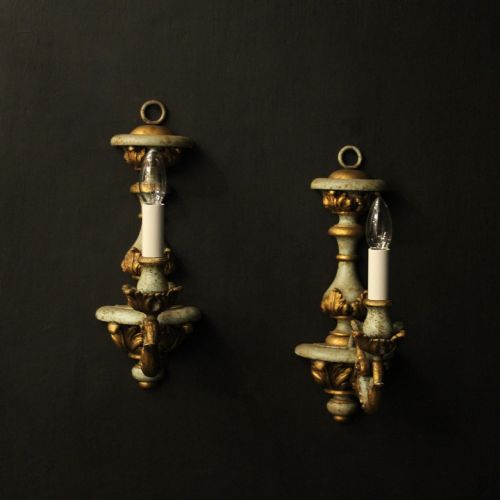
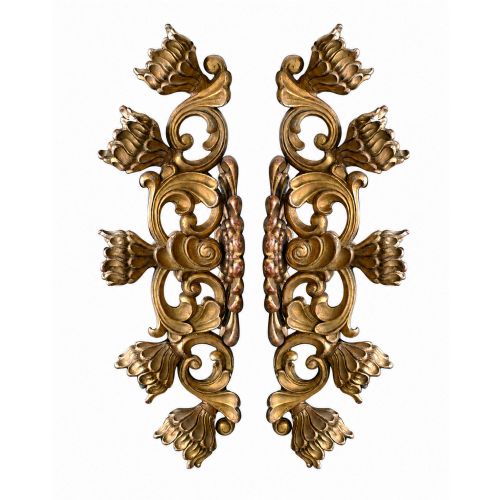
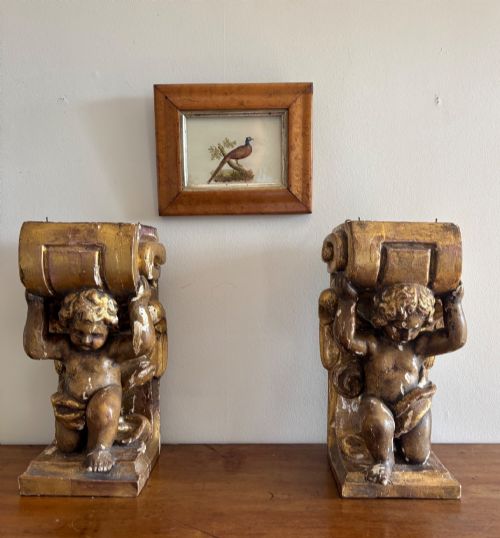
A carved giltwood wall bracket brings dramatic texture and historic warmth to an interior, projecting sculpture into the room.
Carved Giltwood Wall Bracket
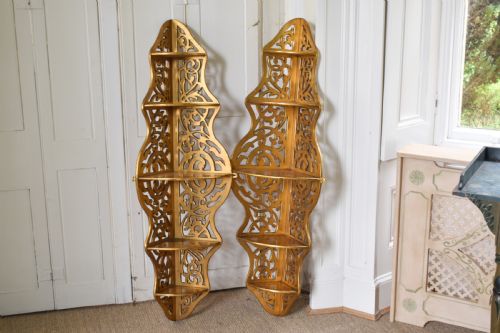
A carved giltwood wall bracket provides a decorative architectural shelf or support, designed to display ornaments, clocks or porcelain. When searching this phrase, a buyer encounters pieces originating from the eighteenth century through to the early twentieth century.
The selection includes Italian and French examples, alongside Victorian British pieces. Forms span simple single shelves to elaborate console tables and bracket mirrors.
Many items appear in pairs, reflecting their traditional use flanking mirrors or doorways. The stylistic vocabulary draws heavily on Rococo and Neoclassical ornament.
Materials and construction
Carved wood provides the structural core for these objects, frequently built from pine, lime or other soft timbers suited to intricate carving. Artisans applied gesso over the carved surface to create a smooth, unified layer for subsequent gilding.
Gold leaf is applied to the prepared gesso base, often burnished to catch ambient light in a room. Some iterations incorporate painted polychrome details, silver leaf or inset marble tops such as breche d'alep.
Listings feature eighteenth-century origins alongside extensive early twentieth-century Italian and French revivals.
Assessing quality
Quality rests upon the depth and crispness of the hand-carving in the wood beneath the gilding. Vigorous, undercut foliage and ornament distinguish superior examples from mechanical or shallow relief work.
The handling of the gilding and gesso layer dictates visual success. Finer pieces retain complex layers of burnished and matt gold leaf that age with a rich patina rather than flat, uniform modern metallic paint.
Strahan of Dublin
The Carved Giltwood Wall Bracket Glossary
- Giltwood
- Wood that has been coated with thin sheets of gold leaf over a prepared gesso ground. This finish provides a luminous surface resistant to tarnish.
- Gesso
- A mixture of gypsum or chalk and size used as a base for gilding on wood. It allows carvers to achieve sharp, refined details before applying gold leaf.
- Rococo
- An ornate decorative style characterised by asymmetrical scrolls, C-curves and naturalistic plant motifs. It heavily influences many eighteenth-century and revival wall brackets.
- Neoclassical
- A style inspired by classical antiquity, featuring symmetrical geometry, urns, swags and clean architectural lines. It offers a restrained contrast to Rococo exuberance.
- Console
- A decorative bracket table fixed to a wall, frequently topped with marble. These pieces serve as substantial architectural focal points within a room.
Carved Giltwood Wall Bracket: Frequently Asked Questions
How were carved giltwood wall brackets used?
These brackets served primarily as decorative architectural shelves to display prized porcelain, small bronzes or timepieces in formal rooms. Placed above console tables or flanking mirrors, they elevated decorative objects to eye level.
Their reflective surfaces also helped to bounce candle or natural light around dimly lit period interiors, adding a sense of grandeur to domestic spaces.
How do I hang a heavy wall bracket?
Due to the solid wood and dense gesso construction, these brackets require secure fixing directly into wall studs or appropriate masonry anchors. The weight distribution relies heavily on the structural integrity of the backplate.
Professional installation is recommended to ensure the bracket safely supports any ornaments placed upon the shelf.
How do I distinguish eighteenth-century pieces from later revivals?
Eighteenth-century examples typically exhibit hand-carving with subtle tool marks and a deep, mellow patina developed across centuries of gentle cleaning. The gesso layers on older pieces are often thinner and more integrated with the timber.
Revival pieces from the Victorian era or the early twentieth century often display heavier, more uniform gesso applications and machine-finished consistency in the carved details.