


Carved Giltwood Pendant
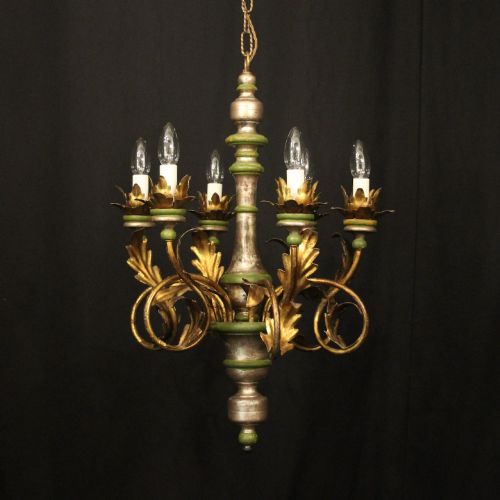
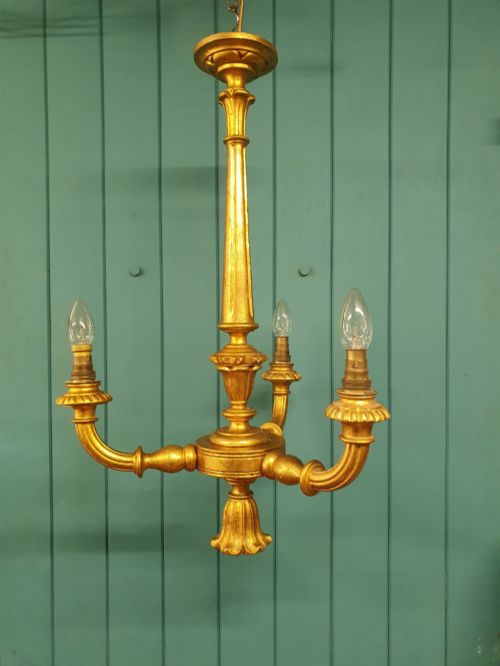
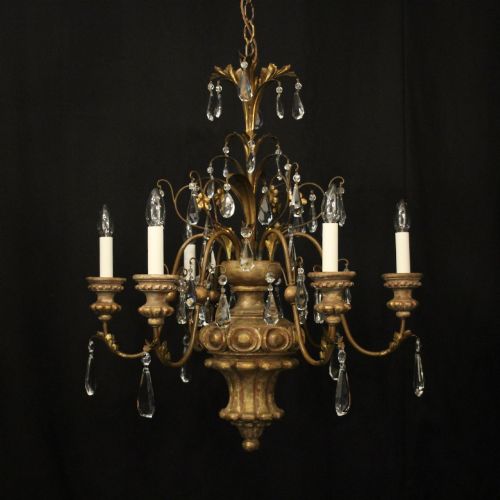
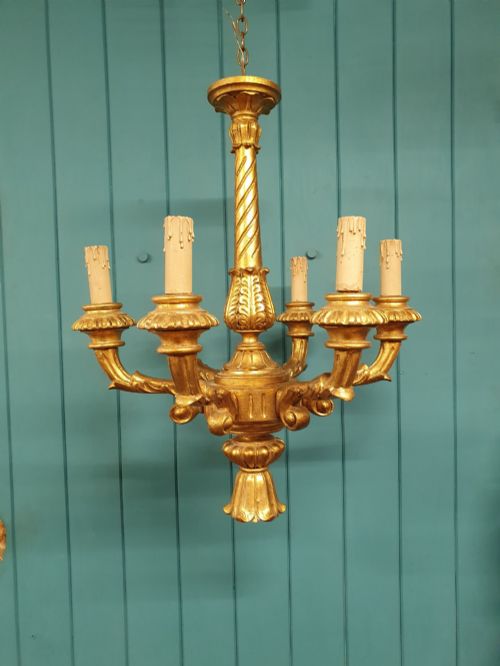
A carved giltwood pendant brings warm, reflective illumination to a room through intricately carved timber finished in gold leaf.
Carved Giltwood Pendant
A carved giltwood pendant comprises ceiling lights, chandeliers and hanging lanterns shaped from wood and finished with gold leaf or gesso. These pieces bring layered illumination to high ceilings and reception rooms.
You will most commonly encounter Florentine and Italian chandeliers carrying multiple lights, alongside Venetian and French hanging lanterns dating from the eighteenth century to nineteen thirty.
The selection ranges from compact triple-light fixtures to monumental nineteenth century Baroque forms, reflecting Italian and French decorative traditions.
How they were made
Maker's workshops shaped timber by hand before applying layers of gesso to create smooth surfaces ready for gilding. Gold leaf was then carefully laid over the prepared base to achieve a brilliant reflective sheen.
Pieces frequently incorporate iron or metal armatures to support multiple candle branches or light fittings securely. Additional elements of paint, ebonisation, glass and fabric sometimes contrast with the primary gilt finish.
The listings on this site show pieces spanning the eighteenth century, the Victorian era, the Edwardian period, and the 1920s and 1930s.
What varies in quality
Depth and crispness of the timber carving distinguish standard production from superior examples. Master carvers achieved fluid acanthus leaves and scrolling foliage with sharp undercutting that catches light effectively.
The application and burnishing of the gold leaf dictate the richness of the surface. Early pieces display hand-applied leaf that has aged organically over gesso and wood.
The Carved Giltwood Pendant Glossary
- Giltwood
- Timber coated with gold leaf or gold paint. This technique gives wooden architectural elements and light fittings the appearance of solid gold.
- Gesso
- A plaster mix applied to wood surfaces as a preparation for gilding. It provides a smooth base that carvers could shape before applying gold leaf.
- Florentine
- A decorative style originating in Florence, typically characterised by ornate carved scrolls and foliage. These designs often feature heavily on Italian chandeliers.
- Baroque
- An elaborate artistic style spanning the seventeenth and eighteenth centuries. It emphasises dynamic movement, drama and rich ornamentation.
- Toleware
- Enamelled and painted sheet metal used in decorative objects and lighting components. It frequently provides contrasting colour alongside gilded elements.
Carved Giltwood Pendant: Frequently Asked Questions
How do I hang a heavy carved giltwood pendant safely?
These fixtures require secure fixing directly into ceiling joists or structural noggins using appropriate weight-bearing fixings. Professional electrical and structural installation is essential due to the substantial timber and metal mass.
Ensure the hanging chain and internal wiring are inspected to support the specific weight of nineteenth-century or earlier fittings safely.
What rooms suit a carved giltwood pendant?
High-ceilinged entrance halls, formal dining rooms and drawing rooms provide the vertical space needed for multi-armed chandeliers and hanging lanterns. The reflective gold surface brightens darker interior spaces effectively.
Scale is key when placing these fixtures within a room, balancing the drop and diameter against the ceiling height and floor area.
How do I clean a carved giltwood pendant?
Dust the intricate carved surfaces gently using a soft, dry ostrich feather duster or a clean artist's paintbrush. Avoid applying moisture, modern chemical cleaners or abrasive cloths which can damage delicate gold leaf.
Professional restoration is recommended if the gesso or gilding requires consolidation or repair.
How can I tell an eighteenth-century piece from a nineteen-thirty reproduction?
Early pieces display hand-cut timber construction methods, historical tool marks and patinated gesso beneath worn gold leaf. Later interpretations often exhibit more uniform machine-prepared timber and consistent modern gilding.
Examining the internal ironwork and fixing methods helps confirm the period of manufacture.