

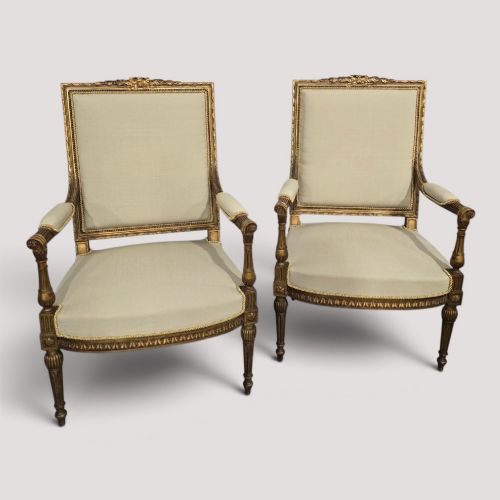
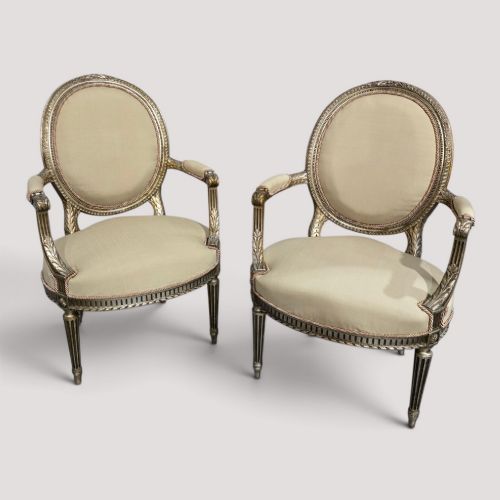
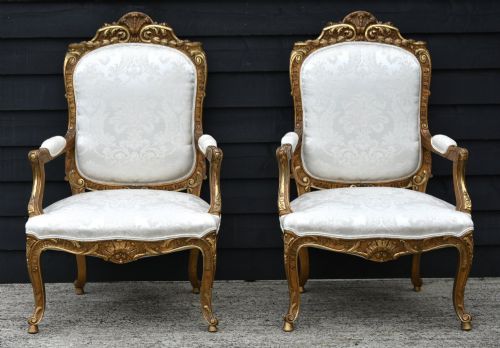
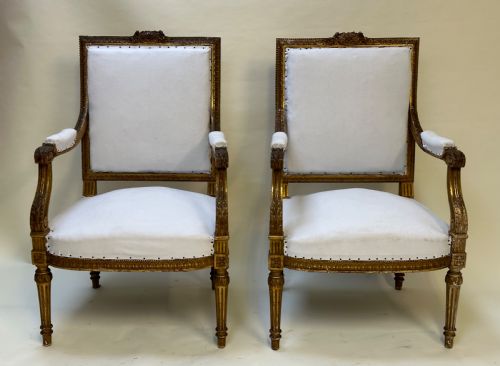
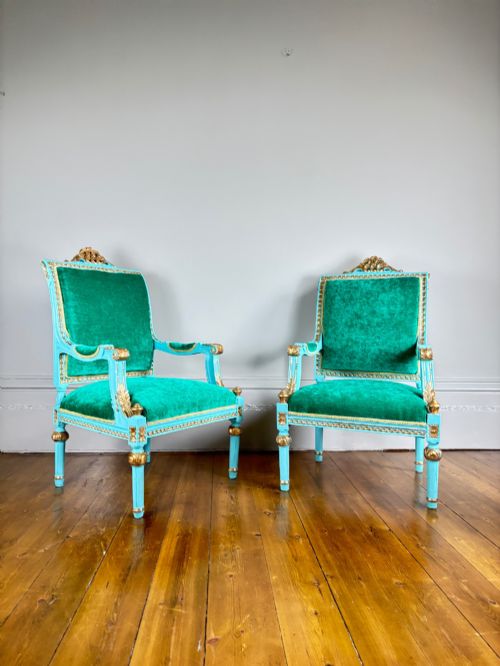
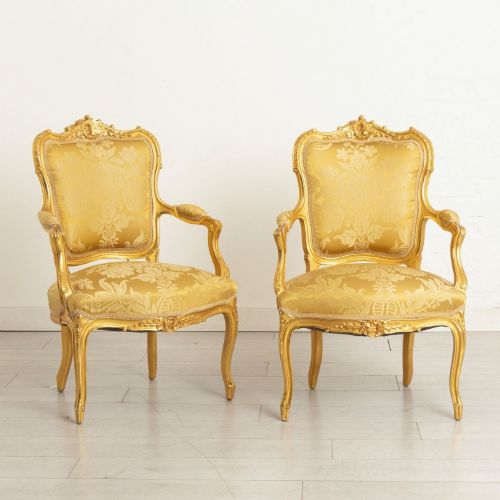


Carved Giltwood Fauteuil Pair
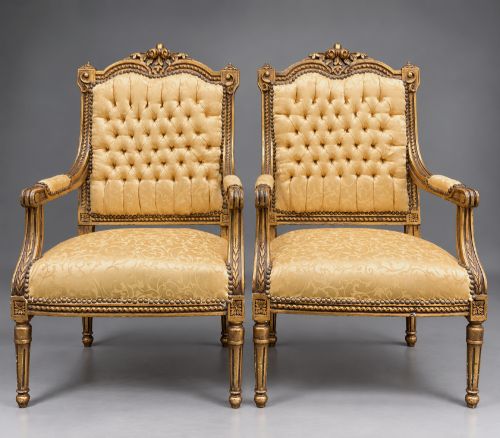
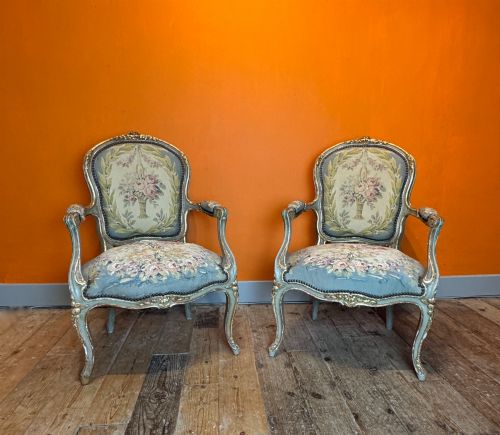
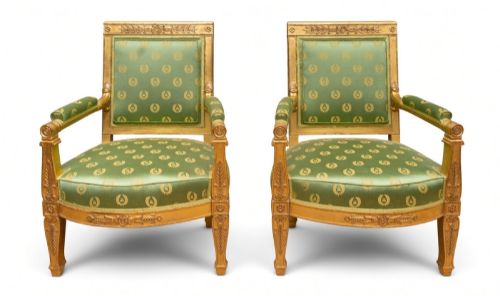
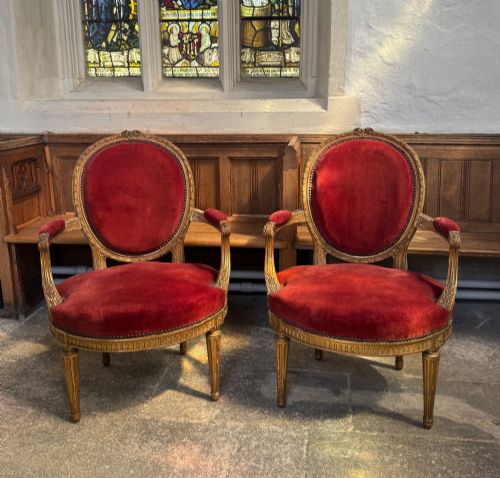
A carved giltwood fauteuil pair brings the grand proportion and gilded warmth of French and Italian salons directly into a room.
Carved Giltwood Fauteuil Pair
A carved giltwood fauteuil pair consists of matching open-armed seating designed for formal drawing rooms and sitting spaces, originating primarily from French and Italian traditions. These seats emerge in styles ranging from Louis XVI Revival and French Rococo to Italian Neoclassical, reflecting historical revivals across different centuries.
Buyers examining this selection will frequently encounter nineteenth-century interpretations alongside eighteenth-century originals and later twentieth-century reproductions. The forms encompass standard salon chairs, larger elbow chairs, and grander throne-style armchairs built for display and formal comfort.
Originating predominantly from continental workshops, these pieces often incorporate regional stylistic shifts such as English Regency adaptations or specific French chateau aesthetics. They function together as symmetrical pairs intended to anchor a room's decorative scheme.
Materials and construction
Makers shaped the structural frames from timber such as beech, applying thin layers of gold leaf or silver gilt over a prepared gesso ground. This technique created the reflective metallic surface characteristic of giltwood furniture.
Upholstery forms an integral part of the construction, utilising textiles like silk, velvet, and tapestry to cover padded seats and backs. Many pieces retain later coverings or have undergone reupholstery while maintaining their traditional wooden frames.
Carved Giltwood Fauteuil Pair Retail Price Guide 2026
Typical asking prices for carved giltwood fauteuil pair among the pieces listed under this phrase on Sellingantiques today, from the lower quarter to the upper quarter. They describe what is for sale here now, not the wider market.
Listings feature beech frames finished in giltwood and silver gilt, upholstered in silk, velvet, and tapestry.
Assessing quality and craftsmanship
The crispness and depth of the wood carving distinguish superior examples from simpler production, particularly around the crest rails, arm supports, and cabriole legs. Hand-chiselled detail in the gilt surface shows greater artistry than uniform mechanical application.
The structural integrity of the timber frame and the historical accuracy of the revival style determine the piece's standing within its period. Original gilding retaining its natural patina holds different appeal compared to later re-gilding.
Jacob-Desmalter
The Carved Giltwood Fauteuil Pair Glossary
- Giltwood
- Timber coated with gold leaf applied over a gesso base. This finish provides the characteristic metallic sheen.
- Rococo
- An ornate design style marked by asymmetric C-scrolls and natural motifs. It heavily influences French and Italian salon seating.
- Neoclassical
- A revival style drawing on classical Greek and Roman symmetry and straight lines. It frequently appears in Louis XVI furniture.
- Parcel Gilt
- Woodwork partially painted with other colours alongside gilded sections. This technique highlights specific carved details on the frame.
Carved Giltwood Fauteuil Pair: Frequently Asked Questions
How do I spot a true pair?
A matched pair shares identical carved wooden motifs, frame dimensions, and construction methods. Minor variations in the hand-carving often indicate genuine period craftsmanship rather than modern mass production.
Examine the underside and joinery to confirm that both chairs originated from the same workshop at the same time.
Where were these chairs used?
These seats belonged in formal drawing rooms, receiving parlours, and grand salons where hosts entertained guests. They served as primary seating for high-status visitors in French chateaus and Italian palazzos.
Their open arms accommodated wide eighteenth-century fashions and voluminous dresses during social gatherings.
Can I use them every day?
Period giltwood armchairs function well for light daily sitting provided the internal frame and webbing remain stable. Historic joints require careful treatment to prevent strain during routine use.
Many owners place them in low-traffic sitting rooms or bedrooms to preserve the delicate silk and tapestry upholstery.
How do I date an armchair?
Dating relies on stylistic markers such as straight tapered legs for Neoclassical pieces or sweeping cabriole curves for Rococo designs. Tool marks, timber types, and the composition of the gesso layer under the gilt offer further clues.
Comparative analysis against documented eighteenth- and nineteenth-century workshop patterns helps narrow the manufacturing window.