

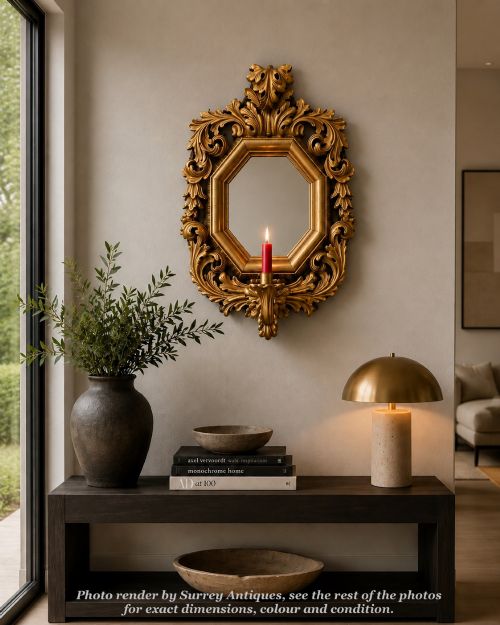
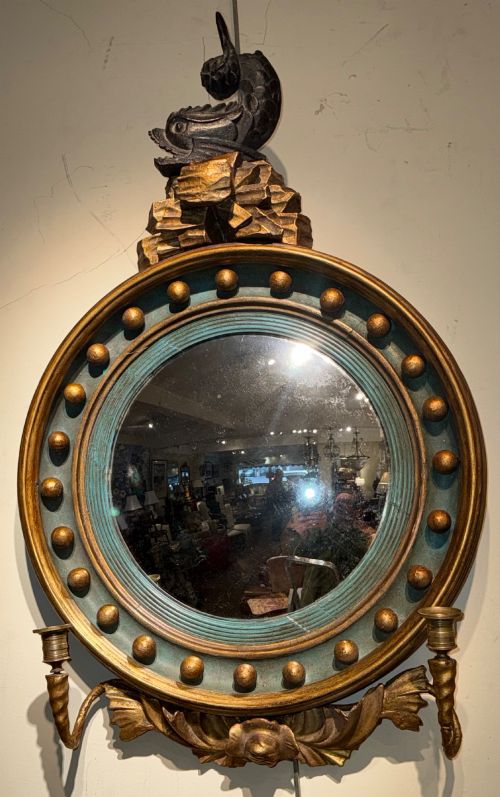


Carved Gilt Wood Sconce Mirrors
Carved gilt wood sconce mirrors bring warmth and reflection to a room, catching candle and daylight in their gilded surfaces.
Carved Gilt Wood Sconce Mirrors
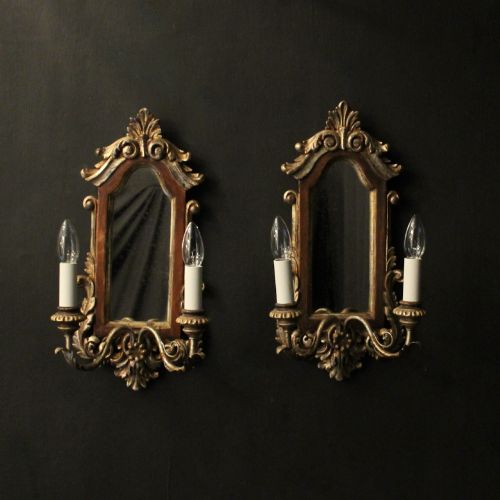
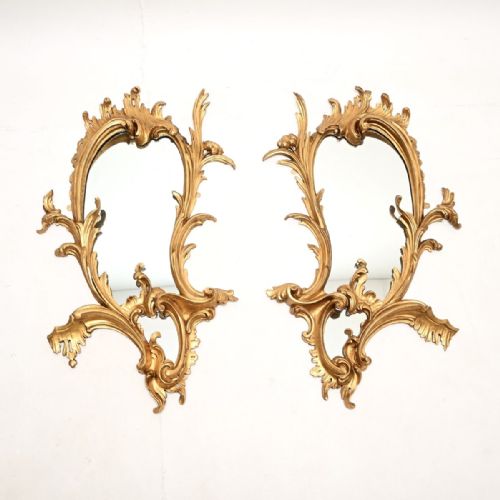
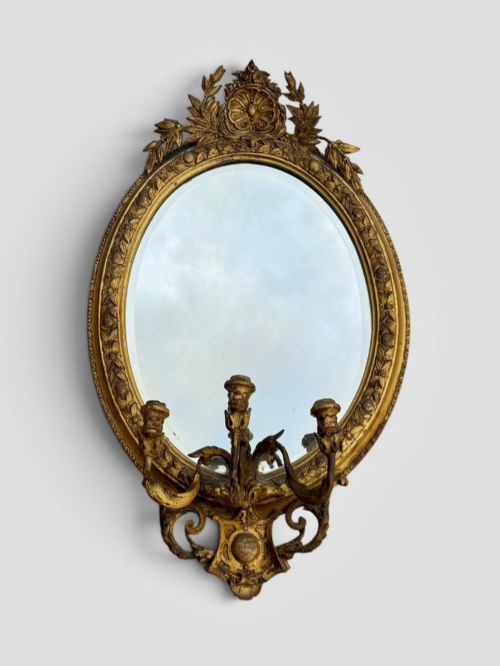
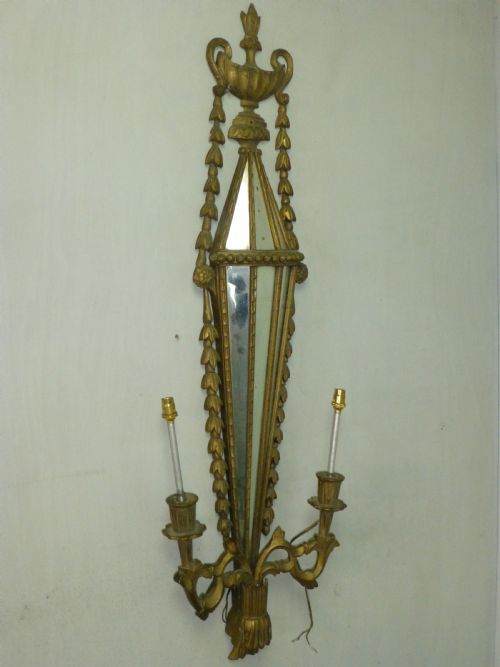
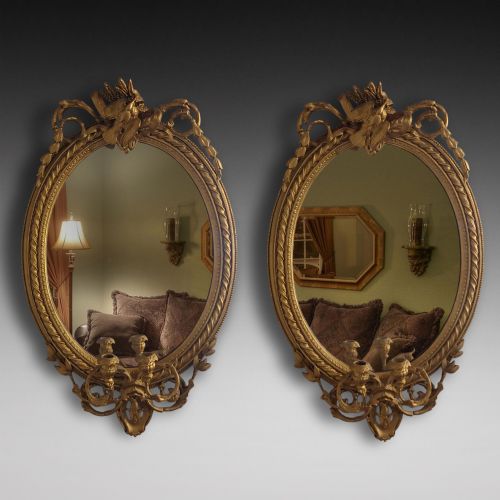
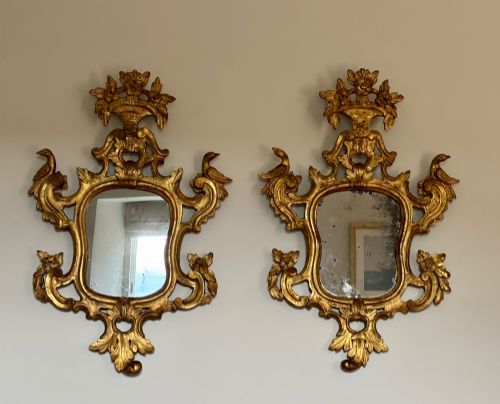
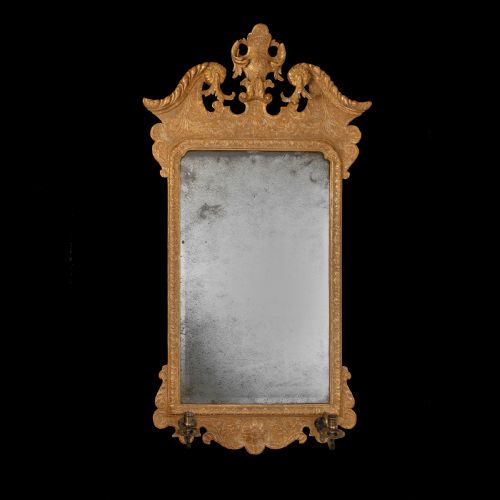
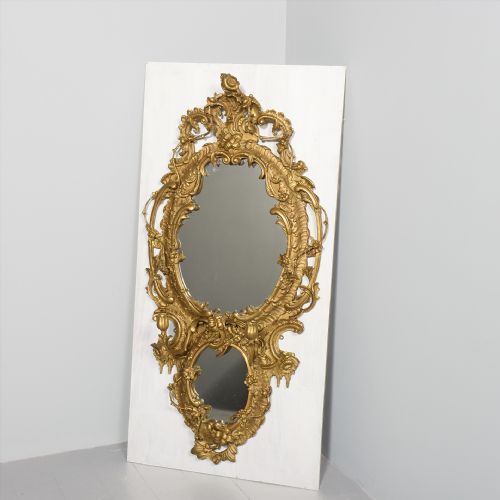
Carved gilt wood sconce mirrors combine wooden frames with reflective glass and integral candle arms, serving both functional illumination and decorative display. These wall-hung fixtures emerge in styles from Italian Rococo and George II to Victorian revivals and later twentieth-century interpretations.
The most frequent examples found here date from the eighteenth and nineteenth centuries, often originating from Italian workshops in Florence and Venice alongside British Regency and Victorian makers. They appear as single plates or as matched pairs featuring twin or single candle arms.
Forms range from cartouche and pier mirrors to convex glasses and girandoles equipped with shelves or brass sconce attachments. Their primary role remains brightening darker interior spaces through the reflective interplay of gold leaf and mirror glass.
How they were made
Makers shaped the structural foundations from carved wood, applying layers of gesso to smooth the surface before adding gold leaf or gilt paint. Metal brass components frequently support the candle arms or sconces extending from the main frame.
Mirror glass plates, sometimes showing age through foxing, sit within these ornate wooden housings. The combination of carved wooden relief, gesso preparation, and delicate gilding creates the characteristic luminous quality of the period.
Carved Gilt Wood Sconce Mirrors Retail Price Guide 2026
Typical asking prices for carved gilt wood sconce mirrors among the pieces listed under this phrase on Sellingantiques today, from the lower quarter to the upper quarter. They describe what is for sale here now, not the wider market.
Some Venetian mirror plates are so delightfully foxed that they reflect the room like a hazy dream through a golden fog.
What varies in quality
The crispness of the wood carving dictates much of the visual impact, distinguishing deeply undercut foliage and scrolls from softer, later mouldings. Hand-applied gold leaf possesses a depth and warmth that differentiates it from flat modern gilding.
Originality of the glass plate and the retention of early gesso layers under the gilding influence the integrity of each piece. Pairs that remain together with matching sconce arms hold greater decorative consistency than assembled counterparts.
Benjamin Goodison
The Carved Gilt Wood Sconce Mirrors Glossary
- Giltwood
- Wood that has been coated with gold leaf or metallic powder over a prepared ground. This technique provides the bright reflective surface characteristic of these mirrors.
- Gesso
- A plaster mix applied to carved wooden frames to create a smooth surface for gilding. It allows for crisp detail work in the mouldings.
- Girandole
- A branched wall fixture featuring a mirror combined with candleholders. The reflective glass amplifies the light cast by the candles.
- Foxed plate
- Mirror glass displaying dark spots and age-related oxidation. This natural weathering develops within the silvering over long periods.
- Cartouche
- An ornamental frame resembling a scroll or rolled-up paper, often with a central shield. Eighteenth-century mirrors frequently use this shape for asymmetrical Rococo designs.
Carved Gilt Wood Sconce Mirrors: Frequently Asked Questions
How do I hang a heavy giltwood mirror?
These mirrors require sturdy wall fixings secured directly into studs or masonry rather than plaster alone. The weight of the carved wood and glass demands robust load-bearing hardware.
Professional mirror hangers often employ French cleats or heavy-duty D-rings to distribute the load safely across the frame structure.
Can I burn candles in the sconces?
While original sconces were designed for candles, modern use requires caution to protect the delicate giltwood and gesso surfaces from dripping wax and heat.
Using LED taper candles provides the traditional atmosphere of illuminated sconces without risking smoke damage to the antique finish.
How do I clean an antique giltwood frame?
Dusting should be done gently using a soft, dry artist's brush or a feather duster to avoid disturbing fragile gesso and gold leaf. Water and chemical cleaners strip the historical finish and must be avoided entirely.
Professional conservators should handle any structural cleaning or repairs to prevent permanent loss of the original surface.
What is the difference between a girandole and a standard wall mirror?
A girandole specifically incorporates attached arms for holding candles or lights, integrating illumination directly into the mirror design. Standard wall mirrors focus solely on reflection without the projecting hardware.
Many examples on this page feature twin arms specifically intended to bounce candlelight across eighteenth and nineteenth-century rooms.