


Carved Gilt Floor Lamp
A carved gilt floor lamp brings instant warmth and presence to a room, offering height and rich surface texture.
Carved Gilt Floor Lamp
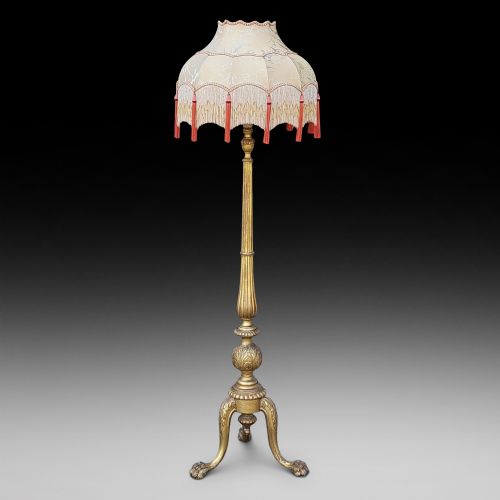
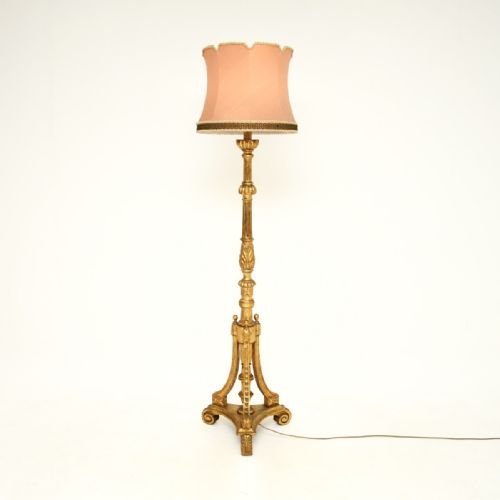
A carved gilt floor lamp functions primarily as a statement lighting piece, standing tall to cast illumination while anchoring a corner with sculptural weight. When exploring a carved gilt floor lamp, buyers encounter a lineage stretching from the nineteenth century through the early decades of the twentieth century, taking the form of standard lamps, torcheres, and figural supports.
The aesthetic vocabulary draws heavily from Italian Baroque, Venetian, French Chateau, and Neoclassical traditions. Pieces range from straightforward columnar standards to ornate figures on stands, reflecting diverse regional tastes across England, France, Italy, and Sweden.
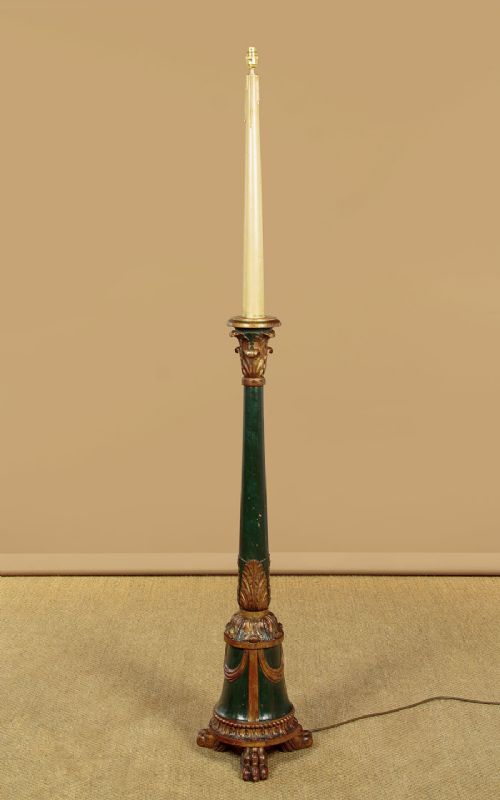
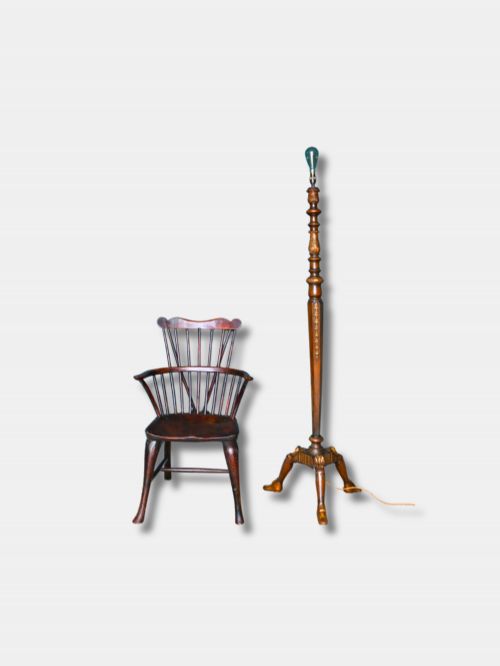
Design variations include tripod bases, marbleised details, and parcel gilt finishes on walnut or carved wood. These upright fittings bridge the gap between functional household illumination and decorative arts.
Materials and construction methods
The core structure relies on carved wood, including walnut and general timber, shaped by hand to create slender columns or elaborate figural pedestals. Gesso is often applied over the wooden substrate to provide a smooth, responsive base for subsequent gilding.
Gold leaf and parcel gilt techniques impart a luminous metallic sheen to the surfaces, sometimes contrasted with original polychrome paint or marbleised effects. Brass components frequently appear in the internal fittings and structural assemblies of these tall standards.
The listings on this page span from the nineteenth century through the 1930s, uniting materials such as giltwood, gesso, brass, and fabric.
Factors determining quality
Quality rests heavily on the depth and crispness of the hand-carved detail across the wooden structure. Finer examples display precise execution in botanical motifs, fluting, or figural anatomy, whereas simpler items show softer, more generalised moulding.
The application and preservation of the gold leaf, gesso, and polychrome layers dictate the visual richness of the surface. Original gilding that retains its complex tonal variation elevates a piece far above later, flat repainting.
The Carved Gilt Floor Lamp Glossary
- Giltwood
- Wood that has been coated with gold leaf or gold paint. This finish creates a reflective, opulent surface that defines the character of many antique lamps.
- Gesso
- A plaster-like mixture applied to wood as a base before gilding or painting. It provides a smooth ground that can be intricately carved or moulded.
- Torchere
- A tall ornamental stand originally designed to hold a candle or torch. In later periods, these forms were frequently adapted to hold electric lamp fittings.
- Parcel Gilt
- A finishing technique where only specific parts of an object are gilded, leaving other areas of wood, paint, or walnut exposed.
Carved Gilt Floor Lamp: Frequently Asked Questions
Where should I place a floor lamp?
These tall standards command attention in drawing rooms, studies, or large hallways where vertical height balances low furniture. Position them beside armchairs or in empty corners to draw the eye upward and soften shadowy areas.
Ensure the scale of the lamp matches the room's proportions, as heavily carved Baroque designs require breathing space to display their detailing.
How do I choose a lampshade?
Selecting a shade involves balancing the physical weight of the carved base with appropriate fabric proportions. Simple, neutral silk or pleated shades allow ornate giltwood and figural carvings to remain the primary focus.
Pay attention to the fitting type and height of the harp to ensure the shade sits securely and casts light evenly across the room.
Are these lamps wired for modern use?
Most antique standards have been adapted for electricity at various points in their long histories. It is standard practice to inspect the internal wiring and have a qualified electrician check the fitting before regular daily use.
Preserving the original wooden shaft and base while updating the flex and plug ensures both safety and historical integrity.
How do I date these pieces?
Dating relies on stylistic clues, construction methods, and the specific materials used in the base and column. Pieces range from nineteenth-century Victorian and Edwardian examples to early twentieth-century interpretations of Neoclassical and Baroque styles.
Subtle shifts in the carving style, the composition of the gesso, and the wear patterns on the gold leaf help distinguish earlier hand-carved items from later revival pieces.