

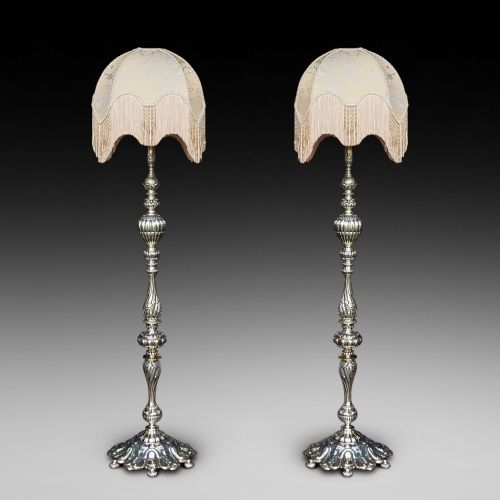
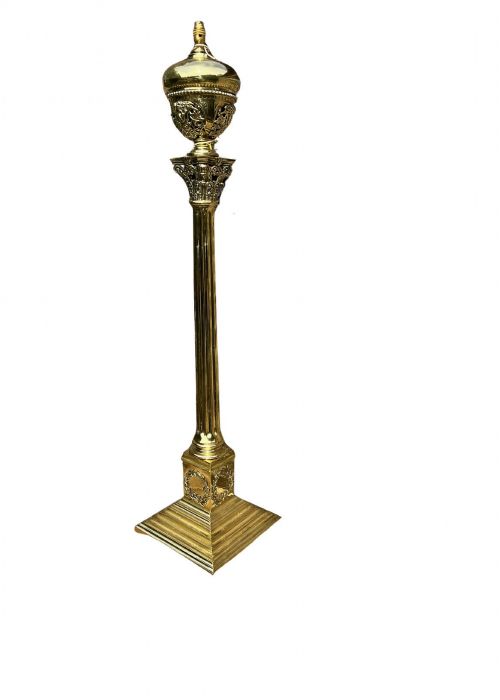


Ornate Standard Lamp
An ornate standard lamp brings height and decorative presence to a room, drawing the eye upwards through classical or floral detail.
Ornate Standard Lamp
An ornate standard lamp provides elevated interior illumination while serving as a sculptural focal point within a room. When searching for an ornate standard lamp, collectors encounter tall floor-standing lighting fixtures dating from the nineteenth century into the early twentieth century.
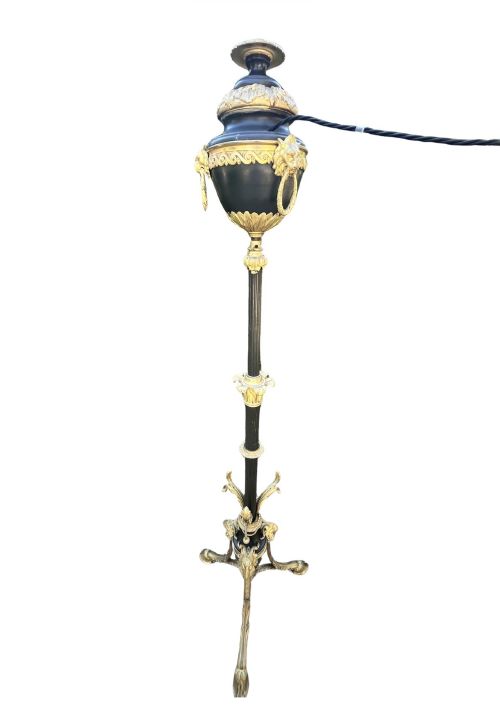
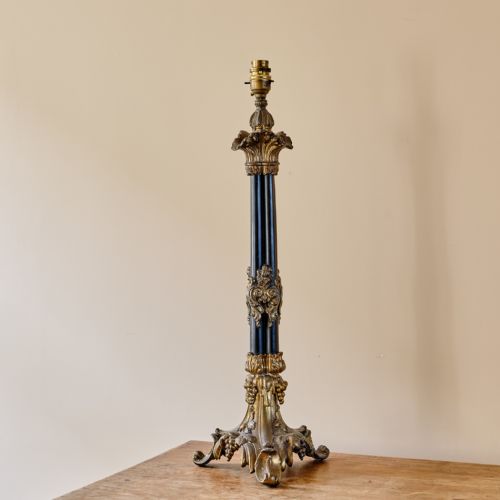
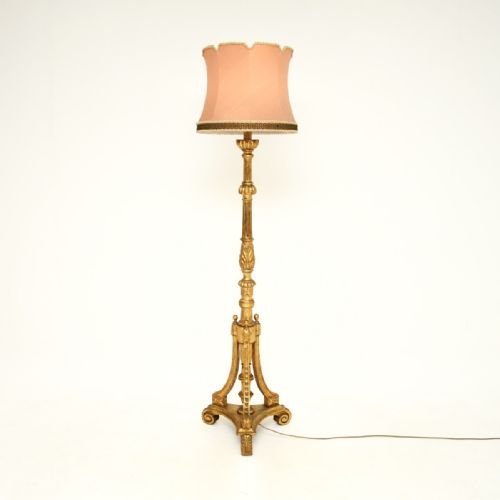
The selection ranges from heavy cast brass and telescopic oil conversions to carved giltwood and gesso pieces influenced by French Chateau, Art Nouveau, and Italian Baroque styles. Brass examples frequently feature scrolling arms, floral openwork bases, or adjustable mechanisms, whilst wooden alternatives display rich carving and gilding.
Origins span Victorian England, France, Italy, and beyond, incorporating diverse stylistic revivals such as Louis XVI and Classical motifs. These pieces reflect the shift from oil burning to electrical illumination whilst retaining elaborate decorative forms.
Materials and construction
Maker's workshops relied heavily on cast brass, often shaped into telescopic columns, scroll arms, and floral openwork bases that provided both stability and intricate ornamentation. Metalwork was frequently polished or cast with detailed relief work, sometimes complemented by bronze or ormolu mounts.
Wooden variants utilised carved giltwood, gesso, and exotic timbers such as padouk, shaped through traditional joinery and carving techniques before receiving a gilded or painted finish. Bases occasionally incorporated marble columns to add weight and textural contrast to the metallic or wooden shafts.
Many survivors began as oil lamps featuring rise and fall mechanisms or adjustable heights, later adapted for electricity while retaining their original fabric shades, fringes, and structural fittings.
Listings feature brass, giltwood, and marble materials across Victorian, Art Nouveau, and Italian Baroque styles.
Distinctions in quality
Quality rests in the crispness and depth of the casting or carving, where finer examples display sharply defined acanthus leaves, scrollwork, and openwork rather than softened or blurred details. The weight and gauge of the brass or the density of the carved wood determine the structural integrity and presence of the piece.
Sophistication of mechanism separates standard production from superior examples, particularly in the smooth operation of telescopic height adjustments, rise and fall oil systems, and secure heavy bases that prevent tipping. The integrity of the original gilding, whether on gesso, wood, or ormolu, dictates how successfully the surface has aged over time.
Messenger
The Ornate Standard Lamp Glossary
- Giltwood
- Wood that has been coated with a thin layer of gold leaf or powder over a prepared gesso ground. This technique creates a luminous, reflective surface popular in classical and baroque revival furniture.
- Telescopic
- Describing a standard lamp column composed of sliding sections that allow the overall height to be adjusted. This engineering feature was particularly useful in nineteenth-century oil lamps.
- Gesso
- A plaster-like mixture applied to wood surfaces as a smooth base for gilding or painting. It allows craftsmen to carve intricate relief details before applying gold leaf.
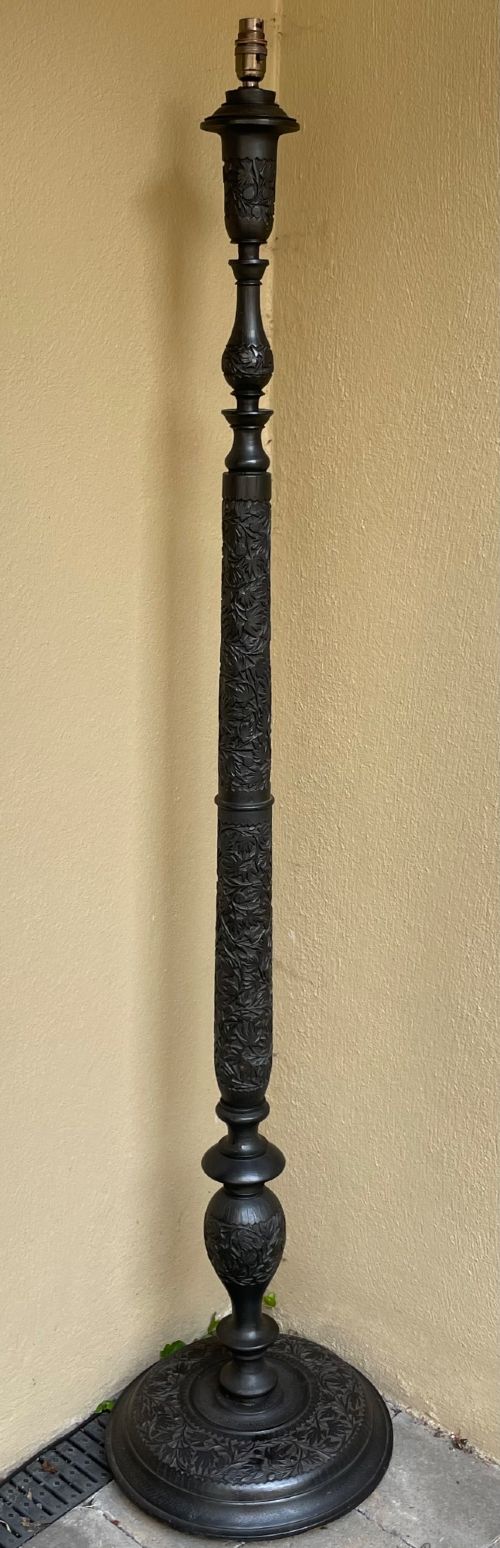
- Cairoware
- Metalwork inlaid with silver or copper, originating from Egyptian revival influences in the late nineteenth and early twentieth centuries. These pieces display intricate Islamic-inspired geometric patterns.
- Ormolu
- Gilded bronze mounted onto furniture and lighting fixtures to provide decorative highlights. The technique involves applying a gold amalgam to bronze through heat treatment.
Ornate Standard Lamp: Frequently Asked Questions
Were these originally wired for electricity?
Most nineteenth-century and early twentieth-century examples started life as oil lamps or paraffin burners before being converted to electricity later in their lifespan. This often involved adapting the original burner gallery to house a lampholder.
Conversion methods vary, with some retaining their rise and fall mechanisms while others were fixed in place during rewiring.
How do I style a standard lamp at home?
Place a tall floor lamp beside a reading chair or in an empty corner where its vertical height can balance low furniture. The detailed brass or giltwood base works well against neutral walls that allow the craftsmanship to stand out.
Pairing the lamp with an appropriate fabric fringe shade completes the historic silhouette without overwhelming the surrounding interior.
What is the difference between floor and standard lamps?
In historical terminology, standard lamps specifically refer to tall wooden or brass floor-standing light fixtures that traditionally supported oil fonts or large bulbs. Floor lamp is a broader modern term encompassing similar tall lighting.
Both terms describe heavy, freestanding pieces designed to illuminate a room from an elevated vantage point.