


Carved Gilt Coffee Table
A carved gilt coffee table brings gilded luxury to a room, offering a decorative centrepiece shaped by revival styles.
Carved Gilt Coffee Table
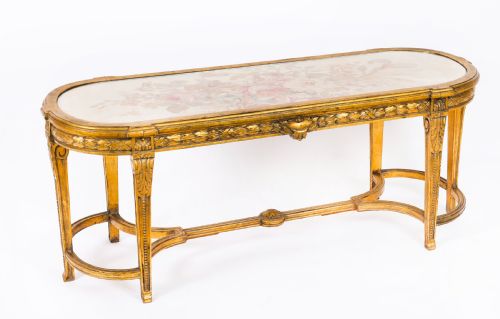
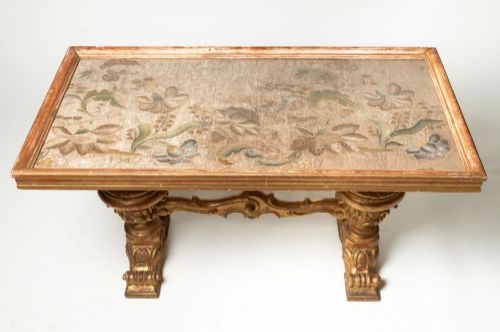
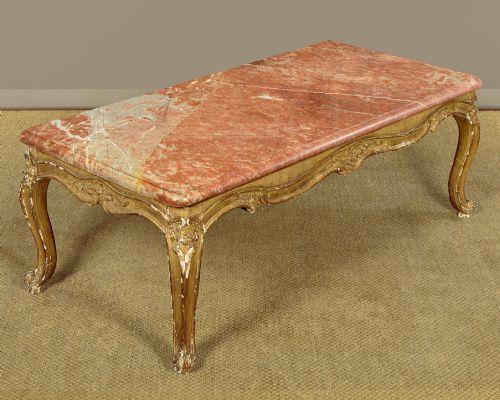
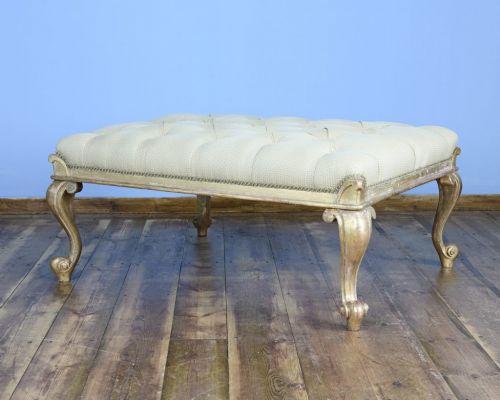
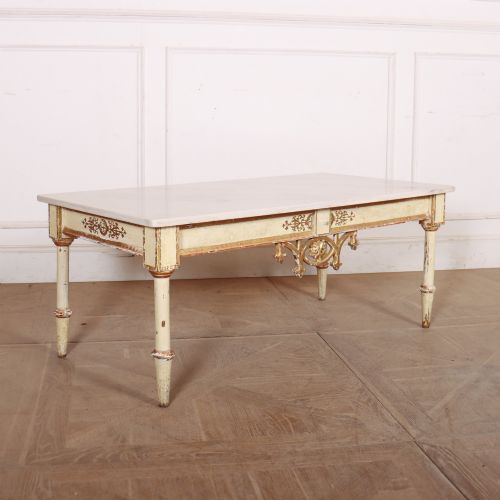
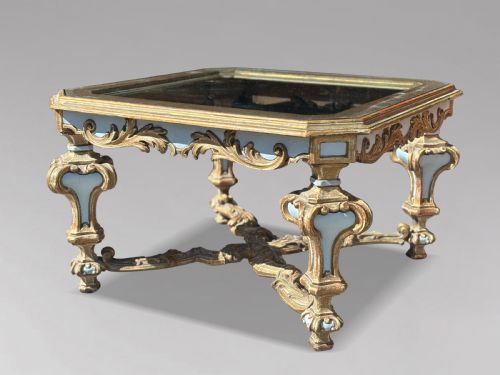
A carved gilt coffee table encompasses low tables and occasional pieces finished with gold leaf, paint, or gesso over wooden frames. These items draw heavily on historical revivals, including Rococo Revival, Italian Baroque, and Louis XVI styles.
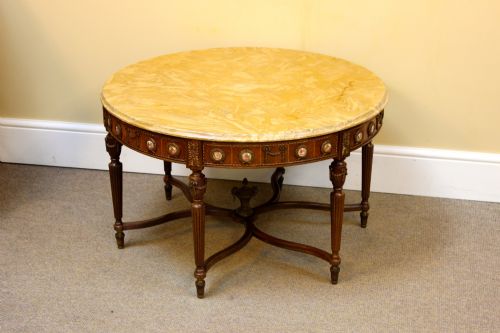
The pieces available span from the nineteenth century through the Edwardian period and into the mid-twentieth century. Buyers frequently encounter low tables featuring marble tops, glass inserts, or painted details alongside traditional carved giltwood.
Forms extend beyond standard coffee tables to include side tables, occasional tables, centre tables, and low footstools adapted for modern living spaces. Origin points visible across the selection range from French workshops to Italian ateliers and English makers.
Materials and construction methods
Construction relies primarily on timber frames shaped from walnut, mahogany, and general wood substrates. Carvers built up surface detail using gesso before applying gold leaf, paint, or parcel gilt finishes.
Many surfaces incorporate inset slabs of marble or glass fitted into the carved wooden rails. Frame construction frequently employs revival joinery techniques characteristic of nineteenth and twentieth-century cabinet making.
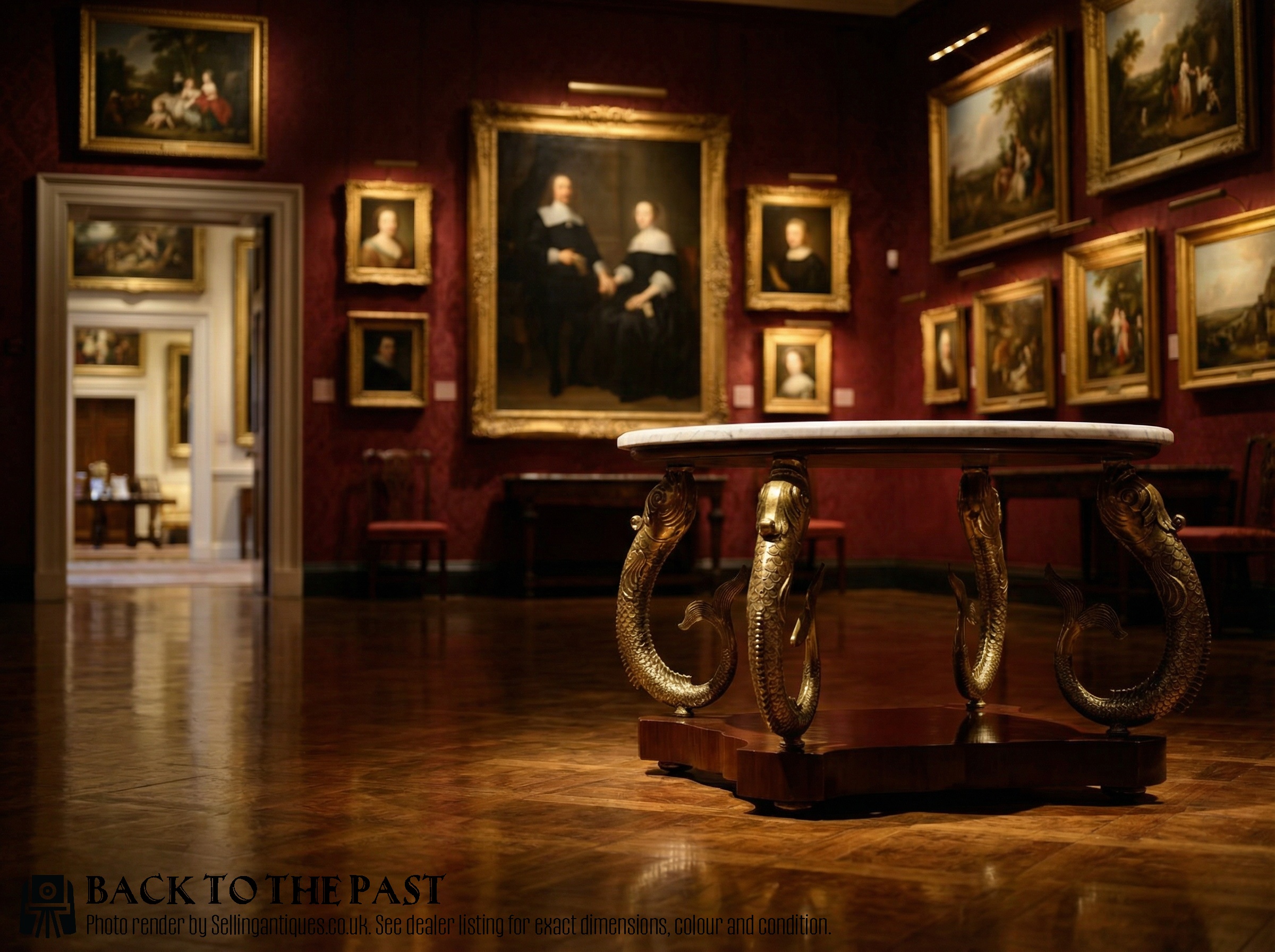
Look closely for whimsical dolphins supporting marble slabs, proving that historical decorators enjoyed a touch of aquatic theatre.
Distinctions in quality and execution
Quality rests upon the crispness of the hand-carved ornamentation and the depth of the gilt or painted finish. Tables with substantial marble tops and intricate gesso work demonstrate superior craftsmanship compared to simpler production pieces.
The integration of regional styles, such as Venetian painted decoration or French Louis XVI proportions, dictates the refinement of the piece. Scale and proportion also influence the overall presence of the table within an interior.
Harrods
The Carved Gilt Coffee Table Glossary
- Giltwood
- Wood carved and subsequently coated with gold leaf or metal leaf. This finish defines the reflective surfaces seen on many revival tables.
- Gesso
- A plaster-like mixture applied to wood surfaces to create a smooth base for gilding or painting. It allows carvers to achieve sharp relief details.
- Rococo Revival
- A nineteenth-century design movement emulating the asymmetrical curves and organic motifs of the French Rococo period. Tables in this style feature elaborate scrolling foliage.
- Parcel Gilt
- A technique where only specific portions of an object are gilded while the remaining areas show painted or polished wood. This highlights particular carved details.
- Louis XVI Revival
- A neoclassical style characterised by straight tapered legs, restrained ornamentation, and classical symmetry. It appears frequently in early twentieth-century French tables.
Carved Gilt Coffee Table: Frequently Asked Questions
How do I clean a marble top?
Wipe the marble surface gently using a soft, damp cloth with mild soap. Avoid acidic cleaners that can etch the polished stone.
Dry the top thoroughly to prevent water spots and protect the surrounding gilt frame from excessive moisture.
Where do I place a gilt table?
Position the table as a central focal point in a living room or drawing room where light can catch the metallic finish. Keep it away from direct sunlight to preserve the gilt surface.
Ensure adequate clearance around the piece to showcase its carved legs and frame details without obstruction.
How do I date a revival table?
Examine the timber substrate beneath the gilt layer and check the wear patterns on the underside. Construction methods and joinery often reveal whether a piece dates to the nineteenth century or the mid-twentieth century.
Compare the decorative motifs against known revival periods like Edwardian Louis XVI or Italian Baroque to confirm the era of manufacture.
Are these tables sturdy enough for daily use?
Most examples are constructed from solid woods like mahogany or walnut with reinforced frames. However, delicate gesso and leaf work require care to avoid chipping.
Use coasters and avoid dragging heavy items across marble or glass inserts to maintain the integrity of the table.