
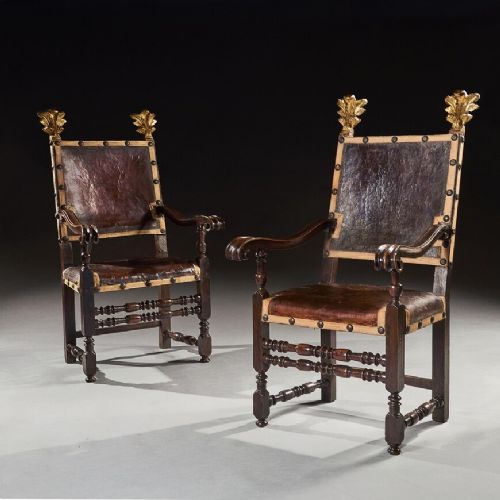

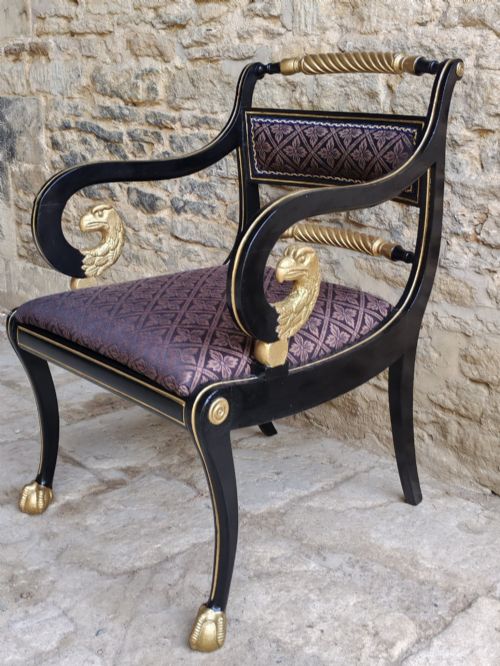
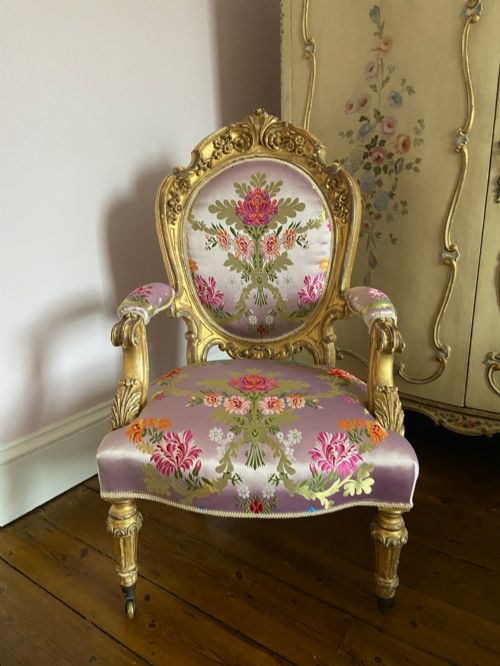
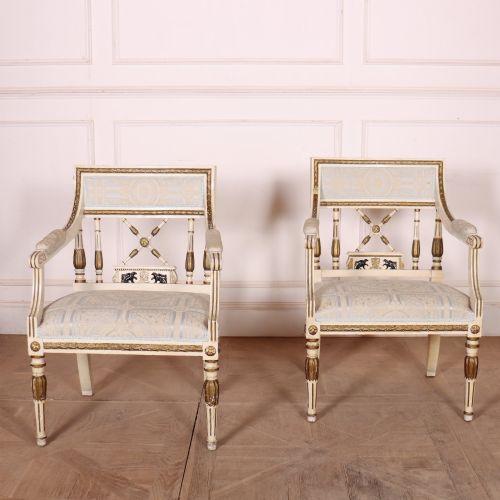
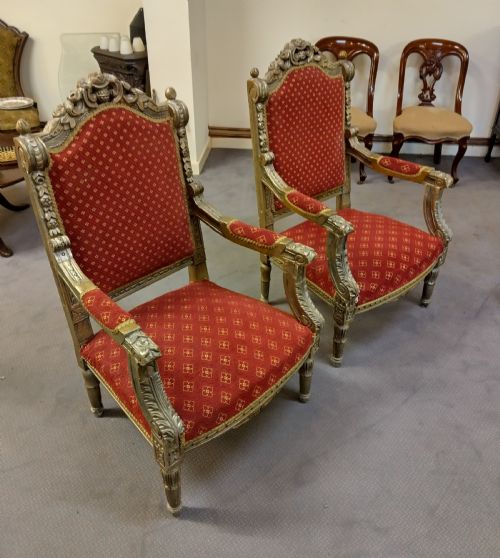
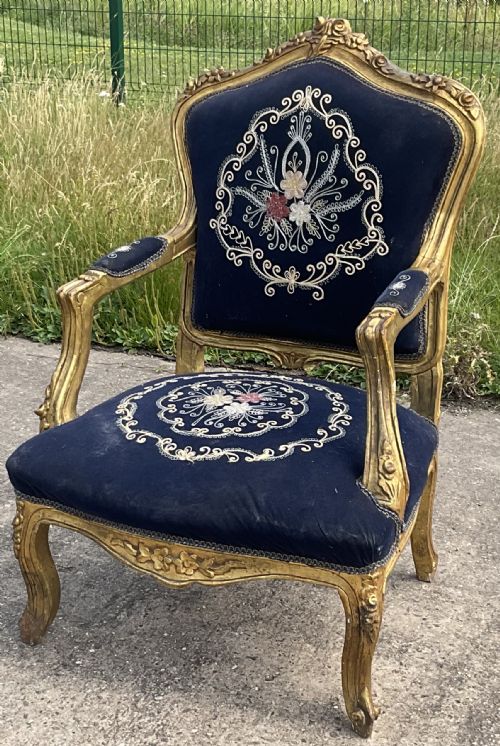
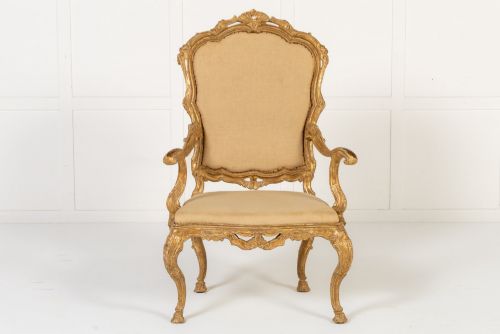
Carved Gilt Armchair
When choosing a carved gilt armchair, collectors acquire seating defined by elaborate timber frames and gilded surfaces spanning several historic periods.
Carved Gilt Armchair
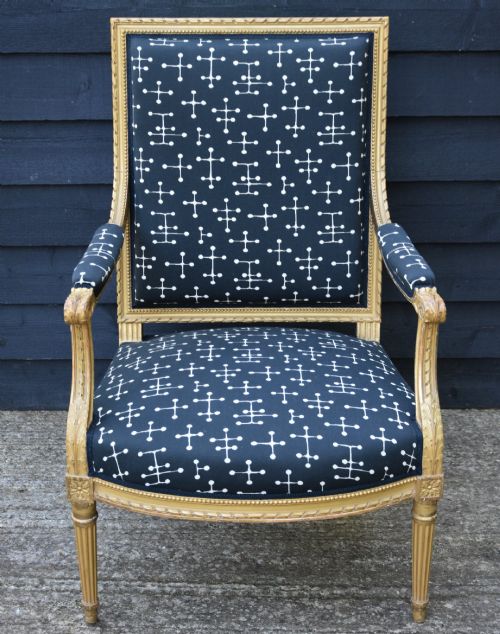
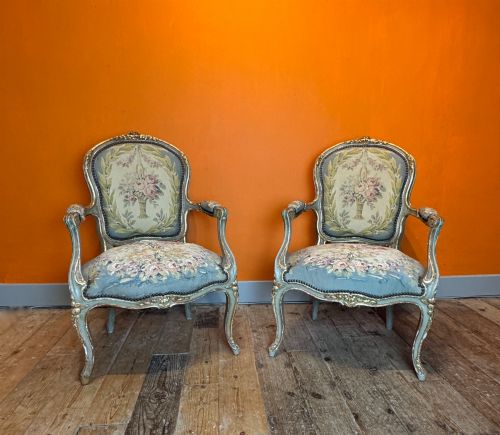
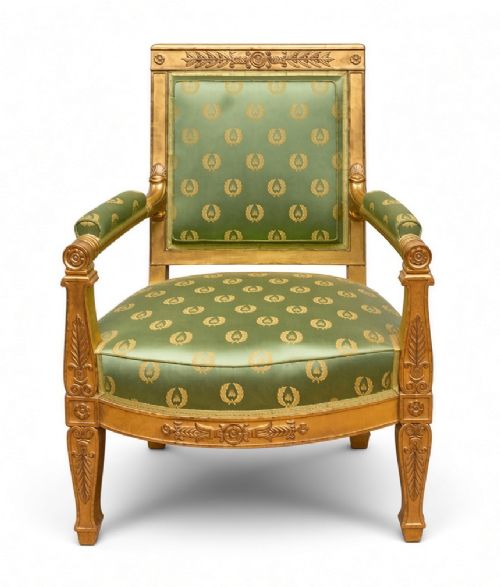
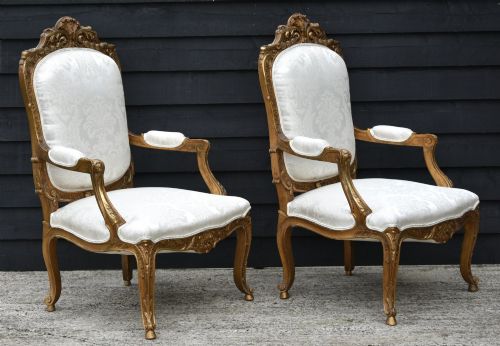
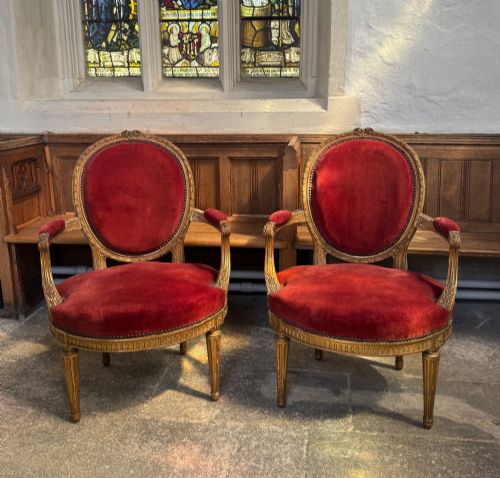
A carved gilt armchair brings formal seating traditions into domestic interiors, frequently taking the form of open armchairs, bergères, or fauteuils. The selection on this page draws heavily from French and Italian workshops, alongside English cabinetmakers working across the eighteenth and nineteenth centuries.
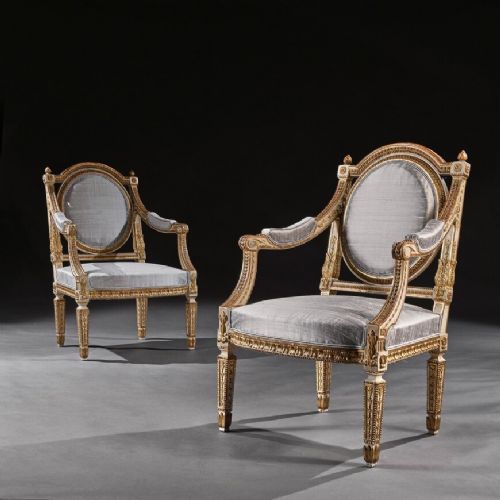
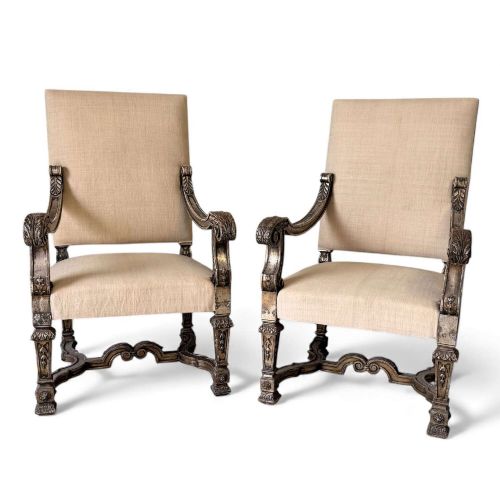
Buyers encounter distinct stylistic revivals, particularly Louis XVI, Louis XV, and Baroque designs, alongside Regency and Victorian interpretations. These seating options range from intimate salon chairs to large-scale throne chairs designed for prominent placement.
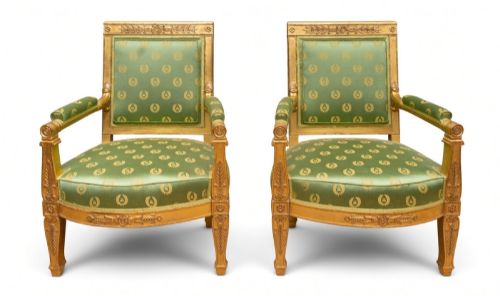
The category extends beyond single chairs to include matched pairs and larger sets intended for formal drawing rooms and libraries. Upholstery treatments vary widely, incorporating period-appropriate silks, velvets, tapestry work, and modern fabric replacements.
Materials and Technique
Frames are constructed primarily from solid timbers such as beech, walnut, and oak, carved by hand into scrolling foliage, floral motifs, and architectural lines. Timber selection prioritised stability to support intricate relief work along the arm rests, rails, and cabriole legs.
Giltwood finishes were achieved by applying thin layers of gold leaf over a prepared gesso and bole ground applied to the wood. Parcel-gilt examples combine gilded highlights with painted surfaces, creating contrast across the carved details.
Upholstery methods involved traditional stuffing techniques secured over webbing and squabs, finished with decorative brass nailheads or gimp trim framing the perimeter.
Some nineteenth-century makers evidently expected royalty at tea, judging by the sheer scale of the throne chairs listed.
Judging Quality
Quality rests primarily on the crispness and depth of the hand carving across the wooden frame, where superior examples exhibit fluid, undercut relief rather than shallow, mechanical shaping. The application and survival of the original water or oil gilding also determine the visual weight and historical integrity of the piece.
Structural honesty separates exceptional seating from lesser items, visible in the tightness of the joinery at the arm joints and block corners. Well-balanced proportions and comfortable ergonomic angles indicate a maker who prioritised both aesthetic presence and practical utility.
Jacob-Desmalter·Blaise Maucuy
The Carved Gilt Armchair Glossary
- Giltwood
- Timber that has been coated with thin sheets of gold leaf over a prepared base. This finish provides the characteristic metallic brilliance seen on formal antique seating.
- Fauteuil
- An open-framed French armchair with upholstered back and seat, featuring exposed wooden arm supports. These seats originated in the seventeenth century for formal domestic interiors.
- Bergère
- An enclosed upholstered armchair featuring solid upholstered sides filled in with cane or fabric. They offer a deeper, more enclosed seat than standard open armchairs.
- Parcel-gilt
- A decorative treatment where only specific portions of a painted or stained wooden surface are gilded. This technique highlights particular carved details like crest rails and cabriole knees.
- Gesso
- A plaster-like mixture applied to wooden frames as a smooth foundation for laying gold leaf. The quality of this preparatory layer dictates how well the surface accepts fine carving details.
- Rococo
- An ornate design style characterised by asymmetry, C-scrolls, and naturalistic shell motifs. It heavily influenced mid-eighteenth-century seating frames and later Victorian revivals.
Carved Gilt Armchair: Frequently Asked Questions
What is a fauteuil armchair?
A fauteuil is an open-arm French chair featuring a wooden frame and exposed carved elements around the arms and legs.
These seats were traditionally used in formal salons and reception rooms during the eighteenth and nineteenth centuries.
How do I identify Louis XVI style?
Louis XVI style furniture is distinguished by straight tapered legs, neoclassical symmetry, and geometric carved motifs.
These designs contrast sharply with the curving, asymmetric lines of the earlier Rococo period.
Are these chairs comfortable to sit in?
Most antique gilt armchairs were built for formal posture rather than deep lounging, featuring upright backs and supportive arm rests.
Original seat heights and padding depths reflect the formal social customs of their respective periods.
What does parcel-gilt mean?
Parcel-gilt refers to items where only select carved details or raised ornaments are highlighted with gold leaf.
The remaining areas of the wooden frame are typically painted in contrasting tones or left as natural timber.