





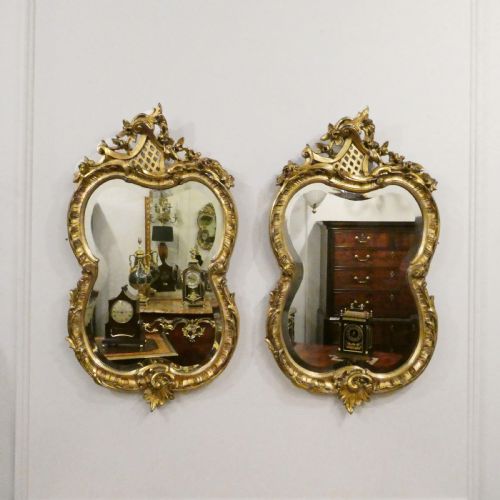
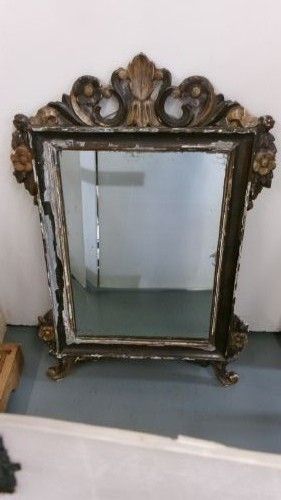

Carved Gilt Accent Mirror
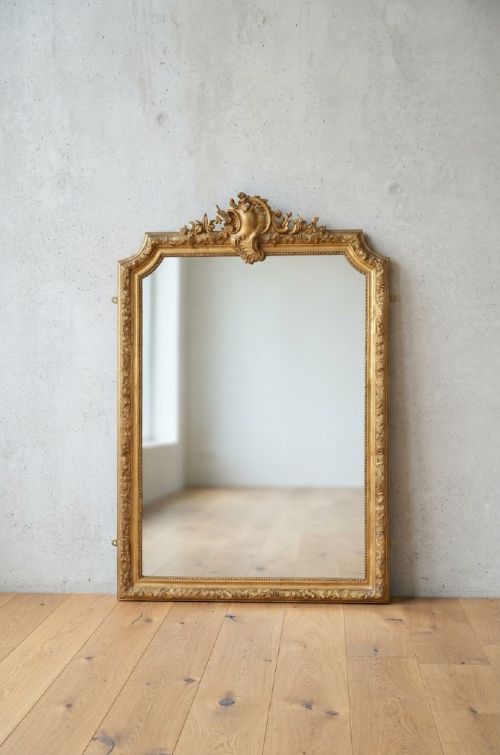
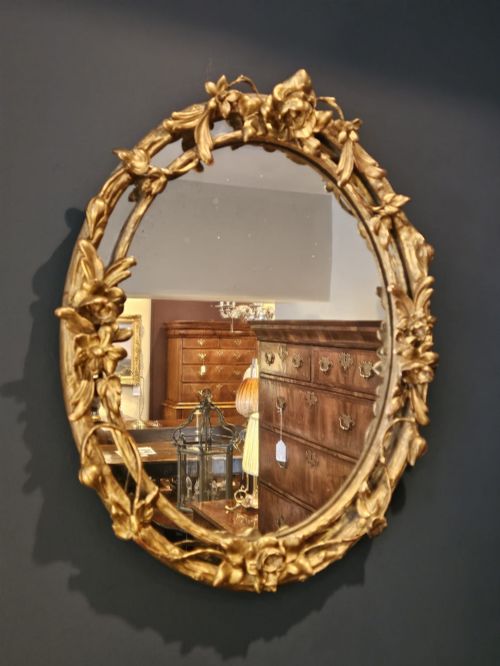
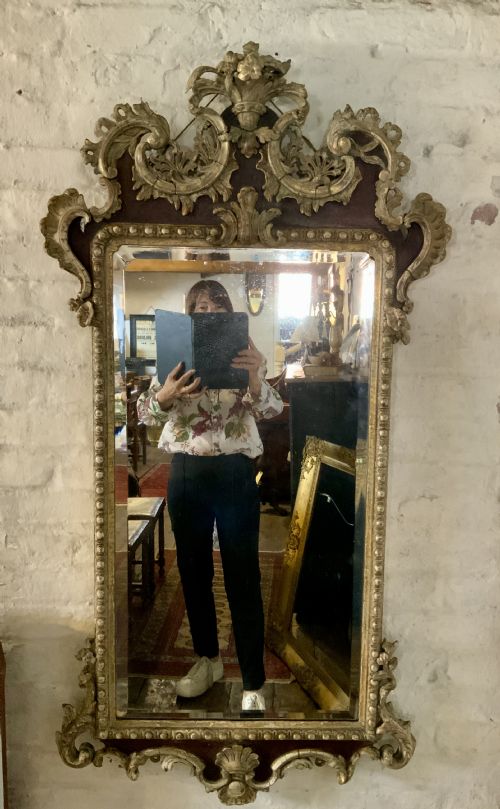
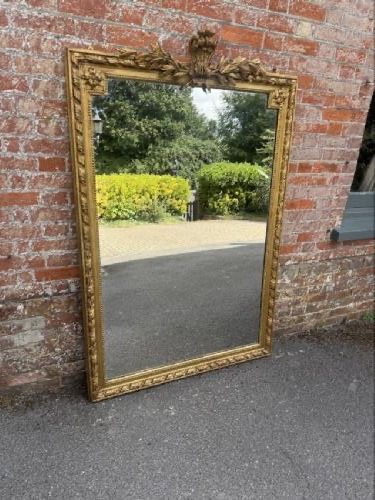
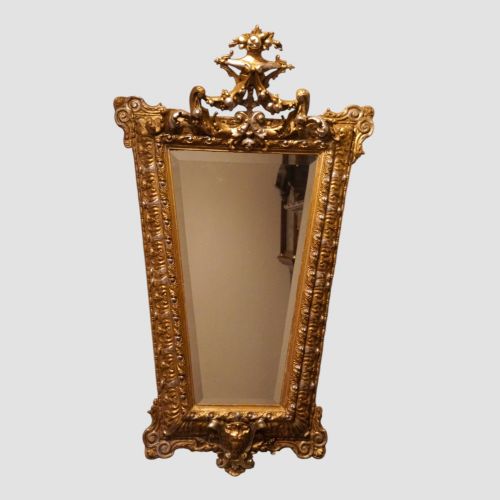
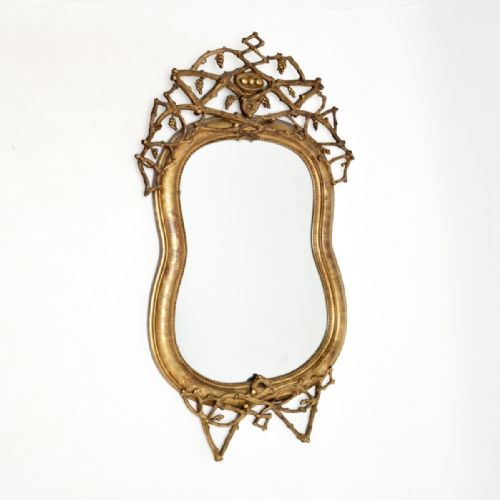
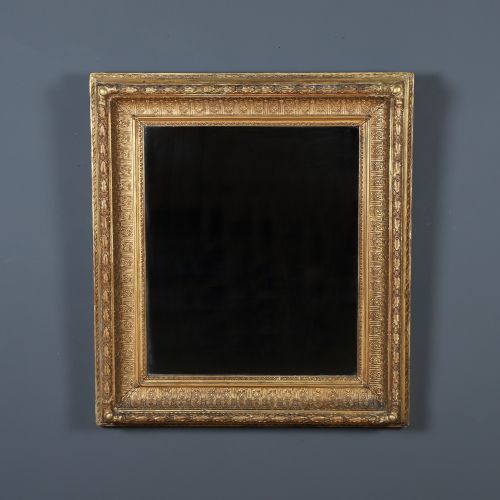
These carved gilt accent mirror examples bring warmth and reflective depth to a room through centuries of decorative traditions.
Carved Gilt Accent Mirror
A carved gilt accent mirror functions as a decorative focal point, combining reflective glass with ornate wooden frames. When searching for a carved gilt accent mirror, buyers encounter a range of forms spanning from compact wall fixtures to grand overmantels.
The pieces on this page originate across the eighteenth, nineteenth, and early twentieth centuries. Originating from English, French, and Italian workshops, these items display distinct regional interpretations of classical and revival styles.
Wall mirrors, overmantel mirrors, and smaller convex hallway pieces dominate the selection. Makers utilised various shapes including rectangular, oval, trapezoidal, and cartouche formats to suit different interior spaces.
How they were made
Craftsmen built the foundations of these frames using carved wood, oak, walnut, or timber. Artisans then applied layers of gesso to create smooth surfaces for detailed ornamentation and relief work.
Gilding techniques involved applying gold leaf or silver-gilt over the prepared frames to achieve a luminous finish. Some items incorporate hand-painted details or parcel gilt accents alongside the primary reflective mirror glass.
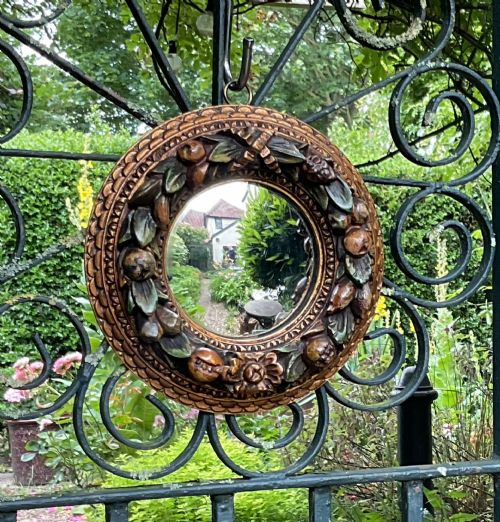
Convex mirrors capture entire rooms in miniature, turning everyday parlours into curved optical curiosities.
What varies in quality
The depth and crispness of the carved detail distinguish finer examples from simpler production. Skilled hand-carving in wood and gesso yields fluid ornamentation, particularly in rococo and baroque revival styles.
The preservation of the original gilt surface and the character of the mirror glass itself indicate the integrity of a piece. Hand-engraved plates and well-maintained gold leaf demonstrate higher workshop standards.
John Belchier
The Carved Gilt Accent Mirror Glossary
- Giltwood
- Wood that has been coated with gold leaf or a gold-coloured metallic finish. This material defines the bright, reflective surfaces characteristic of these decorative frames.
- Gesso
- A plaster-like mixture applied to wooden frames to provide a smooth base for carving and gilding. Artisans model this substance to create raised ornamentation before applying gold leaf.
- Overmantel mirror
- A large mirror designed to hang above a fireplace mantel. These expansive pieces often feature arched tops and substantial frames to anchor a room.
- Convex mirror
- A round mirror with a curved, outward-bulging glass plate that provides a wide-angle reflection of the interior. These pieces frequently appear in hallways and smaller spaces.
- Pier glass
- A tall mirror designed to fit on the wall space between windows. These vertical glasses often incorporate decorative consoles or match pedestal stands.
Carved Gilt Accent Mirror: Frequently Asked Questions
Where should I hang an overmantel mirror?
An overmantel mirror is traditionally positioned directly above a fireplace mantel to reflect light and anchor the room's main living space.
These large pieces also suit principal reception rooms where their substantial frames can command the wall.
How do I identify a Victorian gilt mirror?
Victorian gilt mirrors often feature dense, high-relief ornamentation drawing on rococo or baroque revival styles. The construction typically employs carved wood and gesso finished with gold leaf.
Makers of this period produced various formats including large wall mirrors and overmantles with arched or rectangular frames.
What is a convex mirror used for?
Convex mirrors provide a wide, panoramic reflection of a room due to their curved glass plates. Historically placed in hallways and parlours, they offered a practical way to monitor activity across a space.
Today, smaller convex pieces serve as striking focal points in entryways and compact rooms.
How do Italian gilt mirrors differ?
Italian gilt mirrors frequently showcase elaborate Florentine carving and scrolling foliage associated with regional rococo traditions. These pieces often utilise carved wood and gesso to achieve deep, ornate relief work.
They range from intimate wall fixtures to imposing vertical pier glasses designed for grand interiors.
What does parcel gilt mean?
Parcel gilt refers to an object that is only partially gilded, leaving portions of the underlying wood visible. In eighteenth and nineteenth-century pieces, this technique highlights specific carved details against a contrasting wood base.
Walnut and oak frames frequently incorporate parcel gilt accents to create subtle visual depth.