



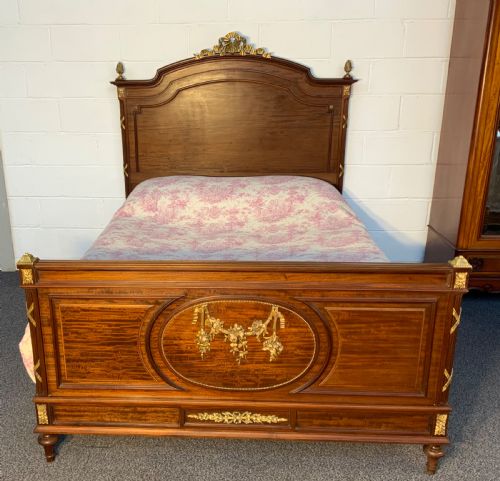

Carved French Walnut Bed
A carved french walnut bed brings warmth and grand architectural presence to a bedroom, combining rich timber with flowing nineteenth-century decorative curves.
Carved French Walnut Bed
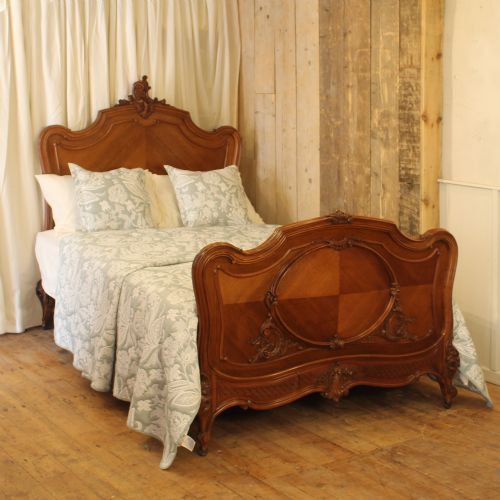
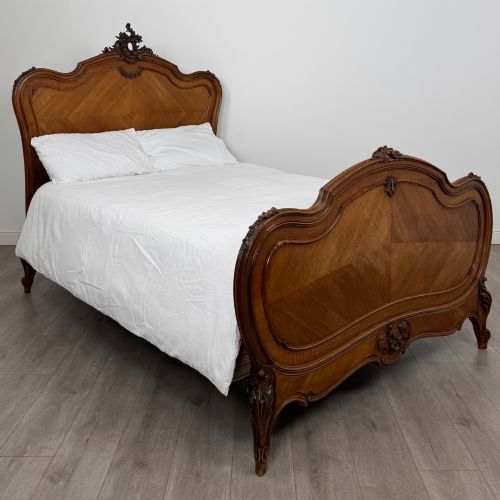
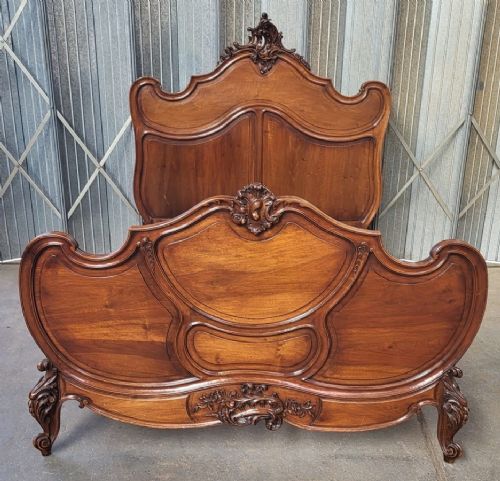
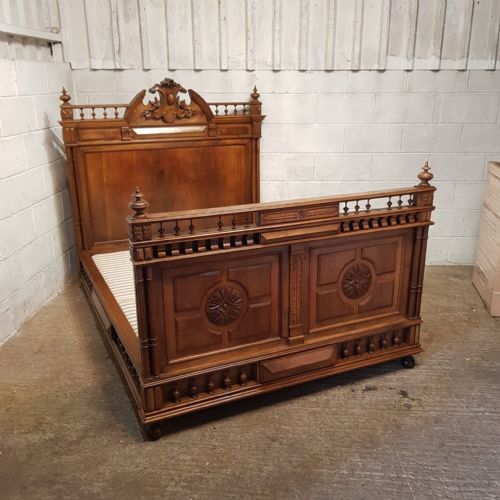
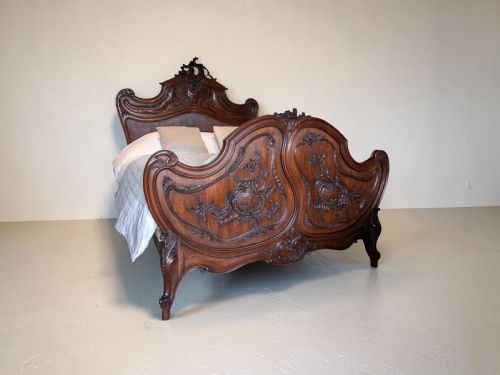
A carved french walnut bed is a substantial sleeping frame originating from continental workshops, most frequently encountered in nineteenth-century and early twentieth-century designs. These pieces range from grand king-sized proportions down to double beds and occasional daybeds, often drawing on Louis XV, Louis XVI or Rococo revival styles. Buyers searching for this furniture will find robust timber frames shaped with characteristic cabriole legs, scrolled crestings and elaborate floral carvings.
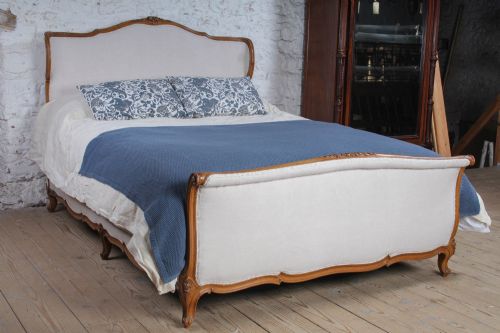
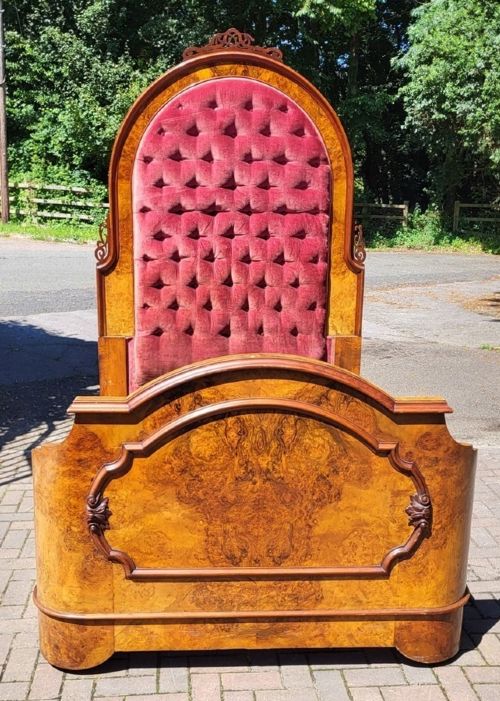
The aesthetic leans heavily towards traditional chateau elegance, where timber and fabric intersect through button-backed upholstery or exposed quarter-veneered panels. Alongside standard bedsteads, the category occasionally embraces related bedroom furniture including window seats, bedside cabinets and complete suites. The prevailing formats on offer highlight walnut in both solid form and highly figured burr variations.
Materials and Construction Techniques
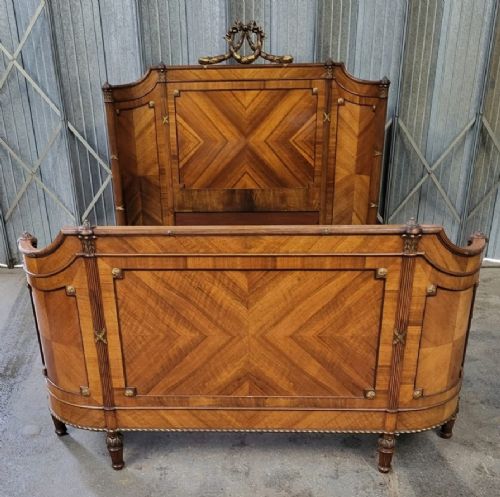
Makers utilised solid walnut and decorative burr walnut veneers over secondary timbers, applying hand-carving techniques to shape deep relief mouldings and scrolling crests. Selected panels frequently display quarter-veneering or marquetry arrangements that exploit the natural grain patterns of the wood.
Metal accents such as brass detailing appear across specific frames, while soft furnishings incorporate contemporary and period upholstery fabrics like velvet and leather panels. Giltwood highlights and hand-painted floral elements are applied to select frameworks to accentuate the carved contours.
Listings feature walnut, burr walnut, and giltwood frames spanning the Victorian era through the early twentieth century.
Evaluating Quality and Craftsmanship
Quality rests upon the depth and crispness of the hand-carving, where superior examples exhibit sharp undercutting and fluid symmetry across the headboard and footboard. The selection of timber also dictates tier, with finely figured burr walnut and quarter-veneered surfaces commanding greater appreciation than plain timber boards.
Structural integrity depends on the joinery used in the heavy framework and the preservation of the original proportions. Finer pieces demonstrate seamless integration between decorative elements like brass mounts, upholstery and the underlying walnut carcass.
Louis Majorelle
The Carved French Walnut Bed Glossary
- Burr walnut
- A prized veneer taken from the knotted growth of a walnut tree, yielding intricate swirling patterns across large panel surfaces.
- Louis XV style
- A nineteenth-century revival design movement defined by asymmetrical curves, cabriole legs and naturalistic floral carvings.
- Bedstead
- The complete structural framework of a bed, including headboard, footboard and side rails, designed to support a mattress base.
- Daybed
- A multipurpose piece combining seating and reclining functions, sharing the carved wooden framework characteristic of French walnut beds.
- Quarter-veneered
- A method where four symmetrical slices of wood veneer are matched grain-to-grain to create a geometric decorative panel.
Carved French Walnut Bed: Frequently Asked Questions
How do I choose the right size?
French antique beds were constructed to historical measurements that frequently differ from modern standard mattress sizes. Checking the internal length and width dimensions before purchase ensures contemporary bases and mattresses fit the antique wooden frame correctly.
Larger rooms accommodate king or super-king scale frames comfortably, while double and single variants suit compact guest spaces. Consideration must also be given to the height of the carved headboard and footboard within the room's architecture.
How are these beds assembled?
Most antique wooden bedsteads utilise heavy iron bolts or traditional timber wedge systems to lock the side rails securely into the headboard and footboard. Modern slat systems are frequently integrated inside the antique frame to support contemporary mattresses without altering the exterior appearance.
Careful positioning and professional assembly protect the original joints and carved side panels from undue stress. Ensuring the floor is level prevents twisting in large walnut frames.
Can I use a modern mattress?
Modern mattresses integrate seamlessly once a suitable slatted base or concealed wooden platform is measured and fitted inside the antique rails. The depth of the side rails dictates how high the sleeping surface sits relative to the carved footboard.
Consulting dimensions regarding the internal drop prevents the mattress from obscuring low decorative carvings on the foot panel. Custom mattress makers can also supply bespoke dimensions for unusual French sizes.
How do I care for walnut wood?
Walnut timber benefits from regular dusting with a soft, dry cloth to prevent particulate accumulation on intricate carved surfaces and veneers. Avoiding direct sunlight and sustained heat sources protects the polished finish and natural wood oils from drying out.
Application of appropriate wax polish maintains the lustre of the timber without building up heavy residues in the carved recesses. Gentle handling preserves the original patina developed over generations.