
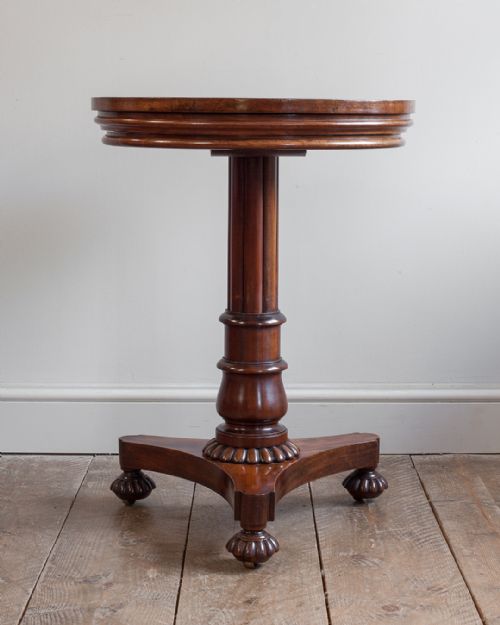


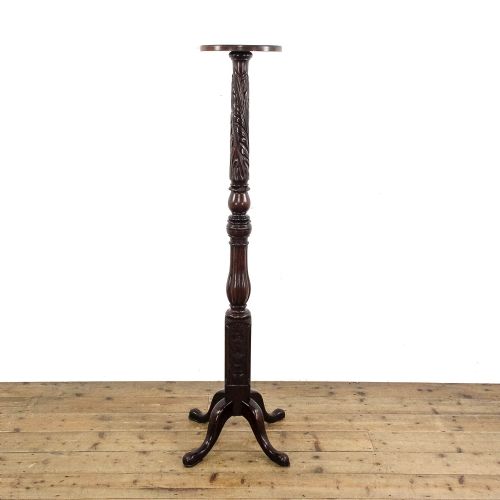


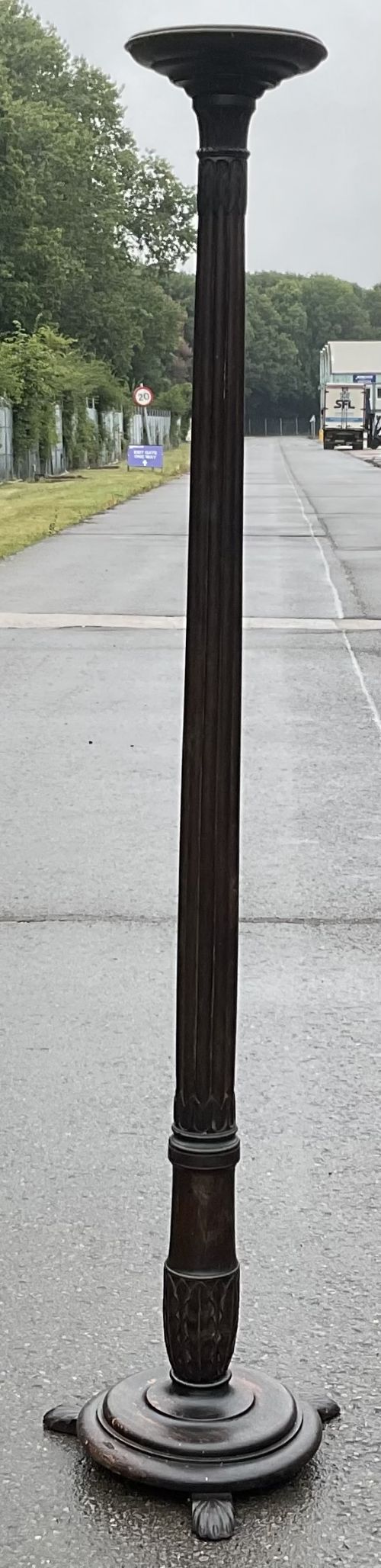
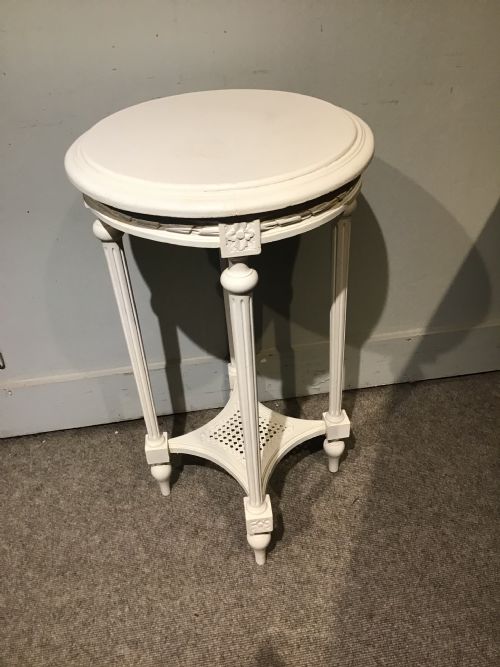

Carved Fluted Pedestal
These carved fluted pedestal pieces elevate sculpture, plants and lighting, bringing classical form and rich mahogany grain directly into a room.
Carved Fluted Pedestal
A carved fluted pedestal provides a raised platform for display, taking the form of tall columns, torchères and plant stands. You will most frequently encounter nineteenth-century mahogany examples alongside eighteenth-century Georgian designs and later revival pieces.
These supports function to elevate items such as busts, urns and lamps above floor level. The vertical column format draws the eye upward, utilising architectural detailing to anchor a corner or punctuate a wall.
Originating in classical traditions, these objects appear in various materials including pine, marble and stone alongside traditional timber. The form ranges from slender candle stands to robust architectural columns designed to bear significant weight.
Materials and construction methods
Cabinet makers relied primarily on dense hardwoods like mahogany, carving the vertical flutes directly into the timber columns by hand. Subsidiary woods such as pine and oak appear in concealed structural areas or painted baseline constructions.
Surface decoration frequently incorporates gesso, paint and gold leaf to enrich the classical profiles. Marble and stone variants demonstrate specialised masonry techniques, shaping heavy mineral blocks into smooth shafts and capitals.
Differentiating quality across examples
The standard of execution in the hand-carved flutes dictates the visual rhythm and sharpness of the piece. Crisp, deeply channelled lines demonstrate superior craftsmanship compared to soft or shallow surface scoring.
Choice of raw material heavily influences the calibre of an object, with finely figured mahogany and high-grade statuary marble marking the upper tier. Structural stability, balanced tripod bases and intact original surface finishes further separate standard items from exceptional ones.
The Carved Fluted Pedestal Glossary
- Torchère
- A tall ornamental stand designed specifically to support a candelabrum or light source. These pieces typically feature slender vertical columns raised on tripod or weighted bases.
- Fluting
- A series of shallow, parallel concave grooves running vertically along the shaft of a column or pedestal. This classical decorative detail creates shadow and visual length.
- Gesso
- A plaster-like mixture applied to wood surfaces as a smooth base for painting and gilding. It allows for intricate relief ornamentation before leaf application.
- Capital
- The topmost member of a column, situated directly above the shaft. It provides a decorative transition and a stable bearing surface for whatever rests on top.
Carved Fluted Pedestal: Frequently Asked Questions
What were these pedestals originally used for?
These supports held lighting instruments such as candles or oil lamps before electric illumination became standard. They also served to display prized decorative objects, bronze busts and indoor plants.
Wealthy interiors utilised them in reception rooms and hallways to create focal heights and display classical taste. Their structural rigidity allowed them to bear heavy stone and marble items safely.
How do I style a pedestal at home?
Place a standalone column in an empty corner to draw the eye upward and break up flat wall expanses. Ensure the top surface holds a complementary object, such as a bronze figure, a ceramic urn or a trailing plant.
Keep surrounding furniture low to let the vertical lines of the column remain the primary focus. Avoid overcrowding the immediate floor space so the carved details stay fully visible.
How do I distinguish Georgian from Victorian pieces?
Georgian examples often display restrained classical proportions using dense, richly patinated mahogany with precise hand-carved details. Their design language leans heavily on authentic architectural proportions from antiquity.
Victorian iterations frequently introduce heavier ornamentation, varied revival styles and alternate timbers like painted pine or walnut. They reflect a nineteenth-century enthusiasm for historical revivals ranging from Gothic to Neoclassical.
Are these columns structurally stable enough for heavy items?
Most timber and stone columns possess wide bases, often with tripod configurations, designed to distribute weight safely. Solid hardwood and marble variants safely accommodate heavy sculptures and large ornamental urns.
Inspect the joinery where the column meets the base and top platform to ensure the historical fixings remain secure. Avoid placing excessively top-heavy loads on slender tripod designs in busy walkways.