
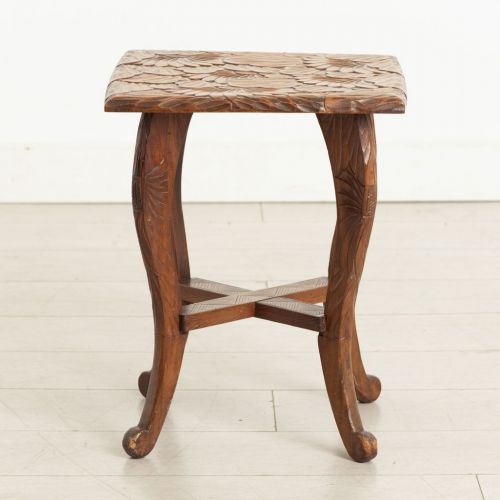
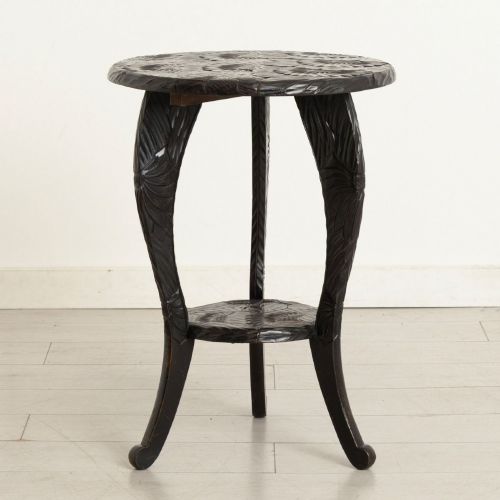
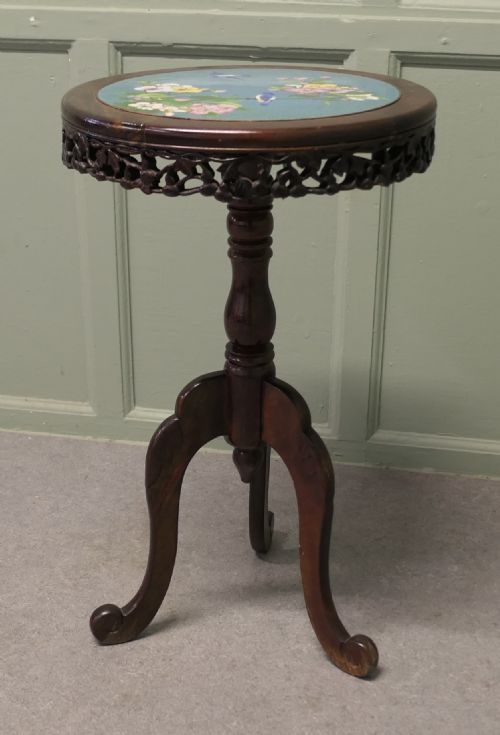


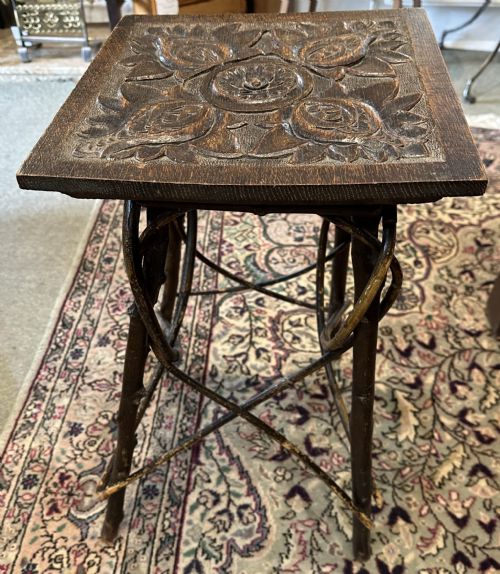
Carved Floral Plant Table
A carved floral plant table brings botanical focus to a room, offering a sturdy yet decorative stage for urns and greenery.
Carved Floral Plant Table
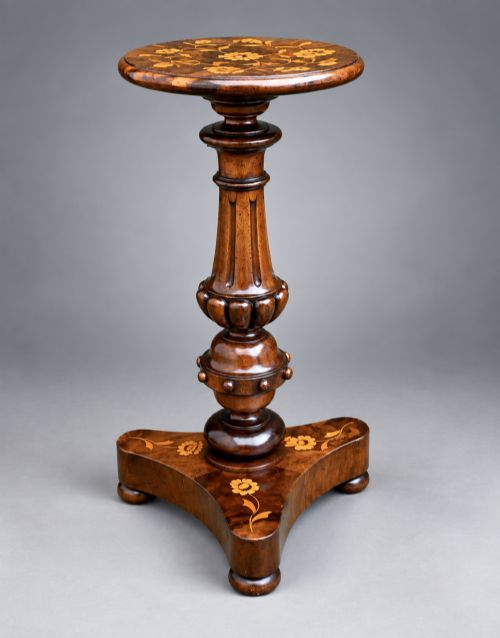
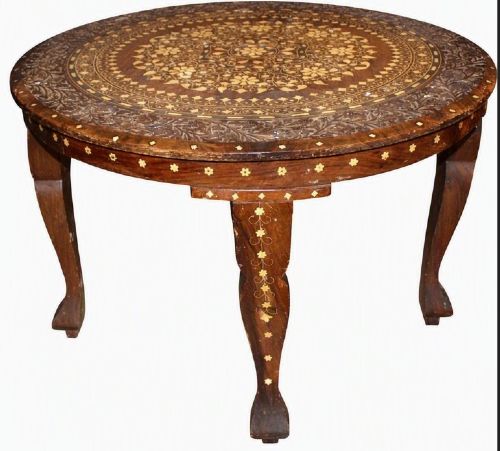
A carved floral plant table functions primarily as a stand for pots, vases, and jardinières, taking forms such as occasional tables, plant stands, and urn stands. Buyers searching for a carved floral plant table encounter diverse global origins, from Victorian English and Arts and Crafts oak designs to Chinese export hardwoods and Anglo-Indian bone inlay.
The materials and styles span centuries and continents, featuring rosewood, walnut, teak, and hardwood alongside specific stylistic influences like Qing Dynasty, Japonisme, and Dutch marquetry. These surfaces are built to support botanical displays while serving as decorative sculptures within domestic interiors.
Materials and construction methods
Construction relies heavily on dense timbers such as oak, mahogany, rosewood, and general hardwood, often enhanced with contrasting elements like marble inserts or bone inlay. Cabinetmakers and regional artisans utilised hand carving to render floral motifs, turning techniques for bobbin legs, and precise joinery to ensure stability under heavy stone tops.
Surface finishes range from lacquered and painted pedestal applications to ebonised treatments and intricate marquetry. These techniques reflect both European revivalist methods and Eastern export traditions, binding decorative floral carving directly into the structural framework of the table.
The listings on this site span materials from marble and teak to rosewood and bone inlay, crossing styles from Anglo-Japanese to Jacobean Revival.
Indicators of quality and execution
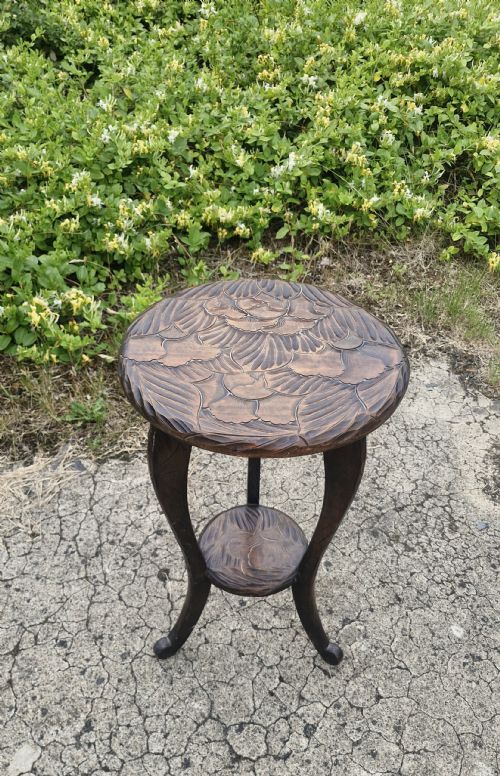
The depth, crispness, and relief of the hand carving dictate the visual standard of the piece, separating mechanical repetition from spirited artisan execution. Finer examples display meticulous attention to detail in floral and avian motifs, whether rendered in hard Chinese rosewood or softer European oak.
Integration of materials also marks quality, particularly in the fit of inset marble tops and the precision of bone inlay within hardwood frames. Substantial weight, tight joints, and balanced proportions signal superior workshop output across both Victorian domestic production and specialised export studios.
Liberty & Co·Liberty of London·Liberty's
The Carved Floral Plant Table Glossary
- Jardiniere stand
- A tall, dedicated table designed to hold a ceramic or metal planter filled with flowers or foliage. These pieces often feature water-resistant stone or marble tops to protect the underlying timber.
- Marquetry
- A decorative technique where thin slices of various woods are fitted together to form pictorial patterns and floral designs on a surface. It appears frequently on Dutch occasional tables of the nineteenth century.
- Hongmu
- A traditional Chinese term for dense, reddish-brown hardwoods utilised in fine furniture and plant stands. Pieces made from this material offer exceptional structural rigidity.
- Bone inlay
- The practice of embedding intricately carved animal bone into wooden surfaces to create contrasting geometric or floral patterns. This technique is characteristic of Anglo-Indian occasional tables.
Carved Floral Plant Table: Frequently Asked Questions
What is a carved floral plant table used for?
These tables provide a raised surface specifically intended for displaying potted plants, ceramic vases, and heavy decorative urns within living spaces.
Beyond botanical displays, they function adequately as compact side tables, lamp stands, or wine tables in tighter domestic corners.
How do I identify a Chinese export plant stand?
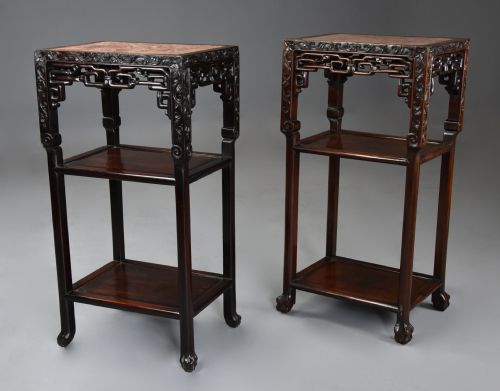
Chinese export stands typically utilise dense hardwoods such as rosewood, mahogany, or hongmu, frequently incorporating inset marble tops designed to resist moisture from plant pots.
They often display intricate floral carvings and styles associated with the Qing Dynasty or regional export workshops of the nineteenth century.
What distinguishes an Anglo-Indian table?
Anglo-Indian tables are characterised by heavy, deeply carved hardwood structures frequently detailed with intricate bone inlay depicting floral and foliate motifs.
Many examples from this tradition were retailed through British firms like Liberty & Co during the late nineteenth and early twentieth centuries.
How do I care for a marble top plant stand?
Marble inserts require gentle cleaning with a damp cloth and mild soap, avoiding acidic solutions that can etch the polished stone surface.
Placing felt pads beneath heavy ceramic pots prevents scratching and distributes weight evenly across the marble and surrounding timber frame.
What is the difference between a jardiniere stand and a side table?
A jardiniere stand is usually taller and narrower, engineered explicitly to support heavy planters and urns with minimal footprint.
Side tables offer broader surfaces intended for general placement of lamps, books, and occasional decorative objects rather than damp botanical arrangements.