

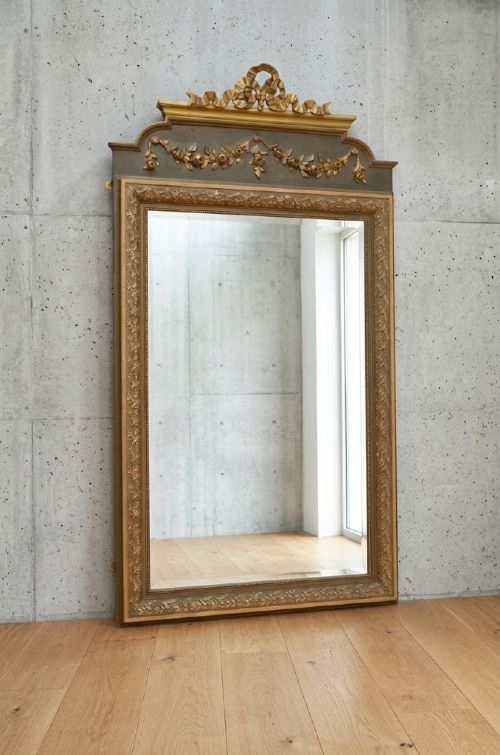
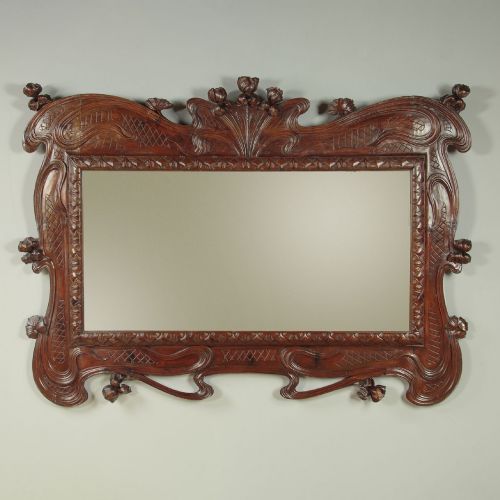
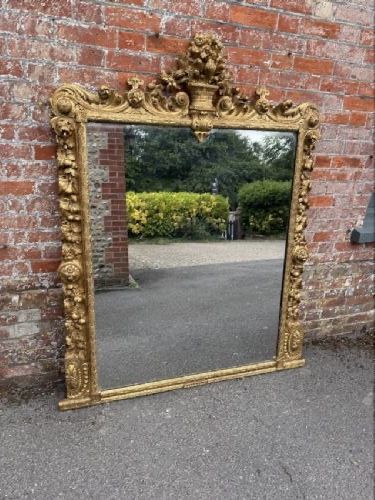
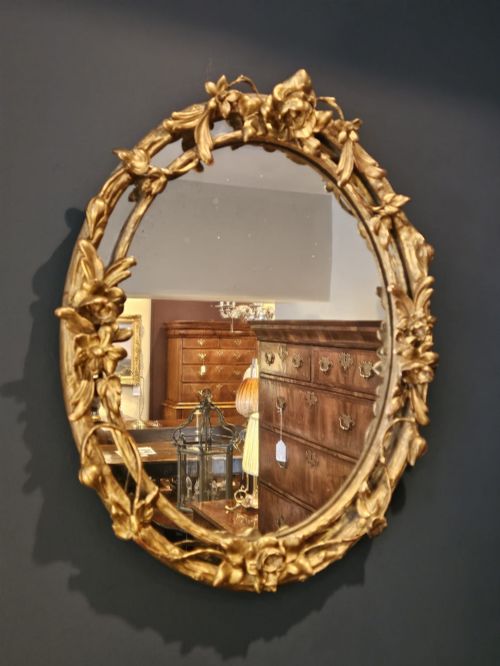
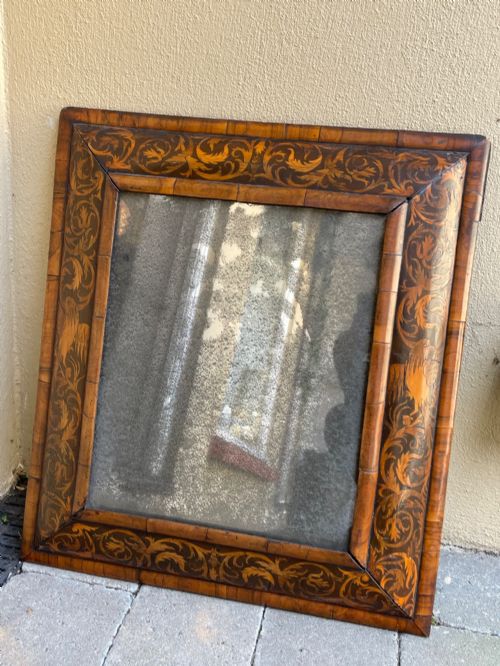


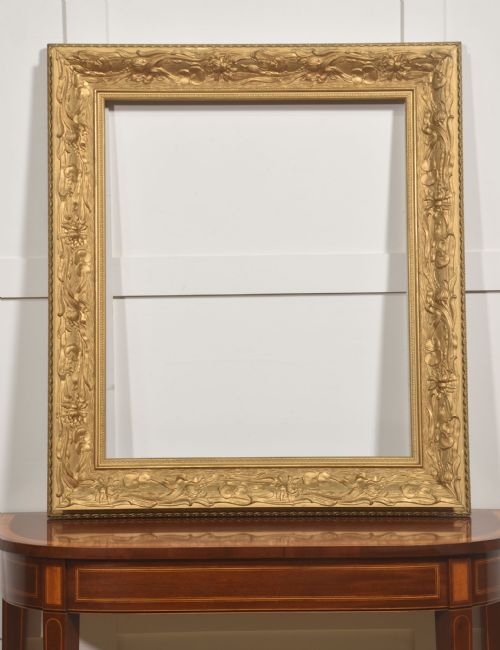

Carved Floral Frame Mirror
A carved floral frame mirror brings organic movement and botanical detail into a room, joining the utility of glass with sculptural wood or gesso work.
Carved Floral Frame Mirror
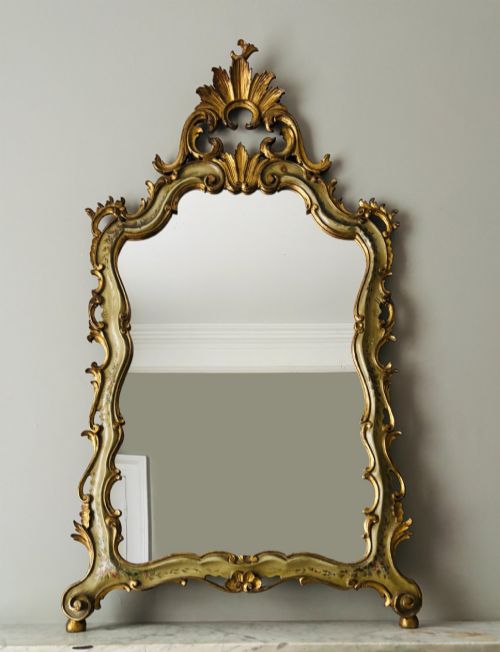
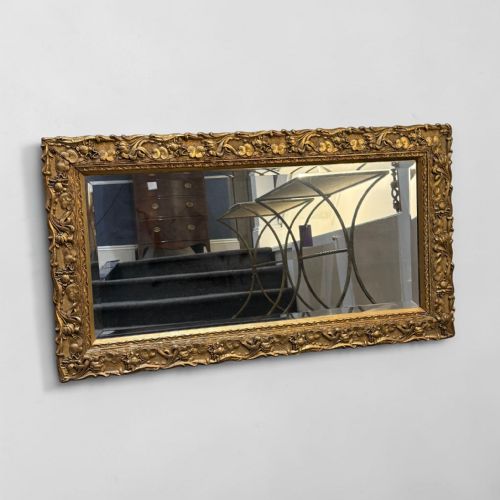
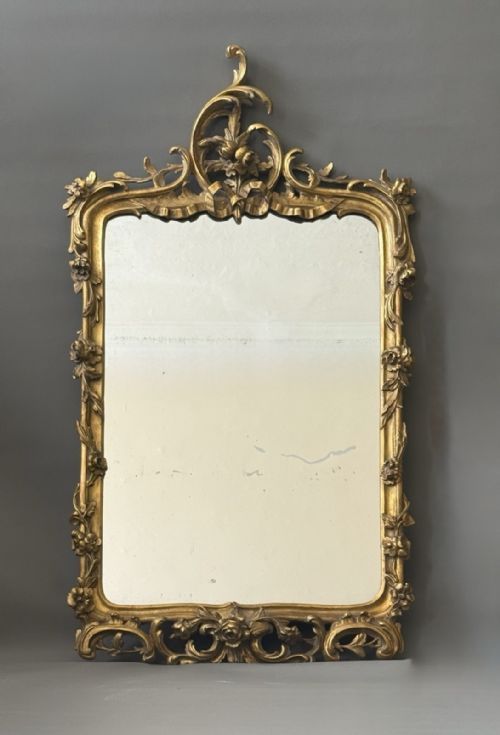
A carved floral frame mirror spans several centuries of domestic interior decoration, appearing in forms from grand overmantels to intimate wall hangings. Buyers seeking this style will encounter pieces originating from French, Italian, and English workshops, utilising motifs of roses, vines, and foliage.
The material vocabulary of these pieces ranges from heavy giltwood and gesso to painted wood, walnut, and oak. Wall mirrors, trumeau mirrors, and pier glasses dominate the selection, often carrying the characteristic floral crests or vine decorations typical of periods from the eighteenth century through the Edwardian era.
Art Nouveau and Rococo revivals heavily influence the items found within this category, bringing asymmetric botanical curves and naturalistic floral carvings to the forefront. Buyers frequently meet pieces finished in gold leaf, olive green paint, or natural wood tones that highlight the depth of the floral relief.
Materials and Construction Techniques
Makers shaped these frames primarily from timber such as pine, beech, oak, and walnut, frequently applying a layer of gesso to build up intricate relief details before gilding or painting. Giltwood and gold leaf finishes required meticulous application over bole, while other examples received hand-painted floral embellishments or reverse-painted glass panels.
Carvers worked freehand into the solid wood or moulded the gesso composition directly onto the wooden substrate to achieve crisp botanical forms like rose vines and scrolling foliage. Joinery techniques varied by period, employing pegged mortise and tenon joints for heavier overmantel frames and simpler mitred corners for smaller wall mirrors.
Carved Floral Frame Mirror Retail Price Guide 2026
Typical asking prices for carved floral frame mirror among the pieces listed under this phrase on Sellingantiques today, from the lower quarter to the upper quarter. They describe what is for sale here now, not the wider market.
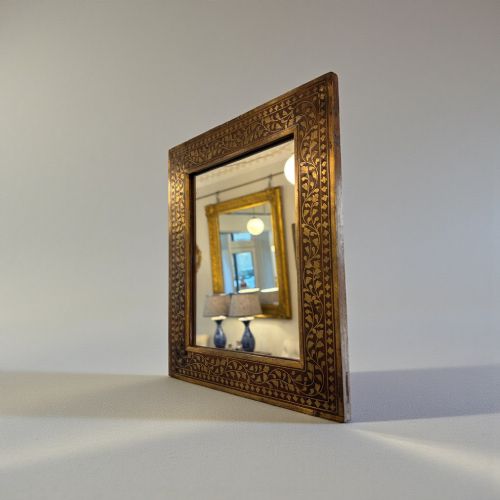
Regional variations in this selection include French Rococo wall mirrors, Italian pier glasses, and Anglo-Indian hardwood pieces.
Distinctions in Quality and Craftsmanship
The depth and undercutting of the carved wooden relief separate superior examples from standard production pieces, as hand-carved depth creates shadow and naturalistic movement. Moulded gesso offers crisp initial detail, but hand-finished touches and the crispness of the secondary tool marks reveal the dedication of the maker.
The integrity of the surface finish, whether original gold leaf showing gentle burnishing or period oil paint retaining its muted tones, dictates the visual authority of the piece. Subtleties in the joinery of the frame corners and the presence of period mirror plates further distinguish exceptional works from later adaptations.
The Carved Floral Frame Mirror Glossary
- Giltwood
- Wood that has been coated with gold leaf or gold paint. This finish creates a reflective, luminous surface that accentuates the carved floral details.
- Gesso
- A plaster-like mixture applied to wood frames as a base for paint or gilding. It allows craftsmen to model fine floral reliefs and delicate scrollwork.
- Trumeau mirror
- An antique wall mirror combined with a painted panel or framed artwork above the glass. These tall vertical pieces frequently feature architectural framing.
- Pier glass
- A tall mirror designed to hang on the wall space between windows. They often incorporate painted decoration or carved floral crests.
- Overmantel mirror
- A large horizontal mirror designed specifically to sit above a fireplace mantel. These heavy pieces often feature extensive carved crests and robust wooden frames.
Carved Floral Frame Mirror: Frequently Asked Questions
Where should I hang a carved floral frame mirror?
These mirrors function effectively above mantelpieces, dressing tables, or console surfaces where their botanical carvings can catch natural light. Pairing them with complementary period furniture enhances their decorative impact within a room.
Consider the scale of the surrounding wall space to ensure the frame commands attention without overwhelming the room. Hanging them at eye level maximises their reflective utility and visual presence.
How do I identify the period of a carved floral frame mirror?
Examine the timber behind the frame, the composition of the gesso, and the style of the carving to determine the era of production. Eighteenth-century pieces often display hand-carved depth in giltwood, while Edwardian and later revivals may show different framing techniques and softer wood choices.
The mirror plate itself, if original, can offer clues through slight oxidisation or bevel edges. Stylistic cues like Art Nouveau asymmetry or Georgian symmetry further anchor the piece in its historical context.
Are these mirrors heavy to hang?
Many larger examples, particularly overmantel mirrors and those with dense gesso or hardwood frames, possess considerable weight. Proper wall fixings into structural studs or masonry are essential for secure installation.
Consulting a professional art handler is advisable for exceptionally large trumeau mirrors or heavy giltwood pieces. Ensuring the hanging wire or brackets match the weight capacity of the frame prevents structural strain.
Can I place these mirrors in a bathroom?
High humidity and moisture can damage antique gesso, original gilding, and historic wooden substrates over time. Placing them in dry, well-ventilated rooms preserves the integrity of the delicate floral carvings and finishes.
If positioned near a sink or bath, persistent steam may cause the silvering on antique mirror plates to deteriorate. Protecting the frame from direct water contact is vital for long-term preservation.