

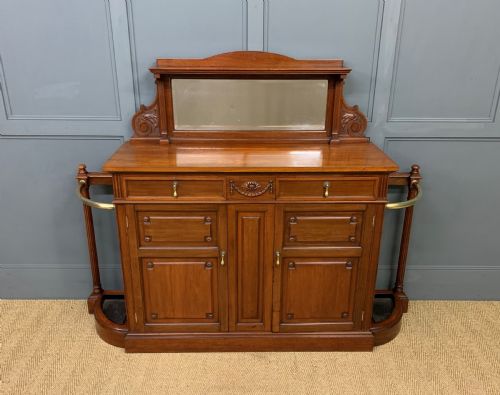
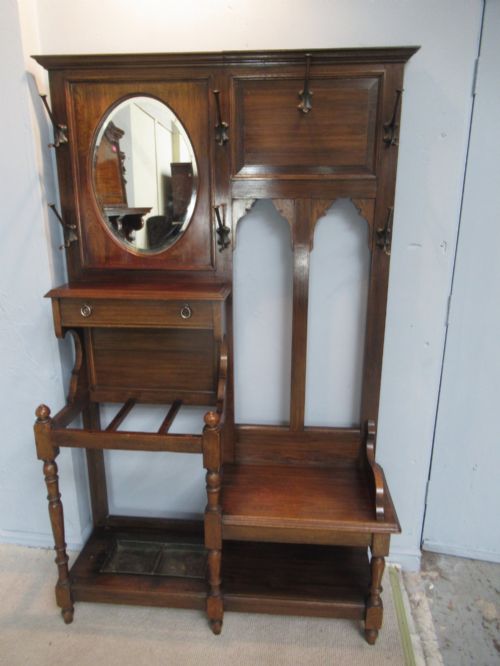
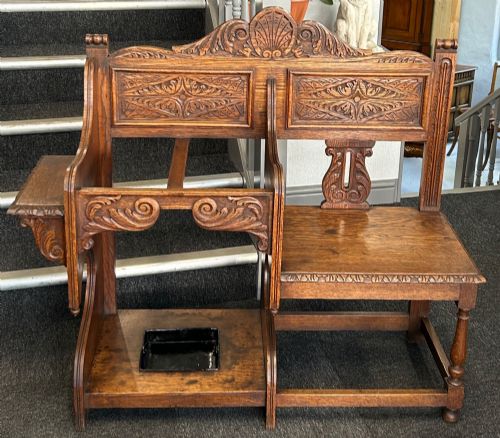
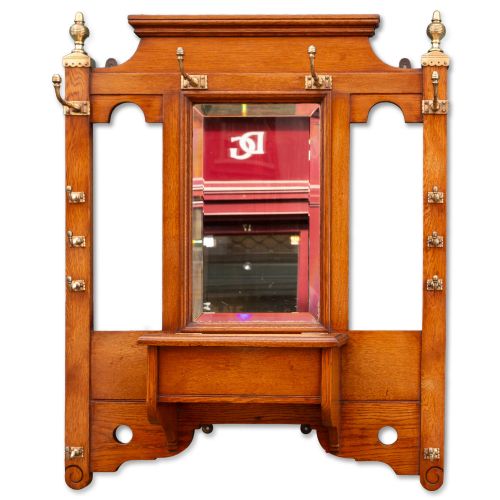
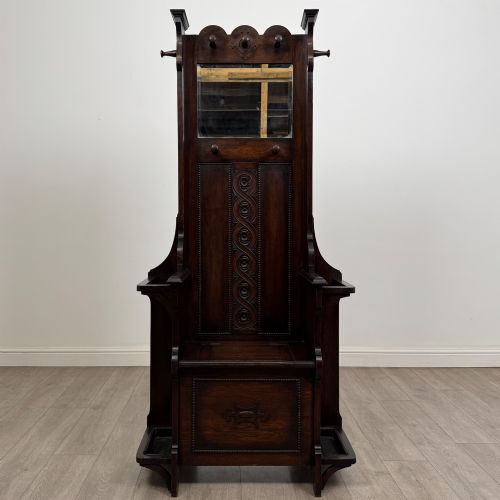
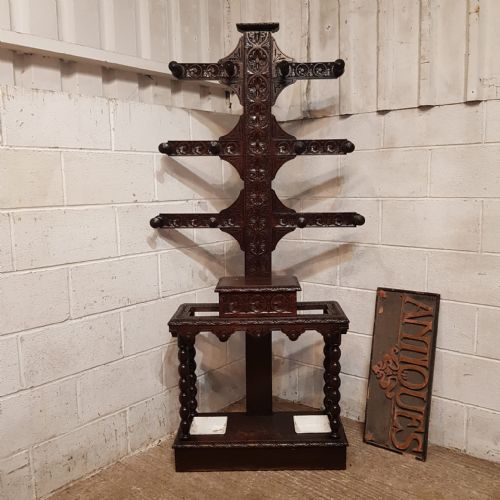
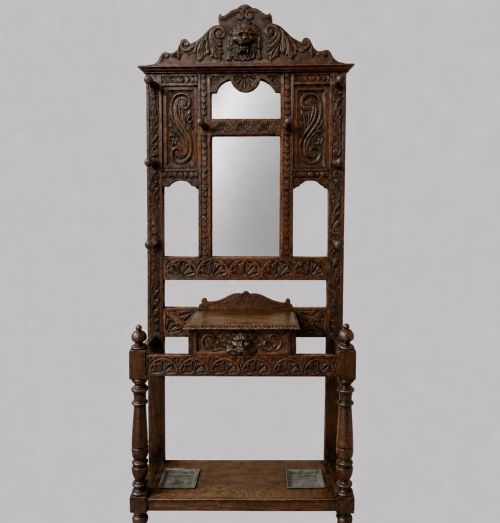


Carved Entryway Coat Stand
A carved entryway coat stand greets visitors with practical utility and heavy timber presence, holding hats, coats, and sticks.
Carved Entryway Coat Stand
A carved entryway coat stand is a substantial piece of hall furniture designed to organise outdoor garments and walking gear upon entering a home. Most pieces on this page emerge from the Victorian and Edwardian periods, taking the form of tall wooden hallstands incorporating mirrors, hooks, and umbrella wells.
The materials span sturdy timbers such as oak, walnut, and mahogany, frequently embellished with deep relief carving and brass fittings. These items served a central domestic function in nineteenth-century hallways, combining seating, storage, and display into a single architectural unit.
Materials and construction
Cabinetmakers constructed these pieces primarily from solid oak, walnut, and mahogany, selected for their structural strength and capacity to take crisp hand-carved details. Panels were frequently framed and panelled to accommodate seasonal wood movement, while iron and brass hooks were screwed securely to withstand the weight of heavy wool coats.
Surface ornament relied heavily on manual chiselling, producing deep foliate motifs, grotesque masks, or animal figures such as bears. Bevelled mirror glass and white marble inserts appeared on more elaborate examples, held in place with timber mouldings and backed by tongue-and-groove boarding.
Current listings feature oak, walnut, and mahogany timbers spanning the Victorian, Edwardian, and Arts and Crafts periods.
Distinguishing quality in construction and ornament
Quality reveals itself through the crispness of the hand-carving and the choice of primary timber, where dense, figured oak or rich walnut outperforms plain secondary woods. The integration of functional elements, such as cast brass drip pans beneath umbrella wells and cleanly bevelled mirror plates, marks the better workshops.
Scale and proportion separate standard hall furniture from monumental examples designed for grand residences. Pieces boasting intact mirror plates, original coat hooks, and integrated seating demonstrate superior original specification and careful survival through generations of use.
Shoolbred & Co.
The Carved Entryway Coat Stand Glossary
- Hallstand
- A piece of hall furniture combining hat hooks, a mirror, umbrella storage, and frequently a small bench or glove box. It stood immediately inside the front door of a home.
- Flemish Renaissance Revival
- A nineteenth-century decorative style inspired by sixteenth-century Flemish design, characterised by bold strapwork, heavily turned columns, and deep figural carving.
- Black Forest carving
- Woodwork originating from the mountainous region of central Europe, noted for naturalistic representations of animals, particularly bears, integrated into functional furniture.
- Stick stand
- The section of a hallstand or a standalone rack designed to hold walking sticks and umbrellas, usually featuring metal drip trays at the base to catch rainwater.
Carved Entryway Coat Stand: Frequently Asked Questions
How do I maintain the wood and polish?
Apply traditional beeswax sparingly with a soft cloth to nourish dry timber and maintain a gentle sheen. Avoid placing the furniture near direct heat sources that might cause the wood to split.
Buff the surface gently after application to prevent dust accumulation in carved recesses and crevices.
Are the mirrors original to the stands?
Most surviving hallstands retain their original bevelled glass mirror plates, which often display light oxidation or foxing around the edges. This aged speckling confirms the age and authenticity of the piece.
Replacement mirrors generally feature modern backing and lack the slight distortions typical of nineteenth-century glass.
How were these stands secured in hallways?
Because of their great height and narrow footprint, many tall hallstands were originally anchored to the wall using discreet brackets at the top. This prevented tipping when heavy garments were hung on the upper wooden pegs.
Checking for original fixing points helps determine whether a piece stood independently or relied on wall support.
What is the purpose of the marble insert?
Marble sections positioned above umbrella wells provided a durable, waterproof surface for placing wet items or damp hats. They also served as a cooling slab for floral arrangements or visiting card trays.
White or grey veined marble was most commonly utilised in Victorian and Edwardian designs.