
Carved Elm Chair
A carved elm chair brings sturdy vernacular craftsmanship and rich grain into a room, offering both practical seating and historical character.
Carved Elm Chair
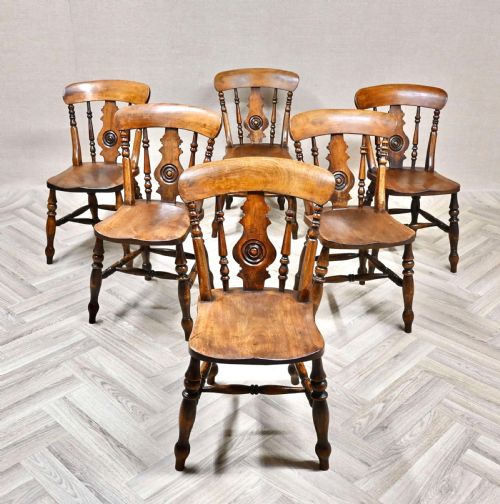
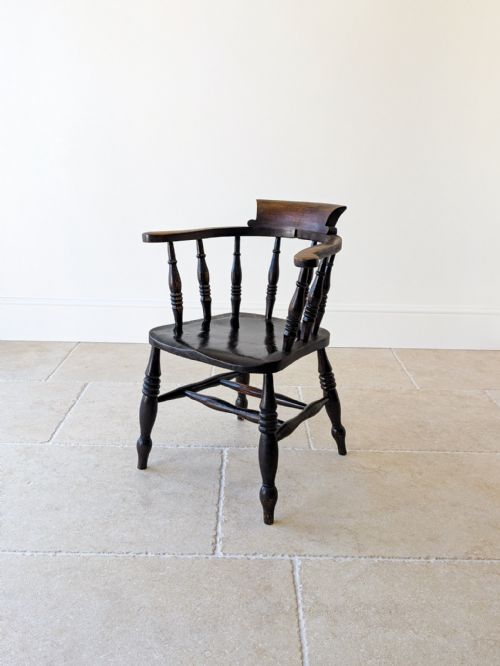
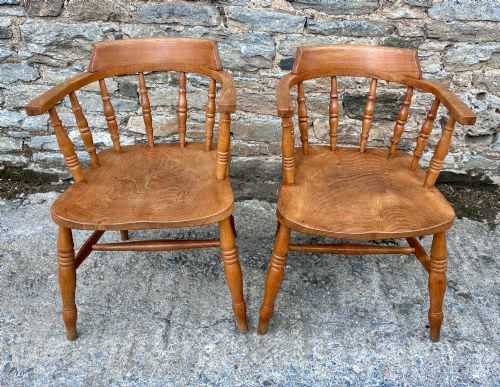
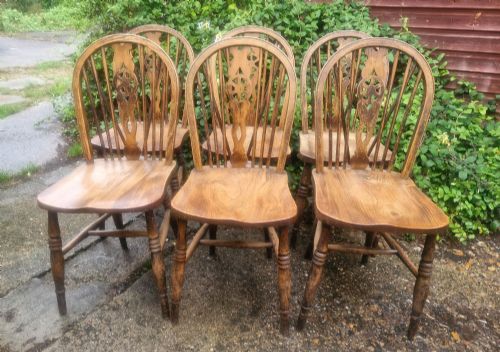
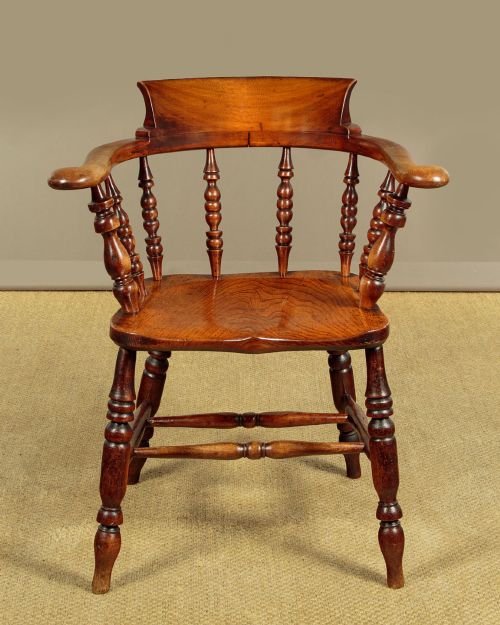
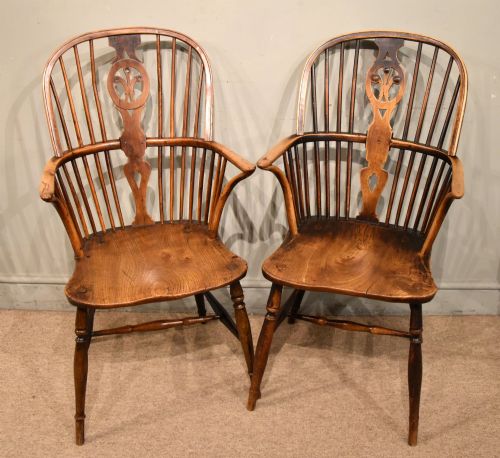
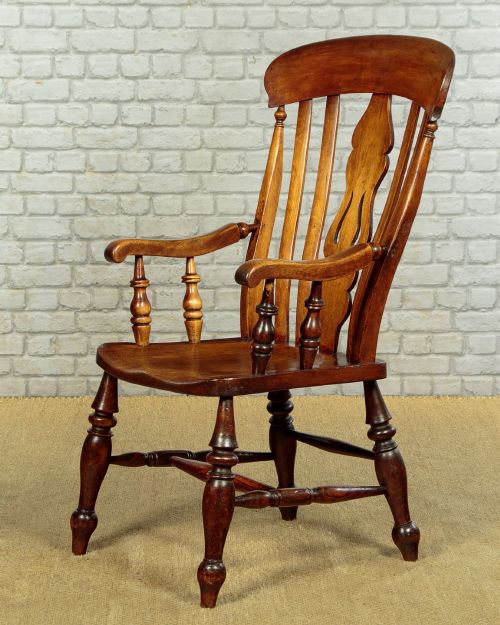
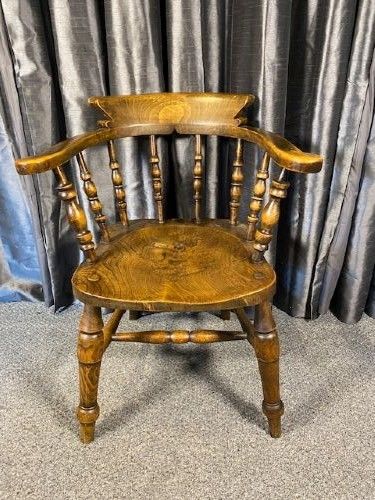
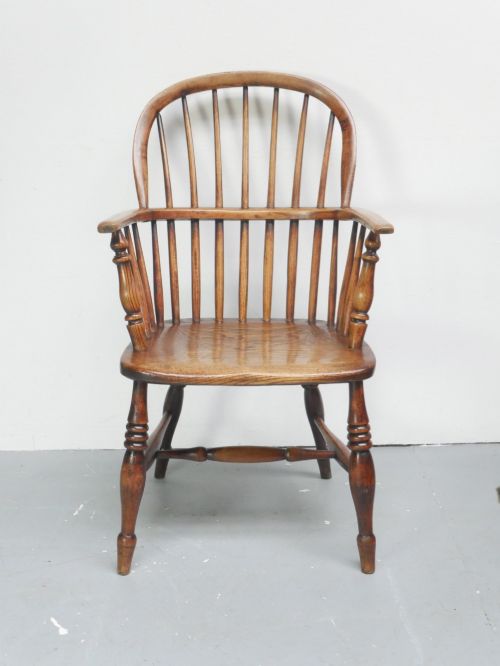
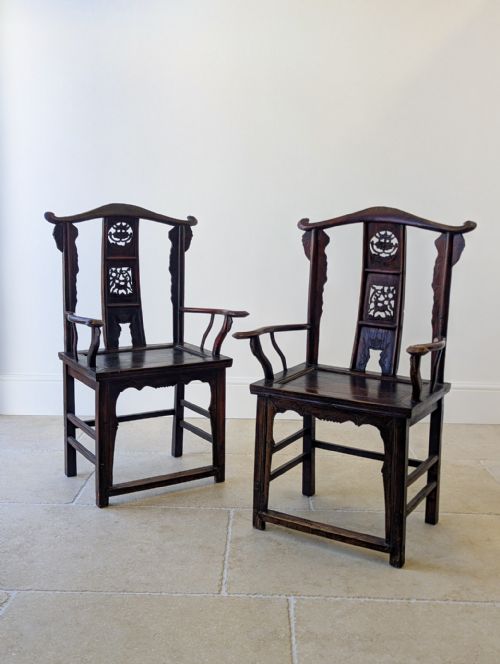
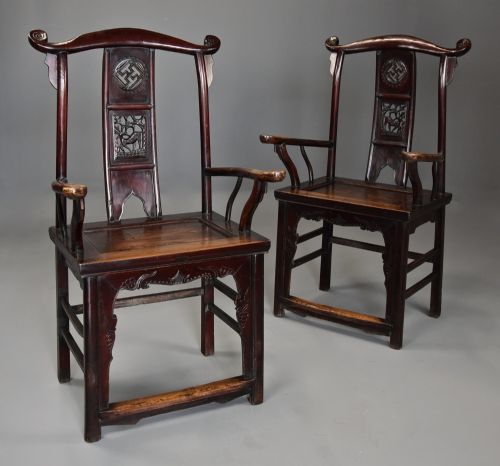
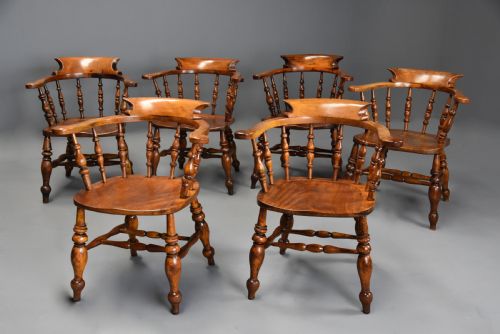
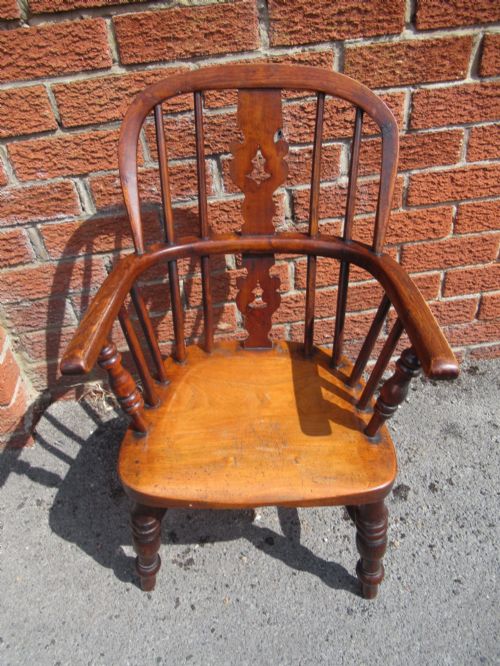
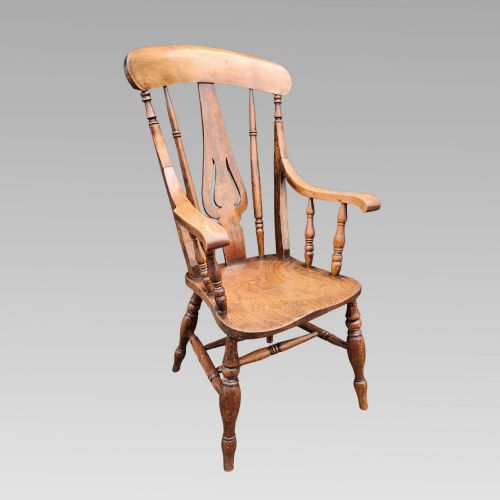
The most common versions you will meet on this page are nineteenth-century English farmhouse and kitchen armchairs, alongside wheel-back, spindle-back, and comb-back Windsors. Alongside these local vernacular forms, you also encounter nineteenth-century Chinese elm yoke-back and lamp hanger chairs featuring original red lacquer and carved back splats.
Makers utilised elm for its tough, interlocking grain, often combining it with ash, beech, yew, and fruitwood to build seats, bends, and spindles that withstood heavy daily use. Whether taking the shape of a low back, high back, or a child's armchair, each example reflects the practical demands of domestic, kitchen, or tavern life.
What varies in quality
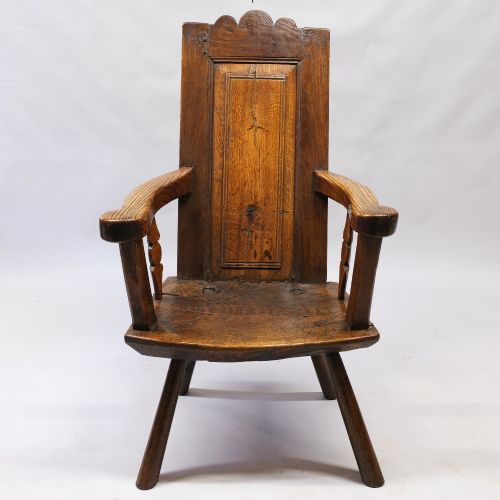
The distinction between ordinary and superior pieces rests upon the crispness of the hand-carved details, the articulation of the turned spindles, and the depth of the timber's natural patina. Chairs retaining their original surface treatments, such as early red lacquer or rich wax polishes, demonstrate higher preservation.
Structural integrity and proportional harmony separate basic utility items from exceptional examples, particularly where diverse woods like yew and fruitwood are combined in a single frame. Well-balanced proportions in regional Windsor forms and cleanly executed carved back splats indicate superior workshop execution.
Some nineteenth-century Windsor armchairs double as rocking chairs, combining kitchen utility with the gentle art of the nursery.
The Carved Elm Chair Glossary
- Windsor chair
- A chair built with a solid wooden seat into which the legs and back spindles are directement doweled. This form uses a combination of bentwood bows and turned components.
- Yoke-back armchair
- A traditional Chinese chair style named after its curved top rail that resembles an ox yoke. These chairs often feature carved central back splats.
- Patina
- The surface sheen and colour developed over decades of handling, exposure, and polishing. It signals age and regular use.
- Comb-back
- A Windsor chair variation where the tall back resembles the teeth of a comb, featuring an upper headrest rail supported by vertical spindles.
Carved Elm Chair: Frequently Asked Questions
How were Windsor chairs used originally?
These chairs served as everyday seating in farmhouses, kitchens, and taverns, prized for their robust construction and supportive saddle seats.
Their hardy build allowed them to withstand heavy, continuous use by families and workers over many generations.
Why is elm used so often?
Elm timber possesses an interlocking grain structure that resists splitting, making it exceptionally well-suited for solid-carved saddle seats.
Cabinet makers and chair bodgers relied on its toughness to anchor turned legs and back spindles securely.
How do I care for antique elm?
Keep wooden furniture away from direct heat sources and sudden temperature shifts to prevent the timber from drying out and splitting.
Apply a natural wax polish occasionally to maintain the surface sheen and protect the historic grain.
What is a yoke-back chair?
A yoke-back chair is a traditional Chinese form featuring a curved top rail shaped like an animal yoke, often paired with a carved central splat.
These pieces showcase contrasting regional aesthetics within the broader category of elm seating.