


Carved Ebonised Bedroom Chair
A carved ebonised bedroom chair brings dark finish and crisp detail to a dressing room or parlour.
Carved Ebonised Bedroom Chair
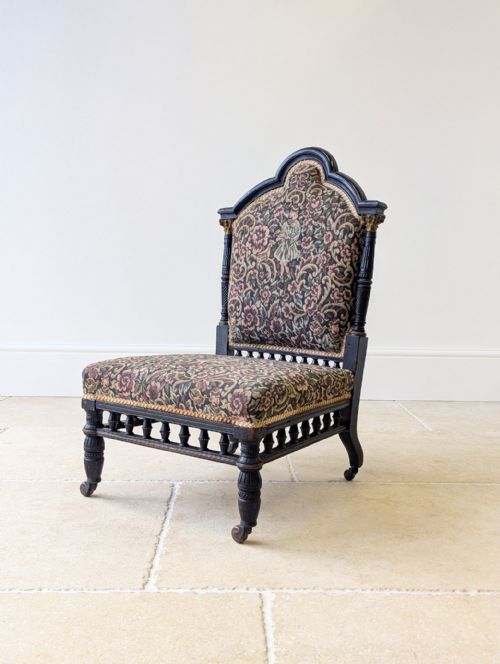
A carved ebonised bedroom chair is a seating piece finished in dark, black-stained wood to imitate ebony, often highlighted with carving or gilding. The selection here spans Regency and Victorian periods, including pieces from around 1870 and 1880.
Forms include side chairs, low salon chairs, nursing chairs, and slipper chairs, alongside occasional armchairs and library chairs. These smaller seats served private chambers and drawing rooms in the nineteenth century.
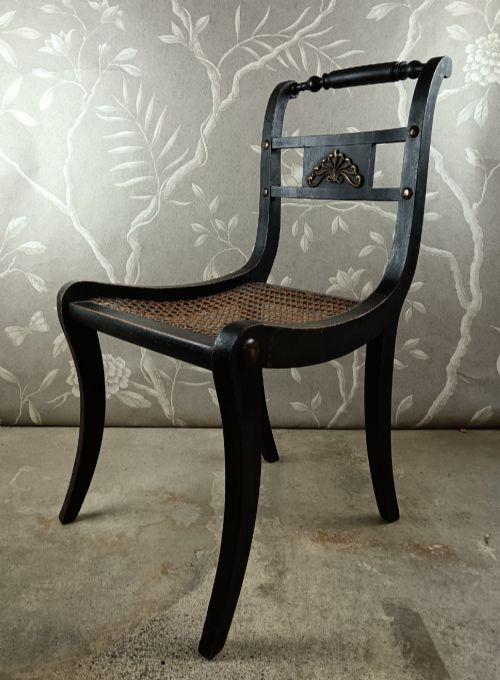
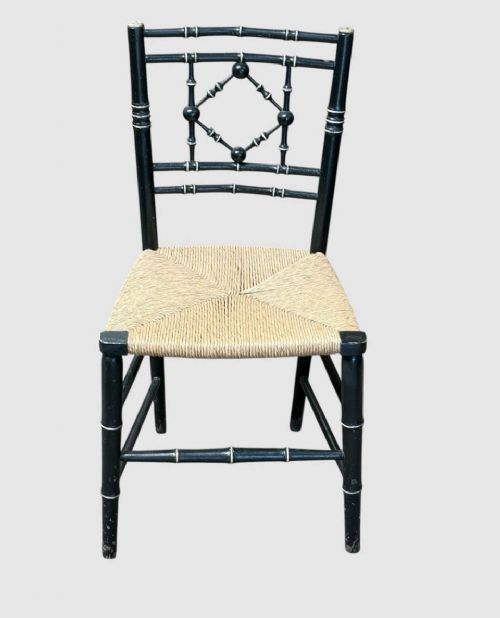
Stylistic influences range from classic Regency sabre leg designs to Aesthetic Movement patterns and Hepplewhite revivals. Many examples show direct inspiration from French or English nineteenth-century makers.
Materials and construction methods
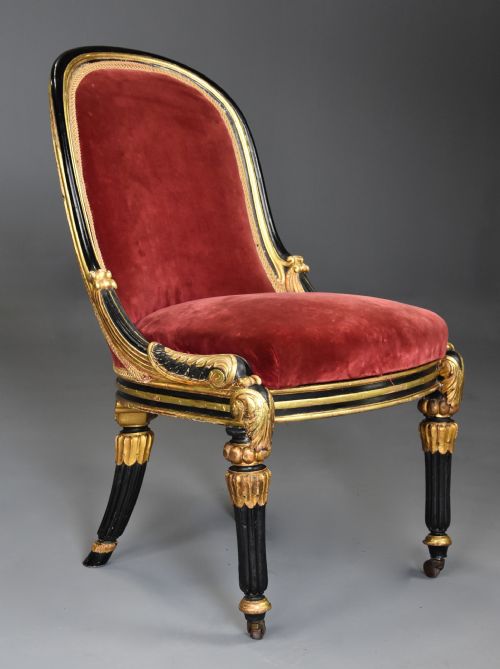
Frames are constructed from hardwoods such as mahogany, finished with an ebonised coating to achieve a dense black surface. Gilding and gold leaf often accent the carved details.
Seating varies between original cane panels and surfaces prepared for textile upholstery, including velvet and traditional fabric coverings. Brass elements sometimes accent the joinery and legs.
Listings feature ebonised woodwork paired with cane, velvet, and gold leaf across Victorian and Regency periods.
Distinctions in craftsmanship and finish
The crispness of the wood carving determines the visual depth of the ebonised surface, where sharp mouldings and defined motifs separate finer examples from simpler production. The integrity of the black finish and any remaining gold leaf or gilt detailing also indicate the original grade of the piece.
Structural robustness in smaller frames, particularly around turned or saber legs and cane seats, dictates long-term durability. Original materials like intact cane or early upholstery webbing add substantial character to surviving examples.
Bruce J. Talbert·Maple & Co
The Carved Ebonised Bedroom Chair Glossary
- Ebonised wood
- Timber stained or painted black to simulate genuine ebony. This dark finish gained popularity during the Regency and Victorian eras for its striking contrast with gilt details.
- Aesthetic Movement
- A late nineteenth-century design style emphasising visual beauty over narrative content. Pieces from this movement often feature ebonised surfaces and stylised carved motifs.
- Cane seat
- A seating surface woven from rattan or cane strips. This lightweight method was frequently utilised on light bedroom and salon chairs.
- Slipper chair
- A low-set upholstered chair traditionally used in bedrooms for dressing. The low height made it convenient for putting on shoes.
- Sabre leg
- A concave-curved furniture leg tapering towards the foot, commonly seen on Regency chairs. This classical form draws inspiration from ancient Greek klismos furniture.
Carved Ebonised Bedroom Chair: Frequently Asked Questions
How do I care for ebonised wood?
Dust regularly with a soft, dry cloth to prevent surface scratching. Avoid harsh chemical polishes that can degrade the black finish.
Keep the chair away from direct sunlight and heat sources to prevent the wood from drying and the dark stain from fading.
Were these chairs meant for bedrooms?
Many smaller forms like nursing chairs, slipper chairs, and low salon chairs were specifically made for dressing rooms and private chambers. Their compact scale suited intimate domestic spaces.
Other variants such as side chairs and hall chairs crossed easily between reception rooms and bedrooms depending on the household.
How do I identify an Aesthetic Movement piece?
Aesthetic Movement pieces from the late nineteenth century often feature ebonised frames paired with incised carving or gilt highlights. The designs reject heavy Victorian ornamentation in favour of cleaner, linear forms.
Look for refined proportions and decorative motifs that reflect artistic craftsmanship of the 1870s and 1880s.
Is original cane seating durable?
Original cane woven from split rattan remains surprisingly resilient if kept clean and moderately humid. Dry indoor air can make the natural fibres brittle over time.
While intact period cane adds authenticity, professional re-caning can restore a damaged seat without altering the frame.