
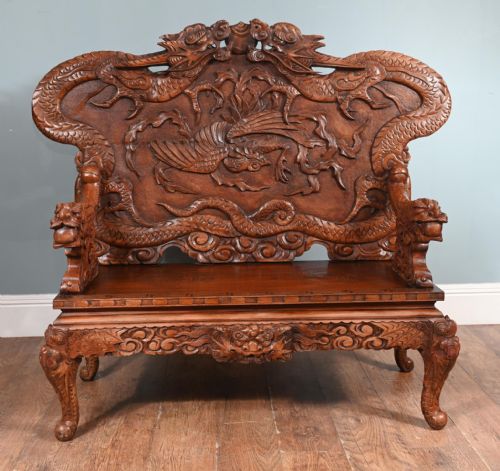


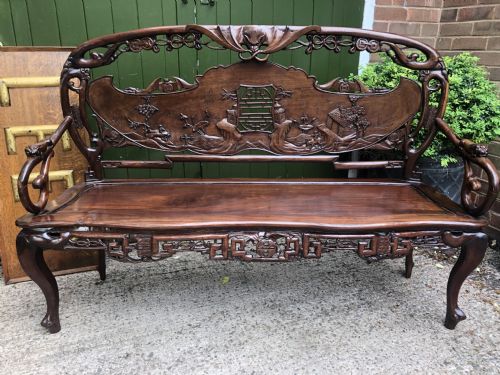
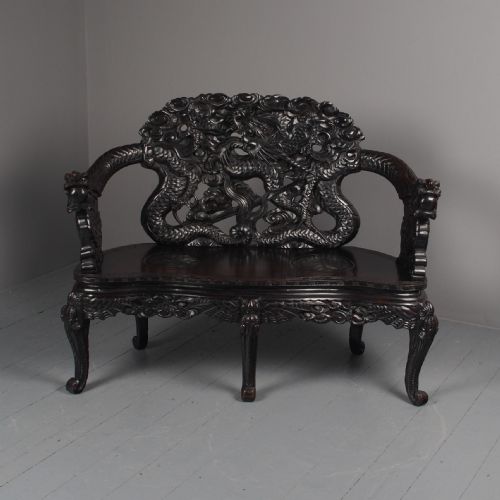


Carved Dragon Hall Seat
A carved dragon hall seat brings imposing presence to an entranceway, drawing the eye with vigorous mythical motifs.
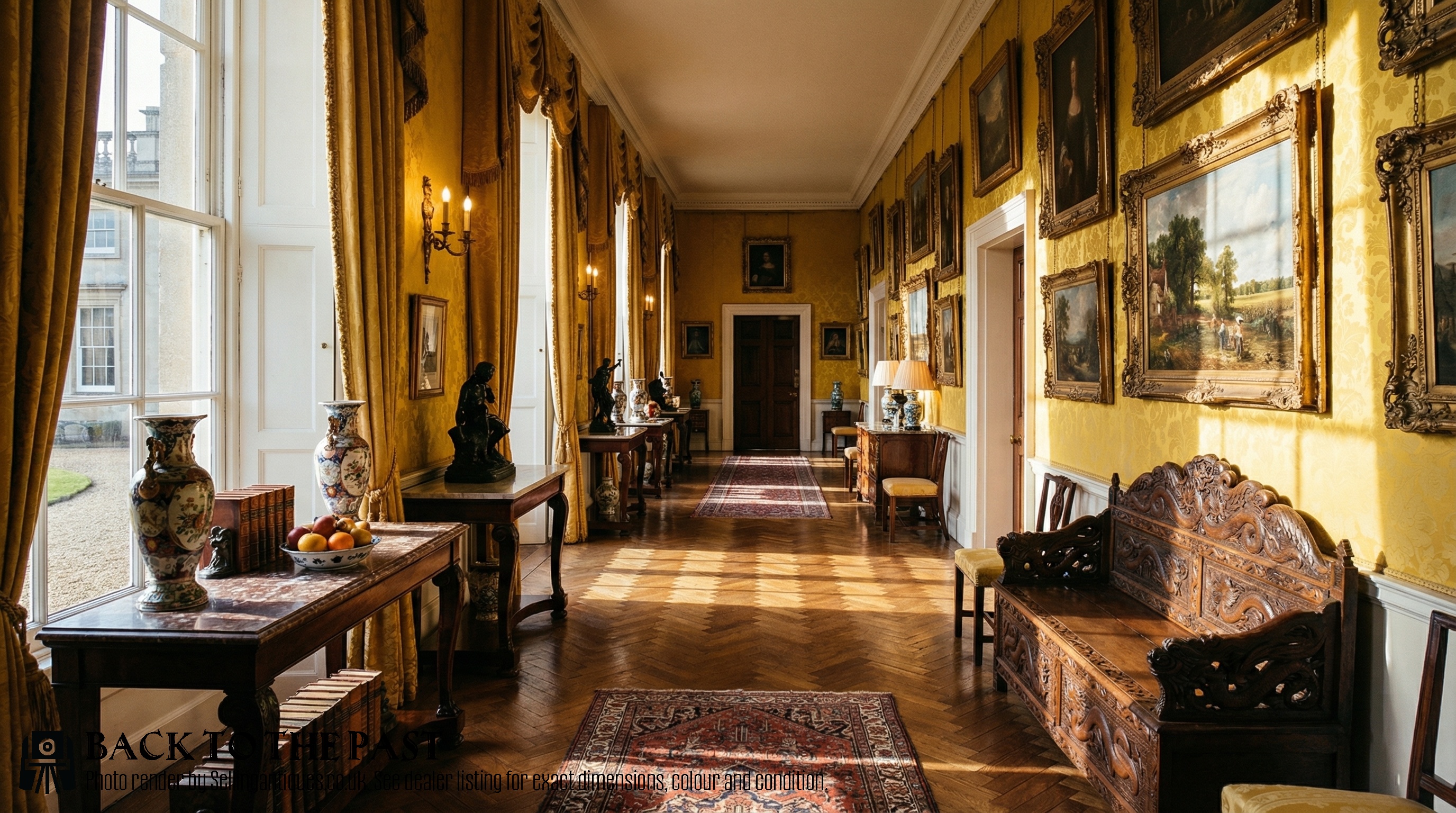
Carved Dragon Hall Seat
When you search for a carved dragon hall seat, you encounter substantial furniture designed primarily for entrance halls and corridors. These pieces typically function as benches, settles, or corner seats intended to anchor a large space.
The examples gathered here span the nineteenth and early twentieth centuries, drawing heavily upon Chinese export and Qing Dynasty traditions alongside occasional Welsh folk art interpretations.
Most entries on this page take the form of hardwood or rosewood benches, often featuring elaborate surface carving that highlights coiled dragons and traditional oriental motifs.
How they were made
Maker workshops utilised dense hardwoods such as rosewood, teak, and general timber to construct the heavy frames of these seats. Artisans carved intricate dragon motifs directly into the structural wood, requiring exceptional hand skill to achieve high relief.
Some variations incorporate specialist surface finishes, including cinnabar lacquer and delicate bone inlay work. These decorative layers were applied over the timber base to enhance the texture and visual depth of the panels.
Materials across the listings include rosewood, teak, lacquer, bone inlay, and traditional hardwood.
What varies in quality
The distinction between standard and superior pieces rests on the depth and crispness of the hand carving. Finer examples display deeply undercut dragons with sharp detail rather than shallow, mechanical scoring.
Material selection also dictates the standing of a piece, with heavy, figured rosewood and intact lacquer surfaces commanding greater appreciation than plain timber or heavily worn finishes.
The Carved Dragon Hall Seat Glossary
- Settle
- A wooden bench with a high back, solid arms, and frequently a storage box beneath the seat. This form provided draught protection in large halls.
- Cinnabar lacquer
- A decorative technique involving multiple layers of coloured resin carved once set. It produces a rich, tactile surface often seen on oriental export items.
- Hardwood
- Slow-growing timber prized for dense grain and durability. Makers selected these woods to withstand the weight of deep relief carving.
- Bone inlay
- Fragments of bone inserted flush into channels cut within wood. This method creates contrasting pale geometric or figurative patterns.
Carved Dragon Hall Seat: Frequently Asked Questions
Where should I place a hall seat?
These benches suit grand entranceways, wide corridors, and reception rooms where their substantial depth and backrests can be fully appreciated.
Position them against a sturdy wall to support their heavy timber frames and allow clearance for the carved armrests.
How do I clean lacquered wood?
Dust the surface gently with a dry, soft microfibre cloth to prevent abrasive particles from scratching the delicate finish.
Avoid liquid polishers and harsh chemical cleaners, as these substances can degrade historic lacquer and bone inlay.
What periods do these seats cover?
The listings span from the mid-nineteenth century through to the early twentieth century, encompassing late Qing Dynasty production.
Occasional items reflect European folk traditions from the same era while retaining similar heavy wooden construction.
Are these benches comfortable for sitting?
While built primarily as architectural statements for an entrance hall, they offer upright seating supported by solid wooden backs.
Adding a tailored squab cushion can soften the timber seat for longer periods of use.