
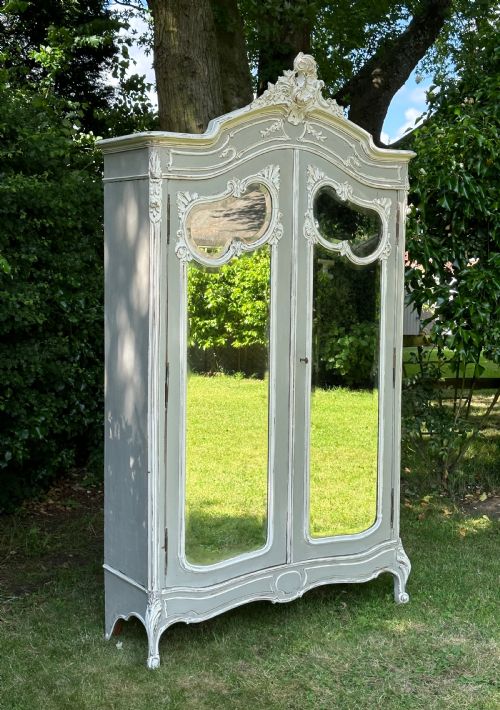
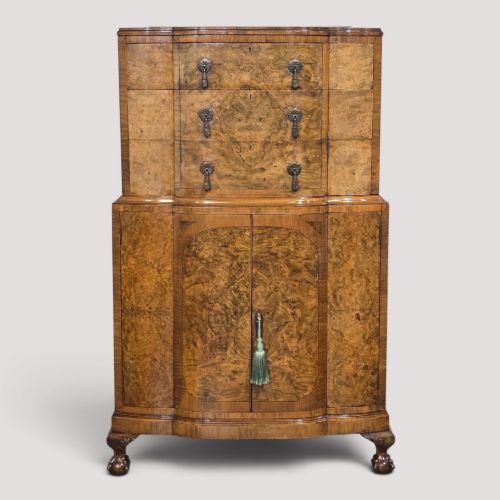
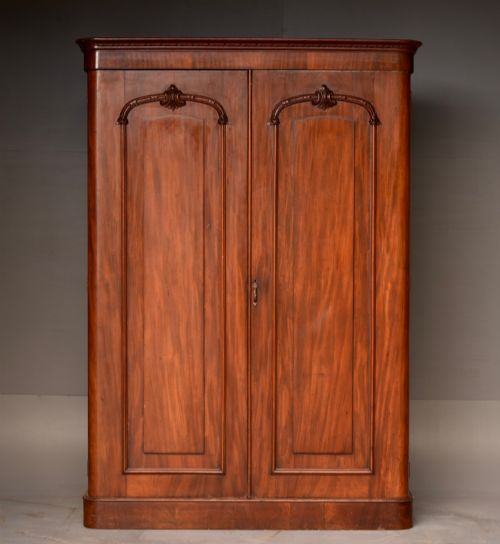
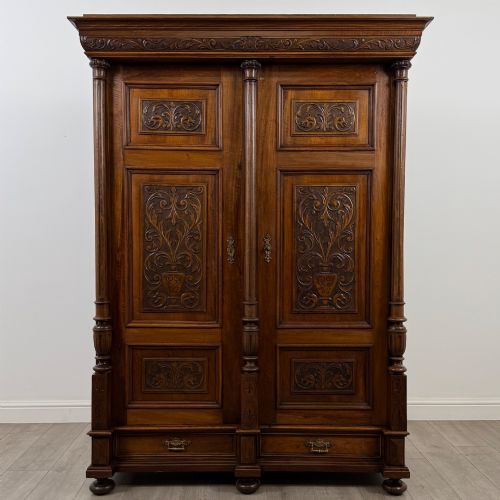
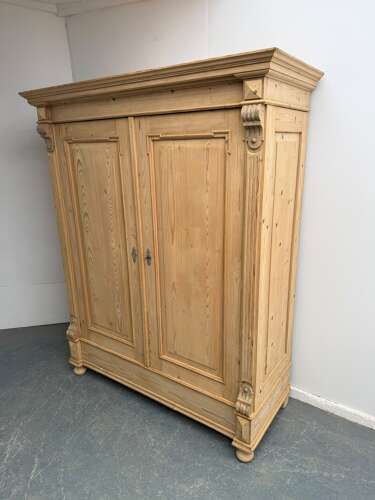
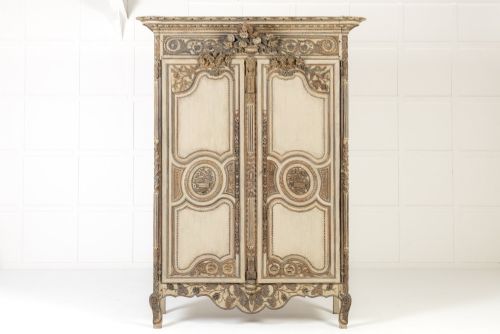
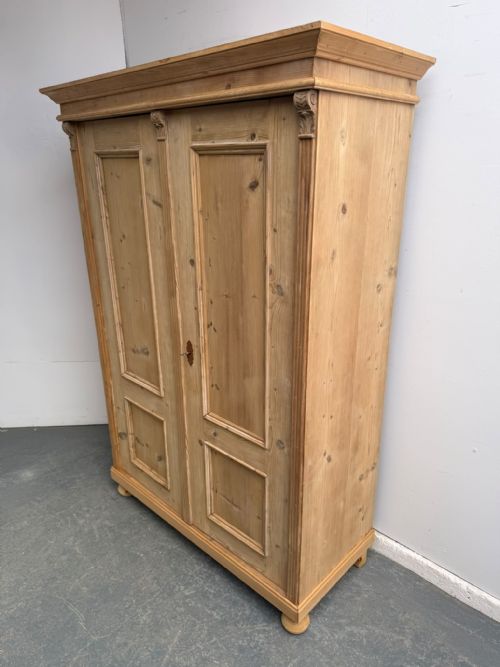
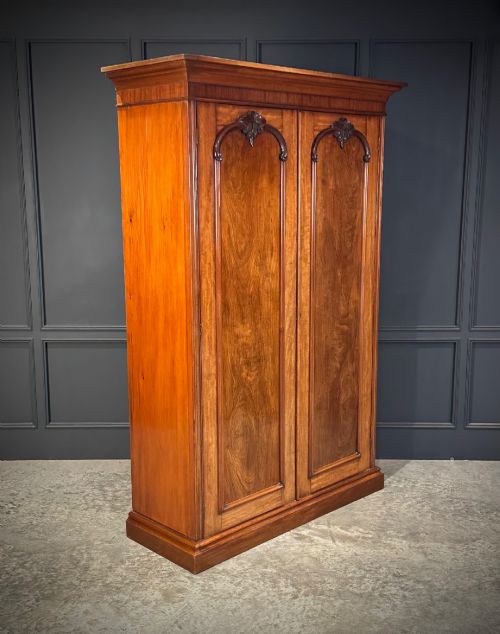


Carved Double Door Wardrobe
A carved double door wardrobe is a substantial storage piece built to anchor a bedroom with timber and craft.
Carved Double Door Wardrobe
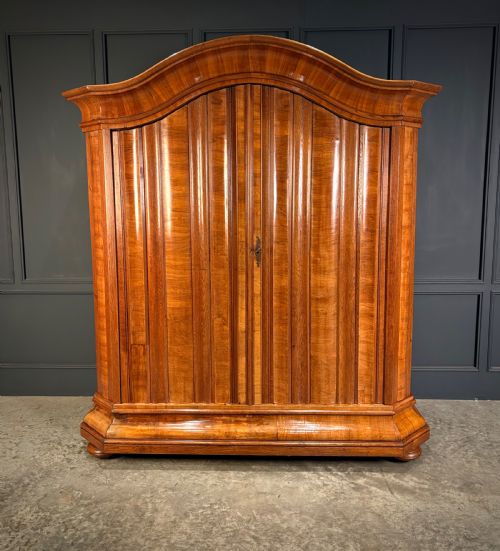
A carved double door wardrobe stands as a large storage piece designed to hold garments and linens within domestic chambers, appearing here through centuries of regional cabinet-making. When searching for a carved double door wardrobe, a buyer encounters pieces originating from the eighteenth century up through the nineteen-twenties, encompassing British and Continental workshops.
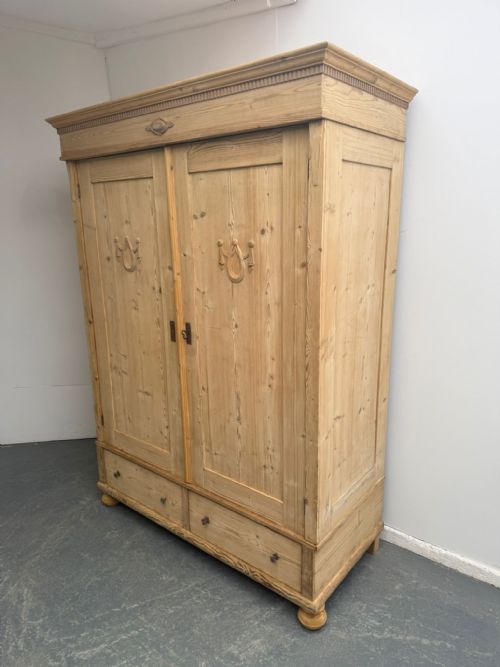
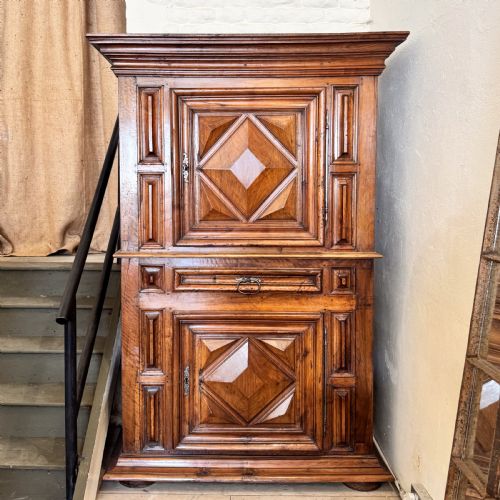
The assortment on this page leans heavily towards regional European armoires, French provincial cupboards, and British pine or mahogany wardrobe forms. These objects serve as primary bedroom furniture, offering hanging space and internal shelving behind heavy panelled or glazed doors.
Makers and joiners constructed these storage units to dismantle or remain fixed, depending on whether they served English country houses or tall Continental ceilings. Buyers find examples executed in walnut, oak, mahogany, and pine, frequently bearing relief carving or moulded panelling across the twin doors.
How they were made
Cabinet-makers relied on solid hardwoods like oak, mahogany, and walnut alongside softer timbers such as pine, often applying figured burr walnut veneers to primary display surfaces. Workshops utilised traditional frame-and-panel construction to accommodate seasonal timber movement in large doors without warping the structure.
Carving was executed by hand directly into the timber solids, ranging from deep Continental baroque motifs to linear Arts and Crafts styling and simpler provincial mouldings. Joiners integrated brass hardware, iron hinges, and occasionally ormolu mounts to secure the heavy double doors during daily use.
Some nineteenth-century wardrobes doubled as sentry boxes, proving that even clothing storage once maintained military discipline.
What varies in quality
The standard of a wardrobe rests upon the selection of timber figures, such as matched burr walnut veneers or dense quarter-sawn oak, compared to plain utility planks. Superior examples display crisp, deep relief carving rather than shallow machine-cut detailing, alongside well-proportioned cornices and robust internal fittings.
Construction methods also distinguish finer workshops from provincial output, visible in the thickness of the panel timbers, the precision of the door joints, and the survival of original brass or iron hardware.
The Carved Double Door Wardrobe Glossary
- Armoire
- A large upright cupboard or wardrobe used traditionally for storing clothes, originating from continental Europe. These pieces typically feature deep proportions and double doors.
- Knockdown wardrobe
- A large piece of furniture engineered with pegged or bolted sections that allow it to be dismantled for transport and reassembled on site. This method was common for large pine wardrobes.
- Linen press
- A tall cupboard featuring sliding trays or shelves in the upper section for folded textiles, positioned above lower drawer storage. They often utilise panelled double doors.
- Compactum
- A fitted wardrobe containing a combination of hanging space, shelves, and internal drawers within a single carcass. They represent a more complex form of bedroom storage.
- Ormolu
- Gilded bronze mounts applied to furniture as decorative hardware and ornamentation. They appear on high-status continental armoires.
Carved Double Door Wardrobe: Frequently Asked Questions
How do I dismantle a knockdown wardrobe?
Many large pine and Continental wardrobes were built using a knockdown system of wedged tenons, bolts, or tongue-and-groove joints that allow the carcass to separate into flat panels. This clever engineering enabled bulky furniture to travel up narrow staircases before reassembly on site.
To take one apart safely, examine the interior corners for visible wooden pegs, metal bolts, or sliding wedges. Mark each mating joint with chalk before extraction so the panels align correctly during the subsequent build.
Where were armoires traditionally placed?
Armoires originated as principal storage furniture for domestic interiors, sitting in bedchambers, hallways, or large dressing rooms to hold garments, linens, and valuables. Because built-in closets were uncommon in older houses, these freestanding pieces provided the primary wardrobe capacity for a household.
Their grand proportions mean they require a wall with adequate ceiling height and floor clearance, particularly models featuring heavy cornices or deep crown mouldings. Placing them away from direct heat sources protects the timber panels from drying out.
What is the difference between a wardrobe and an armoire?
While both terms describe large storage cupboards with double doors, wardrobe is more commonly associated with British furniture designed specifically for hanging garments. Armoire is the traditional French term for a similar tall cupboard, which historically served mixed storage purposes including folded linens and provisions.
In modern usage, the two terms often overlap, though Continental armoires frequently retain deeper internal dimensions and distinct regional carving styles. British pieces from the Victorian and Edwardian eras tend to focus more strictly on coat hangers and internal clothes rails.
How should I care for antique walnut furniture?
Walnut furniture requires a stable indoor climate with moderate humidity to prevent the underlying timbers and decorative veneers from shrinking or cracking. Regular dusting with a soft, dry cloth maintains the surface without the buildup of modern silicone polishes.
Applying a traditional beeswax feed periodically helps nourish the grain and protects the patina accumulated over the centuries. Avoid placing these pieces in direct sunlight, which can fade rich walnut tones and dry out delicate veneers.