
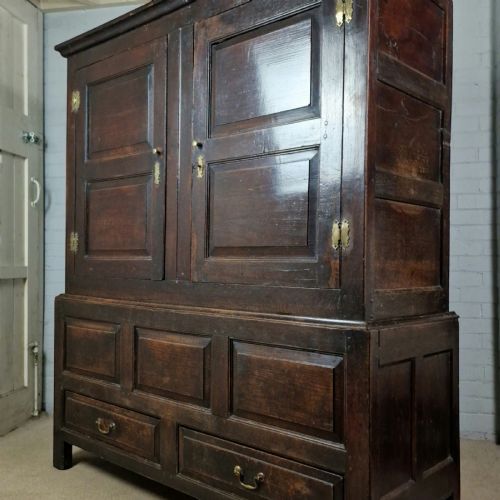
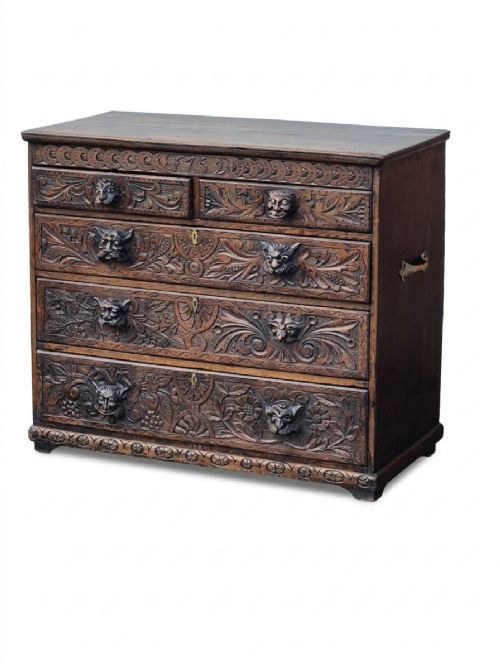
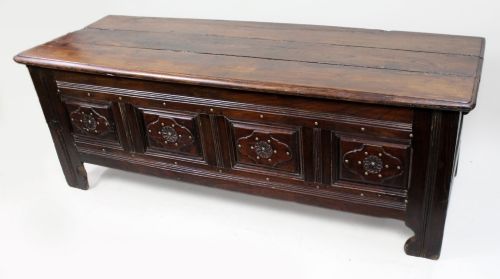
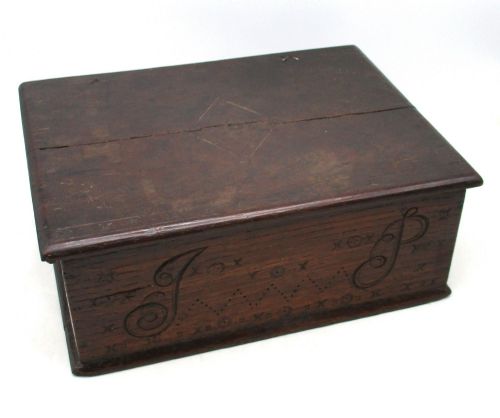
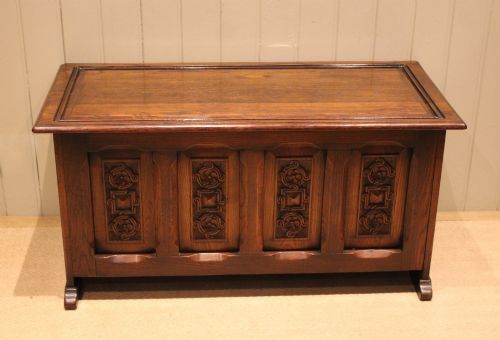
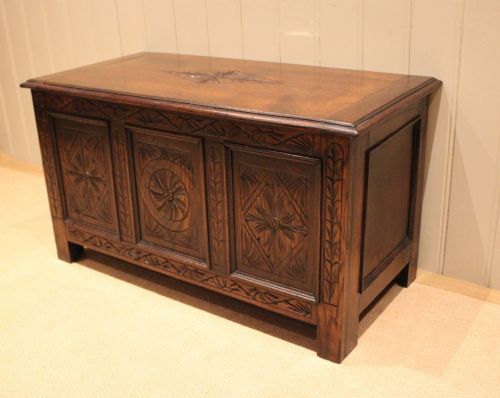
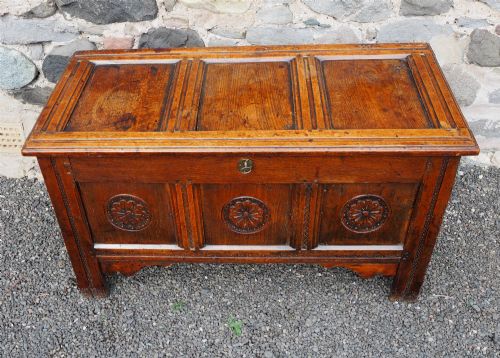
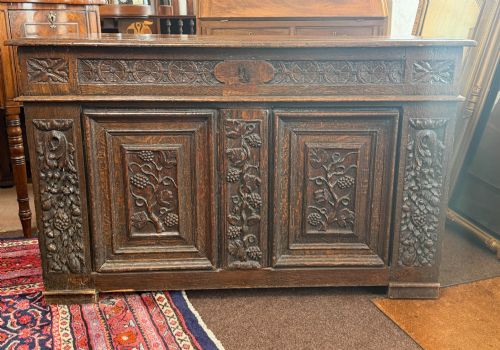
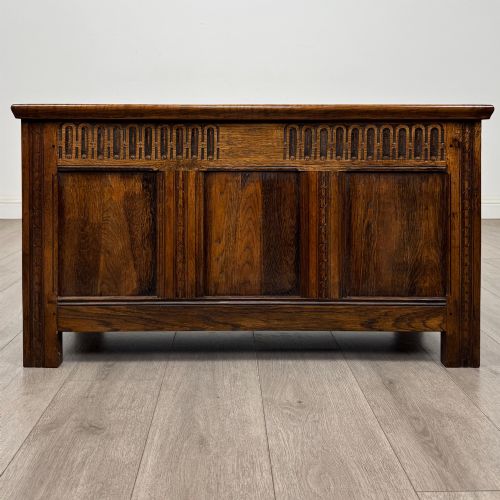
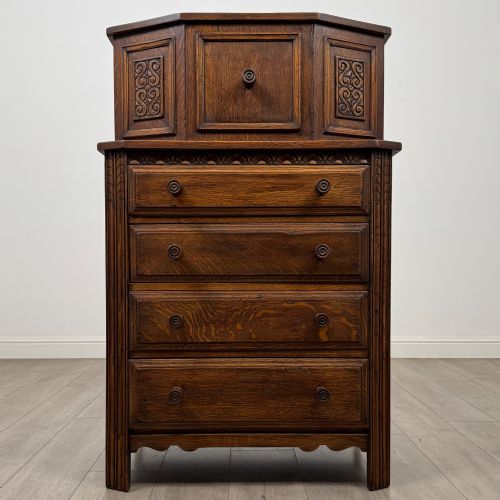
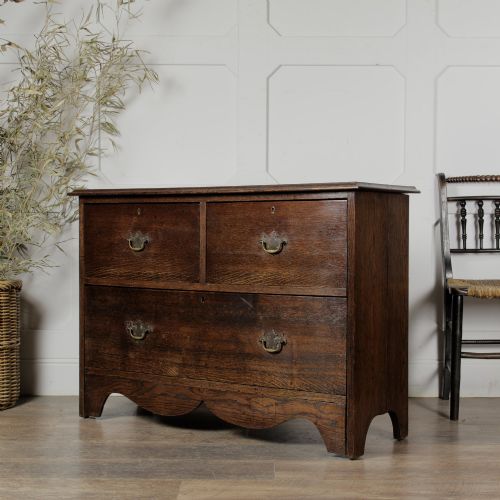


Carved Dark Oak Chest
A carved dark oak chest is a sturdy storage piece built to hold linens and valuables, prized for centuries for its deep colour and robust construction.
Carved Dark Oak Chest
Early examples originate in the seventeenth century, displaying styles such as Jacobean, Charles II, and Cromwellian work, alongside later revivals from the Edwardian era and the early twentieth century. These pieces function as practical furniture that anchors a room with historical presence.
Materials and Construction
Cabinet makers utilised solid oak planks, joined using traditional pegged mortise and tenon methods to withstand centuries of use. Iron hinges, brass escutcheons, and wrought iron fittings frequently secure the lids and drawers.
Surfaces display hand carving, panelled construction, and occasional wood inlay or marquetry details. The timber deepens in tone over generations, developing a rich dark patina through waxing and handling.
Several chests preserve the spirit of domestic life centuries ago, carrying the distinct tool marks of forgotten carpenters who pegged each joint by hand.
Judging Quality
The distinction between standard utility items and finer examples rests on the crispness of the hand carving and the integrity of the timber joints. Superior pieces retain their original boards, hardware, and structural thickness without extensive timber replacement.
Proportion and decorative restraint elevate certain coffering above plain utilitarian boxes. Earlier dates and documented regional origins add historical weight to the construction.
The Carved Dark Oak Chest Glossary
- Coffer
- A large wooden chest used historically for storing valuables and documents. These pieces often feature hinged lids and heavy panelled construction.
- Jacobean
- A style of design dating from the early seventeenth century during the reign of James I. It is characterised by dark oak, geometric moulding, and formal carved motifs.
- Linenfold
- A style of relief carving resembling folded linen cloth. This technique appears commonly on panels of sixteenth and seventeenth century woodwork.
- Marquetry
- The art of applying decorative veneer pieces to a structure to form patterns. This decorative technique appears on select seventeenth century pieces.
- Mule chest
- A storage chest fitted with one or more drawers beneath the main compartment. This form bridges the evolution from the simple coffer to the chest of drawers.
Carved Dark Oak Chest: Frequently Asked Questions
What is a carved dark oak chest used for?
These pieces function primarily as storage containers for blankets, linens, and household possessions. Their sturdy lids also allow them to serve as occasional surface tables or seating benches.
Placed in hallways, bedrooms, or living spaces, they keep bulky items out of sight while adding historical character to a room.
How do I date a carved dark oak chest?
Dating relies on observing construction methods, such as hand-cut dovetails, pegged joints, and the style of the surface carving. Tool marks and the method used to split or saw the timber provide clues to the period.
Comparing panel styles, hinges, and locks against known historical examples helps narrow down the decade of manufacture.
How do I care for dark oak furniture?
Maintain the timber by applying traditional beeswax periodically to nourish the dry wood and preserve the dark finish. Avoid placing the chest near direct heat sources or strong sunlight, which can cause the panels to split.
Dust the carvings gently with a soft cloth to prevent grime accumulation in the recesses of the woodwork.
What is the difference between a coffer and a chest?
A coffer traditionally refers to a heavy storage box with a hinged lid, often reinforced with ironwork for security. A chest may share this form or evolve to include drawers in the base.
Over time, terminology has blended, but earlier examples generally retain the simpler box construction while later variations incorporate functional drawers.