
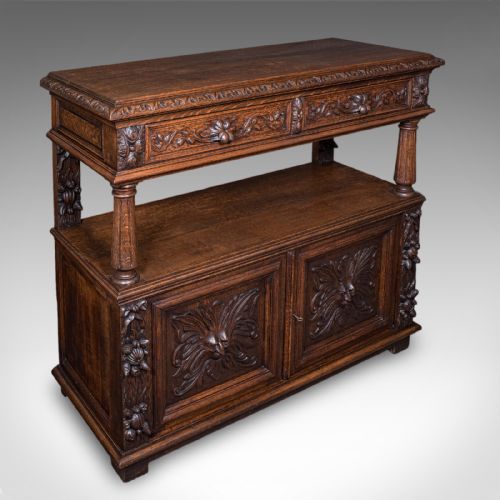
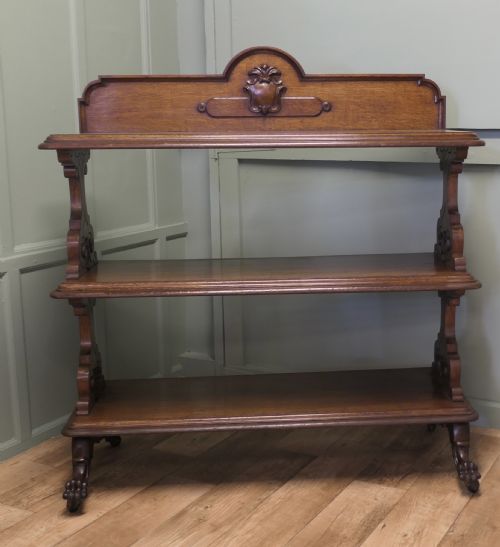
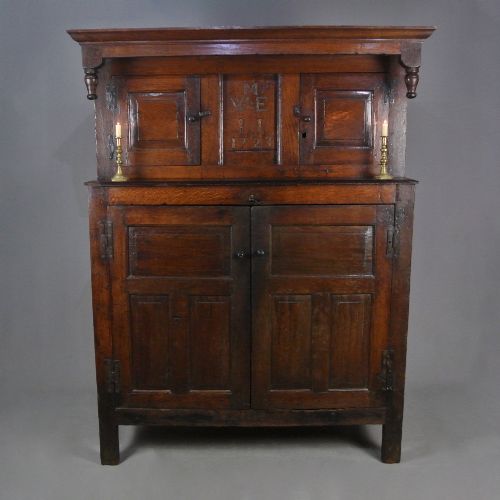
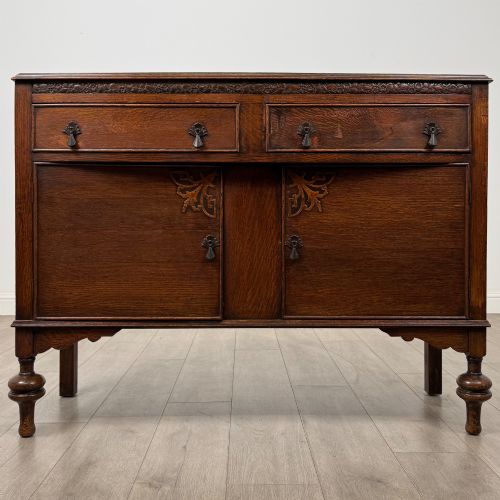
Carved Dark Oak Buffet
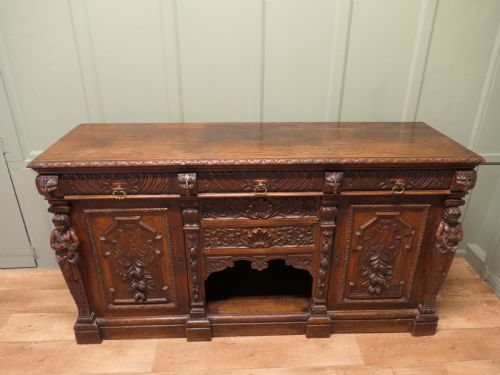
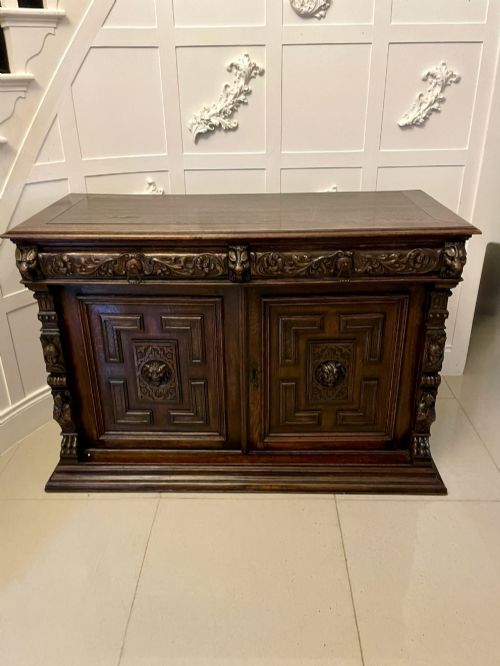
A carved dark oak buffet brings substance and deep timber grain to a room, offering substantial storage built to last centuries.
Carved Dark Oak Buffet
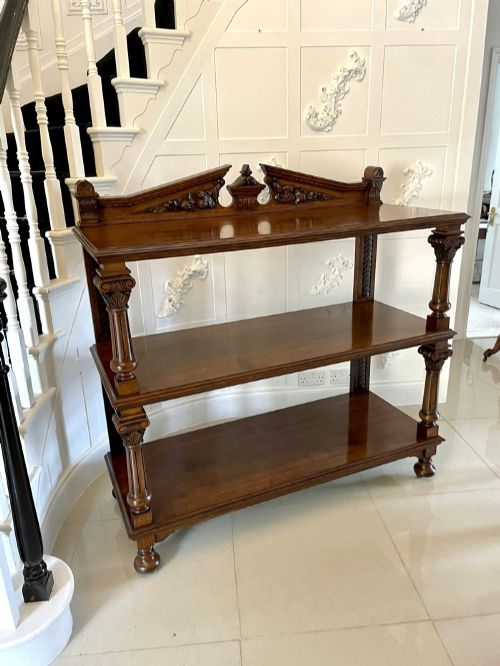
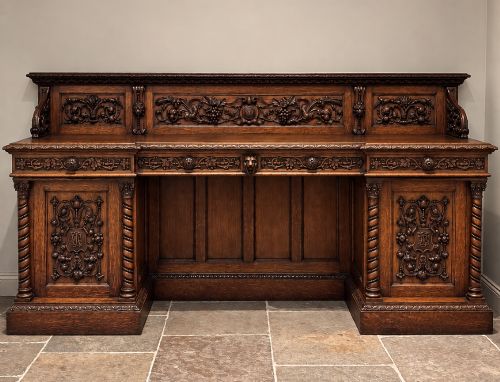
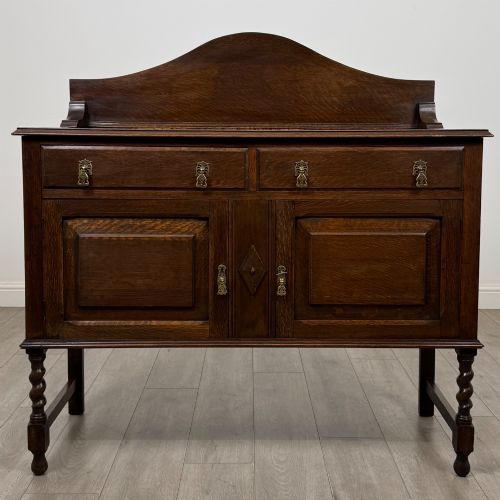
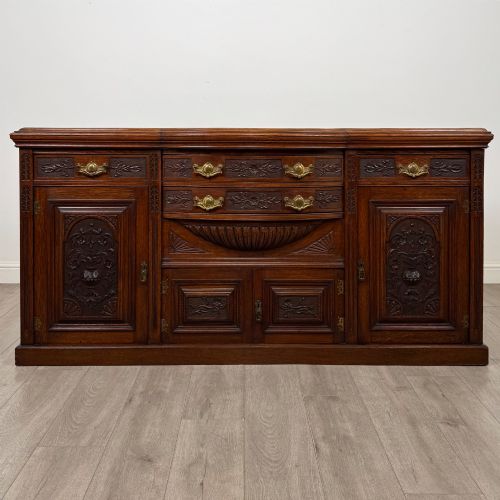
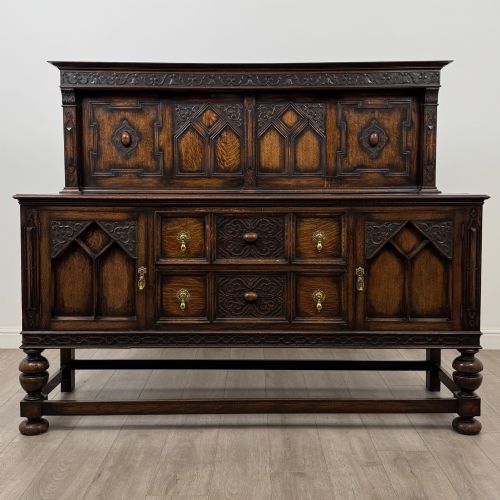
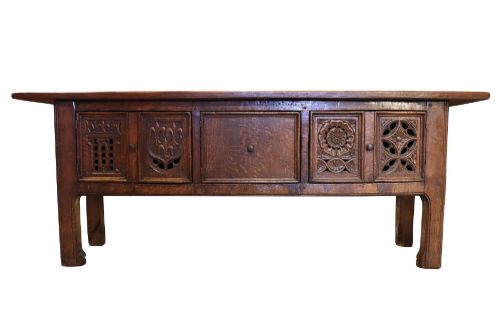
When you search for a carved dark oak buffet, you are looking at substantial timber storage furniture that spans centuries of British, French, and European cabinet-making. These pieces function primarily as serving tables, sideboards, court cupboards, and dresser bases designed for dining spaces.
The versions most commonly met on this page date from the Victorian and Edwardian eras, alongside pieces reaching back to the seventeenth century and forward into the twentieth century. Many carry stylistic revivals such as Jacobean, Gothic, and Renaissance influences expressed through heavy relief carving.
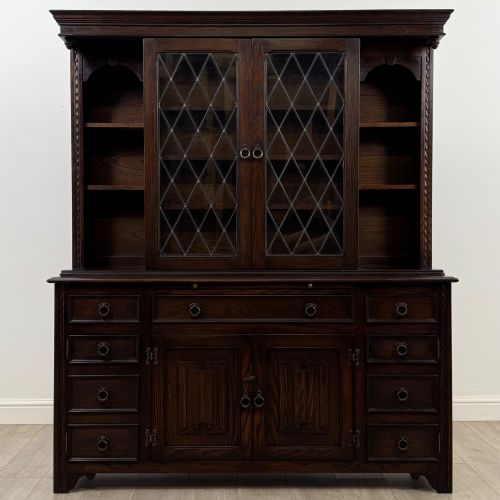
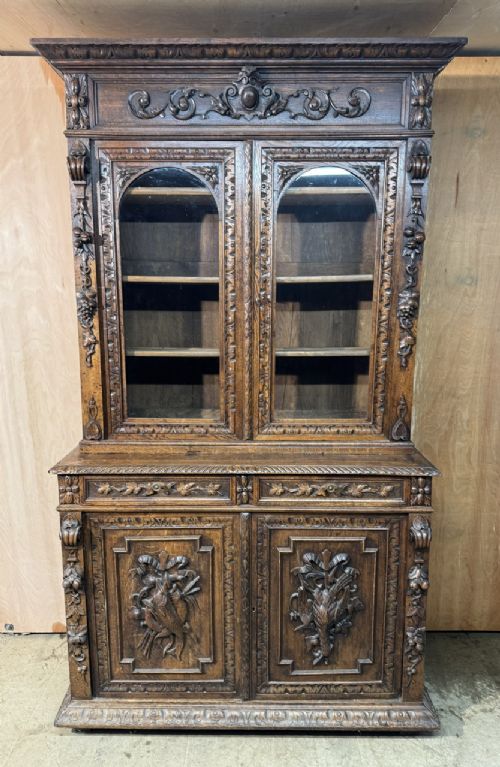
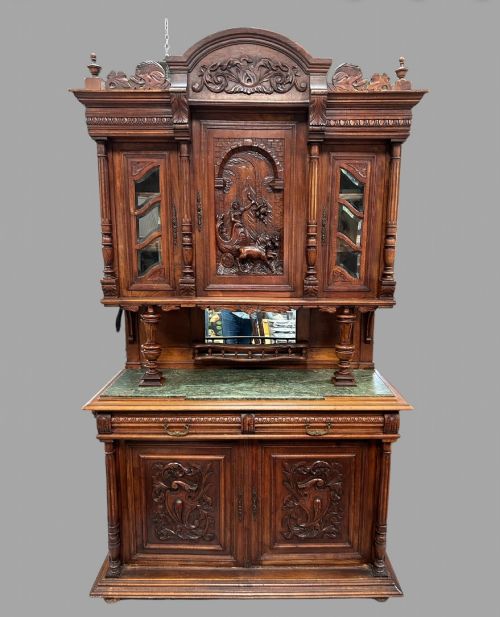
Forms vary from narrow dresser bases and serving tables to imposing court cupboards and display cabinets. Oak remains the defining material across these objects, often paired with brass or iron hardware and occasionally incorporating glass panels.
Standards of craftsmanship
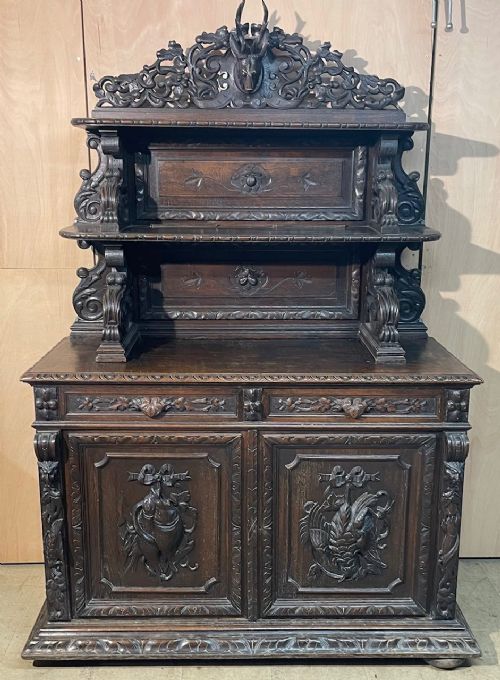
Quality in these heavy timber pieces rests on the depth and crispness of the hand-carved detail, where sharp undercutting distinguishes superior workshop output from softer, mechanical finish work. The choice of timber grain and the preservation of original surface patination also set finer examples apart.
Construction integrity determines daily utility, visible in the tight fit of panel joints, smooth drawer movement, and the stability of heavy cupboard doors on their original hinges. Pieces retaining untouched surfaces and period hardware command stronger consideration from collectors.
French hunting sideboards appear among the selections alongside English court cupboards and Scottish server buffets.
The Carved Dark Oak Buffet Glossary
- Court cupboard
- A traditional enclosed piece of dining furniture featuring upper and lower tiers with doors, often supported on heavy posts.
- Dresser base
- A low wooden sideboard or storage unit fitted with drawers and cupboards beneath a flat top surface.
- Barley-twist
- A turned column or leg shaped like a spiralling helix, frequently found on seventeenth-century and revival furniture.
- Patina
- The deep surface sheen and mellow colour developed by aged timber through decades of handling and polishing.
- Strapwork
- A carved ornament resembling interlaced flat bands or leather straps, typical of Elizabethan and Jacobean design.
Carved Dark Oak Buffet: Frequently Asked Questions
How do I date a carved oak sideboard?
Dating relies on examining the construction marks, timber preparation, and the specific style of carving present on the frame. Seventeenth-century examples display pegged joints and hand-riven boards, whereas Victorian revivals use machine-sawn timber and softer relief work.
Hardware styles and secondary woods inside drawers also provide clear chronological markers for distinguishing older originals from later revival interpretations.
Where were oak buffets traditionally used?
These heavy storage pieces belonged primarily in the dining hall, parlour, or dining room of large domestic households. They served to display plate and silverware on upper tiers while concealing serving dishes and linens within enclosed cupboards.
Today, they adapt readily to modern dining rooms, large hallways, or living spaces as substantial media stands and storage consoles.
What is a court cupboard?
A court cupboard is an early form of enclosed storage featuring a recessed upper section supported by heavy turned columns above a larger base cupboard. They originated as status symbols in substantial homes for displaying dining vessels.
Surviving examples date from the seventeenth century onward, with later revival pieces reproducing the heavy proportions and architectural carving.
How should I care for dark oak timber?
Maintenance requires keeping the wood away from direct heat sources and strong sunlight, which can dry out the dense grain and cause splitting. Regular application of a traditional beeswax feed helps preserve the historic patina and protects the surface.
Avoid liquid polishes containing silicone, as they build up a film that dulls the natural warmth of the dark oak.