

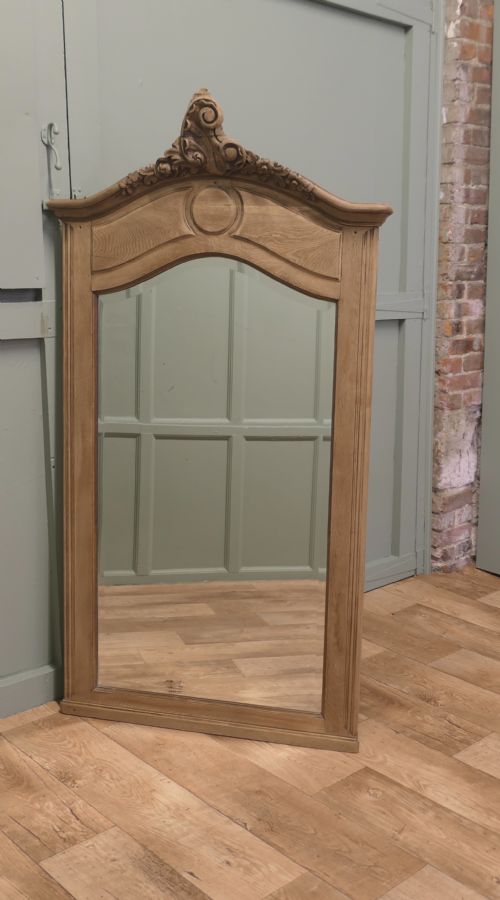
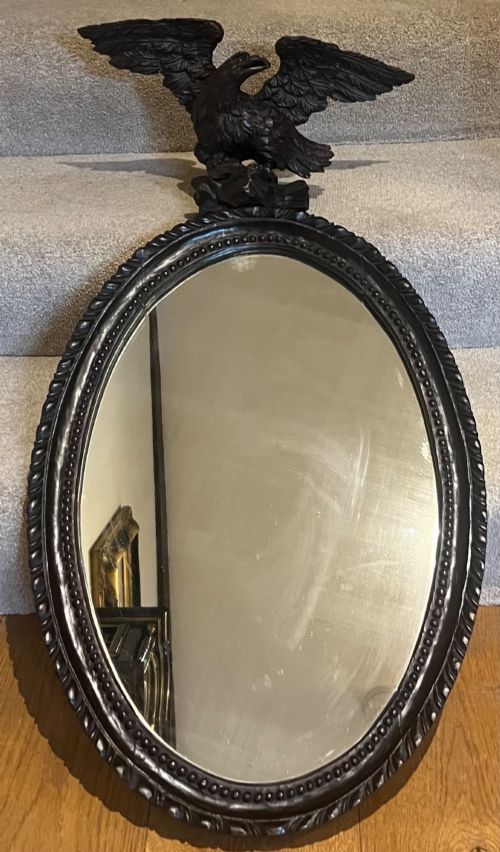


Carved Crest Oak Mirror
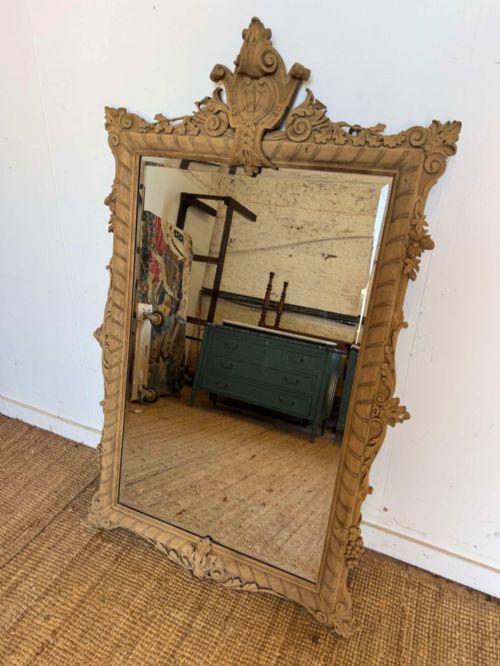
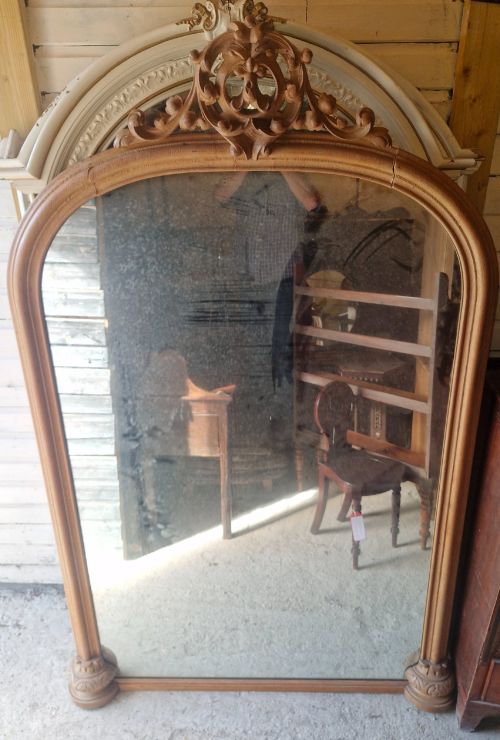
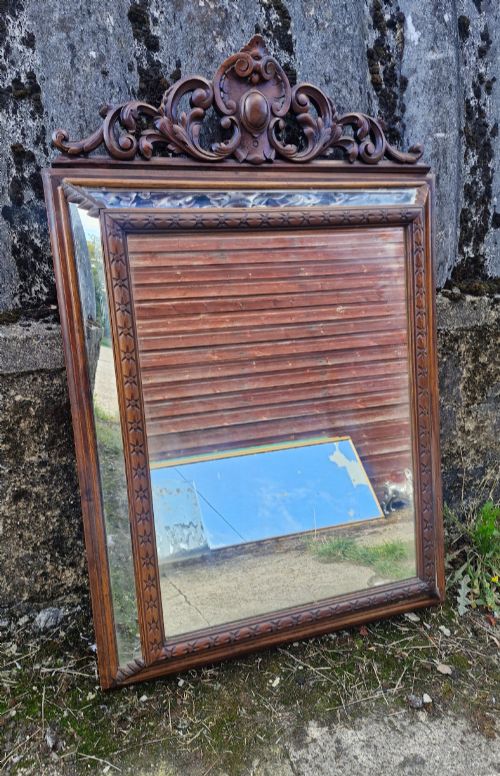
A carved crest oak mirror brings immediate architectural weight to a wall, offering tactile timber framing topped with hand-carved ornamentation.
Carved Crest Oak Mirror
A carved crest oak mirror combines sturdy timber frames with elaborate upper woodwork, serving primarily as a substantial wall hanging for living spaces and hallways. The form spans several centuries, drawing heavily on period revivals and continental aesthetics to create a commanding focal point in a room.
You will most frequently encounter nineteenth-century interpretations on this page, often featuring French provincial or Gothic influences. These pieces range from large wall mirrors with pediment crests to smaller oval or rectangular shapes designed for domestic use.
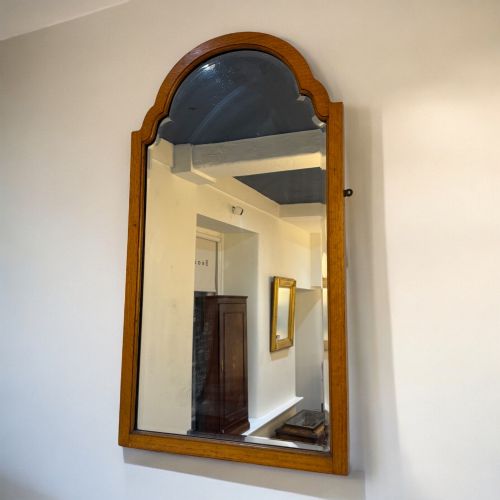
Makers utilised various stylistic idioms across these wall mirrors, including Queen Anne, Carolean, and Regency revivals. The defining characteristic remains the decorative carved crest surmounting the oak frame, which distinguishes them from plain domestic glass.
How they were made
The primary construction relies on solid oak, sometimes bleached or painted, fashioned into heavy frames to support substantial glass plates. Joinery techniques connect the main body to the upper crest, which is typically carved by hand from separate timber sections.
Mirrors utilise both flat and bevelled glass plates, secured within the wood housing using traditional backing methods appropriate to their respective periods. The surface finish ranges from natural waxed timber to lighter bleached tones and painted wood treatments.
Carved Crest Oak Mirror Retail Price Guide 2026
Typical asking prices for carved crest oak mirror among the pieces listed under this phrase on Sellingantiques today, from the lower quarter to the upper quarter. They describe what is for sale here now, not the wider market.
What varies in quality
Quality rests principally in the depth and crispness of the wood carving on the crest, where finer examples display sharp relief and considered proportion. Simpler pieces rely on basic mouldings or shallow incision rather than fully realised sculptural ornamentation.
The integration between the crest and the main oak frame indicates the maker's care, with superior items showing seamless assembly and harmonious scale. Furthermore, the choice of timber, whether dense solid oak or lighter bleached stock, dictates the visual gravity of the piece.
The Carved Crest Oak Mirror Glossary
- Carved crest
- The decorative ornamentation surmounting the top of the mirror frame. This carved section often dictates the stylistic period of the piece.
- Bevelled glass
- Mirror glass featuring an angled, polished edge tapering down towards the frame. This technique adds depth and catches the light distinctively.
- Bleached oak
- Timber treated to lighten its natural dark tone, resulting in a paler finish. This treatment appears frequently on continental European pieces.
- Fret cut
- Woodwork pierced or perforated with a fine saw to create geometric or decorative patterns. It provides a lighter contrast to heavy solid timber frames.
- Gothic Revival
- An architectural and decorative style drawing on medieval forms, featuring pointed arches and heavy tracery. This influence appears strongly in larger nineteenth-century examples.
Carved Crest Oak Mirror: Frequently Asked Questions
Where should I hang a carved crest oak mirror?
These mirrors suit principal reception rooms, grand hallways, or above a fireplace mantel where their architectural weight can anchor the space. Ensure the wall structure is secure enough to support heavy timber framing.
Because the carved crest adds significant height, measure the vertical clearance before placement to allow the decorative top element to breathe visually without crowding the ceiling.
How do I clean an antique oak mirror frame?
Dust the carved wooden elements gently with a soft, dry brush to prevent dirt settling into the recesses of the ornament. Avoid modern chemical sprays that can strip historic wax finishes.
Apply a traditional beeswax sparingly to nourish the timber when it appears dry, buffing lightly with a clean cloth to maintain a soft natural sheen.
What periods do these mirrors represent?
The selection spans primarily from the eighteenth century through to the early twentieth century, encompassing various revival styles. Nineteenth-century interpretations dominate, alongside occasional earlier Dutch and Georgian-inspired pieces.
Stylistic markers such as Gothic tracery, Queen Anne curves, or French provincial crests help situate the piece within its historical design context.