

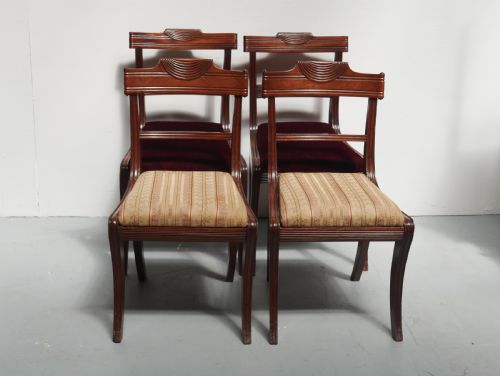
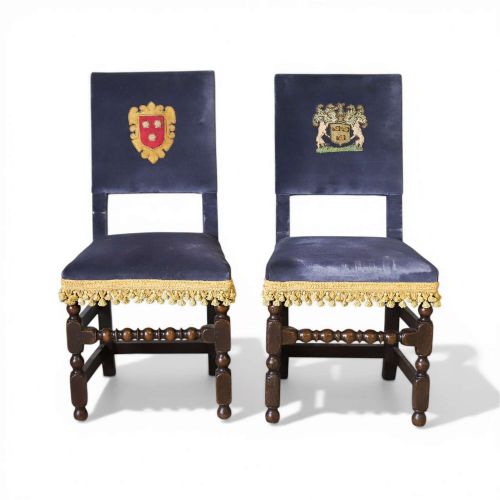


Carved Crest Dining Seats
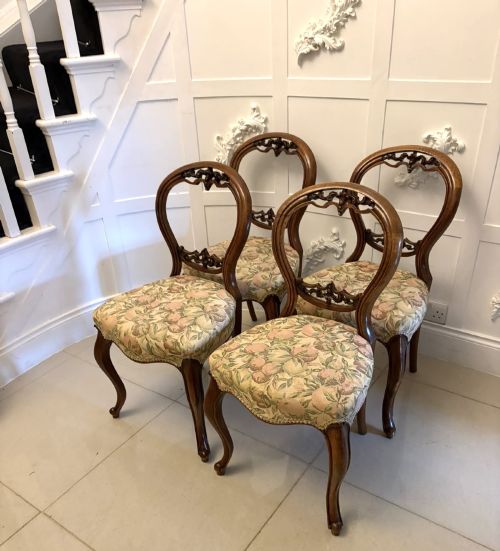
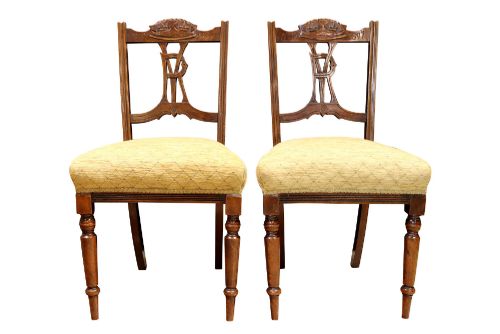
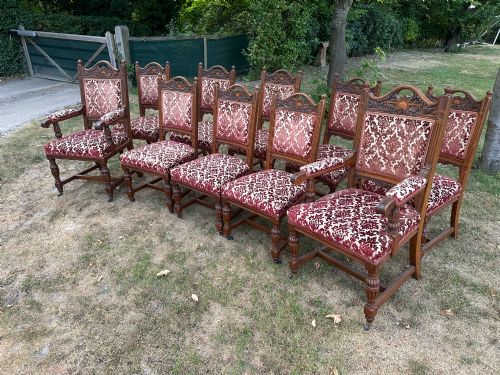
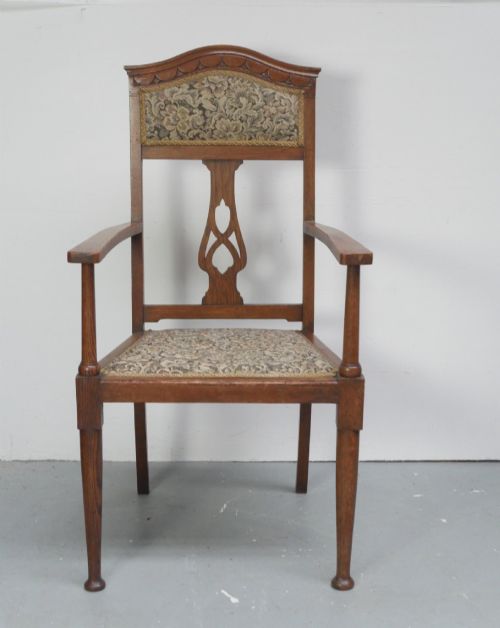
These carved crest dining seats bring architectural timber and heraldic detail straight to the table, offering a commanding presence for any serious dining room.
Carved Crest Dining Seats
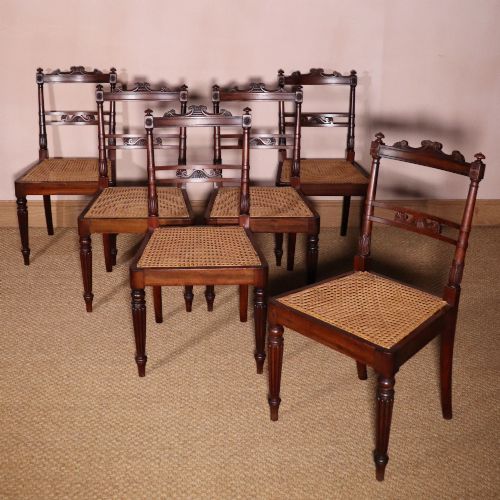
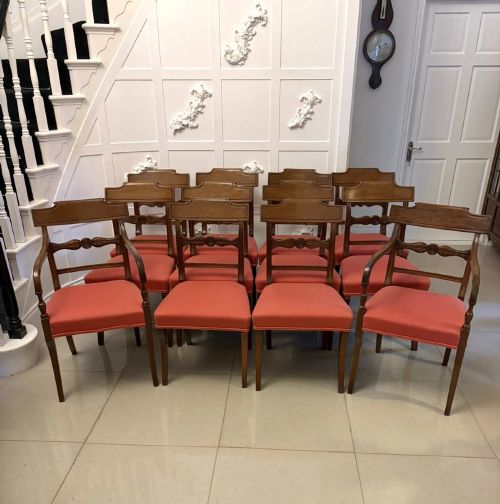
Carved crest dining seats encompass sturdy dining chairs, side chairs, hall chairs, and armchairs selected for their prominent upper rail detailing. Oak and mahogany form the backbone of the selection, spanning periods from the seventeenth century through the Victorian era and into early twentieth-century revivals.
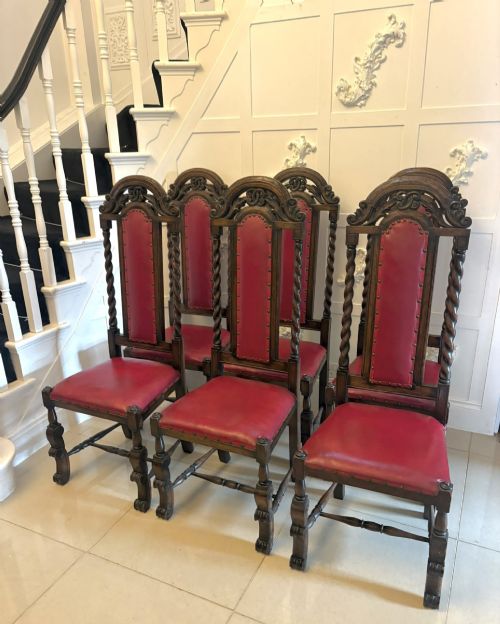
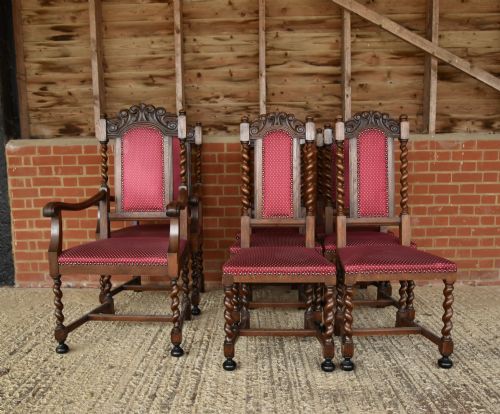
Buyers frequently encounter sets of oak dining chairs featuring barley twist supports alongside mahogany or walnut Regency designs. Highback Jacobean revival pieces and heraldic hall chairs appear regularly alongside upholstered armchairs and cane or bergere seated variants.
Origins stretch across English, Scottish, and Irish workshops, demonstrating styles from William & Mary and George I to Arts & Crafts and Art Nouveau. Whether seeking a matched set for daily dining or a pair of armorial clan chairs, the range balances formal architectural presence with domestic utility.
How they were made
Cabinetmakers constructed these seats primarily from solid oak, mahogany, and walnut, often employing turned elements like barley twists to support the frame. Carving on the top rail or crest was executed by hand, utilising gouges and chisels to produce heraldic motifs, shells, or foliate scrolls.
Upholstery methods varied by period, utilising traditional stuffing techniques beneath fabric, leather, velvet, or cane and bergere panels. Brass inlay, scumble paint, and japanning provided decorative surface finishes on select Regency and earlier frames.
Carved Crest Dining Seats Retail Price Guide 2026
Typical asking prices for carved crest dining seats among the pieces listed under this phrase on Sellingantiques today, from the lower quarter to the upper quarter. They describe what is for sale here now, not the wider market.
Several sets retain their historic family lineage, including clan chairs and pieces linked directly to Winston Churchill's former residence.
What varies in quality
Quality rests upon the crispness of the hand-carved crest and the structural integrity of the timber joints. Superior examples display deep, sharply defined relief carving on the top rail rather than shallow, mechanical shaping, alongside dense, well-figured oak or mahogany.
The completeness of a matched set and the originality of the upholstery materials or cane work separate standard dining chairs from finer collector pieces. Maker attribution through stamped signatures or documented provenance further elevates the standing of an individual chair or suite.
Waring & Gillow·Gillows
The Carved Crest Dining Seats Glossary
- Carver
- An armchair designed with armrests, traditionally placed at the head of a dining table. These often mirror the design of the matching side chairs in a larger set.
- Barley twist
- A turned wooden furniture leg or stretcher resembling a rope twisted in a spiral. This decorative turning appears frequently on seventeenth-century pieces and their later Victorian revivals.
- Bergere
- An upholstered chair featuring woven cane work on the back and seat panels. This technique adds lightness and flexibility to the wooden frame.
- Armorial
- Adorned with heraldic crests, coats of arms, or family insignia. Such decoration denotes specific lineage or institutional commission.
- Japanned
- Finished with a European imitation of East Asian lacquerwork using resin varnishes. This decorative surface treatment creates a dark, glossy coating.
Carved Crest Dining Seats: Frequently Asked Questions
How do I care for antique wooden dining seats?
Maintain the timber by applying a microcrystalline wax polish sparingly to nourish the grain and protect the surface from moisture. Avoid placing antique chairs near direct heat sources to prevent the wood from splitting.
Inspect the joints periodically to ensure the frame remains rigid during daily use. Protect upholstered or cane panels by keeping them out of direct sunlight.
Can I mix these chairs with a modern table?
Pairing carved timber chairs with a contemporary table creates a striking contrast that highlights the architectural qualities of the antique frames. Ensure the seat height aligns comfortably with the underside clearance of the modern table.
Consider matching the wood tone or the finish of the chairs to existing elements in the room for visual cohesion. Armchairs work particularly well as end seats in a mixed arrangement.
What is the difference between a side chair and a hall chair?
Side chairs are built primarily for dining and domestic comfort, featuring upholstered seats and supportive backs. Hall chairs are typically constructed entirely from wood with rigid seats, designed for occasional seating in entryways.
Hall chairs frequently showcase more prominent carved crests or armorial bearings intended to impress visitors. Side chairs prioritize ergonomic comfort during extended seating.
How do I identify a revival style from an original period piece?
Examine the timber shrinkage, tool marks, and construction methods used within the internal framing. Revival pieces from the Victorian and Edwardian eras often employ standardised machine cutting alongside period-appropriate hand carving.
Check the wear patterns on the feet and stretcher rails for consistency with the stated age. Wood species and finishing techniques also provide clear indicators of whether a chair dates to the seventeenth century or a later nineteenth-century revival.